
 Rick Claypool on Pay to Play Corporate Crime Enforcement
  Labaton Launches Whistleblower Practice with Former SEC Acting Chair Allison Herren Lee
  Kremlin payment firm A7 has been pumping billions in ‘untraceable’ cash into global financial system
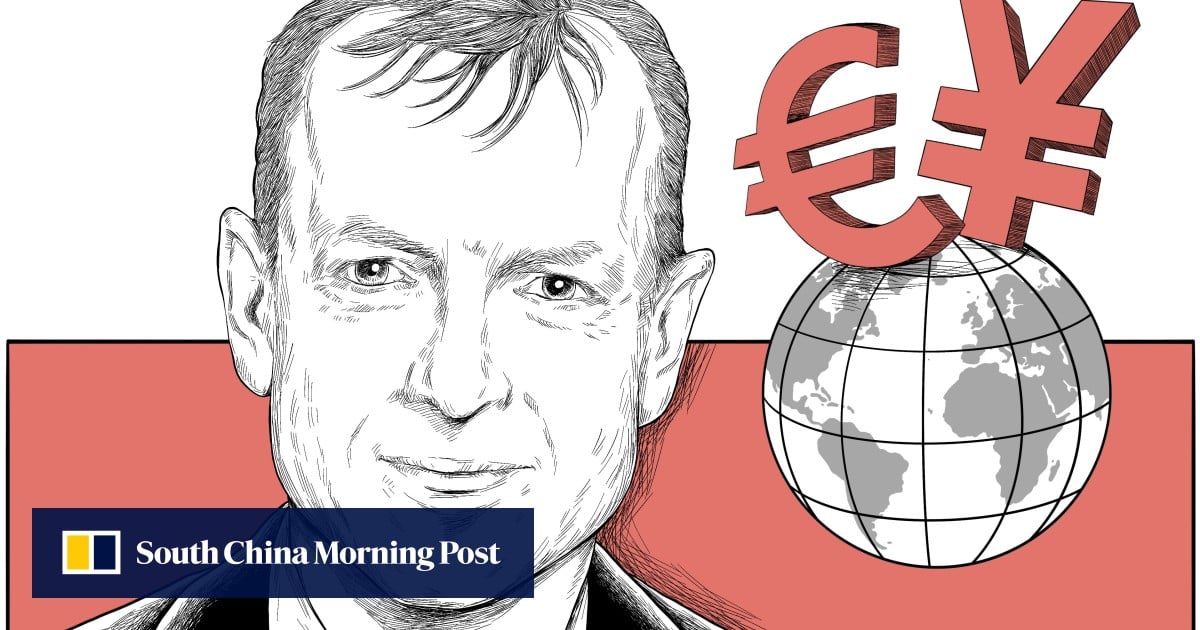
Daniel Gros is the director of the Institute for European Policymaking at Bocconi University. Previously, he served as an adviser to the European Parliament, collaborated with the European Commission as economic adviser to the Delors Committee, which developed plans for the euro, and worked at the International Monetary Fund.
In this interview, Gros examines the structural tensions shaping EU-China economic ties, draws lessons from the euro’s experience to analyse the yuan’s internationalisation, and explains why stablecoins and central bank digital currencies are limited in fundamentally shifting the global monetary order.
Advertisement
After more than two decades since the creation of the euro, what’s the biggest lesson that can be learned from its internationalisation? What do you think can apply to the yuan?
When the euro was created many had the illusion that it would rival the US dollar. But one should keep in mind that the key advantage of the [US] dollar is twofold. First, it has a very deep and broad financial market. It is very open. Second, once a currency is used everywhere in the world, then why should people change?
If you are in Latin America, Africa or somewhere in Asia, and you want to deal with somebody else – even especially those who are not in the US – instead of having to deal with national currencies, you just take the dollar as the common denominator.
Once everybody has chosen the dollar, why should they change? I think this is the lock-in effect the dollar has, and it is very difficult to get into.
Advertisement
Moreover, if you want your currency to become international, you have to have an open capital account. That means you lose control over the value of your currency. That is the trade-off: having a global currency requires letting its value be determined globally.
That is why the Germans in the past did not want the Deutschmark to become a global currency, because then they would lose control over their exchange rates.
Don't Miss:
-
A Total of 13 Mass Graves Have Been Found in Viesca Containing the Charred Remains of Men and Women
-
Jorge Luis Zambrano, alias “Rasquiña”
-
El Taliban Fell In Mazatlán… And What He Confessed Ties Everything Together
-
Inside the Camp at the Heart of Honduras’ Garífuna Land Struggle
-
This Is How the MataZetas Captured and Executed the Zetas