
 Five years after the Pandora Papers, transparency laws lose their teeth
  How Hungary’s richest man funneled millions into Orbán’s propaganda machine
  How Real Is the US Withdrawal from the Middle East?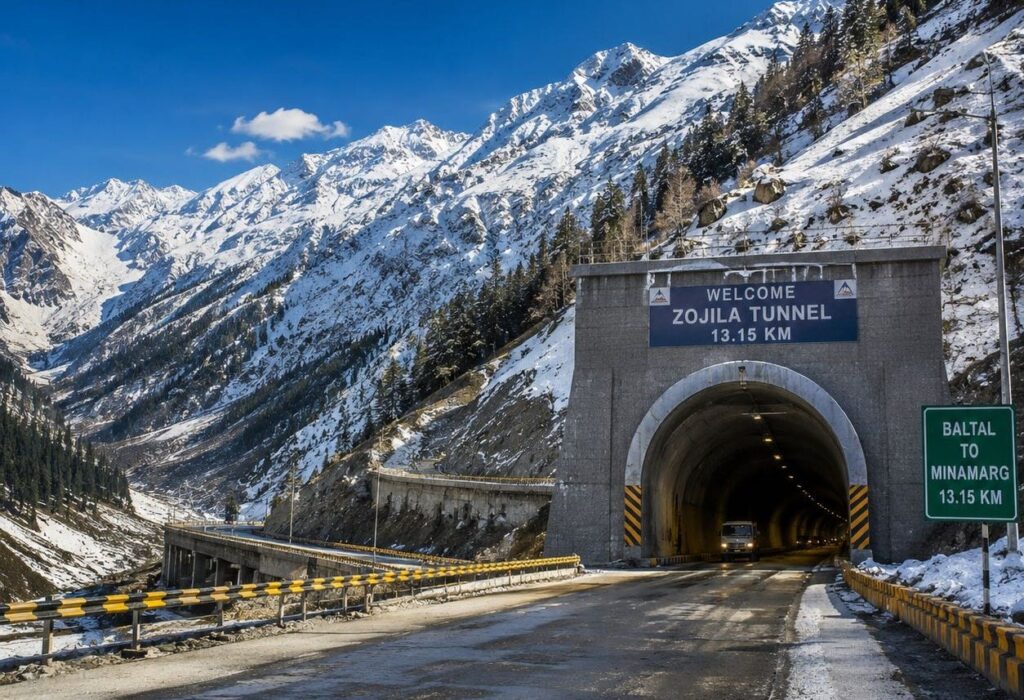
By: Majid Maqbool
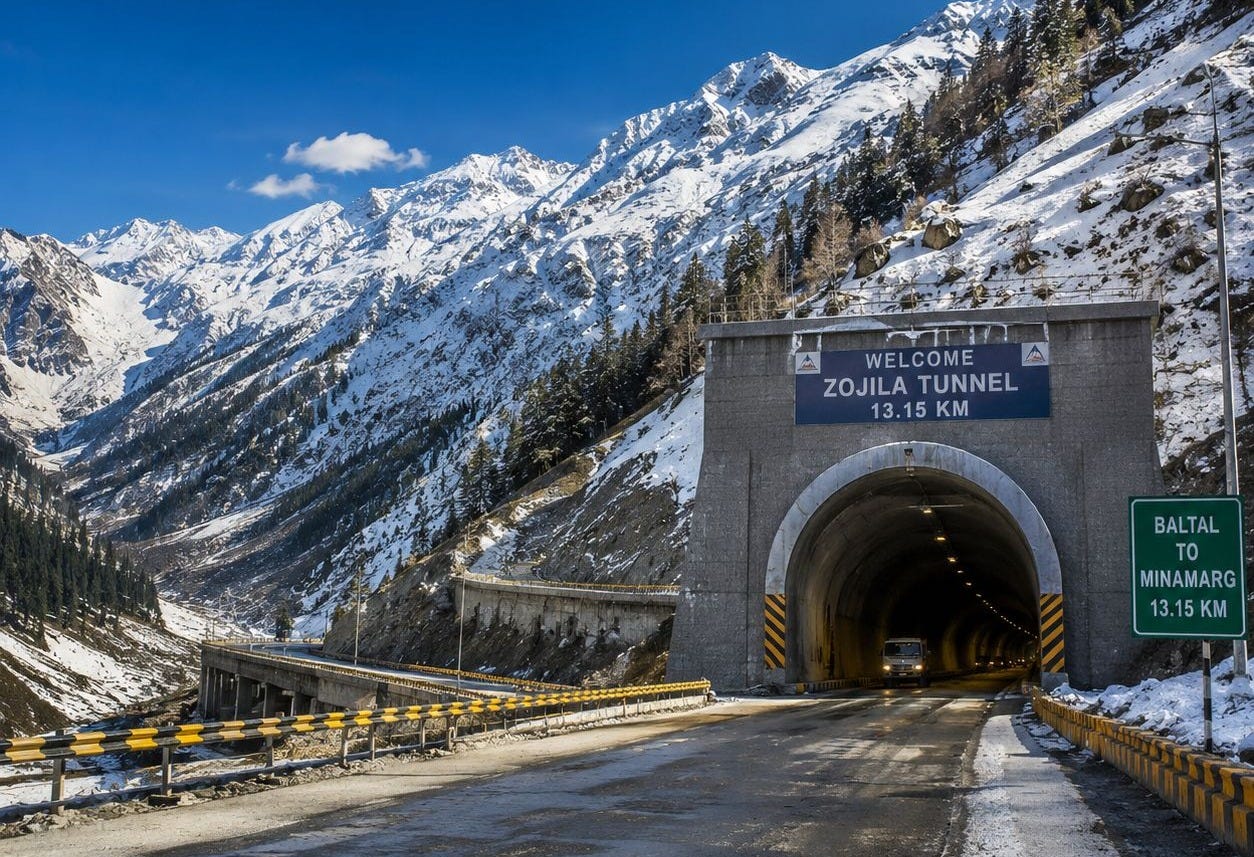
On June 9, India opened a strategically vital 13.15 km tunnel linking the Kashmir region to Ladakh beneath the 3,529-meter Zojila pass, the world’s longest single-tube bi-directional road tunnel at the world’s highest altitude, providing permanent, all-weather reinforcement of its sovereignty along the Line of Actual Control demarking the border with China, reducing travel time from three hours to 20 minutes. It is designed to allow the Indian Army to rapidly move troops, artillery, and supplies to forward positions without the previous weather-dependent delays.
The 3,488-km de facto military border between the two countries has been a source of tension since at least 1963, when disputes over sovereignty at the roof of the world escalated into a full-scale border war in which China secured control of the Aksai Chin region in the west, while claiming nearly all of India’s Arunachal Pradesh region. In 2017. Hostility flared again for 73 days on the Doklam plateau near the Bhutan-India-China tri-junction after Indian forces halted Chinese road-building crews. Hand-to-hand combat between border patrols in the Galwan Valley in 2020 resulted in casualties for both sides, leading to sustained military standoffs.
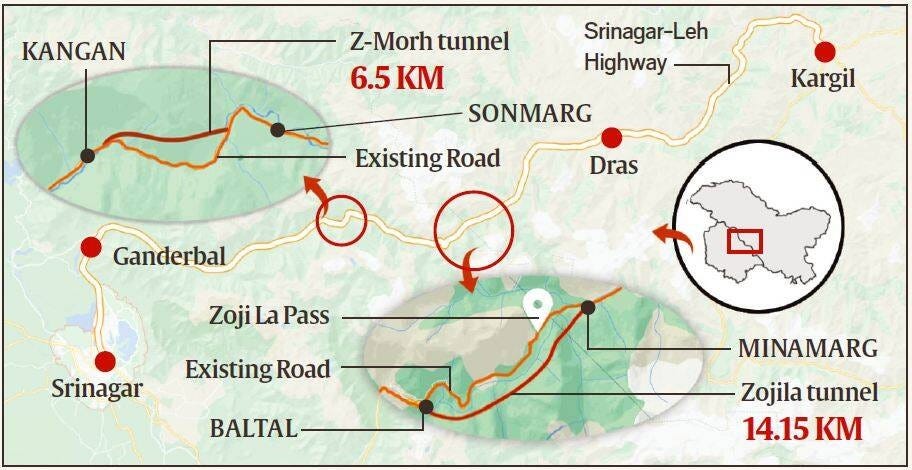
Built at a cost of US$820–850 million, the tunnel is the first-ever all-weather, year-round connection between the two regions. Historically, the past has been cut off for 160 to 180 days annually by snowfall and temperatures which plunge to -35°C. It is being developed under extremely demanding geological and climatic conditions. Once operational, the project will provide year-round connectivity on the Srinagar–Kargil–Leh axis, a route that remains affected by prolonged winter closures due to heavy snowfall and avalanche risks. The tunnel is expected to be fully operational by 2028.
The project makes it Asia’s longest bi-directional road tunnel with a total project length of 30.894 km including tunnel roads and bridges, located between Baltal in Jammu & Kashmir and Meenamarg in Ladakh across the challenging Himalayan corridor. The project is being executed by Megha Engineering & Infrastructure Ltd (MEIL) as the main contractor under the client National Highways & Infrastructure Development Corporation Ltd (NHIDCL), utilizing the New Austrian Tunnelling Method (NATM) construction methodology.
The final breakthrough of the main tunnel, as per an official statement, represents the “completion of the most critical excavation phase and reflects the successful execution of underground works in fragile Himalayan geology under highly adverse terrain and weather conditions.”
“The project is of immense socio-economic and strategic importance, as it is expected to improve mobility, strengthen logistics reliability, support tourism and essential services, and enhance connectivity for border regions,” the release stated.
The work on the project was inaugurated by Prime Minister Narendra Modi on May 19, 2018 in Leh. Union Minister Nitin Gadkari (Road Transport & Highways), accompanied by J&K Lieutenant Governor Manoj Sinha and Chief Minister Omar Abdullah, inaugurated the breakthrough ceremony on June 9, marking the connection between the two ends of the tunnel.
“This is a historic day in India’s infrastructure story,” union minister for road transport and highways Nitin Gadkari said on the occasion. “The Zojila Tunnel is set to make a world record once it is fully operational. It will be a lifeline for the people of Ladakh and Jammu & Kashmir.”
Chief Minister of Jammu & Kashmir Omar Abdullah said the long-awaited dream of the people of Ladakh and Jammu & Kashmir has finally come true. “The joy on people’s faces shows how positively the tunnel’s completion will affect their lives. Improved transport, new opportunities, and tourism will bring real change to the region. Now that the breakthrough is complete, I hope the remaining work is finished quickly,” the chief minister said.
The tunnel is designed to strengthen military movements along the border with China and Pakistan. Improved military movements and quicker access via tunnel are also expected to strengthen India’s ability to respond to potential Pakistani and Chinese aggression along the Line of Control and Line of Actual Control.
“From the defense point of view, the road link will strengthen national security. It will be of great importance to the defense forces,“ said Iranian engineer Yousef Eshaghpour, who worked for years as a team leader on the Zojila tunnel project. He said this was the most challenging project he has worked on in his career until now.
“This project is vital for Ladakh as you don’t have access to this area for about 4 to 5 months in winter due to snowfall. Through this tunnel, one can reach Ladakh in 15 minutes, and it provides all-weather connectivity between Ladakh and Kashmir. Almost 80 percent of the project is completed,” the engineer said.
Another engineer who has worked on the project said the tunnel ensures the road will remain open in all seasons, bringing economic benefits for Ladakh and boosting winter tourism to Ladakh as visitors can visit Ladakh via the tunnel route in the winter season as well.
“The defense forces have to use air force planes to carry equipment and advance stock to Ladakh from Chandigarh when the road closes for several months in winter. When the road is opened, advance stocks will not be needed and the government can use the tunnel to ferry stock for defense and civilian purposes in all weather conditions,” the engineer said.
After the Union Minister of Road Transport and Highways Nitin Gadkari pressed the button for the final blast inside the tunnel on June 9, he emphasized that the tunnel project will prove to be a game-changer when it comes to strengthening India’s security.
“With round-the-year connectivity, the movement of the Indian Army, as well as the supply of Army materials, equipment, and logistics, will become faster, safer, and more effective, thereby strengthening the country’s strategic preparedness,” he said.
Don't Miss:
-
Five years after the Pandora Papers, transparency laws lose their teeth
-
How Hungary’s richest man funneled millions into Orbán’s propaganda machine
-
How Real Is the US Withdrawal from the Middle East?
-
From Iran to China: An Emerging Trans-Central Asian Corridor
-
New documents show how a retail chain’s sales practices helped put guns on US streets