
 Donate to ICIJ
  Chelsea FC fined millions over secret payments under Abramovich ownership
  Nearly half of powerful .50-caliber ammo seized by Mexican government came from US Army plant, defense minister says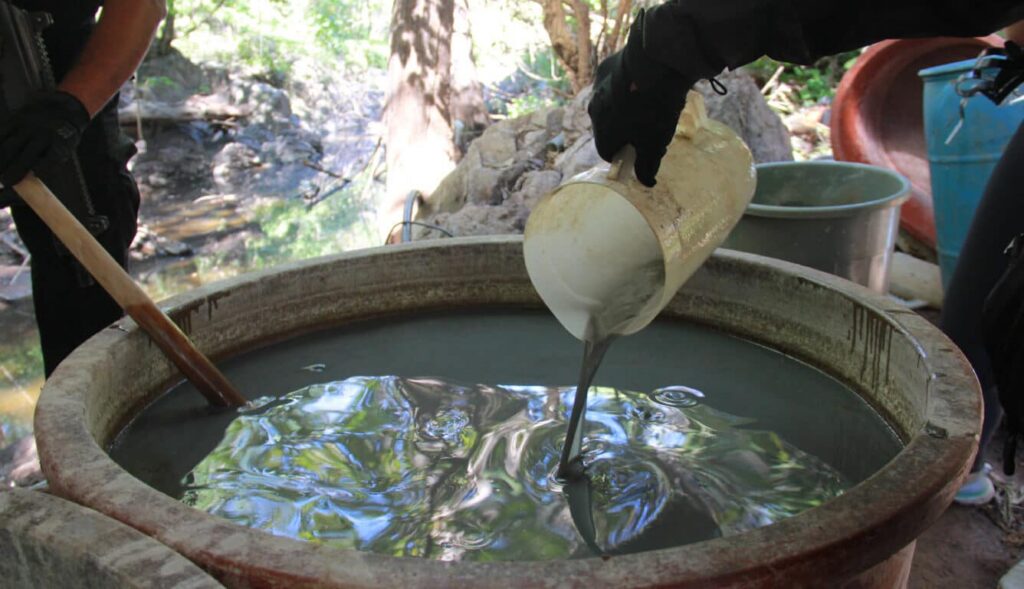
On October 28, 2009, Mexican authorities arrested Oscar Orlando Nava Valencia. Known as “El Lobo,” Nava Valencia was the head of the Milenio Cartel, then one of the country’s most powerful criminal groups.
The group had two large wings, Nava Valencia would testify in a US courtroom years later. One was run by his brother, and another was run by a little-known, hard-boiled lieutenant named Nemesio Oseguera Cervantes, alias “El Mencho.”
Cocaine was the big earner, but the methamphetamine business was starting to catch up. Nava Valencia testified that El Mencho ran five laboratories for him in the late 2000s that produced about a ton of methamphetamine per month at the time, a miniscule amount compared to what was to be produced in the years to come.
After Nava Valencia was arrested, El Mencho’s wing broke away, he testified. It was the beginning of the Jalisco Cartel New Generation (Cartel de Jalisco Nueva Generación – CJNG). The group trafficked cocaine, but its core business was methamphetamine.
That business went through an unprecedented boom, and, according to the United Nations, amphetamine-type stimulants are consumed by more than 30 million people, ranking it third in global use behind marijuana and opiates, in large part due to the ingenuity, power, and reach of groups like the CJNG.
On February 22, Mexican authorities killed El Mencho. As it was in 2009, many expect a schism in the organization. Looking back, it is clear that the winners of battles for dominance and market success relied as much on entrepreneurial spirit as they did on raw power. The story of how the CJNG and El Mencho embraced the methamphetamine market could be a portent for what comes next in the organization’s future.
A US Boom, then Bust
The methamphetamine industrial revolution began with some important Mexican legislation: In 2007, Mexico’s government declared that it would not issue any more licenses to import ephedrine and pseudoephedrine, the two principal precursors used at the time to make methamphetamine. It came after previous legislation had tightened regulatory measures around the chemicals.
The impact generated changes, fast. Mexican producers like El Mencho switched to 1-phenyl-2-propanone (P2P). P2P was better than ephedrine and pseudoephedrine in every way: more accessible, cheaper, and a better core ingredient to make high-quality drugs. Methamphetamine production and purity began an inexorable rise, and with it came more demand.
This was perhaps most notable in the United States, where consumption went from an estimated 38 tons in 2009, the year El Mencho began his own rise to the top of the criminal food chain, to 171 tons in 2016, according to a Rand Corporation report. By comparison, cocaine consumption dropped from 160 tons to 145 tons in that same period.
By 2022, meth was the most frequently identified illicit drug seized in the United States, according to the US National Forensic Library, the Drug Enforcement Administration’s (DEA) drug-testing headquarters. And by 2023, there were an estimated 2.6 million methamphetamine users in the United States, a seven-fold increase from the estimated 353,000 in 2010.
Seizures of the drug along the US-Mexico border also reflected this trend. The US Customs and Border Protection (CBP) reported that it seized 4.1 tons of methamphetamine along the Southwest border in the 2010 fiscal year. By the early 2020s, it was regularly seizing about 70 tons per year.
At first, earnings from the US-bound meth ballooned. The same Rand report says the US meth market went from an estimated $16 billion in 2009 to $27 billion in 2016. But by then, earnings per sale were starting to drop as market saturation meant steep discounts.
The per capita sales market had peaked in 2007, according to the DEA, when prices for a gram of methamphetamine reached $268. By 2024, the DEA said prices were fluctuating between $10 and $30 per gram. (In 2024, producers in Mexico told InSight Crime they were counting on a return of about $50 per gram.)
By then, the CJNG, and other Mexican criminal groups, had moved on.
Shifting Further East and West
In February 2019, US officials, working with Australian authorities, seized 1.7 tons of methamphetamine bound for Australia hidden in a cargo container marked as sound speakers. US producers were no longer capable of producing or bundling such a large load, so it was clear that Mexican producers were moving methamphetamine through the United States to Oceania in large quantities.
This had its logic. Prices for methamphetamine can top $190 per gram in Australia, according to the DEA. In New Zealand, they can top $114 per gram. Australia also has some of the highest seizure-to-population ratios for methamphetamine in the world, and consumption of methamphetamine and other amphetamine stimulants there accounts for 78% of its drug market.
More startling seizures followed. In July 2023, Mexican soldiers seized 10 tons of liquid methamphetamine bound for Australia hidden in bottles marked “artisenal mezcal.” Other seizures were said to be headed to New Zealand. The DEA wrote in a 2024 report that other concealment methods included the use of hydraulic presses, farming machinery, electrical transformers, and alcohol.
By 2024, 70% of the methamphetamine seized within or on its way to Australia came from North America, meaning Mexico, the United States, and Canada, with Mexico showing up as the biggest source of meth, by far, of the three.
“Methamphetamine manufactured in North America has surpassed Southeast Asian countries as Australia’s largest supplier of the illicit drug, with Mexican cartels increasingly targeting Australia,” the Australian Federal Police (AFP) said in a press release.
SEE ALSO: Methamphetamine Traffickers in Mexico Become Global Wholesalers
Wholesale buyers in Oceania had switched. The reason was simple, AFP said: Mexican wholesale prices were as much as five times cheaper than the Southeast Asian producers.
The Future of the CJNG
Analysis of the CJNG’s rise often focuses on its military prowess, its violence, its uncompromising approach, and its discipline. But what of its business acumen? How much of their expansion can be attributed to business savvy and entrepreneurship in the meth business?
In many regards, the question applies to both the CJNG and their longtime rivals, the Sinaloa Cartel. More than any others, these two criminal networks illustrated an agility and wherewithal that put them on a par with some of the largest corporations on the planet. This was especially true in synthetic drugs, where, in both the methamphetamine and fentanyl markets, they became the leaders.
In the case of the CJNG, the group employed its military might, taking key production areas and securing vital drug corridors and ports. But it also used its business savvy. Not long after the switch to P2P, massive labs were producing the cheapest, highest-quality product on the planet. They even figured out how to recycle the waste from the production process to make more meth, according to the DEA. And when new restrictions were put in place to hinder the flow of P2P, they adapted again. Over the years, they, and the other major producers, have come to rely far less on chemicals from abroad.
They, and their counterparts, also built up the US market. In part, this has come via ingenious schemes to lace more familiar pharmaceuticals with methamphetamine. Specifically, fake Adderall, laced with methamphetamine, has proliferated in recent years. As many as five million people take Adderall without a prescription, representing an enormous market potential.
Finally, they have shown a keen sense of how to expand their footprint. After they saturated the US market, emissaries found new business opportunities and forged new partnerships in competitive markets in Oceania and beyond.
El Mencho’s death throws much of this business into question. And while methamphetamine seems to be a mainstay, other synthetic drugs are emerging and evolving constantly.
“To the extent that they can also manufacture other synthetic opioids that are increasingly detected in the supply in the US and Canada, like nitazenes or substances used in veterinary medicine like Medetomidine, this will be important for the future of the organization,” said Cecilia Farfán-Méndez, head of the North American Observatory for the Global Initiative against Transnational Organized Crime.
The market, in other words, remains dynamic, illustrating that whoever emerges from the almost inevitable infighting that follows El Mencho’s demise will have to combine military prowess with strong business acumen.
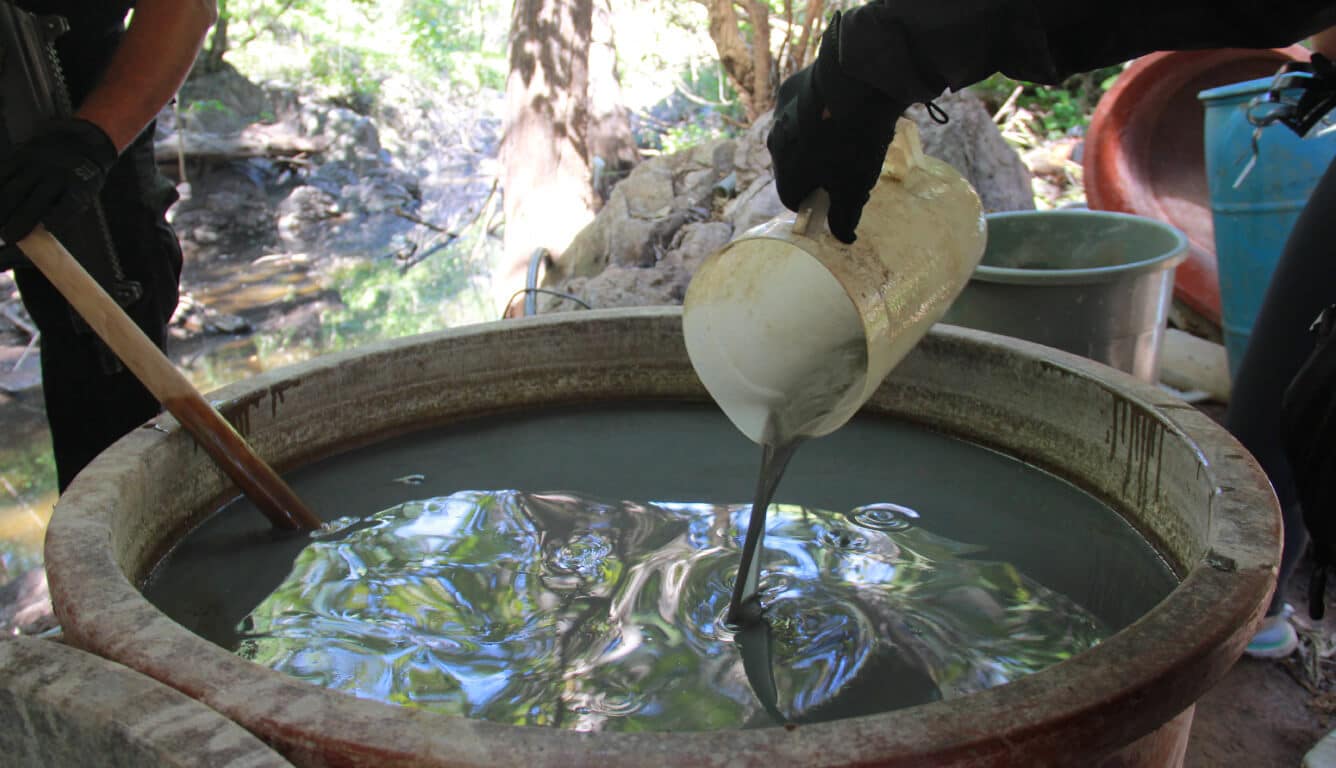
Featured image: Mexican authorities process a clandestine methamphetamine lab in Sinaloa. Credit: Marcos Vizcarra
Don't Miss:
-
CJNG Hitman Commander Killed in Shootout in El Alpuyequito, Colima
-
“Pepe” of the CJNG Has Been Captured; He Transported “El Mencho’s” Girlfriend Prior to his Death
-
Three Suspected CJNG Hitmen Arrested in Chiapas
-
Armed Attacks in Celaya Leave Two Dead and Two Injured in Santa Rita and Villas del Bajío Neighborhoods
-
What Marset’s Capture Tells Us About the Cocaine Business