
 The “Chokubi” Crisis
  Bhutan’s ‘Mindfulness City’ to Link to India by Rail
  Cracks in the Sand: Gulf Monarchies’ Economic and Geopolitical Peril
 On Tuesday, Vietnam’s National Assembly elected a new prime minister. For once, the appointment looks less like a factional compromise than a deliberate bet on competence. Le Minh Hung, born in 1970, is the country’s youngest prime minister since 1955. In a system that often prizes seniority, that alone is striking.
More striking still is Hung’s profile: he is not a provincial baron or a deal maker forged in the rough-and-tumble of local politics. Hung is a technocrat with economic training in Japan and is best known for his years at the State Bank of Vietnam, where he rose to become its youngest-ever governor. His profile suits an economy entering a harder phase of development, but he must now navigate a concentrated power structure at home and a volatile world, with less political capital than any recent predecessor.
Hung’s technocratic credentials are real. As central bank governor from 2016 to late 2020, he helped stabilise Vietnam’s macroeconomic foundations, build sizeable foreign reserves and nudge its banking sector towards digital modernisation. He is not a flamboyant politician, rarely speaking to the media, but a steward who understands that keeping the machinery running matters more than announcing grand redesigns.
Advertisement
However, his record as central banker is not unblemished. The Van Thinh Phat fraud case, one of the largest financial scandals in Vietnamese history, germinated on his watch, raising questions about supervisory rigour even as his macroeconomic management drew praise.
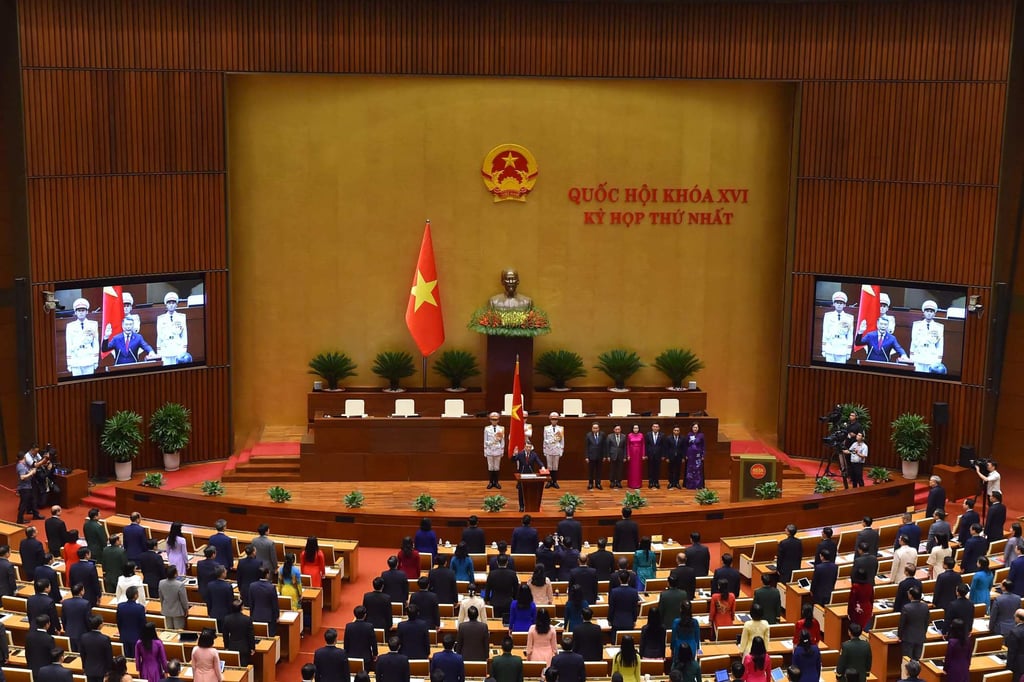
Since leaving the central bank, Hung has led the Communist Party’s Central Office and the Central Organisation Commission, roles that deepened his political exposure but offered little of the hands-on economic policymaking a prime minister must master from day one.
Advertisement
Still, his profile fits the moment. Vietnam’s leadership has embraced talk of double-digit growth and national ascent. Such rhetoric energises the bureaucracy and flatters national pride, but Vietnam has been here before. During former prime minister Nguyen Tan Dung’s first term (2006–2011), an aggressive growth push fuelled an asset bubble, a banking crisis and inflation that hit 23 per cent in 2008. With the credit-to-gross domestic product ratio again past 145 per cent in 2025 – triple that of peers in the same risk bracket – and energy supply gaps threatening to choke the manufacturing base, a prime minister who has spent years watching credit cycles from the inside will know the difference between an economy that is growing fast and one that is being pushed to grow faster than its foundations can support. Hung could serve as a useful brake on policy enthusiasm that outruns economic reality.
Don't Miss:
-
Over the moon: Artemis II astronauts make emotional homecoming after record trip
-
Sex assault claims against California governor hopeful Eric Swalwell under investigation
-
French police find naked boy, 9, locked in father’s van since 2024
-
Attack on a Police Station and Homes in Zacatecas
-
250 Mmbers of the Mexican National Defense Secretariat (Sedena) are Arriving to Bolster Security in Juárez