
 Rick Claypool on Pay to Play Corporate Crime Enforcement
  Labaton Launches Whistleblower Practice with Former SEC Acting Chair Allison Herren Lee
  Kremlin payment firm A7 has been pumping billions in ‘untraceable’ cash into global financial system
 By: Andy Wong Ming Jun
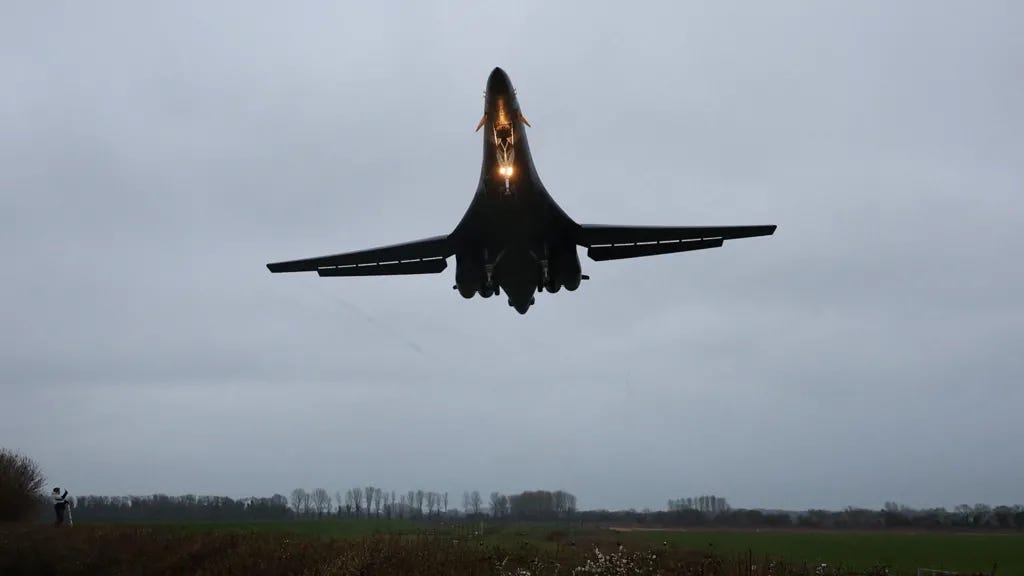
Despite the apparent success of the US Air Force during six weeks of intense operations over Iran which saw much of Iran’s high-end integrated air defense network suppressed or destroyed, the broader implications of the still-ongoing US-Iran War point toward emerging structural weaknesses in American airpower. Far from reinforcing long-held assumptions about US aerial dominance, the war has instead raised serious questions about its sustainability and credibility in future high-end conflicts, particularly in the Asia-Pacific.
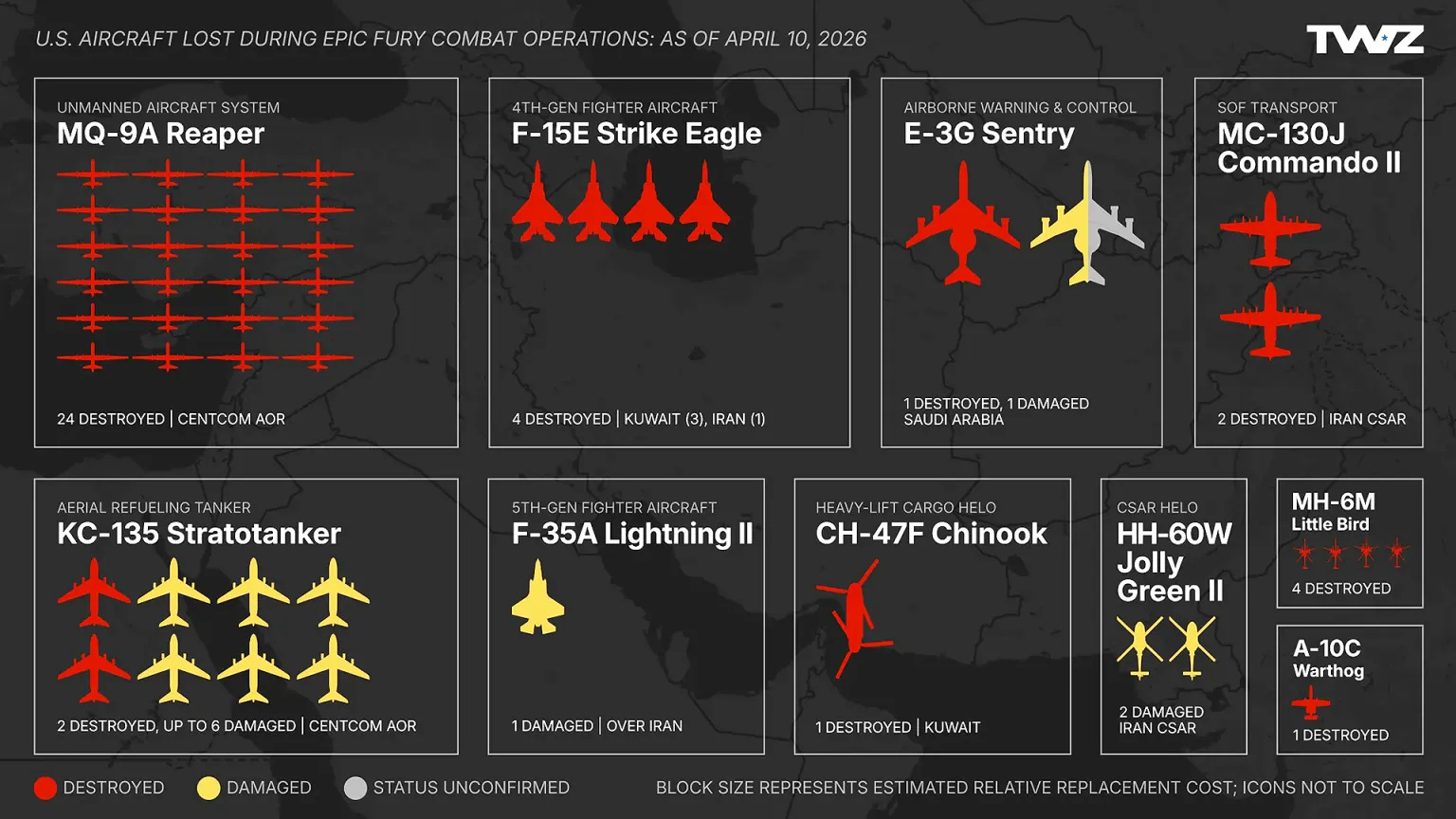
Operation Epic Fury can reasonably be described as a “maximum-effort” stress test of the doctrinal logistical, and technological foundations underpinning modern US airpower. While attention has naturally gravitated toward headline losses such as the downing of an F-15E Strike Eagle, the destruction of an E-3 Sentry on the ground, and the loss of an MQ-3 Triton drone, the deeper significance lies not in the losses themselves, but in what they reveal. In total, the US has reportedly lost 39 manned and unmanned aircraft, with an additional 10 damaged. These figures, while notable, are less important than the systemic vulnerabilities they expose. Even against a degraded adversary operating under asymmetric constraints, the US faced friction that would likely be magnified exponentially in a conflict with a peer adversary.
Lesson 1: The growing fragility of US long-range airpower sustainment
The first and perhaps most consequential lesson is the increasingly tenuous nature of America’s ability to sustain prolonged, long-distance air campaigns. At the core of this issue lies the ageing aerial refueling fleet. The backbone of this capability remains the KC-135 Stratotanker, with more than 150 aircraft still in service despite originating from the 1950s and 1960s. Efforts to modernize this fleet have faltered. The retirement of the KC-10 Extender in 2024 created a capability gap that the still-troubled KC-46 Pegasus program has struggled to fill.
The operational strain on this fleet has become increasingly visible. Incidents such as a KC-135 returning to the US visibly damaged by shrapnel, alongside confirmed tanker losses from operational crashes and destruction from Iranian missile strikes, illustrate the vulnerability and overstretch of this critical support system. Aerial refueling is not merely a supplementary function. It is the linchpin of US global airpower projection.
This problem is compounded by the new strategic reality that US access to forward bases is increasingly not guaranteed. In scenarios where allied basing rights are restricted or unavailable for political reasons, US aircraft will be forced to operate directly from the continental United States. Such missions dramatically increase flight durations, reduce sortie generation rates and accelerate wear on already aging airframes. Maintenance demands rise sharply, further constraining operational tempo. Meanwhile, the Next-Generation Air-refueling System program intended to deliver a modern and potentially stealth-capable tanker remains uncertain, leaving a looming future critical capability gap unresolved.
Lesson 2: Erosion of airborne early warning and control capabilities
A second major concern is the growing precarity of US airborne early warning and control (AWACS) capabilities. These systems are indispensable for coordinating both high-intensity air combat and lower-intensity counter-drone operations. The destruction of the E-3 Sentry at Prince Sultan Air Base represents more than a symbolic loss: it highlights the increasingly-strained fragility of a small and ageing AWACS fleet central to the very idea of precision American warfare.
The rushed deployment of US Navy E-2D Hawkeye AWACS to compensate for gaps during Operation Epic Fury underscores both quantitative shortages and qualitative limitations. Compounding the issue is policy uncertainty, with political-military seesawing in Washington DC seeing the initial cancellation of the E-7 Wedgetail program in 2025 partially reversed in 2026 under congressional pressure but without a clear future adoption timeline.
At the same time, maintaining the aging E-3 fleet is becoming increasingly costly and inefficient, as it shares the same legacy airframe lineage as the KC-135 Stratotanker (both based off the Boeing 707 airliner). Transitioning to next-generation systems is further complicated by optimistic punts on ambitious but unproven concepts such as space-based radar networks linked to futuristic homeland missile defense networks. These ideas are reminiscent of the technologically aspirational Strategic Defense Initiative of the 1980s and remain far from operational viability.
Meanwhile, the proliferation of low-cost drone warfare has exposed gaps in current detection and tracking capabilities. Iran’s sustained use of small, low-flying drones across the Persian Gulf region illustrates how even relatively unsophisticated systems can asymmetrically challenge timely tracking by advanced aerial or ground-based air defense radars. The limited deployment of advanced active electronically scanned array radar systems in the present US AWACS fleet (mainly on carrier-borne AWACS like the E-2D Hawkeye, but also on the land-based E-7 Wedgetail) further exacerbates this vulnerability, particularly in cluttered and contested environments.
Lesson 3: Persistent vulnerability of airbase infrastructure
The third lesson concerns the vulnerability of US airbase infrastructure and the shortcomings of current doctrinal debates surrounding base hardening. Iranian missile and drone strikes on regional air bases, most notably at Prince Sultan Air Base, demonstrated the consequences of insufficient protective measures. The destruction and damage of high-value assets, including tankers and airborne early warning aircraft parked in the open, underscore the risks inherent in underestimating the threat.
These incidents lend credence to prior analyses such as the Hudson Institute’s 2025 “Concrete Skies 2.0” report, which warned of the vulnerability of US bases to air and missile attack. This issue is even more acute in the Asia-Pacific, where US power projection relies heavily on a small number of major hubs including Hawaii, Guam, and Okinawa. These bases are central to the hub-and-spoke model of US operations but are increasingly exposed to advanced missile threats.
China’s development of intermediate-range ballistic missiles equipped with hypersonic glide vehicles such as the DF-26 “Guam Killer” and DF-27 “Hawaii Killer” poses a significantly greater threat than anything encountered in the Iran conflict. These systems are explicitly designed to target key US bases and airfields, raising serious doubts about their survivability in a protracted high-intensity conflict.
The viability of emerging US airpower doctrinal concepts such as Agile Combat Employment, which emphasize dispersal and flexibility, ultimately still depends on the resilience of these primary hubs across the vast expanses of the Pacific. Without substantial investment in hardened infrastructure, including reinforced shelters and bunkers, US airpower risks being degraded at the outset of a conflict and tethered by a short leash to the continental US west coast.
Not merely tactical but structural
Taken together, these lessons suggest that the challenges facing US airpower are not merely tactical but structural. Operation Epic Fury, while demonstrating operational effectiveness in the short term, has exposed underlying weaknesses in sustainment, force multiplication, and infrastructure resilience. These vulnerabilities are particularly concerning in the context of potential future conflicts with peer adversaries more substantial than Iran, where the scale, intensity, and technological sophistication of threats would be far greater.
If unaddressed, these issues risk undermining the credibility of US airpower as both a warfighting tool and a political deterrent. In an era defined by contested logistics, proliferating missile technologies, and asymmetric threats, maintaining air dominance will require not just advanced platforms, but a comprehensive rethinking of the systems and assumptions that support them.
Andy Wong Ming Jun writes about defense matters for Asia Sentinel.
Don't Miss:
-
Rick Claypool on Pay to Play Corporate Crime Enforcement
-
Labaton Launches Whistleblower Practice with Former SEC Acting Chair Allison Herren Lee
-
Kremlin payment firm A7 has been pumping billions in ‘untraceable’ cash into global financial system
-
New US law requires dating apps to include warnings on romance scams
-
Southeast Asia Welcomes Japanese Investment but not Soldiers