
 Donate to ICIJ
  Chelsea FC fined millions over secret payments under Abramovich ownership
  Nearly half of powerful .50-caliber ammo seized by Mexican government came from US Army plant, defense minister says
 Neal Allen began his writing career in the late ’70s as a reporter in New York’s Hudson Valley. In his long journey since, he’s been a journalist, a corporate executive, and a spiritual coach, writing books and magazine stories, speeches and scripts, memoir and business copy, and everything in between. But in all these modes, Allen’s approach to writing is the same. “My job is the sentence,” he writes. In Good Writing, published this week, he shares 36 rules that he’s compiled over his career—tips to improve these building blocks of our writing. “These rules don’t restrict me so much as they encourage me to stretch into more and more possibilities, leaps of imagination, and lovely explorations,” he writes in the book’s introduction.
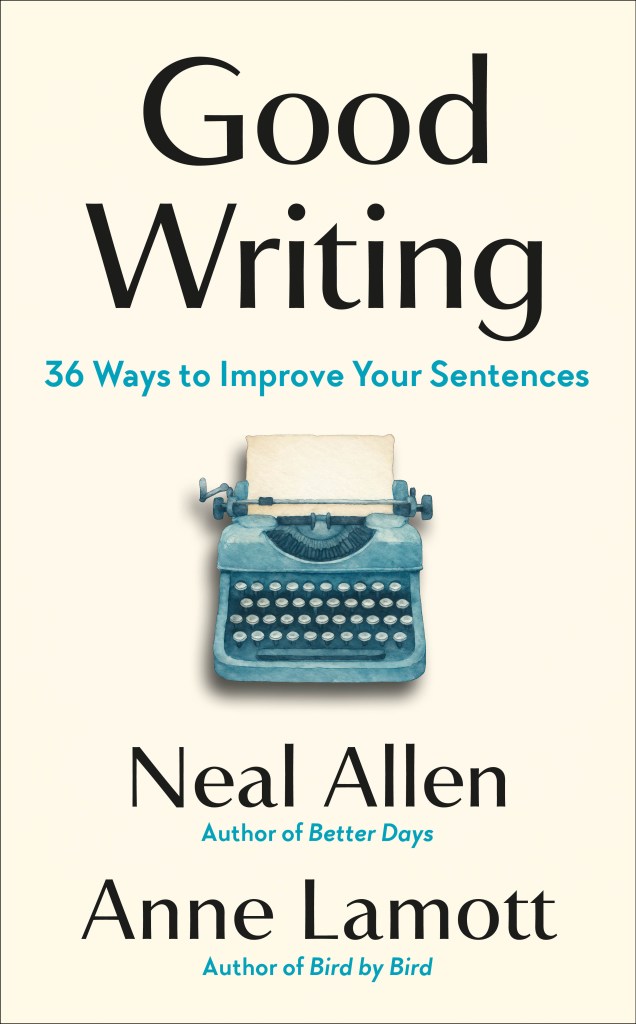
Allen’s wife, author Anne Lamott, turns to these rules for her own work. “Stronger verbs, layered sentences, twist those clichés if you are going to insist on the right to use them,” she writes, running through her husband’s tips like a checklist. When Lamott learned that he was shaping all of this advice into a book, she suggested the idea of annotating what he’d written. For many of us, Lamott needs little introduction; she wrote one of my favorite books on writing, life and creativity—Bird By Bird—which I read for the first time in my MFA program 20 years ago and have returned to often. She helped me discover the tiny Dr. Seuss-like creature deep in my subconscious, and I’ve tended this little muse ever since.
There are 36 chapters in Good Writing, one for each rule. Every chapter includes “Anne’s take,” adding insights to each section, and occasionally challenging Allen, too. The book is a collaboration between two writers and two partners, and ultimately a practical guide for strengthening your craft. I invited both of them to respond to our questionnaire together, and their answers are structured like the book itself—one rule at a time, with both voices in conversation. Enjoy!
Where did you grow up?
At the bottom of our hill in Arlington, Virginia, a creek ran about a mile through woods to the Potomac River. In the spring and summer, that creek bed was where we mostly played.
Anne’s take: In Tiburon, California, when it was a railroad town. No houses on the hillsides, perfect for sliding down on cardboard we got from Mantegani’s Corner Market. Now, a million dollars might get you 1.5 bathrooms—but probably not.
What places feel like home?
Soon after falling in love, Annie and I took over a dilapidated house that we tore down to studs, and the two of us selected the color and texture of every surface we look at day after day. I’ve never lived so much in my own aesthetic.
Anne’s take: Yes, it is this wild resurrected hundred-year-old house.
Other than family members, who or what has shaped you the most?
Books, of course, especially the fiction I devoured from when I was 7 until I was 17 or so. At least once a week I am thankful to have attended St. John’s College in Santa Fe, whose Great Books seminars encouraged and developed my critical thinking skills and pattern recognition. I think those four years of deep textual dives—looking for meanings rather than beliefs—have made my life easier and richer, and gave me the confidence to take big risks.
Anne’s take: Books. I was an early reader and discovered by 4 years old that a chapter book was the source of both thrill and safety. I still feel that 68 years later.
What is your favorite time of day?
I like the morning. When my father was dying, he said the one thing he hated was that one day he wouldn’t wake up to the front page of The New York Times and read what was happening in the world.
Anne’s take: I love early morning, too, for the light and newness, but also love bedtime, crawling under all those covers with Neal and a good book. Heaven.
What are you really good at?
Anticipating the next scene or dialogue while watching detective shows with Annie.
Anne’s take: Parallel parking. Also, I have a great backhand, and I can make a quesadilla that brings grown men (or at least Neal) to tears.
What’s the best gift you’ve ever received?
My parents letting me spend the summer I turned 17 in Europe with a pack on my back and a Eurail pass. Seeing Annie’s answer, I guess I have to add my four children and three grandchildren, but I didn’t think it was a trick question.
Anne’s take: My son Sam, and then his son Jax.
Describe your favorite meal.
Runny, gooey red enchiladas at The Shed in Santa Fe.
Anne’s take: Tuesday Taco Night here on Wednesdays, now, because Jax has started working at the local health food store on Tuesdays. Called, officially, TTTNOW.
Sound or silence? (And if sound, what sound?)
Sound. The Beatles, Sonny Rollins, Ellington, The Byrds, Beethoven, lieder by Mahler, Jobim and João Gilberto, Krishna Das, Sam Bush, Dizzy and Bird, Dylan, Marina Allen, Miles, Hüsker Dü, Bach, The Supremes, Jefferson Airplane.
Anne’s take: Silence.
Where do you do your best thinking?
Walking into our little hippie town or into the woods.
Anne’s take: Same. Also, sitting on my bed in silence with the kitty.
What journey—physical, creative, intellectual, or otherwise—has meant the most to you?
At 52, I got a spiritual wake-up call from a firestarter named Adyashanti. For the next 10 years, I explored freedom from the East to the West, especially Buddhism, Hinduism, the Gospels, Krishnamurti, and A.H. Almaas. If not for that odyssey, I wouldn’t have joined Annie in life, gardened, found peace, or written books.
Anne’s take: Getting sober in 1986 was the most radical, life-changing, and scariest thing I’ve ever done. Second: having a child by myself with no partner or money in 1989. Third: getting married for the first time, to Neal, in 2019.
Where do you like to read?
My office and on trains.
Anne’s take: On the couch and on the bed.
What’s the last rabbit hole you disappeared into?
AI, including app development. Three friends and I took a stab at turning this latest book, Good Writing, into an app, with mixed success.
Anne’s take: Trying to stay spiritually centered while also staying involved in politics.
Name three publications you enjoy reading these days.
The Nation, The New York Times, Annie’s Substack.
Anne’s take: The New York Times, Twitter, People magazine (don’t tell Neal).
What’s one longread that you can’t stop thinking about?
For decades, since I was a teenager and first got into him, I have been on a mission to change people’s uninformed opinions about Henry Miller and get him into the pantheon. I give the unconscious philistines a copy of The Henry Miller Reader (scarcely any smut) and have them turn to page 95 for the biographical essay, “Reunion in Brooklyn.” That one longread told me most of what I knew first about old age, death and dying, America during the war years, the pain of nostalgia, casual anti-Semitism and racism, all the gaps in taste and compassion and soul between America and the rest of the world, the paradox of writing for a living, and the power of vulnerability as a necessary adjunct to objectivity. Every sentence gave me something new. Most of the stream pouring from Miller’s faucet describes in telling detail his ailing father, stingy mother, and cruel sister, as he encountered them guiltily and penniless after 15 years abroad. But as usual that’s just material for Miller to closely investigate his yearning for humanity. Here’s a throwaway funeral line to give you an idea: “We pass easily from sorrow to gluttony.”
Anne’s take: For some mysterious reason, I’ve returned a number of times over the years to a piece in The New York Times Magazine from July 10, 1994, called “Kim Philby and the Age of Paranoia” by Ron Rosenbaum. It is a brilliant piece of investigative journalism, with many layers of research and riveting storytelling about the most destructive British spy in history, but it is also a deep dive into one of the dark realms of humanity—betrayal. I frequently quote Gabriel García Márquez’s line that there is our public life, our private life, and, yikes, our secret life, and I love when our best journalists like Rosenbaum push back their sleeves and enter into these dark caves. Dark Caves R Us. Mine aren’t quite as murky and cruel as Kim Philby’s, but this essay did hold up a fun-house mirror to me.
What was the last book you read?
Mrs. Dalloway, although I left it in a cab so I still have to finish it. I’m writing fiction now, and so after a 30-year pause, I’m returning to reading more fiction.
Anne’s take: Splinters by Leslie Jamison. I loved The Empathy Exams and liked this just as much.
What piece of nonfiction are you most proud of writing?
In 1987 or so, while a reporter at the Bergen Record, I was assigned to follow up on a brief notice of a homeless man who died in a patch of woods a few hundred yards from the suburban house where he was raised and his mother still lived. It was the classic “everybody has a story to tell, everybody’s life is interesting and valuable.” Within months I had left hard news behind forever.
Anne’s take: Operating Instructions: A Journal of My Son’s First Year. I’m not sure any parent had come out before me and said how crazy you are those first few months, how boring it can be, how you think about leaving the baby outside wrapped up nice and warmly just for one night, so you can catch up on sleep.
What’s your most reliable way to get creatively unstuck?
Taking a walk into town.
Anne’s take: Same, or binging Below Deck.
Who’s a writer you turn to when you need some inspiration?
They’re all scary to me now that I’m writing fiction. Except maybe Henry Miller; he’s so friendly in his erudition, and fearless in his trust that the reader will follow his riffing.
Anne’s take: I reread Evan S. Connell’s Mrs. Bridge and Mr. Bridge fairly often. Both books fill me with confidence that profound and amusing truths can be captured in short takes. Plus, Evan was the first man I wanted to marry—he and my dad were close friends and he was at our house a lot. They worked together at an avant-garde literary magazine called Contact in the late ’50s and early ’60s.
What words do you overuse?
Facsimile, culture, look at, amplify.
Anne’s take: Just, very, wild.
What’s your favorite guilty pleasure?
Eking out as many electric-powered miles as I can with my plug-in hybrid car.
Anne’s take: Binging on TV shows.
What superpower would you like to have?
Levitation, not being attached to the ground while moving through life.
Anne’s take: Well, I already mentioned the parallel parking, but seriously, I can park in spaces smaller than the car. Ask Neal!
What animal or nonhuman being do you most identify with?
I love how smart my roses are. Unlike most bulb plants, they don’t let the calendar decide when to bloom, but take stock of their nutrients, the sun and clouds, the water and soil, constantly monitoring, and conserve their energy thoughtfully and productively to bloom at just the right time, on their own clock.
Anne’s take: Pelicans. So beautiful and funny looking, such gorgeous flyers that you can’t believe they are even from this side of things.
If you have a free solitary hour in your day, what do you typically do?
Take a walk, garden, or do KenKen puzzles. Plus a little CNN.
Anne’s take: Take a nap with the kitty.
What five items would you place in a time capsule?
Wheat grains, The Collected Dialogues of Plato, Abbey Road, any Vermeer, and I suppose an iPhone.
Anne’s take: Taco shells, Hokas, iPhone, American Beauty by the Grateful Dead, the collected Jane Austen.
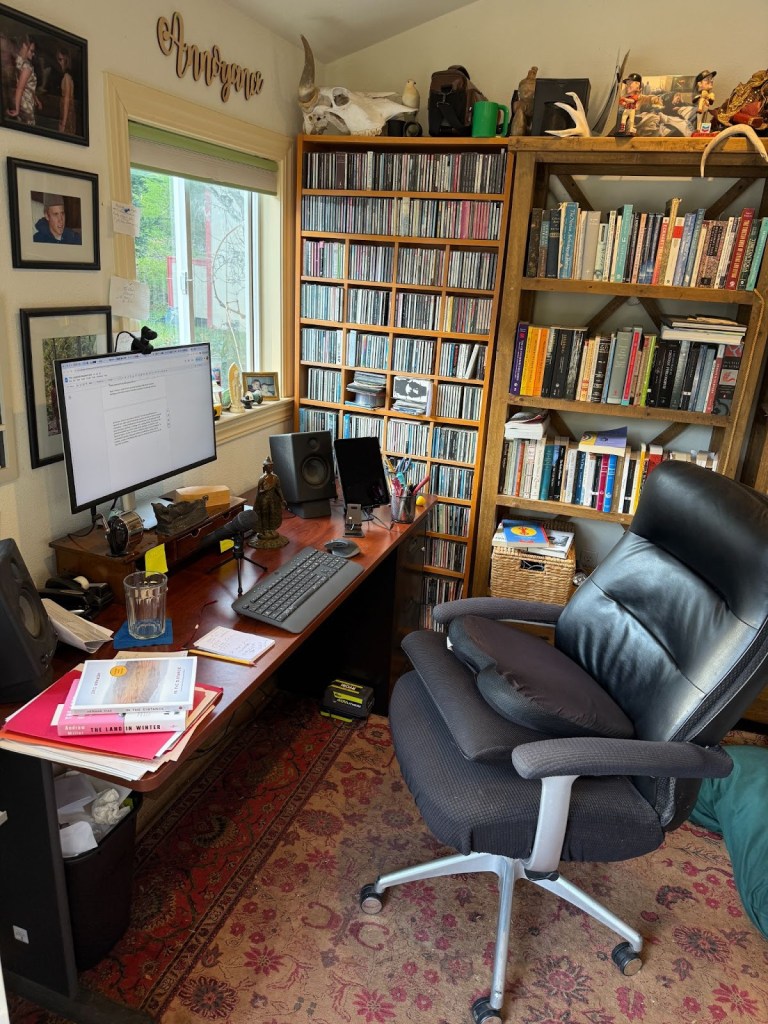
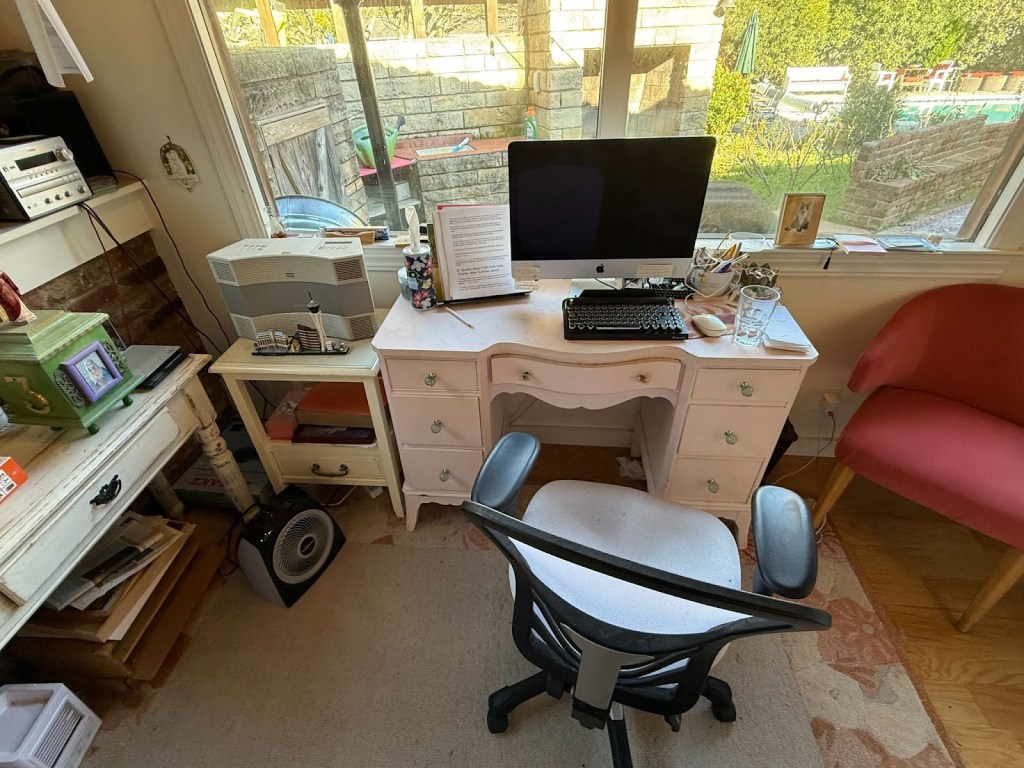
What does your writing space look like?
I work in a 12-by-10-foot converted yard shed with lots of windows, including a view of two redwood trees that we planted seven years ago and have grown from 14 feet to more than 30 feet tall. I have a long slab desk that is relatively neat, with a pair of small studio monitors for music or Zoom, a centered microphone, a wireless keyboard and 26-inch monitor, an old-fashioned school pencil sharpener, and both a reclining and a standing Buddha. My printer is on a separate bookshelf. One wall is books, mainly spiritual, and CDs that I can’t figure out what to do with. My chair is a high-back leather item from Staples. I’m surrounded by photos of my now-adult children, grandchildren, Annie, and my brothers, a huge banner-style poster of The Beatles that hung in my bedroom when I was 9, and an easy chair for visitors.
Anne’s take: Usually I write on the couch or the bed, but I do have an office, too.
Neal Allen is a writer, spiritual coach, and speaker. He is the author of Shapes of Truth and Better Days. A former journalist and corporate executive, he holds master’s degrees in Political Science and Eastern Classics.
Anne Lamott is the author of 20 books, including the New York Times bestsellers Somehow; Help, Thanks, Wow; Dusk, Night, Dawn; Traveling Mercies; and Bird by Bird, as well as seven novels. She is a recipient of a Guggenheim Fellowship and an inductee to the California Hall of Fame.