
 Ten years after the Panama Papers, enablers and tax cheats are still being brought to justice
  Behind the veil of secrecy: Ten years of the Panama Papers, part 2
  WATCH: The Panama Papers at 10 live panel event
Stephen Wood | The Atavist Magazine | March 2026 | 2,518 words (9 minutes)
This is an excerpt from issue no. 173, “The Buffalo Raiders.”
Paul was the favorite of Betty Good’s ten children. His next-eldest brother, Jim, still remembers his christening in 1947 as a momentous occasion, given that Paul was his maternal grandparents’ fiftieth grandchild. Consider yourself advised, right off the bat, that this is a story about Catholics.
Jim described his brother as “a young man that just loved life.” By his teenage years, Paul was such a notorious pool shark that he had to travel farther and farther from his family’s Western Pennsylvania home in search of marks. “You didn’t wanna play pool against Paul Good,” Jim said. “That was out of the question.”
The Atavist, our sister publication, publishes one deeply reported, elegantly designed story each month. Support The Atavist by becoming a member.
Shortly after Paul graduated from high school, he was called up to serve in the Army and sent to Vietnam. When Betty put him on the plane, she was proud of what he was doing and convinced that it was right. But just a few weeks later, on June 19, 1967, she awoke with a premonition that something terrible had happened to Paul.
It took a few days, but when the men from the Army arrived outside her house, she knew why they were there. She knew what they were going to say even as she waited for her husband to come and receive the news with her. Paul Good was killed in action outside Saigon on June 19, a few months shy of his twentieth birthday.
Like many people his age, Jim already had serious problems with U.S. foreign policy. Now it had claimed the life of his younger brother. “At that point,” he said, “I just wanted to make the government feel like they’re not as secure as they think they are.” Eventually, he and some friends hatched a plan to do just that—one as outrageous as it was outrageously simple.
Jim is in his eighties now, and he can’t say for certain how many government offices he broke into following his brother’s death. But it all began in Buffalo, New York.
Jim started out on a path of righteousness—a spiritual one, that is. He entered seminary at 14 and spent eight years training to be a Catholic priest. It wasn’t spreading the faith that excited him so much as the opportunity to travel; he wanted to be a missionary. But shortly before he was to be ordained and sent overseas, Jim was, in his words, “politely asked to leave” due to his chronic inability to obey orders.
Instead he became something of a secular missionary, traveling to the Dominican Republic as a Peace Corps volunteer. He arrived less than a year after President Lyndon Johnson sent tens of thousands of U.S. troops to the island nation to prop up a strongman friendly to his administration. Most locals gave Jim a chilly reception. “When I got out there, it was like, ‘Hey, hi! My name is Jaime Bueno, Jim Good, and I’m here to help!’ And they said, ‘Screw you.’ ” Jim quickly realized that the troops were there to protect American landowners, not Dominicans, and that the local Catholic clergy “lived very well” while their flocks toiled on plantations. When he began to speak out against the injustice around him, according to Jim, he fell out of favor with the Peace Corps bureaucracy. He ended up leaving his post three months early.
Now known as Jaime Bueno to his friends—James was the most popular name for boys born in the United States every single year between 1940 and 1952, so a distinctive nickname was vital—Jim moved to New York City and fell in with the growing antiwar community. He eventually moved to Buffalo, where he met a number of like-minded people, many of whom had also grown up Catholic.
“I always wanted to be a saint,” said Jeremiah Horrigan, a Buffalonian from a family of ten children, whose father, Jack, was a beloved sportswriter turned executive for the Buffalo Bills. Studious, morally upright, and the son of a local bigwig, Jeremiah was a natural fit at Canisius High School, an elite boys’ school he described as “a training ground for the eventual leaders in Buffalo—at least, the Catholic leaders.”
Mike Hickey, the eldest of ten from a South Buffalo family, attended Canisius on a scholarship. As a kid, Mike always took the Church seriously, but his “scrupulous conscience” alerted him to some major contradictions between doctrine and practice. While studying the catechism in grade school, he was surprised that the illustration accompanying the Fifth Commandment in his book was a photograph of soldiers storming the beaches of Normandy: “It seems pretty straightforward, you know, as a commandment: Thou shalt not kill.”
Ken Mudie referred to the neighborhood where he and Mike grew up as “an Irish-Catholic ghetto.” Ken and his brother stood out. “We had two strikes against us,” he said. “My parents were divorced and we weren’t Irish.” His early life was chaotic, with his mother working multiple jobs and a variety of “transient” relatives cycling through his home. But he had a great time, and he got good grades, which earned him a ticket to Canisius.
Maureen “Meaux” Considine grew up in a suburb of Buffalo, one of “only” five kids. Her parents were “devout,” she said, “but there were things about the Catholic Church that they questioned a little bit.” Had the Church allowed it, her mom would have been a priest. The Considines were the rare suburban white couple who purposefully sent their daughter into the city proper for high school, to Mount St. Joseph Academy. Being in an urban environment exposed Meaux to the effects of racial segregation and grinding poverty. It also put her in proximity to Canisius boys, including Mike, Ken, and Jeremiah.
After the four of them graduated high school, in 1968, they headed to college. Ken and Mike enrolled at Le Moyne College in Syracuse. A Jesuit school, Le Moyne until recently had employed Father Daniel Berrigan, a radical antiwar priest. The Catholics there dressed and talked more like hippies than like the Mass-goers Ken had grown up with, and they weren’t above getting their hands dirty when the spirit moved them.
Le Moyne was where Mike first got picked up by the cops, for leafleting on behalf of farmworkers. He’d been a literal and figurative Boy Scout before college. “ I was always a good boy and never disobeyed any rules,” he said. “But it just seemed like the right thing to do. So we did it.” He and Ken also protested racist hiring practices at a construction site, and they began to recognize the connections between racism in the United States and what was happening in Vietnam. In the early years of U.S. military involvement in the conflict, Black Americans were drafted and killed in disproportionately high numbers.
Ken’s upbringing wasn’t political, beyond his family’s general affinity for John F. Kennedy because he was Catholic. His father was a World War II veteran who had fought in the Battle of the Bulge, and Ken was raised not to question what America did overseas. Jocular and self-effacing, he continued to defend the Vietnam War in conversations with friends and fellow students, until one day, he said, “I just couldn’t argue why we were there.”
Ken, Mike, and Jeremiah all attended Woodstock, the generation-defining music festival in upstate New York, and their accounts of this period are laced with references to countercultural music. One song that’s stuck with Ken is “Sky Pilot,” a catchy but haunting piece of psychedelia released in 1968 by Eric Burdon and the Animals (of “House of the Rising Sun” fame). Over seven and a half minutes, it tells the story of a military priest blessing troops as they head into battle, listening to the firefight, then watching the men return, wounded and traumatized. Burdon’s tone is one of pity mixed with disdain. It’s a song about a man who keeps his head down and stays quiet, allowing great evil to unfold around him.
Meaux was studying at St. Mary’s College, just across the street from Notre Dame in South Bend, Indiana, when in 1969 the U.S. Selective Service began to draft young men by date of birth via a televised lottery. America watched as men in suits picked blue capsules out of a glass container, like some perverse game show, to determine the order in which the most recent crop of draft-eligible boys would be called into service. “It was a terrible night,” Meaux said. “Lots of drunk people. They were drunk because they were happy or because they were sad. There were people who were hysterically crying because their number was really low.”
Ken got lucky—his draft number was high. So high that he quit Le Moyne after two years, giving up the possibility of a student deferment, and started working full-time. “There’d have to be a ground invasion in Iowa before I would ever be drafted,” he said. Mike stayed in school, but his deferment weighed on him as he watched more and more young men get called up.
Jeremiah credits the alternative of a “death sentence” in Vietnam with his decision to go to college. At Fordham University in the Bronx, another Jesuit school, he discovered a scene similar to the one at Le Moyne: Professors assigned books with titles like The Nonviolent Cross. One of those professors was John Peter Grady, a sociologist who appears to have used his teaching position primarily to foment nonviolent resistance to U.S. foreign policy. Gregarious, canny, and hard-drinking, Grady took every opportunity to convert casual war opponents into crusaders against the war machine. And it was an open secret on campus that Grady had been involved in some of the recent high-profile raids on Selective Service offices, better known as the draft boards.
In 1966, determined that neither he nor any of his eleven younger brothers should be drafted, 19-year-old Barry Bondhus emptied a bucket of excrement into the drawer containing his file at a Minneapolis-area draft board. Thankfully, for the sake of public health, this exact method of protest didn’t catch on, but Barry had exposed just how easy it was to destroy the documentation required to draft young men into military service.
In October 1967, four individuals, including Father Philip Berrigan, brother of Daniel, entered a draft board in Baltimore, poured blood—a mixture of animal and their own—over a quantity of files, and were arrested. The following spring, a group now known as the Catonsville Nine, among them both Berrigan brothers, removed files from a suburban Maryland draft board in broad daylight, destroyed them with homemade napalm in the parking lot, and were arrested. “Our apologies, dear friends, for the fracture of good order. For the burning of papers, instead of children,” the Catonsville Nine said in their official statement, which Daniel Berrigan read to reporters over the pyre.
What separated these raids from nearly all other antiwar actions was, to put it bluntly, their potential to be effective. In a world without computers, the physical documents containing the personal information of draft-eligible men might have been the only materials linking them to the Selective Service. “ I often thought, what about the women who worked in those offices?” Jim Good said. “Did they see those files as death certificates?” He and other peace activists came to view the contents of draft boards’ filing cabinets as no different from bombs or bullets: They were just tools that helped the government kill. Crucially, destroying files could be accomplished without any violence, unless you counted the destruction of property, which raiders did not. They believed that some property simply didn’t have a right to exist.
No central structure existed to plan the raids, but a diffuse network of participants, consisting primarily of working-class Catholics, adopted the moniker of the East Coast Conspiracy to Save Lives. The Berrigan brothers were the most visible members, and they were often assumed to be the movement’s leaders—J. Edgar Hoover even branded Phil a terrorist during a Senate hearing. But neither was personally involved in more than a handful of raids. By 1971, the brothers were in prison for the Maryland actions; Phil went quietly, but Dan led the FBI on a weeks-long chase, during which he occasionally surfaced to deliver guerrilla sermons. Many of their fellow organizers evaded detection, and soon more young people were joining their ranks.
Chuck Darst was one of them. Chuck was a bookish, articulate Catholic kid from Knoxville, Tennessee, whose parents were so apolitical that neither knew how the other voted. He intended to join the ROTC when he enrolled at Notre Dame, then maybe serve in the Air Force. But before long, Chuck was studying just-war theory, reading Gandhi, and plumbing the depths of his own psyche to the tunes of Bob Dylan and Joan Baez. He also fell in love with Meaux over at St. Mary’s.
In the summer of 1968, Chuck was selling books in rural Alabama when his older brother, David, was arrested along with the rest of the Catonsville Nine. Back at school, Chuck tore up his draft card beside other young men during a Mass celebrated before the campus mural known as Touchdown Jesus. They sent their destroyed cards to the Selective Service but weren’t arrested. “ I did get a call from the FBI asking me, ‘Did you knowingly and without duress do that?’ ” Chuck recalled, laughing. “And I said, ‘Yeah, you could cast it that way.’ ”
Then his brother died suddenly. A writer and member of the De La Salle Christian Brothers, a community of laymen who take vows of poverty, chastity, and obedience, David taught religion at a Catholic high school in Nebraska. He’d been convicted for the Catonsville action, but had yet to start his prison sentence, when he was killed in a car accident at age 27.
Chuck took a semester off to focus on compiling a book of his brother’s writings. Maybe some part of him already knew that he wasn’t going back to college. “It just seemed like I was inexorably being drawn to do something more than I had done at Notre Dame,” Chuck said. “The mantle of draft resistance and resistance to the Vietnam War kind of seemed to come to me.”
Meaux also found her studies increasingly meaningless as the fabric of society seemed to fray around her. Buffalo became a favorite port of call for Chuck as he hitchhiked back and forth from South Bend to talk to East Coast publishers about his brother’s book, and when she finally dropped out of St. Mary’s, Meaux ended up back in her hometown, living with Chuck and working for an antiwar congressional candidate.
Chuck’s and Meaux’s fates were sealed when they joined Mike Hickey in a drive across the state to see an off-Broadway play Daniel Berrigan had written about Catonsville. The production incorporated footage of Chuck’s late brother that Chuck had never seen before, and it helped him and his friends come to a monumental decision. “As Meaux and Mike and I made our way back to Buffalo, we were saying, ‘We’ve gotta do an action,’ ” Chuck recalled.
More Atavist stories
The Dark and Stormy Tale of a ShantyTok Band
When a scraggly band of folk musicians arrived to tour the UK, residents of a small Welsh town were enamored—until they learned that the band’s leader ruled with an iron fist.
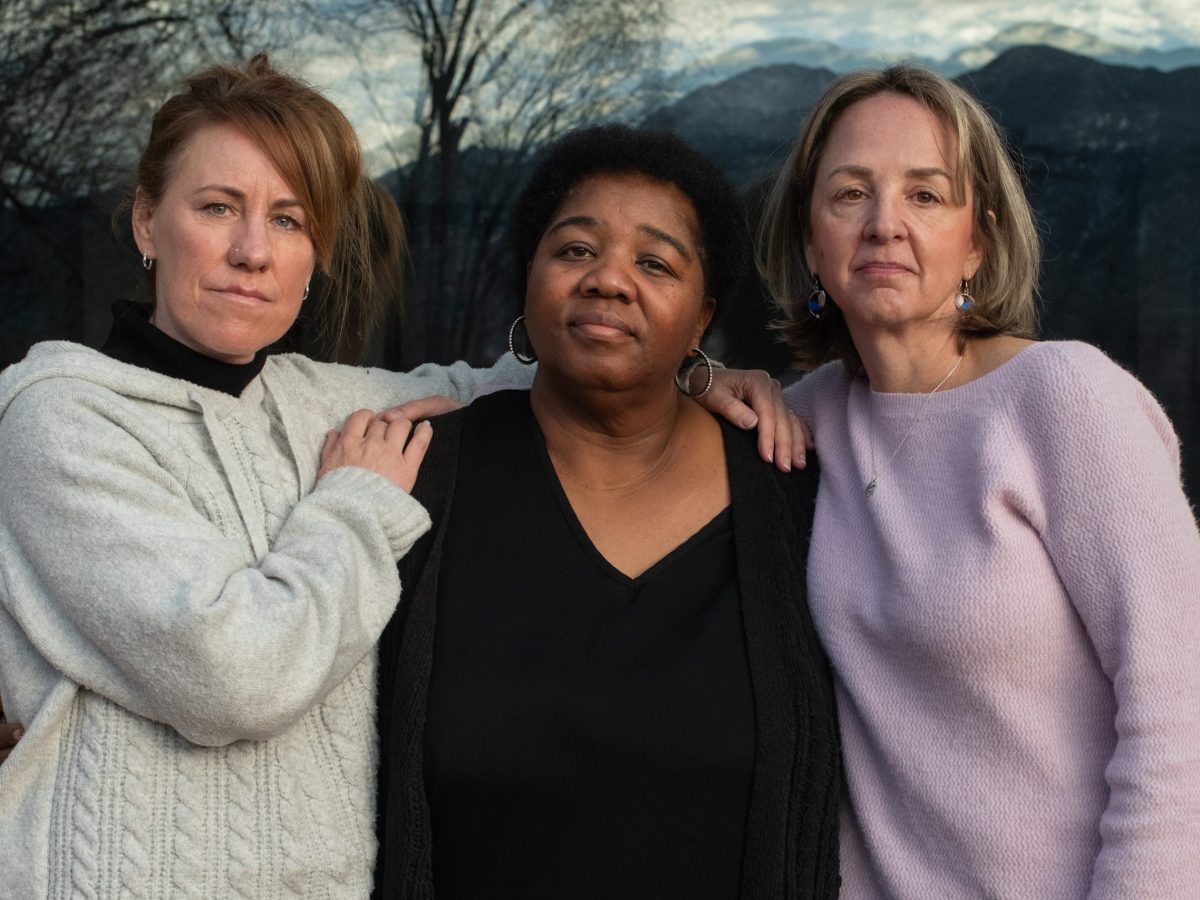
‘I Promise You, You Have Your Soul.’
Three mothers, one struggle: saving their children with schizophrenia.
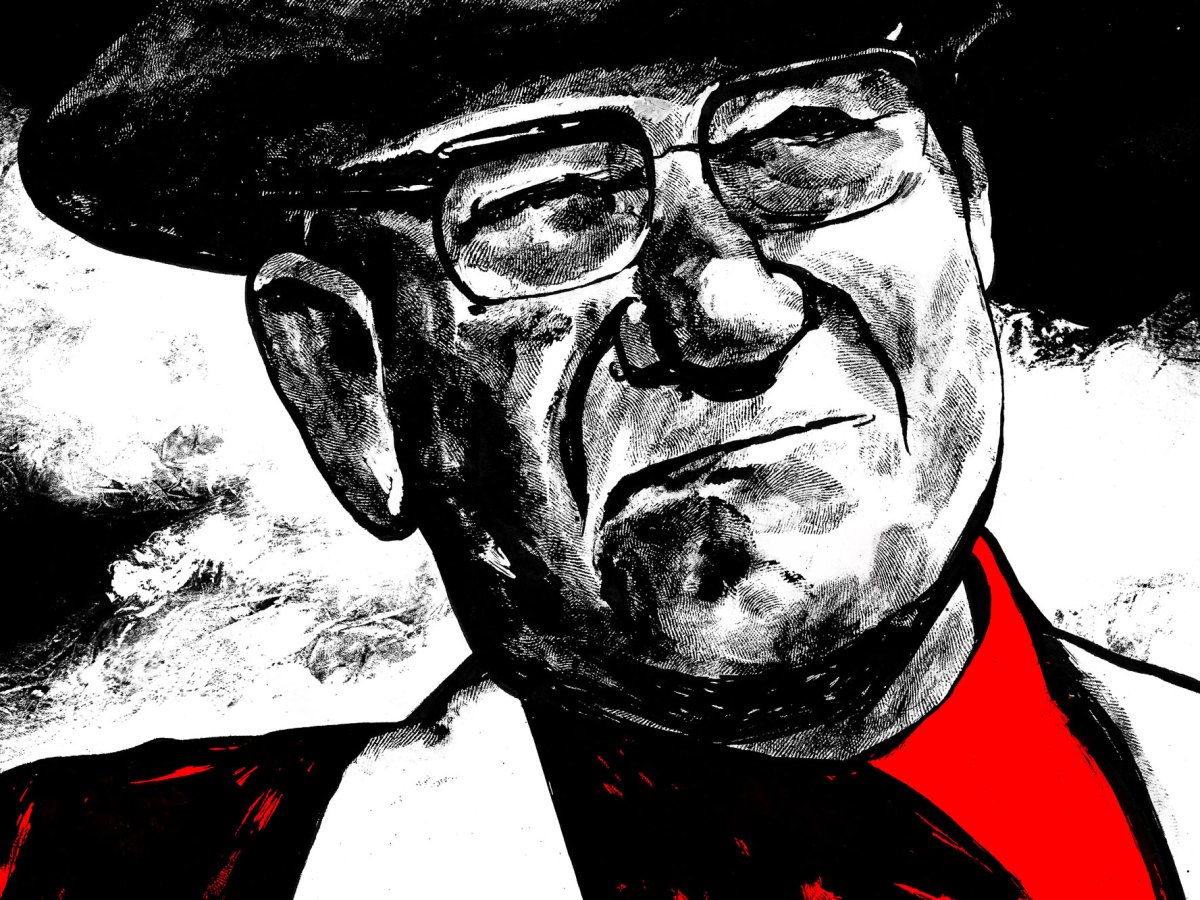
Anatomy of Absolute Power
The people of Wilcox County, Alabama, remember a longtime sheriff as a god or a monster—it just depends on who you ask.
The Nurse Who Names the Dead
Inside a Texas nurse’s quest to document the life and death of every woman killed by a man in America.
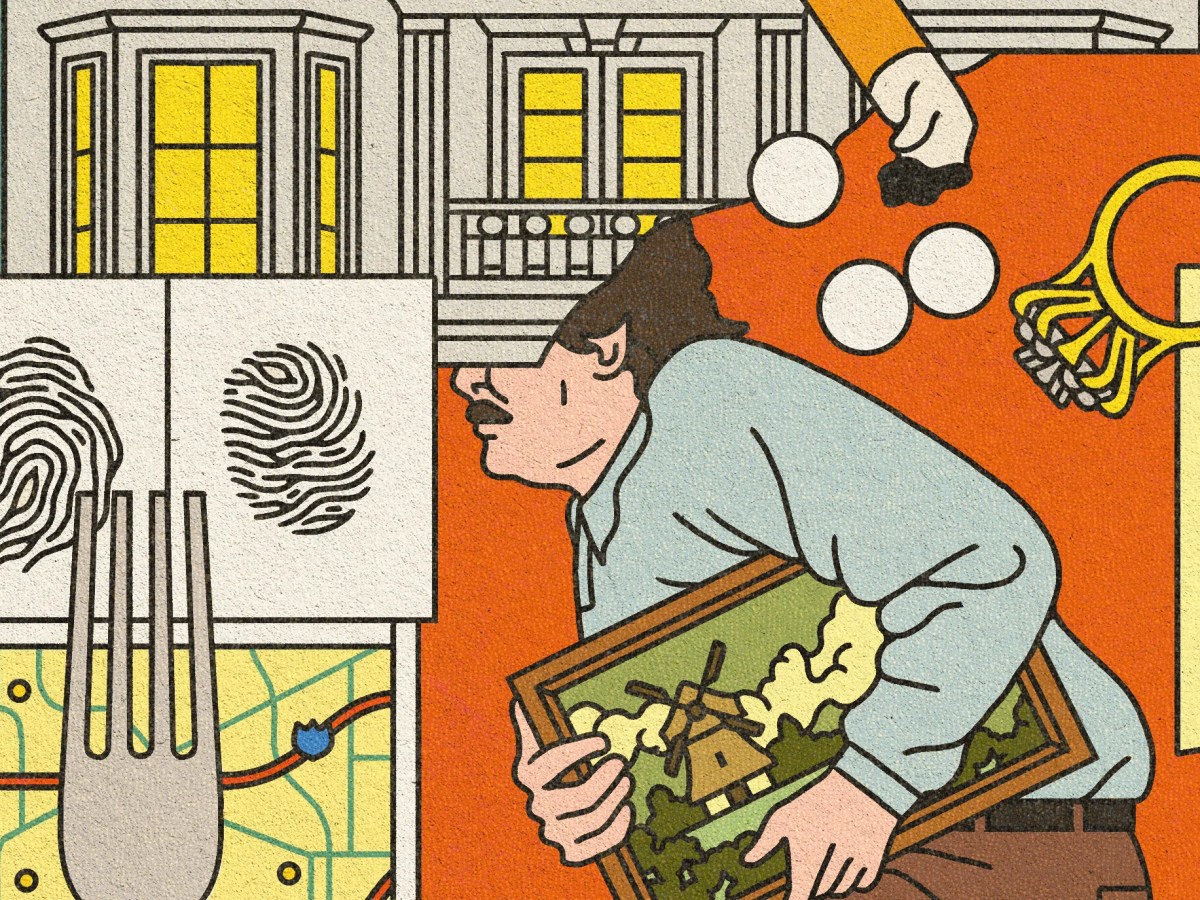
The Art of the Steal
The Social Register was a who’s who of America’s rich and powerful—the heirs of robber barons, scions of political dynasties, and descendants of Mayflower passengers. It was also the perfect hit list for the country’s hardest-working art thief.
‘Are We Breaking Apart, Or Is There Enough Left to Bind Us?’
Conversations and revelations about an ailing nation along Interstate 95.