
 Ten years after the Panama Papers, enablers and tax cheats are still being brought to justice
  Behind the veil of secrecy: Ten years of the Panama Papers, part 2
  WATCH: The Panama Papers at 10 live panel event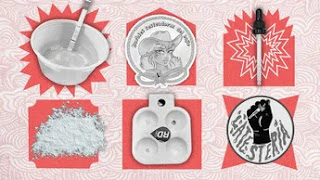
“Sol Prendido” for Borderland Beat

“Cocaine is white and *tusi* is pink—don’t get them mixed up,” sings Bad Bunny. The good intentions are understandable, but the reality isn’t quite so simple—at least not in Mexico, where contaminated drugs cannot be identified by color alone. Your nose might feel like a polar snowdrift, but unbeknownst to you, that pristine white powder you just snorted could be cut with methamphetamine or other substances. Consequently, it is nearly impossible to know if what you consumed is actually what you purchased.
Given the prevailing punitive drug policies, there are no public services available to verify this. That task has fallen to civil society organizations—groups of young people driven solely by a desire to look out for others who simply want to have a good time without the risk of losing their lives over a single hit. This is precisely the work of the *Barbies Testeadoras del Bajío* (Testing Barbies of the Bajío), a collective dedicated to harm reduction and risk mitigation for drug users.
The collective is, in turn, composed of various other organizations: *La Testería* from Aguascalientes; *El After*, *Zanate*, *La Eriza*, and *Recreo Lab* from Guadalajara; *Viaja Seguro* from Salamanca; and an individual contributor in Querétaro. All are based in the central region of the country, where drug consumption has risen significantly; the percentage of the population reporting having tried a substance at least once nearly doubled between 2016 and 2025, climbing from 9.4% to 15%, according to data from the National Institute of Statistics and Geography (Inegi).

It’s no coincidence that these collectives emerged in this region. El Bajío is, on the one hand, deeply Catholic and conservative; on the other, industrial and agricultural. The former has fostered the stigmatization and rejection of drugs; the latter, a socioeconomic dynamic that encourages their consumption as a means of enduring harsh working conditions.
This network—comprising mostly women—does a great deal of work, and does so altruistically: running communication campaigns, hosting discussion panels, conducting interventions in various spaces to provide information on drugs, and engaging in another activity that is as fun as it is dangerous: drug testing at parties, raves, cultural or activist events, bars, and private gatherings. Fun, because there are days when their work takes them to music events; they go dressed up, armed with their testing kits, and work with electronic music DJs playing in the background. Dangerous, because the police could arbitrarily detain or criminalize them, or drug dealers could subject them to violence.
“In 2024, we went to conduct testing at a rave in Guanajuato. We set up our booth right next to others selling event merchandise and others selling coffee. We positioned ourselves in a little corner with all our materials—mainly postcards containing information about addictive substances, and an interaction chart so people could see how one substance interacts with another, highlighting risky combinations. And people started approaching us,” says Mariana Mora, 33, one of the group’s members.

“A colleague—who is excellent at talking to people—was there to welcome them and explain the process; another person performed the drug analyses, and I handed out the results. We spent the entire night testing.” The testing process involves taking a tiny portion of the drug in question, adding a few drops of a chemical reagent that changes the substance’s color, and—depending on the resulting hue—identifying the type of substance present. “And once we were finished—at the very end—we stayed to dance,” says Mariana.
This event was one of 17 substance-analysis sessions conducted by this collective across five states of the Republic between 2023 and 2025.
During this period, they analyzed 117 samples—including cocaine, DMT, ketamine, LSD, MDMA, mescaline, *tusi*, methamphetamine, methylphenidate, and ecstasy pills—that users voluntarily brought in for testing. The results underscore the vital importance of this work: in 57.4% of the samples, the substance reported by the user did not match the analysis results; either it was a different substance than expected, or it was adulterated with other compounds. For instance, someone might bring in what they believed to be MDMA for testing, only to discover that it was actually methamphetamine—a drug that has spread throughout the country like no other.
“On one occasion, a young woman who had brought in a substance for analysis left in a rage; she wanted to confront her dealer because the product turned out to be adulterated. That made us extremely nervous: our role is not to cast doubt on the quality of the products dealers sell. Doing so would leave us highly exposed and put us at significant risk. So, what we told her was this: ‘Don’t pick a fight with your dealer; direct your anger at the State—which continues to refuse to regulate drugs, continues to criminalize users, and has yet to implement any harm-reduction strategies,’” says Mariana.
The Rapid Rise in the Consumption of Heroin, MDMA, and Crystal Meth

Rebeca Calzada, 35, belongs to that generation for whom going out to play was no longer an easy feat, as a war against drug cartels was being waged right outside their doors. In her youth, she didn’t understand much about the subject, but from the very start, she found punitive drug policies to be absurd. She decided to take the matter seriously and began researching every aspect of the issue.
She earned a bachelor’s degree in International Relations and Political Science, followed by a master’s in Society and Politics, with a specific focus on drugs, criminalization, and militarization. She then served as a research assistant at CIDE’s now-defunct Drug Policy Program, where she immersed herself fully in the field of harm reduction, with a particular focus on youth.
One of the many projects she participated in there aimed to identify the concerns, consumption patterns, and harm-reduction needs of high school students. Based on that experience, they published a booklet titled *Bien puestos* (Well-Set), which is available online. It explains what drugs are, why people use them, and the stigmas and myths surrounding them. It includes exercises designed to help readers recognize their emotions—”because when we don’t know how we’re feeling, it’s easier for others to push us into doing things we don’t want to do”—as well as an explanation of how usage varies depending on frequency: whether it is experimental, occasional or recreational, habitual, problematic, or—at the extreme end—leads to dependency. The booklet provides useful information that official agencies often fail to disseminate.
Regarding the risks associated with MDMA use, the publication offers the following advice:
Taking more than 200 mg can result in an overdose. If used frequently, it can trigger depression, anxiety, irritability, or paranoia. How can you reduce the risks and harms associated with taking “ecstasy” pills? If you suffer from any heart condition or circulatory problems, do not use this substance. Remember that these pills are generally adulterated, so always start with a small dose. Avoid combining this substance with others. […] Do not share straws, rolled-up banknotes, or small cards used for snorting. You may become more affectionate than usual, so it is important to remain alert to prevent potential exploitation or abuse. Your friends look out for you—let them take care of you.
“Although the use of any substance carries risks, we are not doomed to suffer the harms,” reads one of the conclusions in the booklet. “Through this study, I realized that there were no efforts of this kind in the Bajío region focused on harm reduction, so I decided to start doing it myself,” says Rebeca, who founded La Testería in 2023 in Aguascalientes and currently works at Youth RISE, an international network dedicated to reducing drug-related harms among young people.

Rebeca’s first challenge was adapting the practice of harm reduction to the political, economic, and social context of the Bajío region. After all, although harm reduction was conceptualized as early as 1993 by WHO experts on drug dependence, it was not implemented in Mexico until after the year 2000—and even then, it was concentrated along the northern border. Several initiatives operate there—such as Verter in Mexicali or Prevencasa in Tijuana—where illicit synthetic drugs are spreading at a frenetic pace, wreaking lethal havoc. In 2022 alone, the Tijuana Red Cross reported attending to over 650 cases involving possible opioid-related overdoses. It is only natural, then, that the urgent priority in these places is preventing deaths.
These organizations have focused on assisting people struggling with the use of heroin, methamphetamine, and fentanyl. The strategies employed by both groups include promoting drug use that is as safe as possible. At Verter, they offer users a syringe exchange program—swapping used syringes for new ones—along with sexual health information, referrals to health services, and human rights advocacy. The team at Prevencasa also exchanges syringes, tests substances, administers screenings for HIV, Hepatitis C, and tuberculosis, and treats wounds.
However, the Bajío region sees lower overdose rates, and the use of fentanyl or heroin is not as common. The local conditions and needs differ from those in the north, and so, as Rebeca emphasizes, an adaptation was necessary.
Reducing Drug-Related Harm in the Bajío
Much of the work undertaken by the *Barbies Testeadoras* (Testing Barbies) focuses on prevention—specifically, on ensuring that you don’t lose your life when all you wanted was to have a good time. One of the first activities they organized was substance testing at a queer party to which they had been invited.
—What was that experience like?
—We created informational materials using whatever supplies we had at home; we solicited in-kind donations and purchased the necessary testing reagents. People were curious. At first, it seemed as though they didn’t quite grasp our approach; however, we explained that we weren’t there to pass judgment on whether their choices were right or wrong—rather, we emphasized that substance use is a reality, and our goal was simply to support them. We did this not only to help them have safer, more positive experiences, but also because—in the absence of a regulated market—one can reasonably expect to find just about anything mixed into their substances. We conducted tests, and indeed, we found substances that had been adulterated or substituted.

Over time, Rebeca heard from other people who were carrying out similar practices in neighboring states. They got in touch to coordinate their testing efforts, swap tips, and split the costs of acquiring the kits they needed. Eventually, it made sense for them to join forces and formally organize as a collective.
Thus, *Barbies Testeadoras del Bajío* was born. Their logo speaks volumes: it features a young woman with pink-dyed hair, wearing a pistachio-green cowboy hat and makeup, shown in profile with a “duck face” expression. Above her appears the organization’s name, while below lies a rope tied in a bow shape, overlaid with a star that features a dropper at its center—much like the droppers used to apply reagents when analyzing drugs.
“Our identity emerged during a moment of joy and shared camaraderie. If the most heteronormative and colonial of dolls tells us that ‘we can be any kind of Barbie,’ then *we* can be the Barbies who seek to reduce risks and harm, and who look out for one another. Our collective is composed, for the most part, of feminized identities; and we know that in the patriarchal world we inhabit, anything feminized is often viewed negatively—as weak, overly sensitive, or irrational. We believe that our strength lies in reclaiming those qualities traditionally understood as ‘feminine’—valuing sensitivity, tenderness, and care—while also embracing the humor and creativity with which we carry out our work,” they explain on their website.

Very soon after, they launched “Hacking Fascism,” an online course designed to analyze, understand, and deconstruct dominant narratives surrounding drugs—specifically their relationship to militarization and fascism, and their impact on human rights. They expected few takers, but the course attracted over 200 registrants—not only from Mexico but from across Latin America. The curriculum covered public health, the impacts of prohibitionism, the War on Drugs, and harm reduction; it also included a dedicated space for mentorship and guidance on developing local-level advocacy strategies.
“One young woman who worked at a rehabilitation center arrived with a proposal she dubbed ‘Cycles of Tenderness for Resistance’; another participant proposed holding educational talks at remote secondary schools in the outskirts of San Luis Potosí; yet another suggested organizing working sessions with authorities in Mexico City. There were proposals for zines, board games, and podcasts. Our core idea is that harm reduction shouldn’t remain confined solely to our own circle—something we’re already actively practicing—but should instead serve as a pedagogical platform for expansion. We want the communities themselves to be the ones carrying out initiatives that are specifically tailored to their own unique contexts. For instance, in Jalisco, it might be crucial to understand the prohibitionist landscape in order to avoid being ‘disappeared’; in another state, it might be more pertinent to have a protocol in place to prevent arrest for minor drug possession; and in yet another, the needs might be entirely different,” says Rebeca.
“Testing [drugs] is caring.”

The State sometimes arrives too late. This is the case with drug analysis. Hospitals can detect addictive substances when someone arrives at the emergency room. And forensic services can do the same to determine the drugs present in the inert bodies stored in their cold-storage units. “Intoxicated” or “dead”—these are the only two scenarios in which toxicology tests are performed in this country, where drugs like methamphetamine have emerged as the substance with the greatest impact across more than 95% of the national territory, according to the Epidemiological Surveillance System for Addictions.
In Mexico, possessing drugs is not a crime, provided the quantity does not exceed the limits permitted by the General Health Law (for example: more than five grams of marijuana, 500 milligrams of cocaine, or 40 milligrams of MDMA or methamphetamine). Even so, there is currently no government agency where one can go to verify the purity of a drug one plans to consume, or to check if it is contaminated with another substance. And as long as the illegal drug market remains unregulated, there is a high probability that the substance acquired may be adulterated or substituted, warns Rebeca Calzada.
She does not say this without cause. On February 20, *Las Barbies Testeadoras* (The Testing Barbies) published the *First Drug Analysis Report for the Bajío Region*. Titled “Testing Is Caring,” the report contains the results of analyses conducted between November 2023 and July 2025 in the states of Aguascalientes, Jalisco, Guanajuato, San Luis Potosí, and Baja California. They analyzed 117 samples of cocaine, DMT, ketamine, LSD, MDMA, mescaline, methamphetamine, methylphenidate, *tusi*, and unspecified ecstasy pills. These analyses were carried out at social, cultural, and musical events, as well as during private sessions.
The testing process is divided into three stages. First, they provide information to those who approach them voluntarily; then, they distribute harm-reduction supplies—personal straws, electrolyte packets, condoms, water, and candy. On occasion, they provide users with test strips to detect fentanyl or methamphetamine, allowing them to test their substances whenever they choose. They also hand out a drug interaction chart outlining the risks of mixing substances—such as cocaine with alcohol, or psilocybin mushrooms with poppers—and warning that combining methamphetamine with almost any other drug is “extremely dangerous.” Finally, as a third step, they perform drug analysis using colorimetric testing.
In this way, the *Barbies Testeadoras* discovered that in six out of every ten samples analyzed between November 2023 and July 2025 in the El Bajío region, the test results did not match the substance reported by the users. Of that subset of samples where the results did not match, 56.4% contained a substance entirely different from the one reported—a phenomenon known as *substitution*, wherein one drug is completely replaced by another due to their similar effects. In the remaining cases (43.5%), the reported substance was identified alongside other additional substances—a phenomenon known as *adulteration*.
“In 84.6% of the samples analyzed as cocaine, the result did not match the reported substance. In the case of LSD, this percentage was 61.5%. And of the few samples of DMT, ketamine, and *tusi* that we analyzed, none matched the expected result. 54% of the cocaine samples contained methamphetamine as an adulterant, and 19.2% contained methamphetamine as a substitute.
“Regarding ecstasy pills, we found that 13% of the samples contained both MDMA and methamphetamine, while another 13% tested positive only for crystal methamphetamine. Finally, 13.5% of the MDMA samples contained only methamphetamine; 5.4% contained both substances; and 10.8% tested positive for crystal methamphetamine and MDA, without containing MDMA.
“Distinguishing between methamphetamine, MDMA, and MDA is important: the former produces stronger stimulant effects and is associated with a higher potential for dependence than MDMA and MDA. Furthermore, methamphetamine carries a greater potential for causing neurological and cardiovascular damage than MDMA,” states the report.
Why are drugs adulterated or substituted?

The Barbies Testeadoras clarify that adulteration or substitution need not be a deliberate act. Adulteration can be the result of contamination, while substitution, in some cases, may stem from errors or inaccuracies in the production process. “Both adulterants and substitutes heighten risks and potential harm, as they can increase toxicity or amplify—or alter—the effects due to the unpredictable nature of their interaction with other substances a person might be taking,” they warn.
Rebeca explains that these analyses cannot determine a substance’s degree of purity; they merely confirm or rule out the presence of specific drugs. “To achieve that level of precision, we would need extremely expensive equipment—which we don’t have. Even so, we believe that armed with this data, people will be better informed to make sounder decisions regarding their consumption,” says Rebeca.
—Listening to you speak, I notice words like “collective care,” “harm avoidance,” “prevention,” and “saving lives”; yet I get the impression that people, in general, do not look favorably upon harm reduction. Have you perceived it that way?
—It happens to us all the time. It’s difficult to communicate what we do without people assuming we’re promoting drug use. In reality, the government does a much better job of promoting it with its official campaigns—Rebeca quips. Drug use already exists; therefore, there is an urgent need to figure out how to reduce risks and harm—an urgent need to provide information so that drug users have the agency to make their own decisions, given that the State is guaranteeing neither quality nor safety.
Source: Milenio

Don't Miss:
-
Australia receives fuel export guarantees from Singapore, Japan
-
China’s luxury spending seen boosting global sales in 2026 despite headwinds
-
Chinese man, 90, cycles across country after tragic losses of wife, son, daughter-in-law, grandson
-
Why crisis-hit Asia is unlikely to embrace Trump’s America 250 party
-
UAE, Bahrain and Kuwait lose water, energy infrastructure to Iran strikes