
 When Great Powers Talk, Who Speaks for Asia
  About the China Capital investigation
  Frequently asked questions about the China Capital investigation
 By: Xiaochen Su
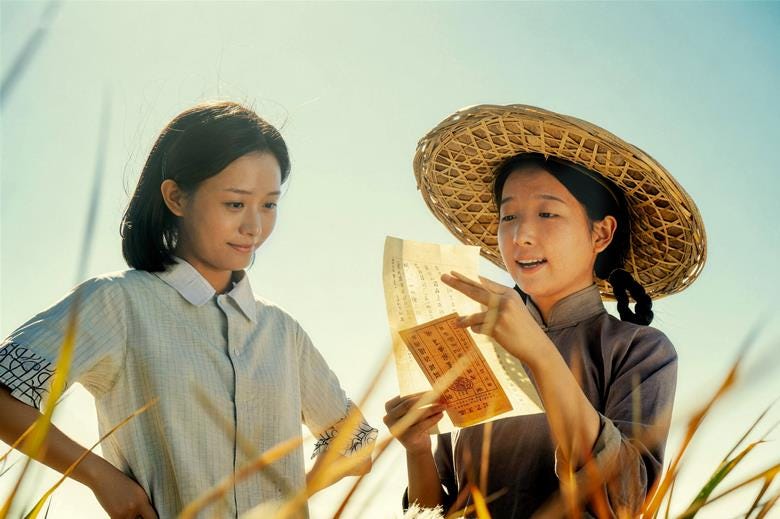
In less than a month, an indie film with an unknown cast became China’s second-highest grossing film of 2026. Dear You, with a modest budget of CNY 14 million (US$2.06 million), earned CNY 1.5 billion (USD 221 million) at the box office by June 5 after being released nationwide on May 3.
Its success is surely causing some consternation in Beijing. As Xi Jinping calls on media professionals to share the uplifting messages of China’s modern development through what he dubs “positive energy,” Dear You centers on protagonists eking out a living amid the poverty and disorder of the 1940s. And as the government promotes the nationwide usage of Mandarin, the film is done entirely in Teochew, a regional Guangdong dialect that few elsewhere in the country understand.
What explains its nationwide success? Viewers shed plenty of tears as they follow a series of remittance letters sent between the husband in Thailand and his wife awaiting his return at their home village. Each details the travails Chinese emigrants faced in their host society, and the longing for the family that they cannot return to. The reality of being hurt and dying all alone in a foreign land amidst the increasingly desperate calls to “come home” tug at the heartstrings of an audience aware that they are privileged enough that they need not leave in the first place.
Propaganda tool?
That inconsolable distance, however, produced not heartbreak, but dismay and suspicion among the Teochew-speaking viewers of Southeast Asia. The Singapore newspaper Lianhe Zaobao suggested that Dear You is an emotional device persuading the progeny of those original emigrants to see China as their homeland. Even though the film had no government involvement, its message inadvertently echoed the Chinese government’s message that the overseas Chinese “come home” and contribute to the mainland’s development.
The sentiment cannot simply be dismissed as paranoia, even if most of the region’s ethnic Chinese today, born and bred locally, no longer have any familial ties to China. As someone who left China at age 5, I also watched Dear You with discomfort. The film is fundamentally reductionist, presenting an extremely “clean” story of where the male protagonist’s allegiances lie in ways that I, and many other overseas Chinese I met, will perhaps never be able to have.
It highlights one extreme sentiment often expressed by the newest arrivals in the newest Chinese communities. Think of the smartphone seller in an African market town or the soybean farmer in the Russian Far East. Their personal success is almost completely reliant on China, in the form of suppliers, customers, and go-betweens that ferry goods, capital, and information between China and the host society. Economic dependence breeds emotional ties. These new emigrants want a wealthier, stronger China that can help their businesses and improve their social standing in the host society, in ways that can fend off unscrupulous locals, whether bribe-seeking officials, xenophobic neighbors, or contract-flouting partners. Dear You’s domestic audience can easily understand this perspective: living in China, they too see no reason not to want the best for where they live.
Split identity
But there is also an entirely different way for the overseas Chinese to think about social standing. Some see their acceptance hinged on outright signaling that they suffer no split loyalties and intend to contribute exclusively to the host society. They know that hostility arrives with suspicions of being a fifth column. Imagine the AI expert in Silicon Valley or the Taiwanese with big investments on the mainland. Whatever they originally felt about China, they need to verbalize their economic and emotional distance from it. And the more they publicize that distance to their families, friends, and professional networks, the distance becomes a self-fulfilling prophecy of sorts. Personal success that came from defining themselves as “not China,” buttressed with the evidence of ever-weakening familial ties to China, only entrenches the distance over time.
The overseas Chinese’s discomfort from watching Dear You ultimately comes down to the male protagonist being portrayed firmly in the former, without giving him the room and agency to shift, even if slightly, to the latter. By portraying the non-Chinese almost exclusively as antagonists, the film implicitly closes off the audience’s imagination that an overseas Chinese’s time abroad can be anything but a temporary sojourn to escape poverty and disorder back home.
Yet, this “we vs them” portrayal discounts the vibrant ties among different communities within any host society. In my travels, it is not rare to come across Chinese workers who planned for a few years in a foreign land, but ended up building entirely new lives when they married, had children, and became part of the non-Chinese community. This shift happens despite the opportunity cost of lost ties with people “back home” or further success that could be had by moving elsewhere. Could the male protagonist have naturally gone down this path over time? The film conveniently leaves that part unanswered.
The contrast between Dear You’s resonance at home and skepticism in the diaspora comes at a time when Chinese identity has become more fraught. The China of 1940s left elicited more sympathy than hostility. Being a fifth column for a country in civil war meant little to a much wealthier host society. That China gave few usable resources for emigrants seeking more success in business or higher social standings. But as China’s rise today drives up anxieties in host societies, the overseas Chinese pay a price. Many face a new sense of urgency in assuaging their non-Chinese friends, while pondering how China’s increasing economic sophistication can translate into their own. Like me, many are constantly remolding who they are to find balance. Dear You might elicit tears, but its absolutist view of the Chinese identity does little to help with that uncertainty.
Xiaochen Su, Ph.D. is a business risk and education consultant and a regular correspondent to Asia Sentinel. He has worked in several countries throughout Asia.
Don't Miss:
-
When Great Powers Talk, Who Speaks for Asia
-
About the China Capital investigation
-
Frequently asked questions about the China Capital investigation
-
ICBC promoted corrupt executive, ignored employee misconduct as it pursued global expansion
-
Chinese bank helped Huawei spirit $1B out of London days after US indictment of the tech giant