
 IMDB’s China Connection
  Trump administration gave firm with ties to ballroom donor the green light to do business with a sanctioned Russian bank
  Claire Sylvia on the Constitutionality of the False Claims Act
 Once a neglected figure in ancient China’s folklore, literature and artefacts, the panda has become a national treasure and a defining symbol of the modern nation.
How did this black-and-white creature, long overlooked, come to occupy such an iconic place in a country’s cultural imagination?
Palaeontologists have discovered panda fossils across China, some dating back eight to nine million years.
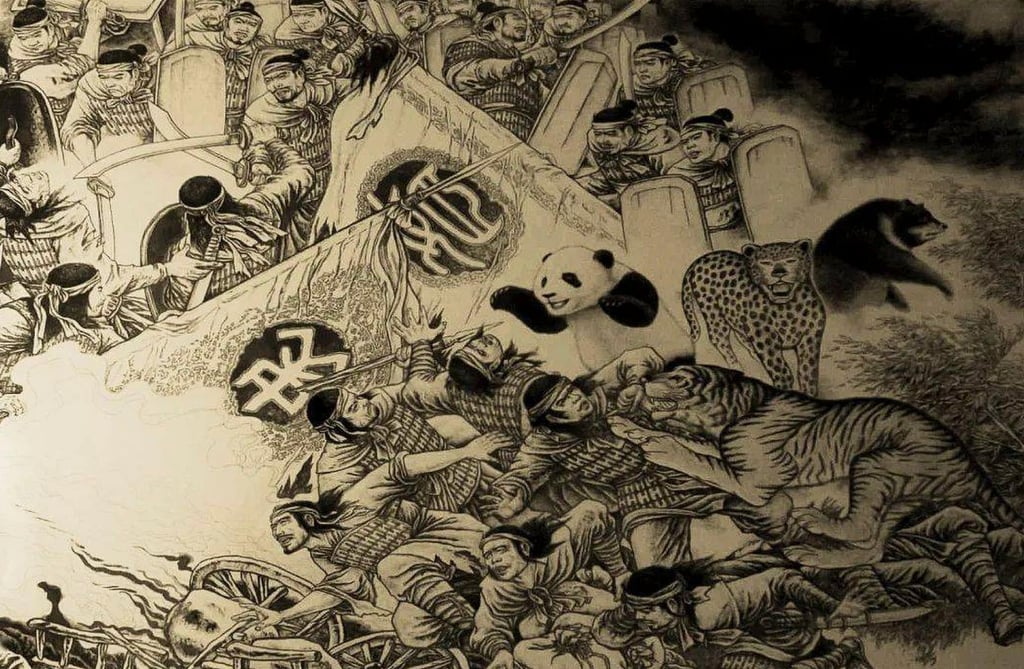
According to early human scholar Wei Guangbiao, many of these ancient specimens show butchery marks, suggesting that prehistoric communities already ate pandas.
Advertisement
The earliest written records of ancient pandas in China appear in the Book of Documents from the pre-Qin period (Paleolithic Period – 221 BC), which describes the animal as “as large as a tiger, with the might of a divine beast.”
By the Three Kingdoms era (220–280), pandas were known as bai pi, or “white bears,” and regarded as ordinary prey.
Advertisement
Folklore even imagined that they could survive by eating iron, earning them the nickname “iron-eating beast.”

Don't Miss:
-
Japan begins clean-up after Typhoon Dujuan kills 4, batters east
-
Indefinite time in psychiatric ward for Hong Kong man who fatally stabbed 2 in mall
-
Who needs a degree? South Korea’s chip boom rewires university-obsessed culture
-
Cambodia hosts anti-scam summit as scepticism lingers
-
‘Do teachers not have families?’: kindergartens’ Mid-Autumn events draw backlash