
 The Taliban’s New War Begins at Home
  Panama removed from EU’s tax haven ‘blacklist’ a decade after the Panama Papers
  Crackdown and Controversy: The Battle Over Beach Bars and Noise in Phuket’s Bang Tao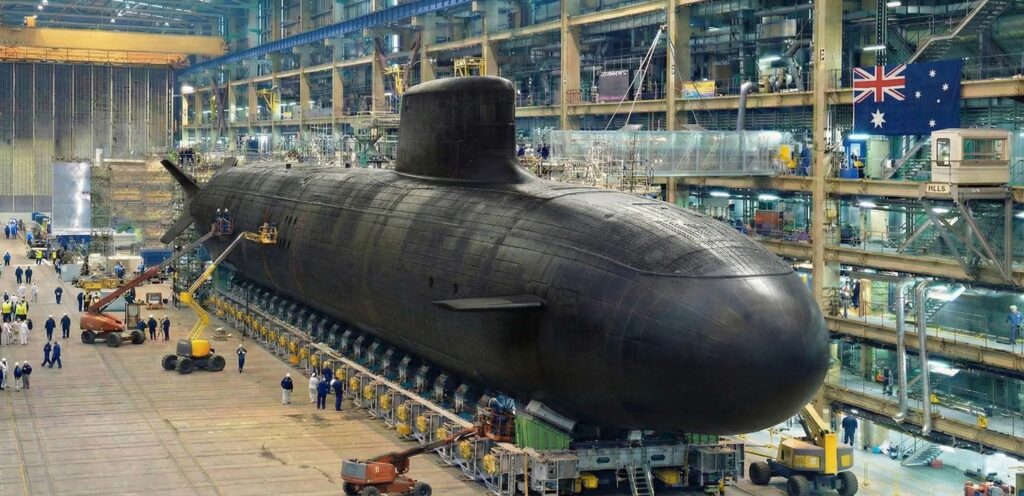
By: Jens Kastner
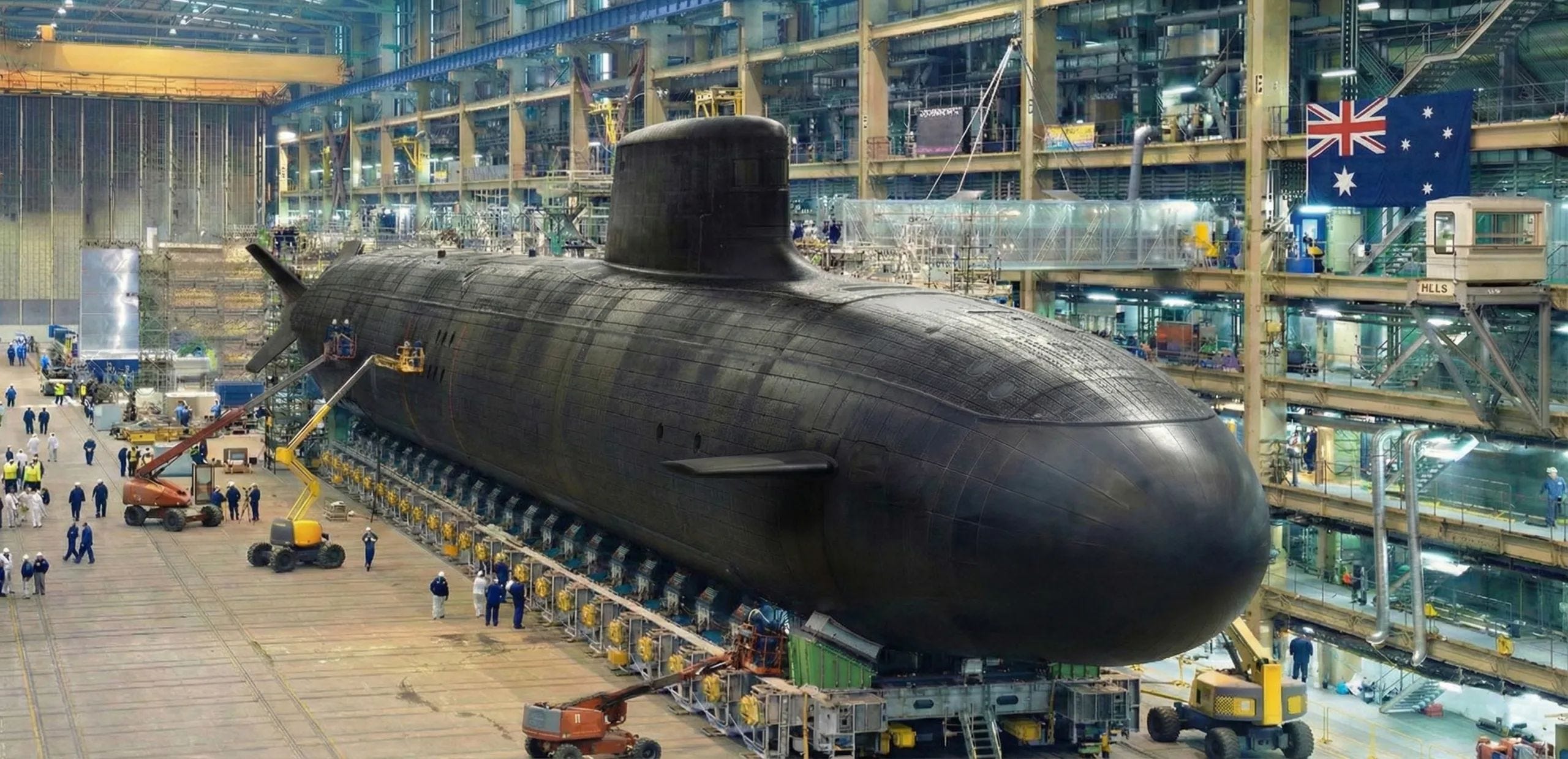
Beginning next year, U.S. and UK nuclear-powered attack submarines are scheduled to rotate through Royal Australian Navy base HMAS Stirling in Western Australia, with preparations and family relocations already in progress. At the same time, Australia’s submarine builder and maintainer ASC is pushing workforce expansion and the upskilling of Australians, including training in Pearl Harbor, to support future submarine sustainment and build a sovereign nuclear capability. At the recent Indian Ocean Defence and Security Conference and Exhibition (IODS) in Perth, Asia Sentinel witnessed Abi Clayton, President of Rolls-Royce Submarines, describing a major production surge for all the new nuclear reactor plants for Australia’s submarine endeavor already being underway.
These developments are the fruits of AUKUS, the trilateral security partnership between Australia, the UK, and the U.S. launched in 2023, comprising the submarine enterprise (Pillar One) and long-term defense technology cooperation (Pillar Two). The submarine rotation period will be followed by Australia purchasing potentially up to five used Virginia-class nuclear-powered attack submarines from the US starting in 2032, dependent on the US ramping up production to release boats. Then, Australia’s own nuclear-powered attack submarines will be jointly built, initially in the UK and ultimately in South Australia.
With Australia eventually basing up to 18 nuclear-powered attack submarines, the naval balance in the Indo-Pacific will be significantly changed to the detriment of China’s territorial ambitions, observers have told Asia Sentinel.
“The looming start of rotation at HMAS Stirling increases allied submarine presence closer to the South China Sea and the broader region, enhancing deterrence now rather than in a distant future,” said Gordon Flake, founding CEO of the Perth USAsia Centre.
“Given that Australia has one of the world’s largest exclusive economic zones, it will use its small navy mainly for backyard patrols, but the submarine will also have their roles within routine peacetime functions, including freedom of navigation operations alongside allies, translating into a stabilizing regional presence and representing a big shift relevant to Taiwan and the Philippines.”
Flake went on to point out that a key enhancement for deterrence comes from nuclear-powered subs’ improved capacity. As they remain submerged for extraordinarily long periods, their locations are virtually unpredictable, thereby delivering strategic ambiguity. By contrast, Australia’s existing diesel-electric submarines must snorkel every 12–24 hours and have limited depth and duration, making their locations more predictable.
For his part, James R. Holmes, a professor at the U.S.’s Naval War College, said that the AUKUS subs could be “huge” also from alliance and military standpoints.
“From the alliance standpoint, it cements solidarity among a significant fraction of the old British Empire while committing Australia, an external power, to any Taiwan conflict but a significant power, to the island’s defense, and it would seem to commit Great Britain, a really, really outside power, to the same cause,” Holmes said.
“From the military standpoint, to secure Taiwan, you mainly need to deny China control of the Taiwan Strait and adjacent waters. Submarine warfare remains an allied advantage and a sea-denial weapon par excellence.”
The AUKUS partnership is providing a major boost to the industry, with around US$240 billion set to be invested over the next 30 years. A key focal point for this upswing was the Indian Ocean Defence and Security Conference and Exhibition (IODS) held in Perth in May 2026. It brought together figures from the military, politics, business, and research sectors.
IODS panel discussions examined the multifaceted challenges of delivering AUKUS, underscoring the need for decisive leadership, rapid workforce and infrastructure build-out, and tightly coordinated trilateral collaboration. Urgent priorities include constructing a dry dock at Henderson near Perth, establishing a single accountable “controlling mind” on the Australian side and releasing contracts to catalyze industry investment. Success hinges on creating an interchangeable workforce and standardized, shared supply chains across Australia, the UK, and the U.S., while building Australia’s sovereign nuclear sustainment capability. Panel participants also stressed the need for a “social license”, meaning the Australian public needs to be made supportive of the costly endeavor.
Unsurprisingly, China has been doubling down on anti-AUKUS information operations and psychological warfare to target public opinion domestically and regionally, noted Gordon Flake. China seeks to gain influence through economic coercion, military activities near Australia’s shores, political pressure and intelligence activities.
“However, these efforts are largely counterproductive, as they raise threat perceptions region-wide when combined with assertive behavior,” Flake said.
“Pre-COVID, polls showed roughly 80% saw China as an opportunity; today, it’s more like 80% for threat and 20% for opportunity. This is attributable to daily incidents against the Philippines and Taiwan, surveillance and survey vessel activity around Australia, and overt economic coercion targeting our exports of coal, barley, crayfish, and wine.”
As to whether the Australian government of the day would choose to come to the U.S.’s help in the event of a Taiwan war, Flake noted Australia’s historical pattern of fighting alongside the US since WWI but referenced the Iran war to illustrate non-coordination with the U.S. U.S. President Donald Trump started the war without consulting U.S. allies.
“Australia’s future decisions will hinge on the trajectory of U.S. alliance coordination. Recovery from periods of ‘nontraditional non-coordination’ [under Trump] will shape how readily Australia aligns with U.S. requests,” Flake said.
Don't Miss:
-
The Taliban’s New War Begins at Home
-
Panama removed from EU’s tax haven ‘blacklist’ a decade after the Panama Papers
-
Crackdown and Controversy: The Battle Over Beach Bars and Noise in Phuket’s Bang Tao
-
East Asia’s Youth Job Crisis Is Hiding Its Coming Labor Shortage
-
Leaked files reveal how Deloitte Cyprus helped Roman Abramovich hide $10B fortune