
 From Iran to China: An Emerging Trans-Central Asian Corridor
  New documents show how a retail chain’s sales practices helped put guns on US streets
  Singapore a battleground of commodities fraud lawsuits

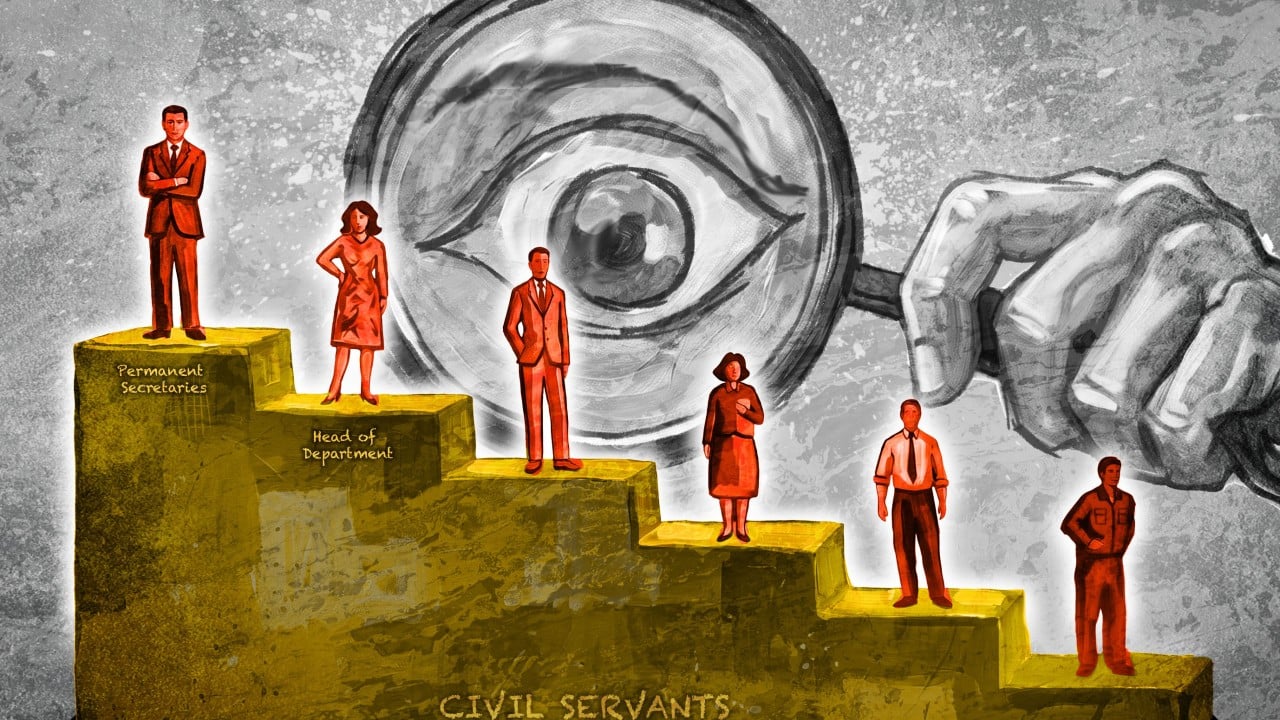
Who is at fault for the notice: the frontline officers involved or the senior civil servant overseeing them?
Advertisement
“Opinions are divided among ourselves,” said a veteran civil servant, speaking on condition of anonymity. “In this case, the senior official can say this was an execution problem by frontline staff. Such a high-ranking official doesn’t micromanage to this level.”
But another said: “Can the head truly shrug off supervisory accountability? It may depend on whether he or she turned a blind eye to questionable practices. But it’s hard to prove.”
Advertisement
The new mechanism targets department heads for “widespread, repetitive, systemic” failures, aiming to clarify administrative blame.
Former ministers, high-ranking bureaucrats and political observers pointed to the practical challenges of attributing responsibility amid scandals, and questioned the government’s decision not to make it a legal requirement to publish full investigation results.
Don't Miss:
-
Hong Kong approves average fee hikes of up to 4.75 per cent for non-public schools
-
4 Indonesian seamen kidnapped by Somali pirates return home
-
UK police arrest seventh man linked to security incident at US-run airbase
-
Iván Cazarín Molina, alias “El Tanque”, Alleged CJNG Operator Active in Several States, Arrested
-
Iceland is ‘critical outpost’ for security, Rubio says during visit