
 Canada revokes dozens of crypto firms’ registrations
  Questions swirl around US plans for record $15B Prince Group crypto seizure
  Donate to ICIJ

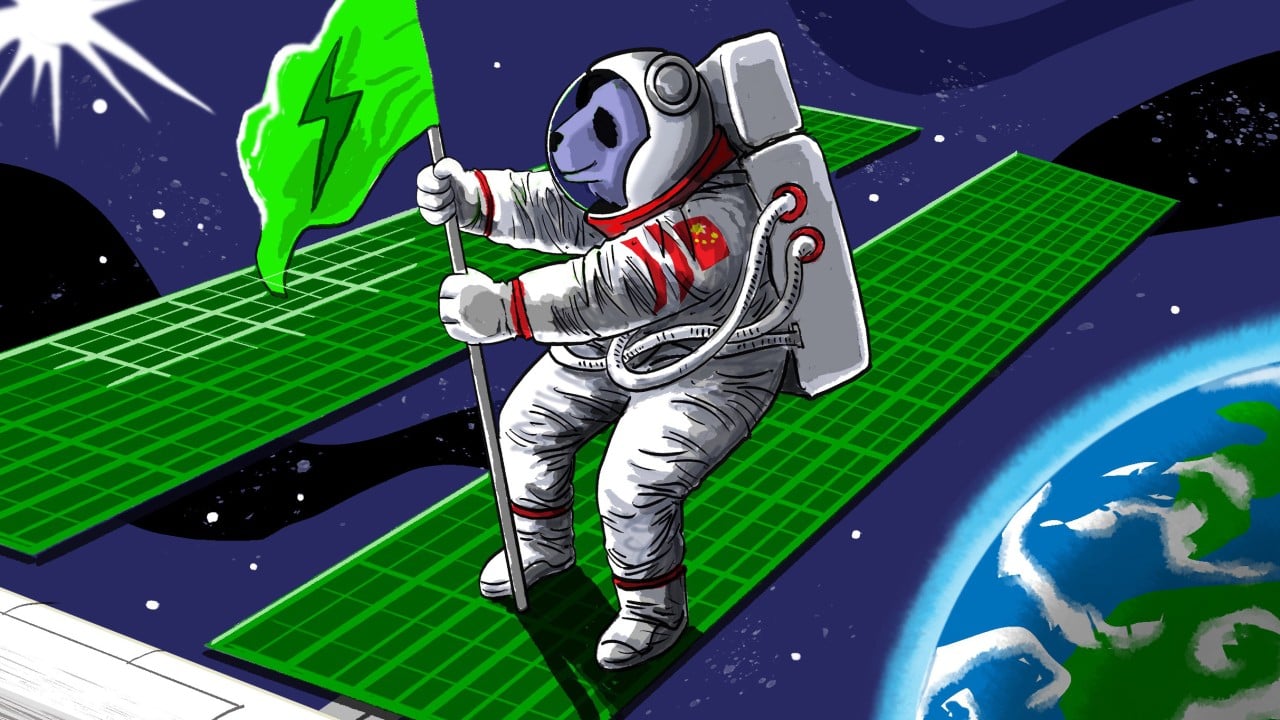
Space-based solar power refers to orbital systems that collect solar energy via satellites equipped with enormous solar panels, convert it into microwaves or laser beams and send it wirelessly to ground-based rectennas, which then feed electricity into the grid.
Advertisement
The appeal is obvious: unlike terrestrial solar, it operates continuously – unaffected by weather, seasons or nightfall.
The concept is not new. Science fiction author Isaac Asimov popularised the idea in his 1941 short story Reason, while aerospace engineer Peter Glaser published the first technical design for an orbital solar power system in 1968.
Advertisement
In the 1970s, the National Aeronautics and Space Administration (Nasa) confirmed its feasibility before concluding that engineering complexity and launch costs made it economically unviable. But that is now changing. Advances in robotics, wireless power transmission and sharply falling launch costs are narrowing the gap between concept and reality. Major space powers are taking notice.
Don't Miss:
-
China proposes a new way to measure academic influence in a departure from impact factor
-
As Cambodia’s scam crackdown deadline looms, criminal gangs flee
-
Errors in Hong Kong Tai Po blaze hearing transcript raise transparency concerns
-
China woman uses an old photo to find brother who was lured away with bread 33 years ago
-
Kyoto is eyeing taller buildings. Critics warn it will look like ‘every other city in Japan’