
 How Hungary’s richest man funneled millions into Orbán’s propaganda machine
  How Real Is the US Withdrawal from the Middle East?
  From Iran to China: An Emerging Trans-Central Asian Corridor
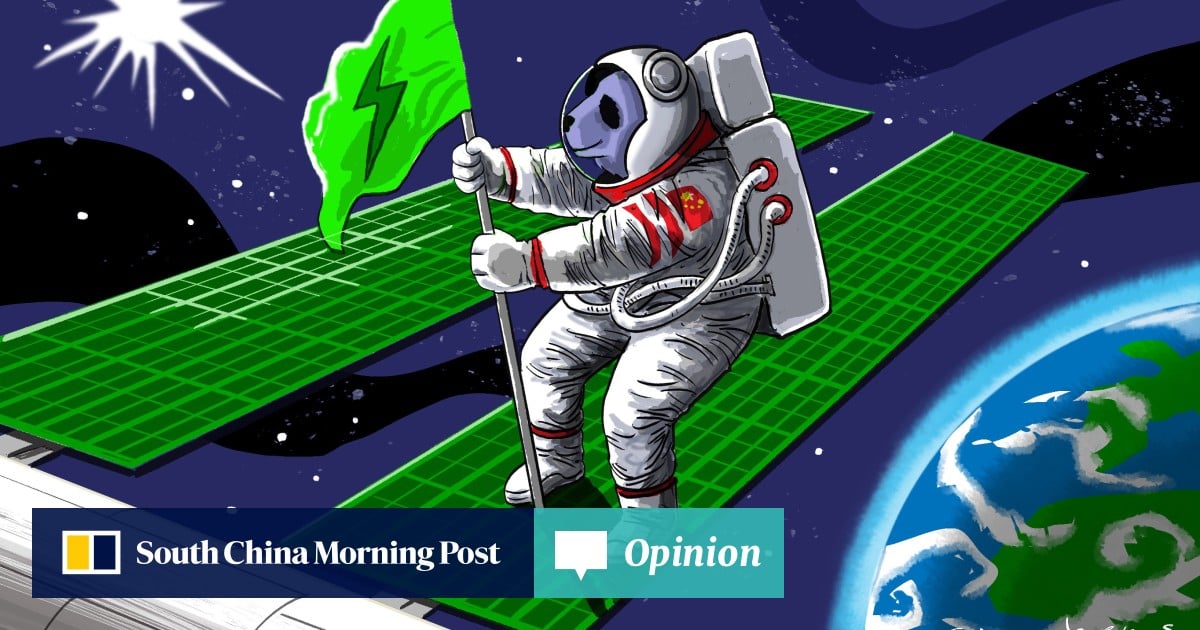
Space-based solar power refers to orbital systems that collect solar energy via satellites equipped with enormous solar panels, convert it into microwaves or laser beams and send it wirelessly to ground-based rectennas, which then feed electricity into the grid.
Advertisement
The appeal is obvious: unlike terrestrial solar, it operates continuously – unaffected by weather, seasons or nightfall.
The concept is not new. Science fiction author Isaac Asimov popularised the idea in his 1941 short story Reason, while aerospace engineer Peter Glaser published the first technical design for an orbital solar power system in 1968.
Advertisement
In the 1970s, the National Aeronautics and Space Administration (Nasa) confirmed its feasibility before concluding that engineering complexity and launch costs made it economically unviable. But that is now changing. Advances in robotics, wireless power transmission and sharply falling launch costs are narrowing the gap between concept and reality. Major space powers are taking notice.
Don't Miss:
-
US wraps up military mission in Iraq, giving Baghdad room to strengthen China ties
-
As China and the EU begin crunch trade talks, optimism is in short supply
-
Data centre opposition is growing in Australia. Is there a middle ground?
-
Helper arrested for allegedly slapping 5-year-old boy after he refuses to eat
-
Workers, mostly Indian, building US consulate in Milan agree to record settlement