
 Canada revokes dozens of crypto firms’ registrations
  Questions swirl around US plans for record $15B Prince Group crypto seizure
  Donate to ICIJ
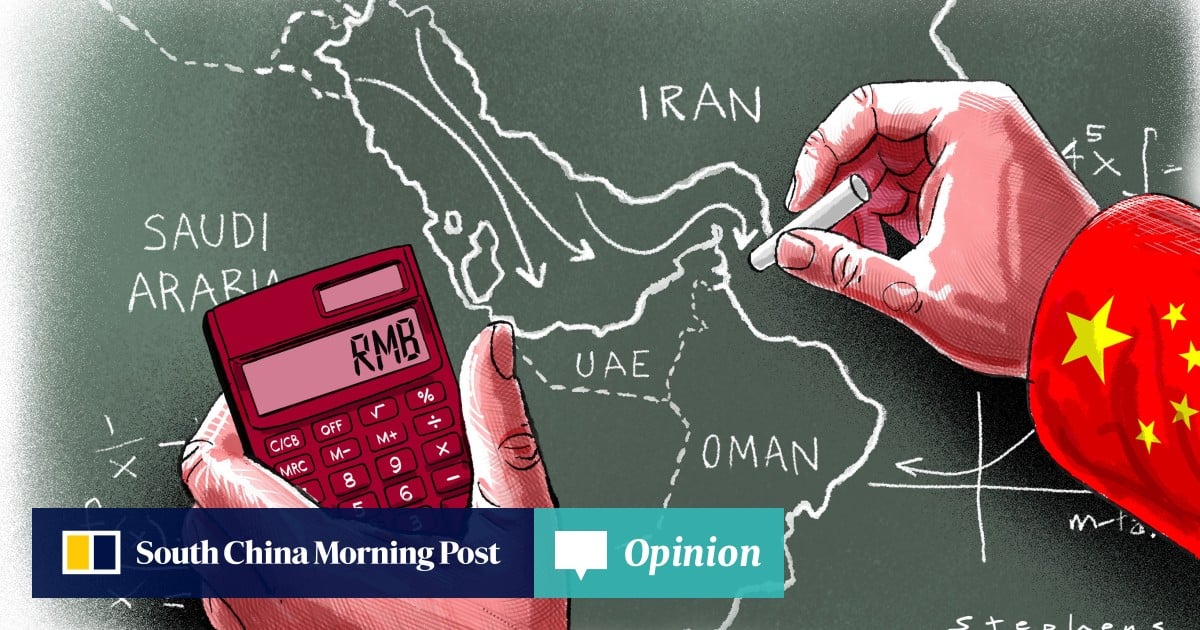
On the Gulf specifically, Wang stated that “the sovereignty, security and territorial integrity of Iran and all countries in the Gulf region should be respected and must not be violated”, a phrasing deliberately vague on whose territory should be respected. At a press conference on March 10, spokesperson Guo Jiakun declined to confirm whether Zhai Jun’s mediation would involve the US and Israel.
Advertisement
While it has criticised the US and Israel for initiating hostilities, Beijing avoids committing to either side. When it comes to Iranian reprisals on its neighbours, China has struck a meeker tone, stating that Gulf nations’ territorial integrity should be respected without specifying by whom, a formulation that reads as principled neutrality that functions as a deliberate refusal to assign responsibility.
Advertisement
The mediation effort follows a familiar template in which China dispatches an envoy, calls for dialogue and positions itself as the responsible alternative to US unilateralism. This fits into the same model China used to help broker the Saudi-Iran rapprochement, which Beijing facilitated after Oman and Iraq had done the preliminary work.
Don't Miss:
-
Supreme Court justices lean towards Trump in asylum-processing case
-
Minnesota sues government for access to evidence in 3 shooting deaths by federal officers
-
Judge allows Brazil’s Bolsonaro to serve 27-year sentence at home due to ill health
-
Trump’s approval hits new 36% low as fuel prices surge amid Iran war, poll finds
-
Seven Electricians Released after Kidnapping in Matehuala, San Luis Potosí