
 Rick Claypool on Pay to Play Corporate Crime Enforcement
  Labaton Launches Whistleblower Practice with Former SEC Acting Chair Allison Herren Lee
  Kremlin payment firm A7 has been pumping billions in ‘untraceable’ cash into global financial system
Drug patents are meant to help pharmaceutical companies recoup high development costs by preventing competitors from using the intellectual property for a defined period of time, typically 20 years in the U.S.
But the global patent system — a patchwork of national laws loosely connected by international treaties — is vulnerable to manipulation. In the case of Keytruda, a blockbuster cancer drug, companies exploited the patent system to try to extend market exclusivity well beyond the expiration of the drug’s initial patents, keeping competitors at bay and prices artificially high for years. Prolonged patent monopolies can delay cheaper alternatives entering the marketplace, prioritizing profit over patient access, straining governments’ healthcare budgets and putting patients’ health — sometimes even their lives — at risk.
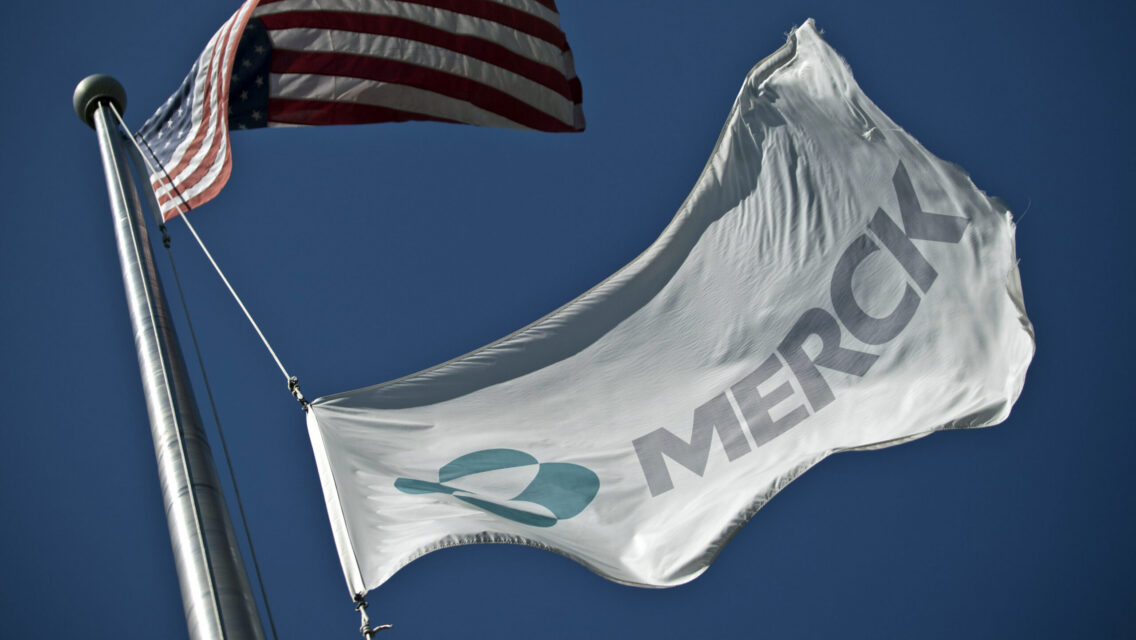
For its Cancer Calculus project, the International Consortium of Investigative Journalists tracked Keytruda-related patents to show how Merck & Co. and other pharmaceutical companies created a dense web of patent applications that can make it harder for more affordable versions of the drug, known as biosimilars, to enter markets around the world. Merck, known as MSD outside the U.S. and Canada, did this by applying for patents for changes to formulation and dosing regimens, altering the drug’s use in combination with other agents, or for switching patients to a similar, newer version of the same drug — known as a “product hop.” Each change can potentially reset the patent clock and add years of exclusivity.
Merck’s scramble to fortify its dominance has included filing for patents that are combinations of Keytruda and another medication that aren’t necessarily new or innovative, according to experts interviewed by ICIJ.
Even if a patent isn’t ultimately approved by a patent office, the application itself can increase the complexity of the competitive landscape, creating legal and commercial uncertainty that can delay or deter competitors, patent experts said.
Patents were only part of the data that explains Keytruda’s price dominance and patients’ struggles to cope with it. ICIJ also reviewed the prices of Keytruda (known generically as pembrolizumab) across dozens of countries. Those prices can vary wildly depending on location and medical context — the result of opaque negotiations between governments and Merck. We also reviewed lawsuits and other court documents filed in Latin America to track the rising number of patients fighting in court, regulatory bodies and elsewhere to gain access to Keytruda, a trend due, in part, to its high prices. Researchers in the region see the phenomenon as part of an increasing judicialization of healthcare.
The patent thicket
ICIJ anchored its analysis on patent applications in the U.S., which accounts for 60% of Keytruda sales globally. The Initiative for Medicines, Access, and Knowledge (I-MAK), a U.S.-based, not-for-profit organization that advocates for affordable access to medicines, provided our starting dataset of 184 U.S. patent applications related to Keytruda. After speaking with patent lawyers and pharmaceutical industry experts to refine our methodology, we reviewed each patent application to confirm key details, including legal status, patent owners, known as assignees, and relevant dates using Google Patents, a free public search platform that aggregates patent information from major patent offices worldwide.
We limited the final set to 180 U.S. patent applications (166 filed or co-filed by Merck & Co. and 14 by Ono Pharmaceutical Co., Ltd. a Japanese company we included because its PD-1 patents underpin Keytruda’s core mechanism. (The patents involve the use of what are known as PD-1-blocking antibodies that restore the immune system’s ability to recognize and attack tumor cells; Keytruda was developed using PD-1-blocking antibody technology.) After a legal dispute, Merck bought licenses to Ono patents as part of an interlocking patent structure. Our final set excluded four patent applications not assigned to either Merck or Ono Pharmaceutical.
Keytruda, known generically as pembrolizumab, is a type of immunotherapy that restores the body’s ability to fight cancer cells. Unlike chemotherapy, which targets rapidly dividing cancer cells, Keytruda disrupts a process that allows some cancers to circumvent the immune system.
That process involves a protein called PD-1, which is found on the surface of some white blood cells. (White blood cells regulate the body’s immune response.) But some cancer cells express proteins called PD-L1 or PD-L2 that bind to PD-1 and block the body’s ability to recognize and kill cancer cells.
Keytruda works by attaching to PD-1, preventing it from interacting with the cancerous cells’ proteins and allowing the immune system to detect and attack the cancer.
Pembrolizumab was first invented in the early 2000s by Dutch scientists working for a company that was later acquired by Merck. The drug was approved for medical use in the U.S. in September 2014.
For each U.S. application, ICIJ then tracked its so-called patent family — a group of patent applications from around the world that cover the same or closely related content, which can include patents filed or co-filed by Merck or MSD and other cancer research businesses. For companies like Merck, the interconnectedness of patents in such families allows them to extend protection around a single drug by filing new applications related to the original patent over time and across markets that can complicate competitors’ decisions about whether to enter a market.
To conduct our analysis, we scraped relevant records from two main websites: Espacenet, a patent search platform developed by the European Patent Office, and Google Patents. Espacenet constructs patent families using an automated system based on so-called shared priority claims, which links a later application to the filing date of an earlier one.
The addition of patent families brought the total to 1,212 global patent applications, including the original 180 U.S. filings. Not included were 129 Patent Cooperation Treaty applications we identified as part of the patent families. Submitted through the World Intellectual Property Organization, these are international applications that do not themselves result in granted patents but instead serve as a unified filing that allows applicants to pursue protection in multiple national or regional jurisdictions. We also excluded nine filings with the Eurasian Patent Organization — which represents Russia and seven former Soviet republics — as they duplicated European Patent Office applications already in our count. We did retain the 134 European Patent Office applications that we found represented substantive regional filings that, once granted and validated, could confer enforceable patent rights across multiple European jurisdictions.
We updated the details of each patent family, including the status, assignees and dates, using Google Patents.
ICIJ relied on both current and original patent assignees, depending on the context, when analyzing how many patents were filed and by whom. Particularly for non-U.S. patent applications, the current assignee or co-assignee is not always Merck & Co. but can also be other businesses involved in cancer research. The European Patent Office has identified these patents as part of Merck patent families. So while they’re not Merck patents, they are connected to Keytruda. For this reason, we refer to these as “Keytruda-related” patents rather than attributing them solely to Merck.
Of the total 1,212 identified applications, most were assigned to Merck as of early 2026 — sometimes with co-applicants: 590, including subsidiaries or companies later acquired by Merck; 44 assigned to Ono Pharmaceutical; 45 assigned to other entities not affiliated with Merck; and 533 listed with no identified current assignee. Of the 533, 455 had originally been filed or co-filed by Merck (or by subsidiaries or companies later acquired by Merck); 14 were filed by Ono; and 34 were not related to Merck. ICIJ couldn’t determine the assignee for 30 of the applications. All applications included in ICIJ’s dataset are part of patent families related to Keytruda.
ICIJ relied on the date that an application was filed rather than the publication date to reflect when inventions were first formally claimed, which was most relevant to our analysis.
ICIJ included patents across all relevant legal statuses, including 211 granted, 337 pending, 120 abandoned, 24 ceased, 41 expired, six revoked, 75 withdrawn, and 398 whose status we couldn’t determine, to capture the full global landscape of patents related to Keytruda that fall within patent families identified by the European Patent Office. Including all statuses allows ICIJ to capture not only enforceable rights, but also the broader ecosystem shaping access and competition. Pending applications may, if granted, translate into enforceable rights with defined expiration dates. Abandoned applications, while no longer pursued, can still be used as evidence to restrict what others can patent.
While this analysis focuses on Keytruda, similar patenting strategies are common across the pharmaceutical industry. As such, the dynamics highlighted in this dataset reflect broader structural features of the global patent system, which is administered through national and regional offices, such as the U.S. Patent and Trademark Office and the European Patent Office, and linked through international frameworks like the World Intellectual Property Organization. A published patent application or successful defense in major markets can deter competitors from entering other countries where there are patents for the same invention.
Patent data tools
ICIJ’s use of Espacenet and Google Patents as patent data sources presented different challenges. While Espacenet blocks automated compilation of patents data, which made it difficult to extract and use for analysis, Google Patents data can be compiled using Google Big Query service. But compiling bigger datasets from there can be costly, so we confirmed that Google Patents allowed us to retrieve information about our target list of patents in an automated and careful way. We also collected some data manually to populate our analysis spreadsheet before fact-checking.
Both sources returned hard-to-read webpage content that is tricky to transform into a structured format, a task made even more difficult by the many properties a patent can contain. At this stage, ICIJ used AI large language models to generate code in the easy-to-read Python language, which used popular Python libraries (pre-existing collections of code) to create parsers that transformed the content we extracted into a single, structured spreadsheet. Two of the Python libraries were Beautiful Soup, which selects the pieces from messy HTML, and pandas, which is used for data analysis. We then used this dataset for the patent analysis.
Uncloaking secrecy around prices
While the price of Keytruda can be a life-or-death matter, even establishing the price is not straightforward.
ICIJ’s investigation found that Merck’s list prices, or the initial undiscounted prices, vary widely across countries, ranging from about $850 for a single 100-milligram vial of the medication in Indonesia to $6,015 for the same vial in the U.S. Extreme disparities stem from secret negotiations leading to non-public discounts and rebates applied to list prices in different countries as well as the different ways healthcare systems decide drug costs. At least half a dozen governmental authorities around the globe refused to disclose to ICIJ and our media partners public spending details about Keytruda or the number of patients receiving the medicine.
The lack of transparency around Keytruda prices presented a particular challenge. Some pricing data, as in South Africa, is readily accessible because governments publish how much patients should expect to pay for the drug (before the cost of additional services). In Europe, by contrast, it’s often only undiscounted list prices that are published — so-called ex-factory prices, set by the manufacturer prior to negotiations with governments. So while much information is available, it’s not always the same type.
ICIJ relied on the pricing data that authorities make public as well as data gathered by its media partners. Publicly available prices — found in South Africa, in Latin America and elsewhere — correspond to different situations and kinds of transactions. For example, the minimum and maximum prices a patient can expect to be charged for a vial of the drug, or the price pharmacies report. ICIJ used list prices when available to calculate a standard price per 100 mg vial, standard 200 mg dose, and one year of treatment. This enabled us to show price differences across countries. But because list prices aren’t the actual prices paid either by governments or patients, ICIJ also studied the affordability of the drug across dozens of countries.
For European countries, ICIJ obtained list prices from the Austrian National Public Health Institute (GÖG), which gathered and calculated the price data in national currency units (unweighted raw data) from national databases as part of its Pharma Price Information service. In the case of Latin American countries and South Africa, ICIJ relied on data publicly disclosed or obtained by partners. We then converted the list prices to U.S. dollars and calculated the so-called purchasing power parity rates to account for differences in price levels across countries. Purchasing power parity helps calculate how much of a local currency is required to buy a product in the domestic market that an equivalent amount of dollars would buy for the same amount in the U.S. To calculate how many vials of Keytruda a patient in these countries could afford, we divided the median annual gross earnings there by the price per Keytruda vial in that country and adjusted for purchasing power parity. For earnings data, we used a dataset known as ILOSTAT produced by the International Labour Organization.
Counting legal battles
Keytruda has become a symbol of a dysfunctional global system that disproportionately hurts poorer countries with limited healthcare budgets and little negotiating power with Big Pharma.
Data analyzed by ICIJ shows that health and legal systems are increasingly intertwined in some Latin American countries, where thousands of cancer patients have gained access to Keytruda only through a court order after public health institutions and private insurers had denied coverage of the high-cost drug. We gathered court rulings regarding Keytruda coverage over several years from three Latin American countries: Guatemala, Mexico and Chile. (Data from Mexico and Chile was shared by ICIJ partners).
ICIJ created a database for each country based on information available in the court rulings, such as the name of the patient, defendants, dates of amparo lawsuits (a legal action designed to protect constitutional rights from abuses by the state) and court rulings, Keytruda and other drug coverage, name of the court, and final decision.
We eliminated both duplicates and court rulings not related to Keytruda, and ended up with details for 163 court rulings regarding Keytruda coverage in Guatemala (96), Mexico (55) and Chile (12). The vast majority of the rulings were in favor of patients: 95 out of 96 in Guatemala, 36 out of 55 in Mexico and 10 out of 12 in Chile.
Through these analyses, ICIJ aimed to contextualize the central issues exposed in its Cancer Calculus investigation, detailing how Merck uses patents to keep its dominance over the drug and dispelling the secrecy that surrounds drug pricing. In this way, we sought to illustrate the plight of thousands of patients in countries where the medication is either unaffordable or inaccessible, while exposing long-held practices that have made the healthcare industry, for far too many, a broken system.
Don't Miss:
-
Rick Claypool on Pay to Play Corporate Crime Enforcement
-
Labaton Launches Whistleblower Practice with Former SEC Acting Chair Allison Herren Lee
-
Kremlin payment firm A7 has been pumping billions in ‘untraceable’ cash into global financial system
-
New US law requires dating apps to include warnings on romance scams
-
Southeast Asia Welcomes Japanese Investment but not Soldiers