
 When Great Powers Talk, Who Speaks for Asia
  About the China Capital investigation
  Frequently asked questions about the China Capital investigation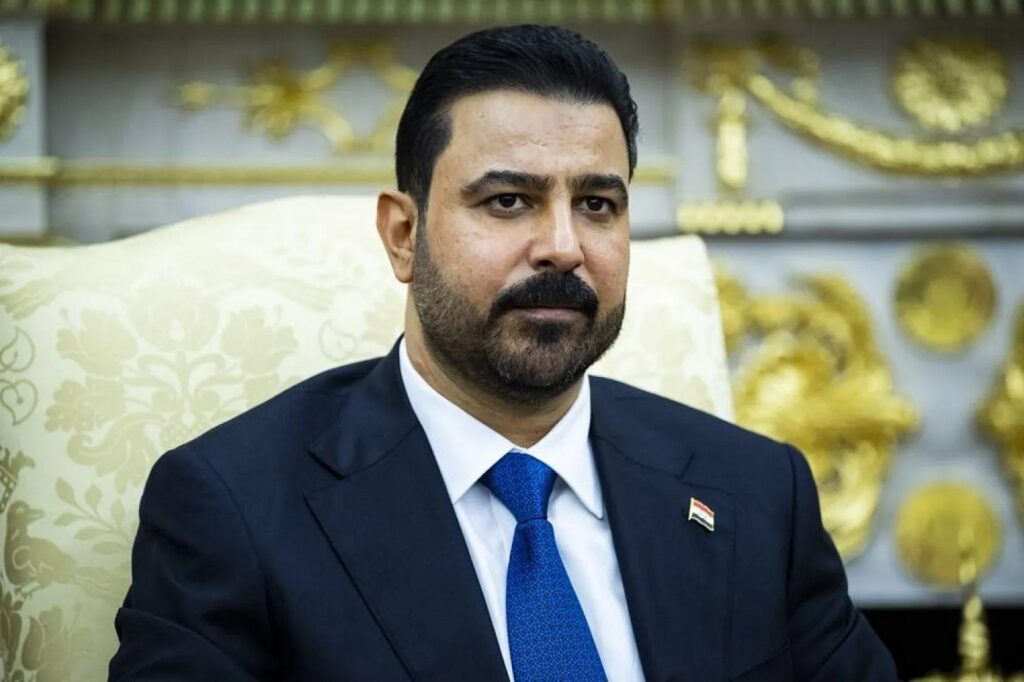
By: Salman Rafi Sheikh
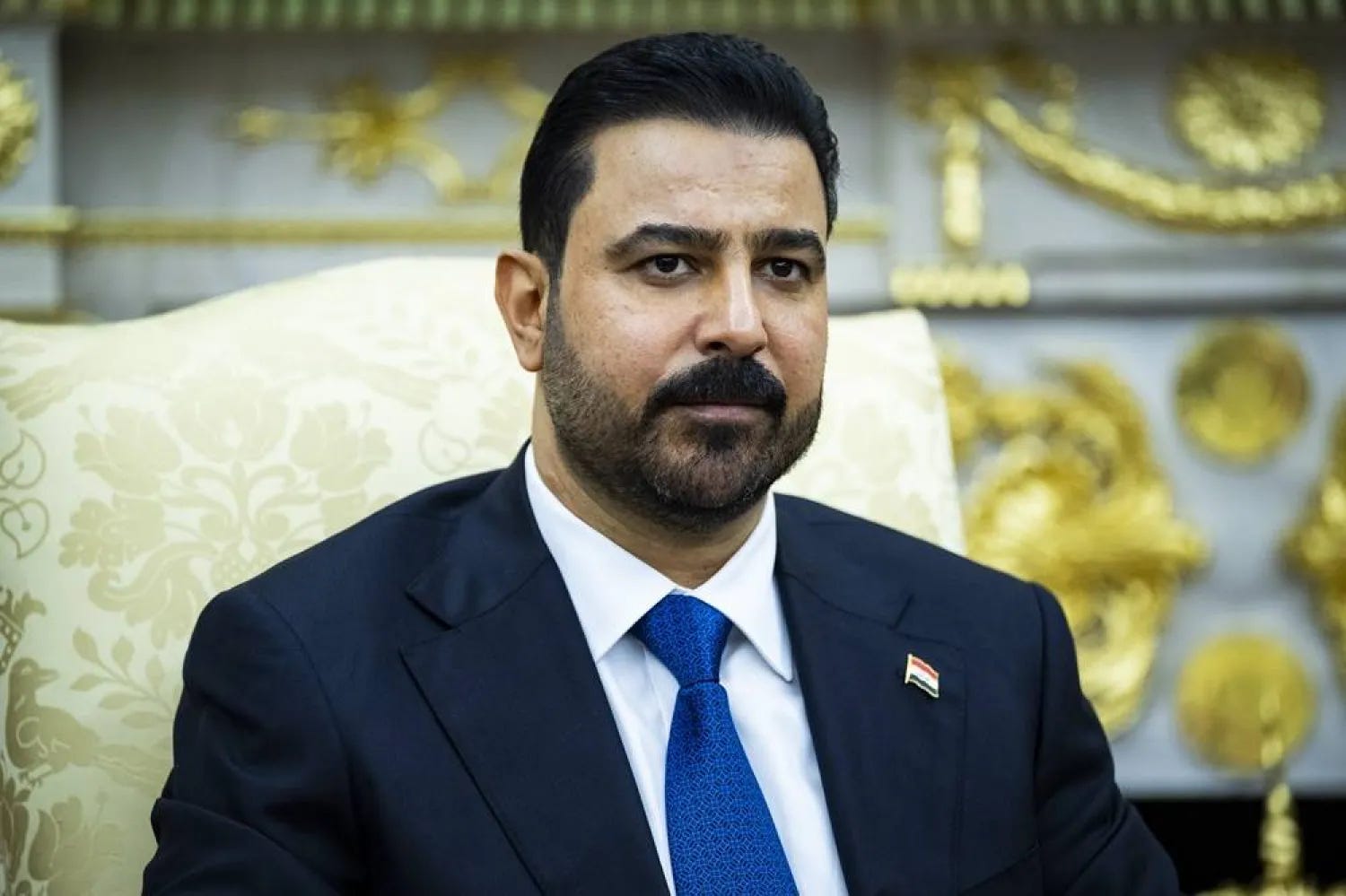
Baghdad, in a tenuous recovery and increased internal peace after the chaos of its post-2003 conflict years, is now trying to be Washington’s partner, Tehran’s neighbor and the Gulf’s investment prize all at once. But the war next door is making that math impossible to solve.
Shia businessman-banker Ali al-Zaidi didn’t rise to Iraq’s premiership in May through the usual channels of patronage and coalition-building. He was, in a real sense, installed by veto. When Iraq’s dominant Shia bloc, the Coordination Framework, moved to back a Tehran-aligned candidate for prime minister, Washington drew an explicit line: no government seen as captured by Iran-linked factions would retain US security cooperation, and Treasury officials warned that anyone enabling militia violence “will be held accountable.”
After a first attempt to push through an alternative ally of former premier Nouri al-Maliki collapsed, the Framework capitulated in a single, 25-minute session and unanimously approved al-Zaidi. He is a 40-year-old banker with no prior political office, chosen precisely because he apparently belonged to neither camp.
That origin is the key to understanding everything al-Zaidi has done since. His mandate doesn’t come from an Iraqi electoral coalition; it comes from the narrow space Washington and Tehran have each agreed, however reluctantly, to tolerate. He has spent his first 10 weeks in office trying to widen that space rather than being crushed by it. His maneuvering has included attending Supreme Leader Ali Khamenei’s funeral procession in Tehran after Khamenei’s assassination in the opening days of the war, and then, days later, shaking hands in the Oval Office with the man responsible for it.
Trump’s Praise
The five-day Washington visit in mid-July produced the kind of imagery Iraqi diplomacy rarely generates: US President Donald Trump praising “tremendous chemistry” with al-Zaidi, and Iraqi officials announcing a pipeline agreement linking Basra’s oil fields to Turkey’s Ceyhan port, backed by Chevron, TI Capital and Qatar’s UCC. Al-Zaidi’s office framed the trip around economic partnership, attracting American investment, expanding US corporate involvement in Iraqi infrastructure, and deepening the energy sector. On departure, he thanked Trump’s administration for what he called a new era of strategic economic partnership.
But the goodwill has a price tag Baghdad hasn’t yet paid. Washington’s support for al-Zaidi has always been conditioned on visible progress toward disarming Iran-backed militias and folding their weapons under state control, a demand that predates his premiership and has outlived several of his predecessors’ promises. Several factions pledged in June to begin disarming; by mid-July, little progress had been made.
Iraqi militias aren’t just militant groups. They are embedded in politics. After last year’s parliamentary elections, the militias’ political wings hold a quarter of the seats in parliament, control ministries, influence the judiciary, and command significant economic resources. It took Iraqis six months to reach consensus on an untested new prime minister who serves at the pleasure of these powerful militia-aligned groups. Removing them from state institutions is therefore not a straightforward law-enforcement exercise but requires a fundamental restructuring of Iraq’s post-2003 political order. It is a venture that a leader like al-Zaidi, new to Iraqi politics, may not be too willing to undertake.
The recent killing of an Iraqi intelligence officer in a drone attack, which Iraq’s own foreign ministry attributed to “factions from the inside,” is a preview of how dangerous that confrontation could become if al-Zaidi pushes harder. He knows the cost of doing that—a calculation that may have influenced Iraq’s decision that al-Zaidi must visit Tehran. He doesn’t want his ties with Washington to be seen as a rupture with Iran.
External Events May Hold Key
Timing has made the balancing act more precarious, not less. The ceasefire that Pakistan brokered between the United States and Iran in April has collapsed again, with fresh strikes on shipping through the Strait of Hormuz in early July prompting Trump to declare the truce over even as Qatari and Pakistani mediators scramble to restart talks. Washington, meanwhile, is planning a further reduction of its troop presence in Iraq by the end of September, removing leverage and protection from Baghdad at precisely the moment the region is escalating again.
The US withdrawal is a double-edged sword. It cuts the risk of American soldiers being sitting targets, but it also cuts the one thing that kept Washington genuinely invested in Iraq’s stability. What is left is a relationship held together by Trump’s fondness for al-Zaidi and a handful of oil deals, which is a much flimsier thing to build a foreign policy on. Iran, for its part, is not going to read this as America stepping back in good faith; it’s going to read it as an opening.
And al-Zaidi is the one left holding the bag: he no longer has “the Americans are still here” as his excuse for not disarming the militias, but he has not gained anything that would actually let him do it either. Push too hard, and Tehran makes him pay. Don’t push at all, and Washington loses patience. Either way, the cushion he used to have is gone.
Betting on a Fractured Gulf
Al-Zaidi’s outreach has not stopped at Washington. Baghdad is simultaneously courting the Gulf states, structuring a new energy and development fund that it hopes Saudi Arabia, the UAE and Qatar will help capitalize alongside American and European investors, part of a broader push to rebuild trust with Gulf capital after years of underinvestment. This is a rational hedge, but it assumes a coherence in Gulf policy toward Iran that no longer exists.
The Gulf Cooperation Council states have responded to the war in starkly different ways: the UAE, having absorbed the most direct attacks of any GCC member, has taken the most confrontational posture and reportedly welcomed direct Israeli defense cooperation. Saudi Arabia has pushed for de-escalation through the same Pakistan-mediated channel while reserving the right to strike back. Qatar and Oman have positioned themselves as the region’s diplomats, hosting Iranian officials for talks even as the war continues. Riyadh and Abu Dhabi, once tightly aligned, have grown into rivals rather than partners on the core question of how to handle Tehran.
Iraq is, in effect, asking a fractured Gulf to fund a state that hasn’t resolved its own fracture with Iran. There exists a dependency that extends well beyond politics into the physical grid, since Iraqi electricity generation still relies in part on Iranian gas and power imports that no amount of Gulf capital has yet replaced. Riyadh, Abu Dhabi and Doha each have their own reasons to keep investing regardless of the war’s trajectory: Gulf sovereign wealth funds have grown enormous over the past decade, and Iraqi reconstruction offers returns that data-center and tourism megaprojects alone cannot match. But the same governments financing Baghdad’s pivot toward Washington and the Gulf are also, individually, hedging their own exposure to Iran through separate military and diplomatic channels. Iraq cannot borrow a unified Gulf position on Iran, because no such unity currently exists to borrow.
What Baghdad’s Bet Actually Wagers
The temptation is to read Iraq’s position as passive; a country buffeted between larger powers with no real agency of its own. That undersells what is happening. Al-Zaidi’s government has made an active, calculated bet: that enough visible alignment with Washington and the Gulf can be sustained without triggering the kind of rupture with Tehran that would destabilize Iraq’s own security architecture, still built substantially on Iran-aligned militias embedded in the state itself.
That bet has a shelf life, and the war is shortening it. Every additional round of US-Iran strikes narrows the middle ground Baghdad is trying to occupy, and every month the militias remain armed is a month Washington’s patience compounds against al-Zaidi rather than for him. If the current escalation in the Strait of Hormuz hardens into a longer war rather than another fragile pause, Iraq won’t be able to remain a hinge state indefinitely; it will be forced into a choice its founding transaction with Washington was specifically designed to avoid. The more interesting question for the region is no longer whether al-Zaidi can keep Iraq out of the war; it is which of Iraq’s external patrons will get tired of the balancing act first.
Dr. Salman Rafi Sheikh is an Assistant Professor of Politics at the Lahore University of Management Sciences (LUMS). He holds a Ph.D. in Politics and International Studies from SOAS, University of London. He is a longtime regular contributor to Asia Sentinel.
Don't Miss:
-
When Great Powers Talk, Who Speaks for Asia
-
About the China Capital investigation
-
Frequently asked questions about the China Capital investigation
-
ICBC promoted corrupt executive, ignored employee misconduct as it pursued global expansion
-
Chinese bank helped Huawei spirit $1B out of London days after US indictment of the tech giant