
 Beyond the Bipolar Binary: The New Art of Sovereign Resilience
  Michael Marx on Corporate Campaigns in the USA
  Losing language and culture in Xinjiang
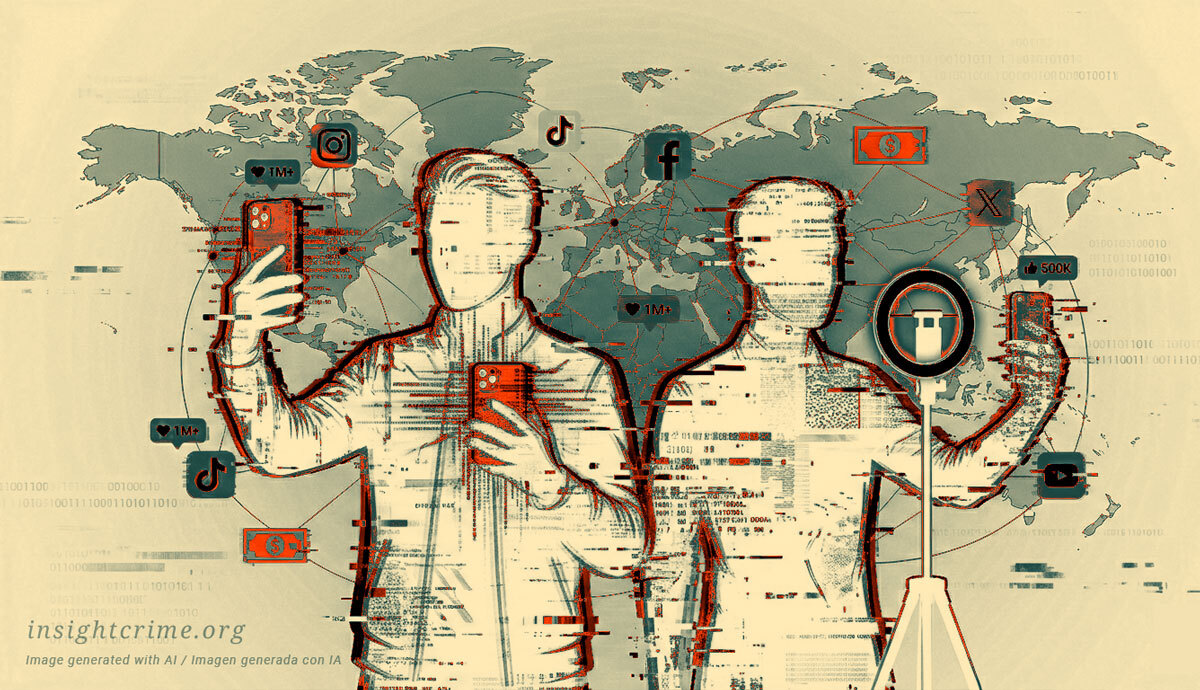
The arrest of several influencers in Brazil shows how social media facilitates money laundering for criminal groups.
Brazilian influencer Chrys Dias was arrested by authorities on April 15 as part of Operation “Narco Fluxo.” He is accused of allegedly being part of a money laundering network connected to the First Capital Command (Primeiro Comando da Capital – PCC), Brazil’s largest criminal organization and one of Latin America’s main drug trafficking networks. Dias’s wife, Débora Paixão, also an influencer, was arrested and placed under house arrest days later.
Dias has over 14 million followers on Instagram and manages MC Ryan SP, one of Brazil’s most popular funk singers, who was also captured as part of the operation. Another 36 people were also arrested across nine Brazilian states, including São Paulo and Rio de Janeiro. The network is reported to have moved around 1.6 billion reais (approximately $320 million) since 2023, according to Brazilian authorities.
SEE ALSO: Colombian Criminals Use Music Industry to Launder Money
Investigations into Dias focused on raffles for apartments, cash, motorcycles, and luxury cars that he organized through his social media. Hours before his arrest, he had announced a raffle for an apartment worth R$200,000 (approximately $40,000).
Dias is not the only influencer accused of laundering through raffles. A Colombian influencer, Javier Arias Castañeda, known as Javier Arias Stunt, was charged by the country’s prosecutor’s office for allegedly laundering money from drug trafficking through raffles for properties, motorcycles, and cars via his online channels.
And in Mexico, 64 influencers are under investigation by the country’s Financial Intelligence Unit (Unidad de Inteligencia Financiera – UIF) for using raffles and advertising contracts on social media to launder money for criminal networks such as the Sinaloa Cartel.
Influencers’ Money-Laundering Techniques
Influencers can help launder money from criminal activities in several ways, in some cases unknowingly.
Raffles are one of the main red flags, as influencers receive large sums of money through ticket sales, transactions that are not always reported to the relevant authorities.
“They might say they sold 1,000 tickets, for example, when they actually only sold 100. The other 900 are money being laundered,” said Luisa María Acosta, an expert in financial flows and money laundering in Colombia. “Since there’s no transparency, the exact number of tickets sold, their price, or who bought them is unknown.”
In other cases involving raffles, a person or organization involved in criminal activities gives money to the influencer under the guise of donations, and the influencer returns it through raffle prizes, explained Joao Paulo Martinelli, a lawyer with expertise in anti-money laundering and counterterrorism financing in Brazil.
Fragmented transactions also raise money laundering alarms. Through their activities on social media, influencers may receive multiple small payments for donations or advertisements that are not reported as suspicious operations because they are below the thresholds set by financial entities. These transactions can also be made through cryptocurrencies and virtual wallets, which are even harder to trace.
Influencers rarely act alone, Acosta said. Professionals such as lawyers, accountants, and notaries also participate in the schemes to provide a veneer of legality to the transactions and activities conducted through social media.
What Makes Influencers Attractive for Money Laundering?
Influencers’ ostentatious lifestyles and the regulatory gaps surrounding their profession create the ideal conditions for criminal groups looking to launder money.
The large sums of money social media personalities receive through donations, advertising campaigns, and other sources have normalized an image of opulence in the collective imagination. Influencers show off cars, trips, mansions, jewelry, cash, exotic animals, and even gold bars, with no questions asked—these are seen as the luxuries of wealth.
“For society, it’s very normal for an influencer to have five luxury cars, three mansions, and wear expensive clothes and jewelry,” said Acosta. “No one asks where that money comes from because it’s socially acceptable.”
Although influencers must comply with general regulations, most Latin American countries do not have specific laws regulating this profession or recognizing them as subjects of financial control, a gap that can be exploited for money laundering.
SEE ALSO: How Criminals Use Art and Culture to Launder Money
In countries like Colombia and Brazil, efforts to prevent money laundering remain primarily focused on traditional sectors like finance, corporate, real estate, and vehicle sales. While large sums of money circulate in other sectors like entertainment, sports, arts, and social media, they are harder to regulate due to the subjective nature of pricing services.
Brazil is one of the few countries that has made the most progress in regulating influencers. In January 2026, authorities passed a law regulating the multimedia profession, which includes influencers and content creators. Brazilian lawmakers are also debating a bill that would reform the current money laundering law to include influencers as entities required to report suspicious financial transactions.
Don't Miss:
-
A Blow to the Caborca Cartel! ‘El Cara de Cochi,’ Wanted in the U.S. for Fentanyl, Is Captured
-
Tiguerones Leader ‘Willy’ Is Living Free in Spain
-
Video Shows CJNG Member Burying Landmine in Apatzingán, Michoacán
-
Explosives Workshop Raided after Shootout in Balleza, Chihuahua
-
The Eccentric Extravagances of “Captain Sol”: 12 Properties, a Penthouse in Tulum, and Casino Spending