
 Donate to ICIJ
  Chelsea FC fined millions over secret payments under Abramovich ownership
  Nearly half of powerful .50-caliber ammo seized by Mexican government came from US Army plant, defense minister says
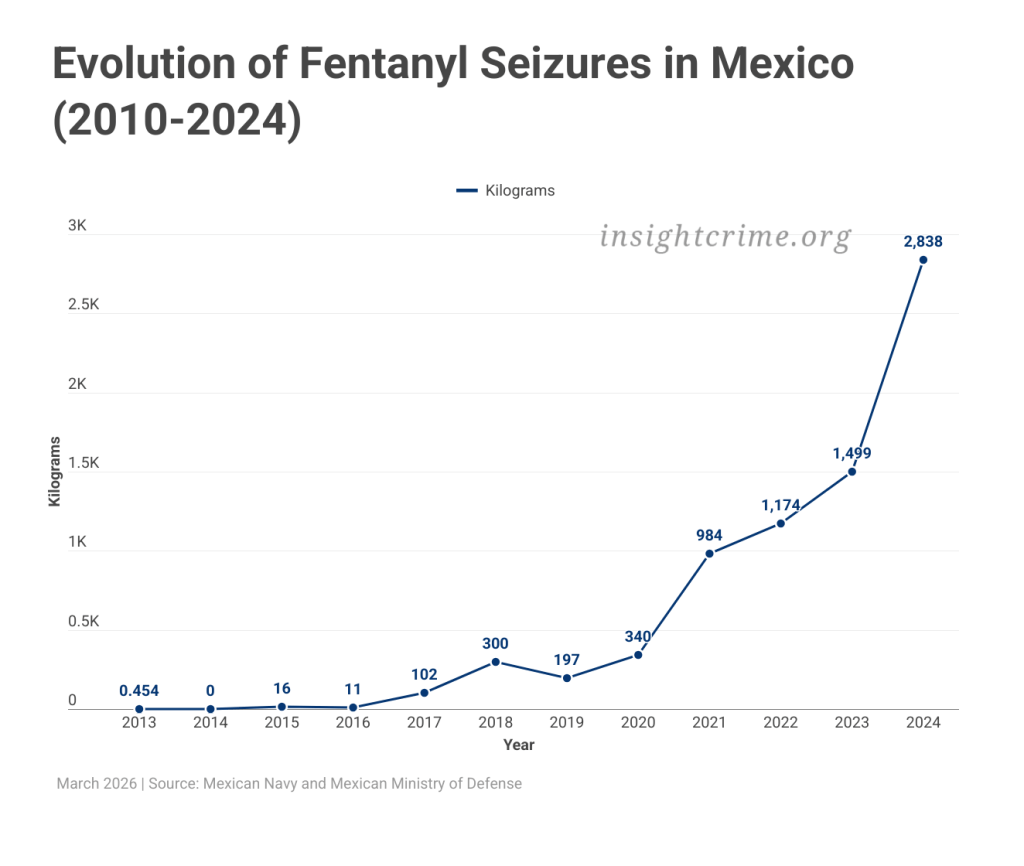
 As Mexican criminal organizations became the main suppliers of illicit fentanyl to the United States, small pockets of domestic consumption began to emerge along key trafficking corridors.
Since at least 2016, fentanyl has been detected in local drug markets in border cities such as Tijuana and Mexicali in Baja California, and has since appeared in other cities along or near the border, including Nogales and Hermosillo in Sonora, and Ciudad Juárez in Chihuahua.
Official data remain limited, making it difficult to estimate the market’s growth. The most recent national drug-use survey, published in late 2025, found that 0.2% of the population reported having used illicit fentanyl at least once. According to the National Commission on Mental Health and Addiction (Comisión Nacional de Salud Mental y Adicciones – CONASAMA), 919 people reported having consumed fentanyl at least once while seeking treatment in Mexico in 2024. Both datasets, however, have methodological limitations that likely underrepresent the true size of the market (see the Annex section of the report).
Still, the impact on the ground in northern Mexico was substantial. Cities where fentanyl took hold saw a surge in lethal overdoses and increasingly strained health systems.
“Fentanyl hit the community hard. It was a very painful process,” said Alfonso Chávez, who works at Prevencasa, a Tijuana-based community organization that provides health services to people who use drugs.
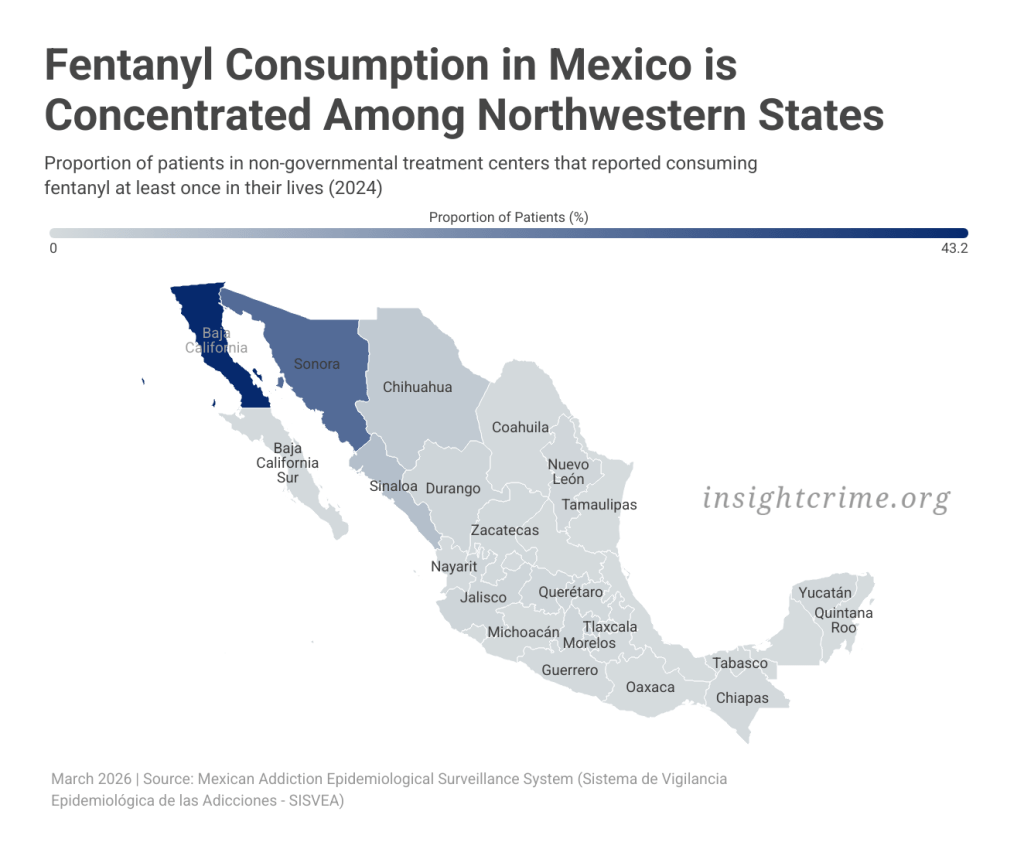
However, the integration of fentanyl into local markets has been far from uniform. Even in cities with similar structural conditions, distributors adapted how fentanyl circulated — and the formats in which it was sold — to existing criminal rules and local consumption patterns. This produced differing levels of market penetration across cities, showing that the spread of fentanyl can follow multiple paths. Understanding these trajectories may offer valuable lessons for other regions where synthetic opioid markets could emerge.
Multiple Introduction Methods
Unlike the United States and Canada, Mexico did not experience a large wave of opioid dependency driven by prescription drugs. What Mexico did have were longstanding pockets of heroin consumption, which coexisted with established markets for methamphetamine, cocaine, and marijuana. It was within these settings that fentanyl consumption first took hold.
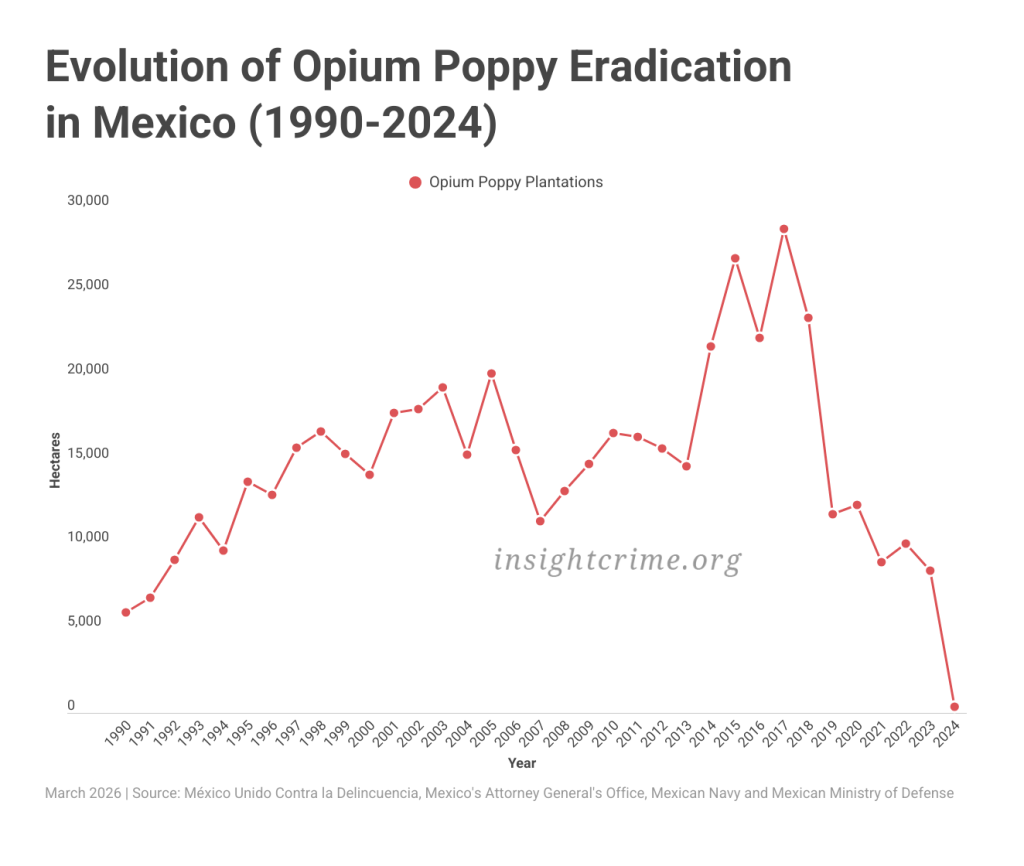
In many ways, the development of the local fentanyl market resembled what sources along Mexico’s northern border described as a “perfect storm.” On the supply side, Mexico’s heroin economy began to decline in the mid-2010s as fentanyl replaced heroin in US markets, leading to falling opium prices and reduced production. For traffickers already moving fentanyl toward the United States, expanding into domestic markets offered an opportunity to increase profits by leveraging existing distribution networks.
On the demand side, heroin users faced an increasingly unstable supply. As heroin became weaker and less consistent, many users struggled to manage withdrawal symptoms and sought a stronger substitute. At the same time, nationwide shortages of methadone, a medical-grade opioid used in gradual detoxification therapy, between 2019 and 2023 forced many treatment clinics to close or reduce services, pushing patients back toward illicit opioid markets.
In some cities, users encountered fentanyl unintentionally. In Tijuana and Mexicali, the drug was initially introduced by distributors as an adulterant in heroin. In Mexicali, it was commonly mixed with black tar heroin, while in Tijuana, it often appeared disguised as white powder heroin. Many heroin users did not initially realize they were consuming fentanyl, noticing only a faster onset of effects, a stronger high, or unexpected overdoses.
This introduction occurred quietly, without the open marketing or promotion often seen with other street-level drug introductions. Early adopters were often highly vulnerable individuals: long-term heroin users living on the streets, many deported from the United States and lacking stable support networks. As shipments with varying potency entered the cities, overdose risks increased, according to local organizations consulted by InSight Crime.
In other cities, however, fentanyl was introduced from the outset as an explicit alternative to heroin. In Nogales, users reported that distributors began offering fentanyl in counterfeit oxycodone pills known as “M30s,” already circulating widely across the US-Mexico border. During periods of heroin scarcity, these pills were marketed as a stronger option capable of relieving withdrawal symptoms.
“I had already gone a week without heroin, getting by with alcohol and Rivotril, but I couldn’t work like that — I was in bad shape, very bad. Then a distributor told me, ‘I have these pills, but it’s fentanyl. You can’t inject it because you’ll die,’ and he showed me how to smoke them,” a user from Nogales explained.

Similarly, in Hermosillo, some distributors marketed fentanyl as China White, a white powder form of heroin. Over time, it evolved into a distinct product, sold either as powder or in pill form to users seeking stronger effects.
“A distributor offered me fentanyl in powder. At first, I thought it was China White, but he told me it was fentanyl, much more potent than China, and that’s what I was looking for because heroin no longer did it for me,” a fentanyl user from Hermosillo told InSight Crime.
In other markets, fentanyl circulation has remained extremely limited. In Ciudad Juárez, despite the large quantities trafficked across the Juárez–El Paso corridor and the longstanding heroin consumption population, the local market continues to be dominated by heroin and methamphetamine. Restrictions imposed by criminal groups mean fentanyl appears only sporadically and circulates discreetly through small networks.
Several users told InSight Crime they had only rarely encountered the substance, in formats ranging from pills to adulterated heroin.
“In 2022, I was offered a stronger dose of heroin. I assumed it had fentanyl because I immediately overdosed. But since then, I haven’t come across it again,” said a heroin user in Ciudad Juárez.
Is Mexico’s Fentanyl Market Still Growing?
Nearly a decade after fentanyl began circulating, there is little evidence that the local market continues to expand systematically. Sources along the northern border said the market’s rapid growth appears to have slowed compared to its early years, though risks on the streets have not disappeared, as overdose spikes continue to occur.
In cities such as Tijuana and Mexicali, fentanyl has become part of daily consumption routines. Users’ tolerance has increased, perceptions of the drug have evolved, and for some, it has become a preferred option, particularly among those seeking stronger effects to manage withdrawal.
“We managed to stabilize the fentanyl crisis for now. But the market is still unpredictable so the risks have not disappeared,” said Chávez.
Meanwhile, in Nogales, Hermosillo, and Ciudad Juárez, fentanyl remains confined to smaller niches or specific forms, as local criminal groups strictly limit its sale.
The role of criminal organizations appears to be key in determining the trajectory of the market, influencing whether it continues to grow or remains contained. In some areas, they allow fentanyl sales under controlled conditions, while in others they enforce explicit or informal restrictions that limit its spread.
SEE ALSO: 5 Models of Criminal Control Over Fentanyl Markets in Northern Mexico
Other factors have also contributed to the stabilization. Several testimonies indicate that fentanyl use is concentrated among specific groups of users with more predictable habits and, in some cases, higher tolerance. Many have prior experience with opioids, which limits the influx of new users and keeps the market focused on chronic, more stable groups. It is also possible that the fentanyl-using population has decreased since the drug’s introduction, following several waves of overdose deaths.
Moreover, stimulants, particularly methamphetamine, remain dominant. In residential treatment centers InSight Crime visited along the northern border, between 80 % and 90 % of patients were admitted for methamphetamine use, while fewer than 10 % were treated for opioid use, including heroin and fentanyl. This historical preference may have prevented a full shift to fentanyl, keeping much of the population within non-opioid markets. And although criminal groups seem to be experimenting with mixing fentanyl and stimulants, this does not appear to have resulted yet in more users.
The high number of deaths and medical emergencies in the early years also instilled fear among some consumer groups. Direct or close experiences with overdoses prompted users to abandon fentanyl or switch to alternatives perceived as less risky, such as methamphetamine. Informal warnings among users reinforced this caution.
“I checked myself into rehab because two of my relatives died from fentanyl overdoses, and I also overdosed several times,” said a patient at a treatment center in Ciudad Juárez.
Finally, community harm-reduction organizations have played a crucial role. In cities such as Tijuana, Mexicali, and Ciudad Juárez, the distribution of naloxone, fentanyl test strips, and safer-use education has helped reduce fatal overdoses and manage fentanyl use among certain groups of users.
“I think that overdoses have stabilized, but not because there is less fentanyl on the streets. People just know how to consume it in a safer way,” said a fentanyl user in Tijuana who attends Prevencasa’s services.
*Angélica Ospina, Cecilia Farfán, Steven Dudley, Mike LaSusa, and Bianca Acuña contributed to reporting for this investigation.


Don't Miss:
-
Mayito Flaco and Ivan Archivaldo Meet Up?
-
5 Models of Criminal Control Over Fentanyl Markets in Northern Mexico
-
How Criminal Decisions Over the Drug Market Impact Public Health in Northern Mexico
-
CJNG Hitman Commander Killed in Shootout in El Alpuyequito, Colima
-
Kristel León Galaz, Wife of Güero Reyna, Is Arrested