
 Michael Marx on Corporate Campaigns in the USA
  Losing language and culture in Xinjiang
  Manila’s EV ambitions confront economic and energy realities
 Russell Vought, the director of the Office of Management and Budget, wants to shutter the Consumer Financial Protection Bureau (CFPB).
National Consumer Law Center
He’s cutting staff, cutting budgets and closing down the CFPB headquarters.
Many former CFPB staffers are fighting back and some have been successful in getting court orders to slow down Vought’s rampage. But only slow it down.
Last month, the Trump administration launched a new broadside against the CFPB consumer complaint database, making it increasingly difficult for people to seek help from the CFPB and shifting resources to discourage people from disputing errors on their credit reports.
In its announcement, the CFPB said it will require people to establish their identity with both a mobile phone and an email address before they are allowed to report the abusive actions of a large corporation.
The CFPB also suggested it would pursue individuals who had “abused” the complaint system. The CFPB did not provide any information as to how it would distinguish “abuse” from legitimate concerns or any evidence to support its allegation of supposed widespread abuse.
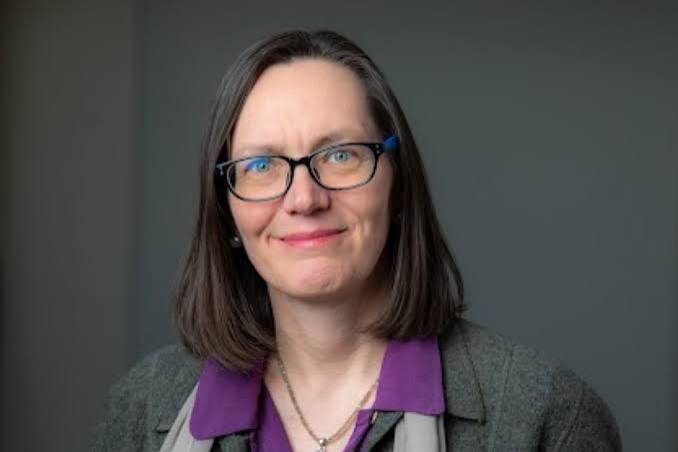
Diane Thompson is deputy director and chief advocacy officer at the National Consumer Law Center and a former staffer at the CFPB.
“The Trump administration’s CFPB, at the behest of the credit reporting companies, is deliberately creating barriers for people to report illegal and abusive actions by large financial companies,” Thompson said. “The CFPB was created to protect consumers, not corporations, and should return to that mission.”
Credit reporting complaints are by far the biggest source of complaints to the CFPB, accounting for about 85 percent of all complaints, with consumers often describing problems with incorrect information.
The consumer agency received more than 5.8 million complaints about credit and consumer reporting companies in 2025, doubling the complaint volume of the previous year. These errors can drive up costs across every aspect of their financial lives.
In February, the CFPB also took steps to reduce the number of consumer complaints, sending aggressive warnings to people attempting to add a complaint to the database telling them not to submit a credit reporting complaint unless a dispute had already been formally filed with the credit reporting company.
The notices, which went live on February 4, also require people to agree to onerous and legally dubious statements about their eligibility to seek help. The notices are not limited to complaints about credit reporting errors and appear before people can submit their requests for help for any financial issue ranging from mortgages to debt collection.
“Vought wants to dismantle the CFPB, but he is also interested in traumatizing staff along the way,” Thompson told Corporate Crime Reporter in an interview last week. “It’s one thing to just get rid of an agency, it’s another thing to say – I’m going to make the lives of all of these public servants miserable. And these are public servants who have dedicated their lives to serving the public good, to working for less than they could get in the private sector, to being at the whim of these ever-changing political fortunes, because they believe that their service and their knowledge can be best applied to the public good by working for this agency. And he deliberately seeks to demonize, stigmatize, and harass those people. It’s just a whole other level of a failure of our systems and our institutions.”
How is he doing in trying to close down the agency?
“There has been an injunction that has stayed some of the action. At the same time, there has been a steady exit of staff – people are leaving the agency. The rulemaking they’ve done has been incredibly rushed, somewhat haphazard, poorly announced, and disdainful of public comment.”
“The recent revisions of the website that they did make it much harder to find, or impossible to find on the CFPB site, critical information that was published under all the previous administrations, including under both Kathy Kraninger and Mick Mulvaney.”
“You have to go to other places to find information about what the CFPB did in those areas, and what it said. They’ve hidden data, they’ve diminished data. I was just looking for something today, and I can’t find it. They say they issued a final rule in the press release, but it doesn’t tell me where to find the final rule, or even what the final rule is called.”
“So, that undermines the credibility of the agency in the public, in the eyes of the courts, and with its employees. And once you undermine the credibility of an agency that can be very difficult to overcome going forward.”
“And then there’s the loss of talent. These attacks on public servants make it unlikely that most people would be willing to return even under a Democratic administration without considerably more civil service guarantees than we have now.”
“The trade-offs aren’t really worth it if you’re going to have four years and then leave. That means that long term, the best case scenario for the CFPB is that we see an overall diminution in its standing, in its effectiveness and in its ability to recruit and retain talented, committed career staff.”
The staff has been cut by how much?
“I would guess the staff is down at least twenty percent. And the administration has cancelled the lease on the CFPB headquarters building. So there’s no longer a space for workers to go to work.”
“They’ve canceled or are going to cancel leases on the buildings in Atlanta and San Francisco and New York. And it takes years to negotiate a lease for federal property. Now they have another place where they say staff are going to have to work, but there’s a physical destruction of the infrastructure that has happened.”
If I were to go visit the CFPB headquarters building now at 1700 G Street NW in DC, just blocks from the White House, what would I find?
“There is no CFPB there. There are rumors about who is moving in there, but there’s no CFPB.”
Under Trump, government workers have to
show up at the office. Where are they going?
“They tell them all to work from home, and they give them no work. As for the budget, at one point during last year, Vought asked for no money to fund CFPB. He was trying to zero it out. The only reason there’s a draw is because of the litigation. The judge told Vought that he could not zero out the agency.”
“Because of the litigation, people are still being paid.”
The Trump administration is attacking the regulatory structure as a whole. But why is the administration seeking to shut down the CFPB, but not say the Securities and Exchange Commission (SEC) and the Federal Trade Commission (FTC)?
“The CFPB is designed to be a voice for the ordinary person, for everybody against these giant corporations that are taking over all of our lives.”
But arguably, so are the FTC and SEC.
“But it’s not their core mission in the same way. The FTC has a longer bipartisan history. And the FTC is not primarily about consumer finance. It’s about monopoly. The FTC is not the same kind of agency. The CFPB is about recovering money from corporations for individual people.”
“Businesses have an interest in having a stable CFPB so they know what the rules are. But they certainly don’t want a CFPB that is doing aggressive enforcement. Vought has cut all of the enforcement and all of the supervision. There is no supervision going on as far as I know. Which is shocking. Usually, Republican administrations favor supervision, because it gives you a quiet way to resolve issues before they get to be big issues.”
What do you mean by supervision?
“The FTC doesn’t have this. One piece of the CFPB is the ability to supervise banks and non banks and debt collectors. The CFPB can go to those entities, ask them for information, conduct an exam to see whether or not they are refunding money when they should, to see whether they are in compliance with fair lending rules, whether their disclosures are correct, and how they are resolving consumer complaints.”
“That’s a critical role of the CFPB – the ability to supervise the non banks. Non banks are now the largest originators of consumer mortgages as well as the largest services of consumer mortgages. Most mortgages are now serviced by non banks. No other federal agency has the authority to go in and inspect their books and make sure they are following the law.”
“We know that keeping a close eye on mortgage lending is critical to our national economy.”
One of the notable aspects of the CFPB is that it had a great portal for consumer complaints. A database grew out of it that fueled much of the enforcement.
“There was an early attempt by Vought to shut it down completely. That effort was stopped by the judge because of the clear statutory mission. It is in the statute that the CFPB has to have a complaint function and that the CFPB can make that information public. And companies have to respond and they have to meet deadlines.”
“It’s hard to shut that down and comply with the statute.”
“The complaint portal is still up and functioning. You can still search. But what has disappeared from the website are all of the reports that the CFPB did using that data to highlight emerging trends and risks. And the CFPB has also been throttling back and trying to reduce the number of complaints. But complaints even under Vought had been rising “
“The first thing they did was they added all of these requirements to file a complaint. And then most recently, just this past week they said anybody who wants to file a complaint with the CFPB has to use two factor authorization. That’s just bonkers. If you call any airline to complain about your seat, you don’t have to pass through two factor authorization. And you don’t need a mobile phone and an email address to get in.”
“This portal is really special. Supervision is one thing. But having access to this consumer data and responding in real time to people and making companies answer people’s complaints is something else that makes the CFPB different. The FTC has a complaint function but it’s nowhere near as robust. The CFPB’s complaint function is the most robust in the federal government. It’s really a jewel.”
“It’s a place that people have come to trust and to get help. Vought has been trying to systematically undermine that system and to drive the numbers down.”
The number one complaint to the CFPB concerns credit reporting agencies. Inaccurate reports that can damage a consumer’s credit rating. And you are saying that Vought is doing this at the behest of these credit reporting companies?
“He says they are doing it in conjunction with those companies.”
Why would the companies want to destroy this complaint mechanism?
“For one thing, the reporting makes them look bad. It looks bad for them when their numbers are high. Second, if the CFPB is getting a lot of complaints about a company, the companies are required to investigate each one of those. And it’s expensive and they don’t want to investigate.”
“If you file with a credit reporting company, it takes forever, the process isn’t clear, they do it badly. Usually it takes multiple tries before they resolve the issue. Sometimes you need to hire a lawyer. It’s not something they do well or particularly want to do well.”
“The CFPB has been very successful over its short life of building up a pretty durable reputation as a government agency that will help people. When I first started working at the CFPB in 2014, when I told people I worked there, they would give me blank looks. Some of them would understand it when I said – it’s the agency Elizabeth Warren had the idea for. Some of them would understand it when I said – after the financial crisis, Congress decided we need an agency on mortgage lenders and other consumer lenders. And people said – that makes sense.”
“Now when I say – I used to work for the CFPB – many more people have some idea of what it is. It has become an agency that people recognize as a place that will help them. That’s not what they are getting with this current CFPB.”
[For the complete q/a format Interview with Diane Thompson, print edition only.]