
 The Taliban’s New War Begins at Home
  Panama removed from EU’s tax haven ‘blacklist’ a decade after the Panama Papers
  Crackdown and Controversy: The Battle Over Beach Bars and Noise in Phuket’s Bang Tao
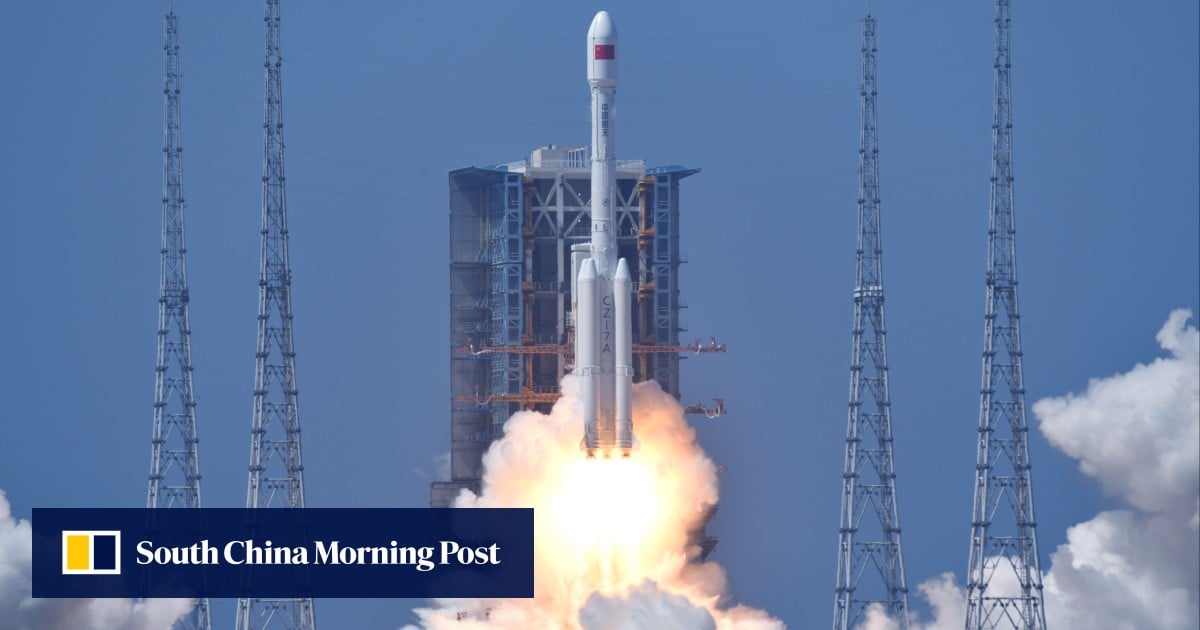
China has tested a satellite engine with a record-breaking operating life, a key technology that could help propel the world’s largest communications, military and deep-space spacecraft into their intended orbits faster and more reliably.
The upgraded engine, developed by the China Academy of Aerospace Propulsion Technology in Xian, can produce 750 newtons of thrust, according to Chinese media reports.
The Chinese engine fired for 11,617 seconds – 3.2 hours – across five orbit-raising manoeuvres during its maiden flight in late June, placing Communications Technology Experiment Satellite 26A into orbit about 35,800km (22,000 miles) above Earth.
The engine, which was designed to run for nearly 10 hours, operated continuously for more than 14 hours during testing, thanks to a novel heat- and oxidation-resistant coating, the reports said.
In contrast, the leading engines currently used to raise spacecraft into their final orbit after launch, including the US-made R-42DM and Europe’s Leros-1B, are typically designed to operate for about seven hours.
The extra operating time did not come at the expense of performance, according to the reports.
Don't Miss:
-
Drug Trafficking, U.S. Banks, and the Economic Reality Under Trump
-
Ivan’s Mob Beheads A Los Mayos Member
-
Ex-OFAC Official: The Cartel Risk Companies Can’t See | The InSight Take
-
Why Ecuador Is Losing Its Fight Against Organized Crime
-
‘El Cromo’ Arrested in Guadalajara; He Is Linked to a Group Affiliated with the CJNG