
 The Taliban’s New War Begins at Home
  Panama removed from EU’s tax haven ‘blacklist’ a decade after the Panama Papers
  Crackdown and Controversy: The Battle Over Beach Bars and Noise in Phuket’s Bang Tao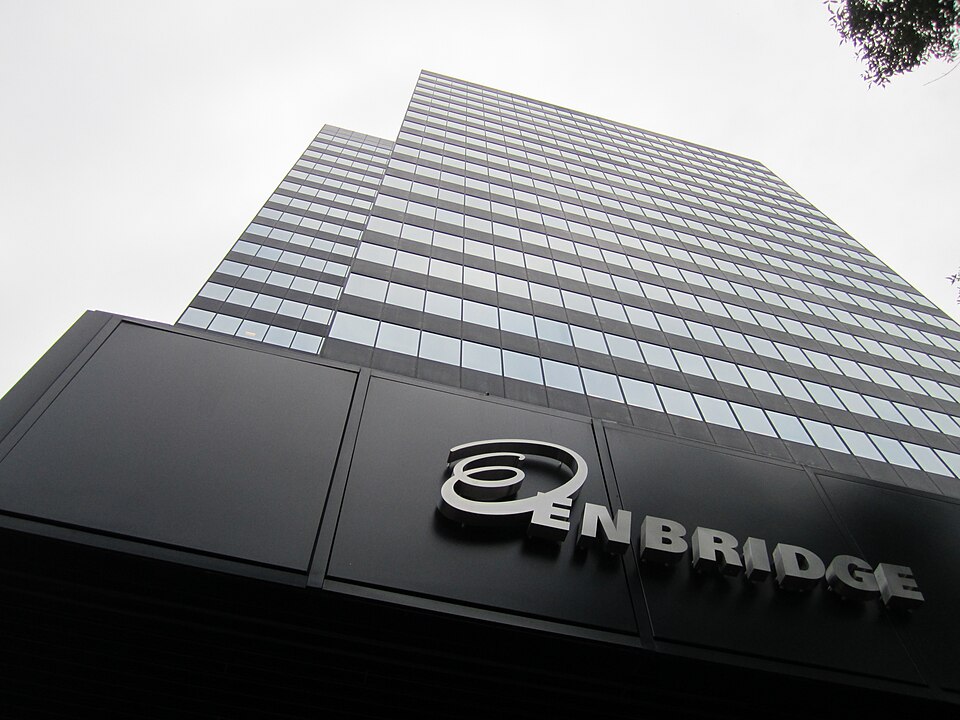
Canadian natural gas producers are hyping AI data centres as the next growth opportunity for their polluting product on investor calls.
DeSmog dove into transcripts from recent investor calls and found that gas companies are promoting a massive build-out of controversial server farms as their next growth sector even as the energy transition accelerates, opposition to data centres increases, and climate change undermines already-low gas prices.
TC Energy, which operates natural gas pipelines across North America and owns gas-fired power plants told investors in their Q4 report, “We continue to see growing demand across multiple segments, driving potential expansion projects to support new natural gas-fired power generation, coal to natural gas conversions, LDC [Local Distribution Company] growth and data centres.”
The energy company plans to complete the $900 million Northwoods pipeline project to the U.S. Midwest by 2029, which will supply 400 million cubic feet of natural gas per day to power data centres in Wisconsin, Michigan, Illinois, and Ohio.
Several gas companies are considering directly powering data centres in Alberta. Premier Danielle Smith has an aggressive agenda to build natural gas demand through her government’s “concierge” program for proposed data centres. This regulatory red carpet promises a “direct gateway for investors and operators entering Alberta’s [AI] market…to deliver unparalleled speed to market”. The Canada Energy Regulator has predicted 12 GW of energy demand for data centres by 2050, while the Alberta Electric System Operator listed nearly 21 GW of demand for projects on its list as of September 2025. These numbers eclipse the much lower estimate of 5.5 GW projected in Carney’s “AI for All” strategy.
“We’re essentially looking at these data centers as digital pipelines and digital refineries for us to help get the value from our natural gas to global markets, but in a creative modern way,” Alberta’s Technology Minister Nate Glubish told Oil and Gas 360 in an interview.
A recent investor call for Tourmaline Oil Corporation, which calls itself “Canada’s largest natural gas producer”, saw senior management promoting the prospect of new data centres driving additional natural gas demand. “We’re excited about what’s happening in Alberta altogether,” CEO Michael Rose said in response to a question from Goldman Sachs about AI demand. “By 2030, just adding up some of the [data centre] projects we kind of see it as a minimum 1.5 Bfc [billion cubic feet] a day of gas consumption inside the basin. And that would be ahead of LNG Canada Phase 2.”
Calgary-based pipeline giant Enbridge is also hyping AI as a boost to their bottom line. “Currently, we’re advancing over 50 potential data center opportunities that could require up to 10 Bcf per day of natural gas,” CEO Gregory Ebel told investors during their Q4 2025 earnings call. “We expect to begin sanctioning these additional projects throughout 2026 and more in 2027.”
Ottawa is likewise promoting AI as a benefit to natural gas producers. DeSmog recently obtained an internal document from the Privy Council that revealed how the Mark Carney government believes a build-out of vast electricity-consuming data centres across the country will “provide markets for Canadian energy” and lead to “net new energy resources.”
These investor calls also reveal that the AI data centre buildout is a strategy to counter long-term weaknesses of the natural gas industry.
Tourmaline CEO Rose conceded that “unusually low pricing” last winter in normally lucrative California export markets “will limit free cash flow and constrain our ability to fund a special dividend in Q1.”And why was that? “They had no winter,” admitted Rose to an investor’s question. “They had an enormous amount of rain. So lots of excess hydro…it certainly hasn’t helped gas.”
Meanwhile, overseas export markets for LNG are rapidly shifting towards cheaper and less risky renewables, accelerated by energy security issues highlighted by the closure of the Strait of Hormuz. “The Republic of Korea as a whole must move very quickly toward renewable energy,” warned South Korean President Lee Jae Myung Lee in March. “Our future will be at serious risk if we continue to rely on fossil fuels.”
Vingroup chairman Pham Nhat Vuong recently informed shareholders the Vietnamese conglomerate had cancelled plans to build 4.8-gigawatt project LNG power plant, which would the county’s largest. Vuong instead informed investors, “We have already submitted a proposal to the government for wind, solar energy, and a battery energy storage system.”
Will AI data centres provide a long-term lifeline to Canadian natural gas producers? Companies certainly hope so. “The whole industry is falling all over ourselves to find a way to draw investment here to increase demand for our energy and to avoid the commodity otherwise being wasted at rock-bottom prices,” Mike Belenkie, CEO of natural gas producer Advantage Energy recently told Reuters.
Not everyone agrees with the self-serving and symbiotic agenda of Big Gas and Big Tech. Manitoba Premier WabKinew recently rejected a proposed massive data centre in his province and believes citizens somehow have a higher calling than boosting prices for fossil fuel companies. “I would much rather have technology serve the people of Manitoba than have the people of Manitoba serve technology,” Kinew told the legislature.
Don't Miss:
-
Crackdown and Controversy: The Battle Over Beach Bars and Noise in Phuket’s Bang Tao
-
‘People’s Rights Are Being Signed Away,’ Claim Albertans Near Proposed Carbon Capture Project
-
Exclusive: Pig and Poultry Air Pollution Costs UK Over £130 Million a Year
-
Fossil Fuel Trade Group Chief Says Approving Rosebank and Jackdaw Would be ‘Climate Leadership’
-
AI Was Supposed to Cut Emissions. Instead, Fossil Fuel Companies Are Using It to Find More Oil and Gas.