
 New documents show how a retail chain’s sales practices helped put guns on US streets
  Singapore a battleground of commodities fraud lawsuits
  From Propagandist to Criminal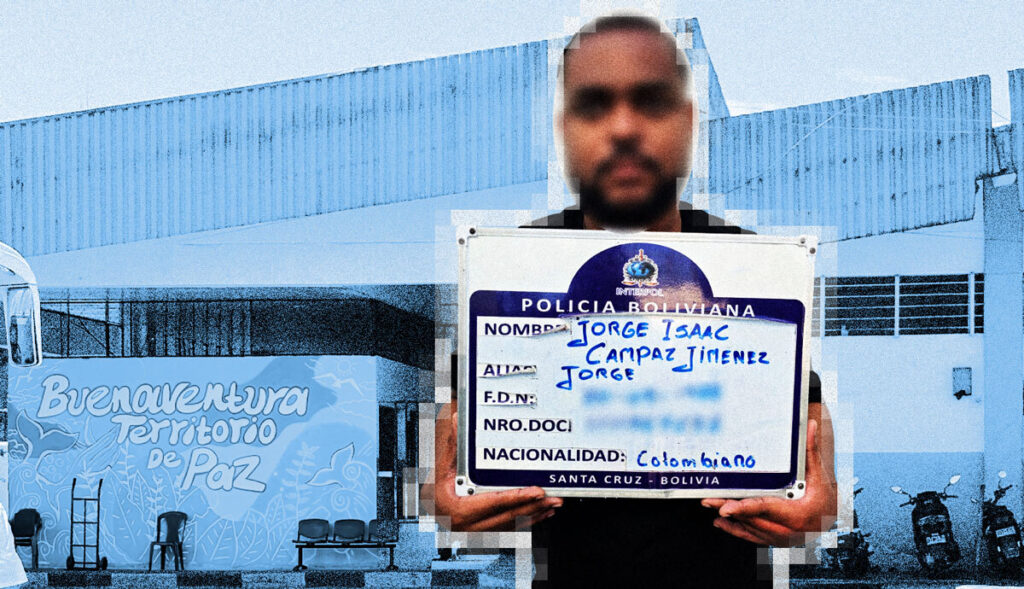
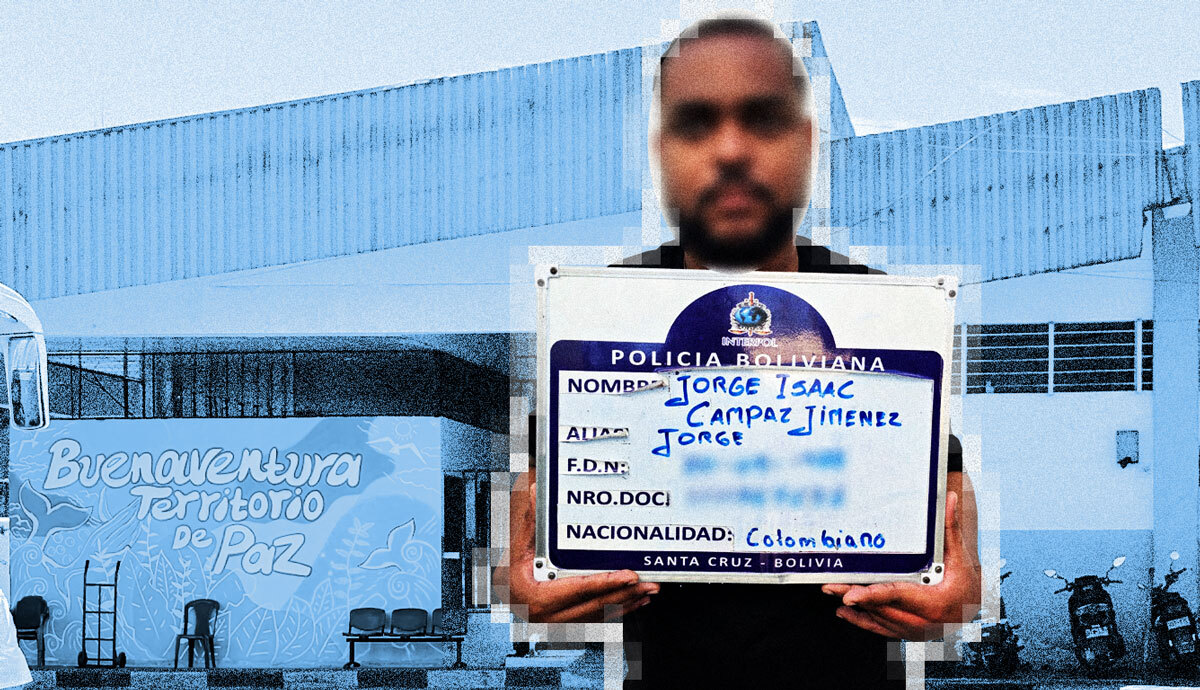
The arrest of a key criminal figure from Colombia’s Pacific coast in Santa Cruz, Bolivia, reveals that Colombian groups are expanding their presence across borders.
Jorge Isaac Campaz Jiménez, alias “Mapaya,” leader of the Espartanos, one of the most important criminal groups on Colombia’s Pacific coast, was arrested on April 6 by Bolivian police.
Acting on intelligence about the presence of highly dangerous foreign nationals at a country house on the outskirts of Santa Cruz, authorities launched an operation and were met with an exchange of gunfire at the scene.
In addition to Mapaya, 10 other Colombians and two Bolivians were arrested. They are accused of attempted homicide, illegal possession of firearms, and criminal association. They will be prosecuted in Bolivia.
The Colombian government has requested the extradition of two of those arrested, including Mapaya, who face charges of aggravated criminal conspiracy and illegal possession of firearms in that Andean country.
SEE ALSO: The Fragile Peace Behind and Beyond Prison Bars in Colombia’s Buenaventura
Mapaya belongs to the Espartanos, one of the two main criminal groups in Buenaventura, home to Colombia’s largest Pacific port. Like their rivals, the Shottas, the Espartanos provide local services to larger criminal groups and drug trafficking networks, contaminating containers inside and outside port terminals and coordinating the dispatch of go-fast boats loaded with drugs to infiltrate shipments at sea.
Mapaya became a top Espartanos leader in 2020, when the group split from the criminal group known as La Local. In 2021 he fled the city, continuing to direct the group from hiding and, apparently, from abroad.
Buenaventura’s Crime Scene Spreads
Mapaya’s capture is the latest in a series of leaders and members of Buenaventura’s main criminal groups arrested abroad, underscoring their territorial expansion beyond Colombia.
Although the Shottas and the Espartanos are still considered local criminal actors by Colombian authorities, the groups are increasingly responding to transnational dynamics, said Linda Posso, coordinator for the Pacific Office of the Peace and Reconciliation Foundation (Fundación Paz y Reconciliación), a Colombian research center specializing in armed conflict analysis.
“This internationalization is part of a process of internal reconfiguration within these gangs that works because the main unifying element is an illegal economy that requires multiple open channels to international trade,” she told InSight Crime.
The criminal migration of Buenaventura’s gangs accelerated in 2021, when members of the Shottas and the Espartanos fled the violence unleashed by the division of La Local.
In February 2026, Diego Fernando Bustamante, alias “Diego Optra,” the top leader of the Shottas, was arrested in Spain, where he allegedly arrived in 2025, evading Colombian authorities. In September 2025, John Camilo Flórez Moreno, alias “Ñoño,” third-in-command of the Shottas, was arrested in Chile.
SEE ALSO: Buenaventura’s Everlasting Cycle of Violence Continues in Colombia
Many Shottas and Espartano members settled in Chile, where a migrant community from Buenaventura formed in 2006, drawn by the local mining boom.
Shottas and Espartanos can be found throughout Chile, primarily in Santiago, Tarapacá, and Antofagasta. In November 2024, 40 people accused of belonging to the Shottas were arrested in Tarapacá, and in February 2025, 32 alleged members of the Espartanos were arrested in Santiago. What’s more, five of the Colombians arrested with Mapaya in Bolivia had previously been convicted of drug-related crimes in Chile and deported.
In Chile, these gangs have embedded themselves in extortion, “gota a gota” (loan sharking), and microtrafficking economies. Their presence has also been reported in port zones in regions like Antofagasta, raising concerns that they are entering into drug trafficking operations outside Colombia.
Mapaya’s arrest in Bolivia deepens these concerns. Santa Cruz is a hub for negotiating cocaine shipments, from where the drug can be transported to departure ports in countries such as Brazil or Chile. In March 2026, Sebastián Marset, one of Latin America’s most wanted drug traffickers, was arrested in Santa Cruz.
Don't Miss:
-
Former American Idol singer Caleb Flynn sentenced to life in prison for wife’s murder
-
Bogota mayor presses Chinese-led consortium for more metro workers as auditors flag delays
-
ICC unseals arrest warrants for 4 Taliban leaders wanted on gender persecution charges
-
Quebec votes in provincial election as separatist surge poses test for Canada’s PM Carney
-
“Here, We Confront Drug Traffickers Daily… And The U.S.?”