
 ICIJ’s investigations into systemic failures highlighted in 2025 annual report
  Judge orders Nazi-looted Modigliani linked to Panama Papers be returned to heirs
  Ten years after the Panama Papers, enablers and tax cheats are still being brought to justice
 The Caribbean has long been a pivotal node in the global drug trade, acting as a stepping stone for South American cocaine destined for consumers in Europe and the United States.
Since September 2025, the region has been at the center of high-profile US military operations targeting small boats allegedly transporting drugs off the coasts of Venezuela and Colombia. Dozens of airstrikes in Caribbean waters have killed at least 61 people in a campaign that Washington has framed as an effort to combat “narco-terrorists” who are “poisoning the American people” with drugs.
But the US focus on the Caribbean may have missed the broader picture, as an outsized share of cocaine moving through the region now heads to Europe instead of the United States.
What’s more, the Caribbean’s geography—hundreds of islands and territories spread across a vast maritime space—offers traffickers a diverse range of routes and transport methods. Targeting any one corridor is unlikely to stop the flow of drugs.
Here’s how cocaine moves through the region.
1. Route Overview
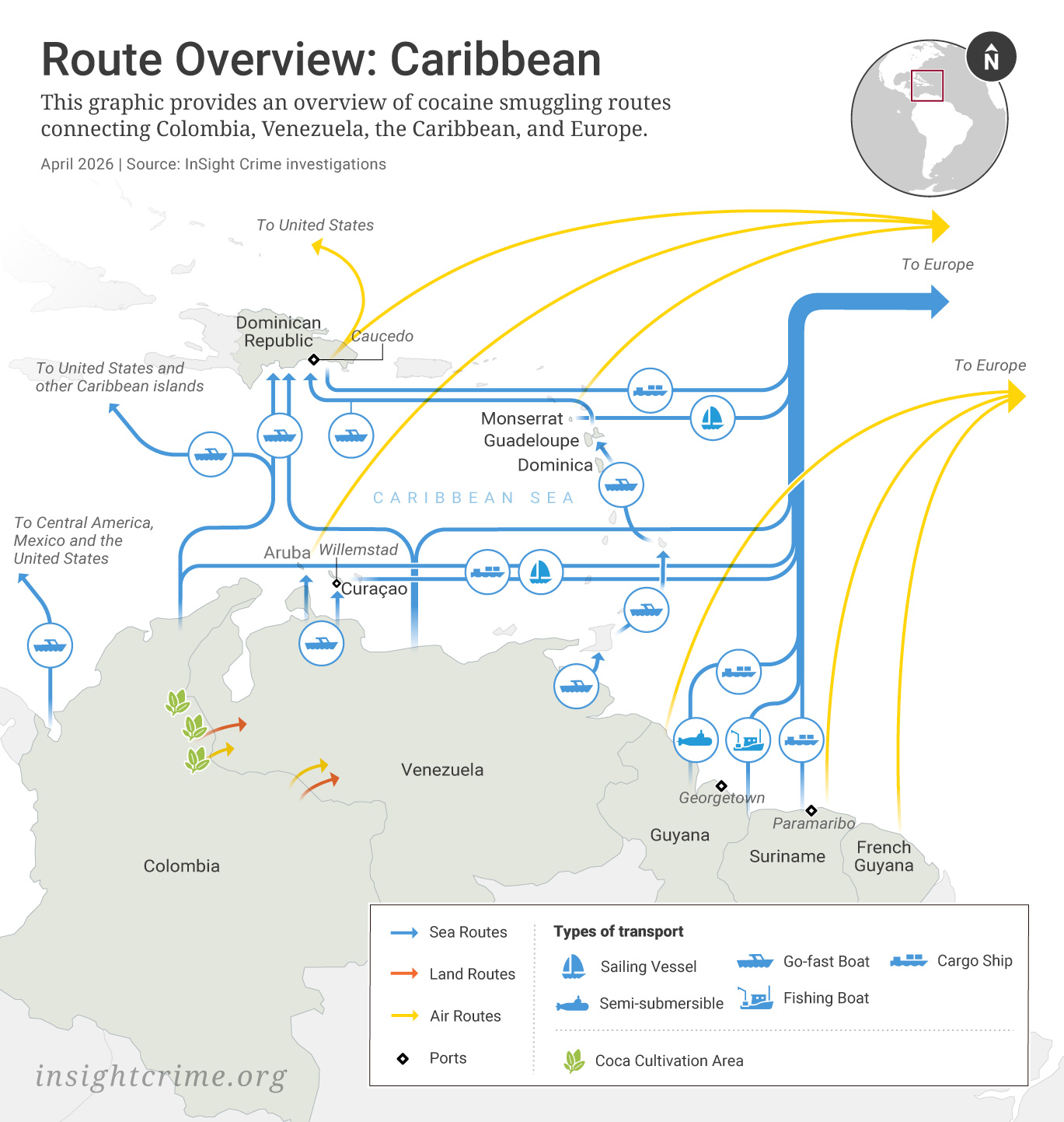
The Caribbean route emerged in the early 1980s, when South American traffickers began using the region’s islands as refueling stops for flights carrying cocaine to the United States. Law enforcement pressure later pushed much of this traffic toward Central America, but the Caribbean never disappeared from the trafficking map. Instead, its role has ebbed and flowed, with smugglers reviving routes when pressure rises elsewhere. In the past decade, growing demand for cocaine in Europe has helped drive a renewed surge in trafficking through the region.
2. Production Zones and Venezuela Transshipment
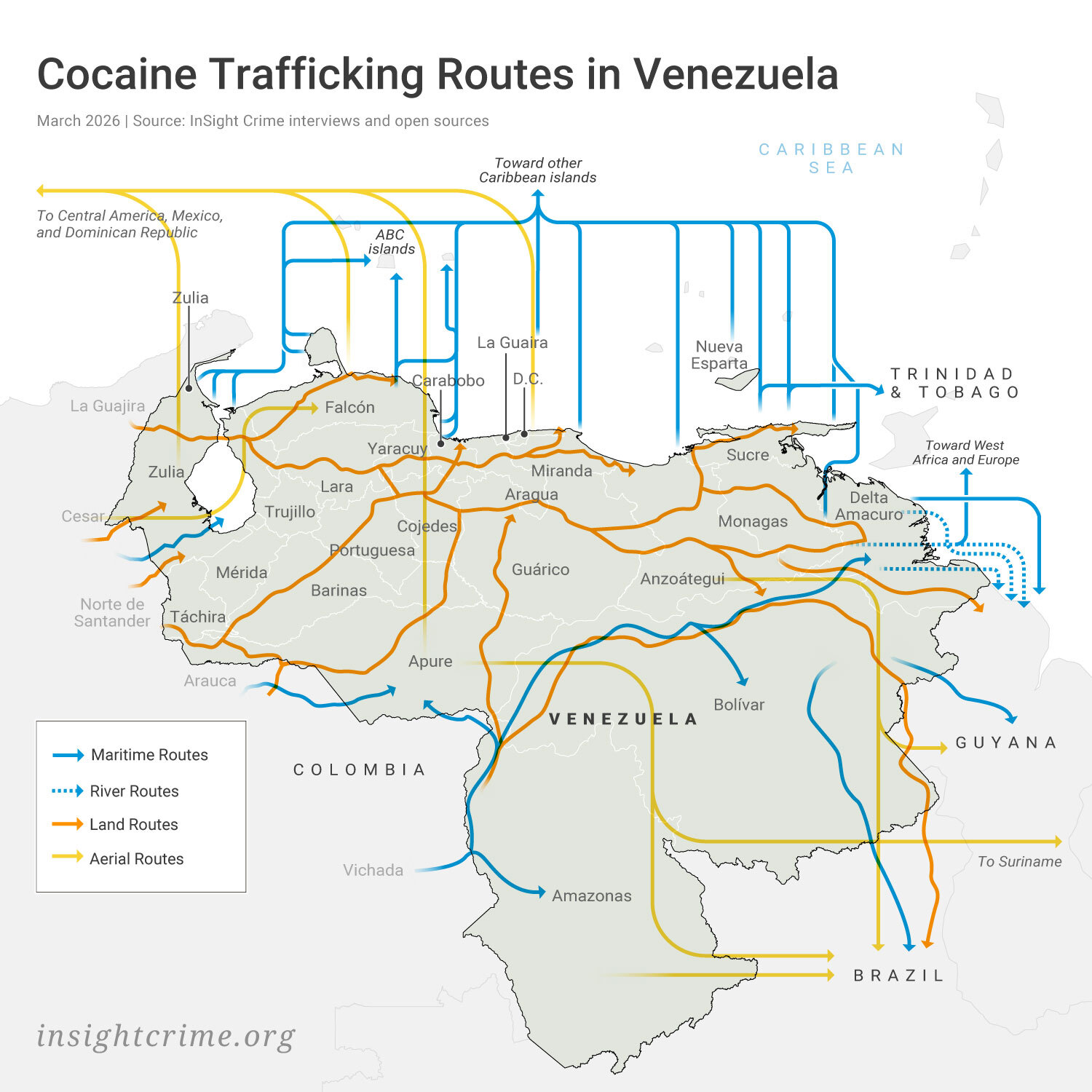
The cocaine supply chain starts in South American production zones, principally in Colombia. Some of this product is dispatched directly from Colombia to Central America and Mexico, from where it continues northwards toward the United States. But much of it is moved via Venezuela, taking advantage of its long, porous border with Colombia and extensive coastline. Once inside Venezuela, some shipments are transported east to Guyana and Suriname or South into Brazil. Most, though, are shifted toward coastal departure points using a mix of river, road, and air transport. From these transshipment hubs, loads begin their next leg toward islands in the Caribbean.
3. Venezuela to ABC
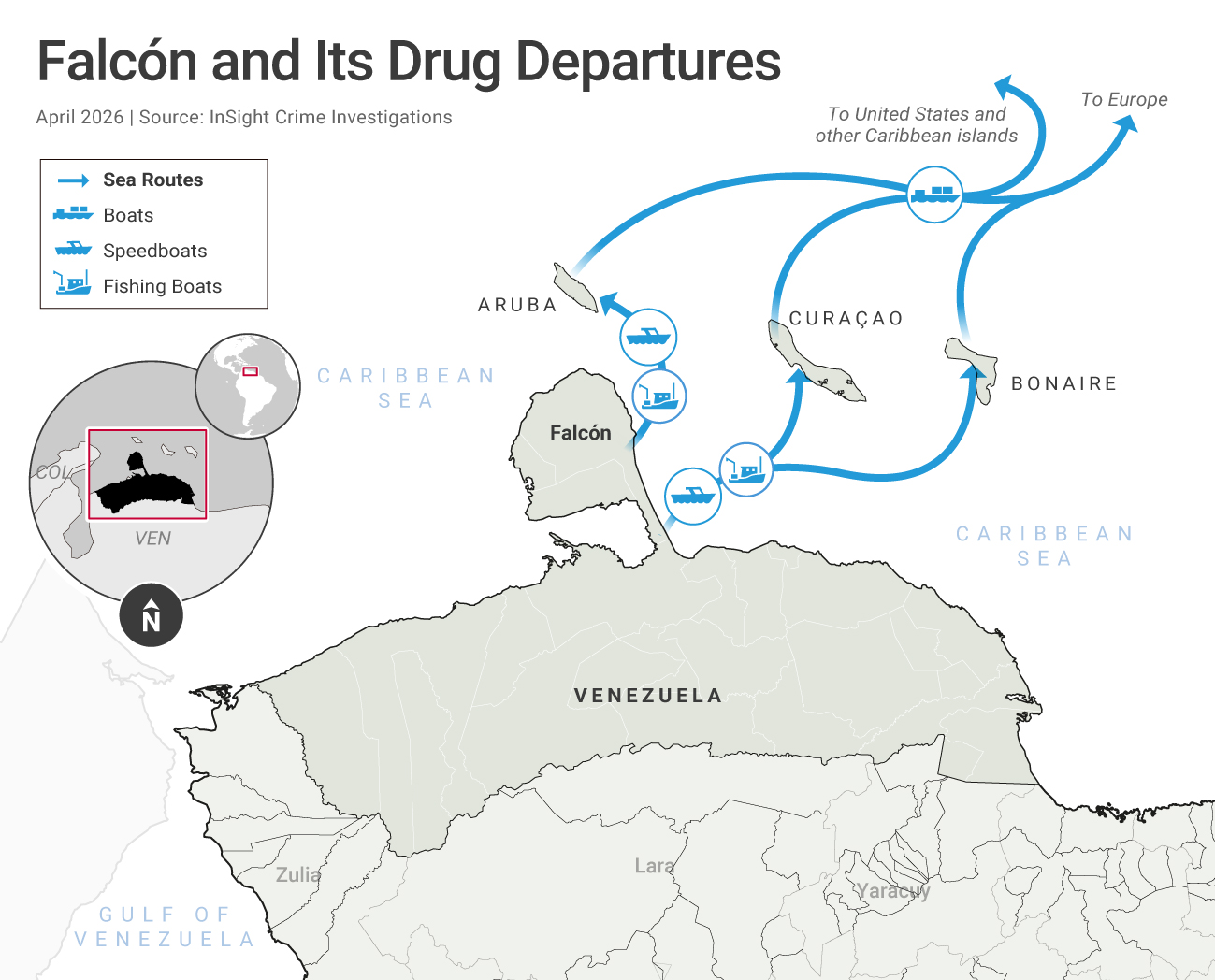
The ABC islands—Aruba, Bonaire, and Curaçao—sit just off Venezuela’s coast, making them a key stopover for cocaine shipments dispatched from the state of Falcón. From the islands, traffickers move smaller loads north through the Caribbean in small vessels—such as go-fast and fishing boats—or across the Atlantic to Europe aboard container ships and private yachts.
4. Venezuela to Trinidad and Tobago
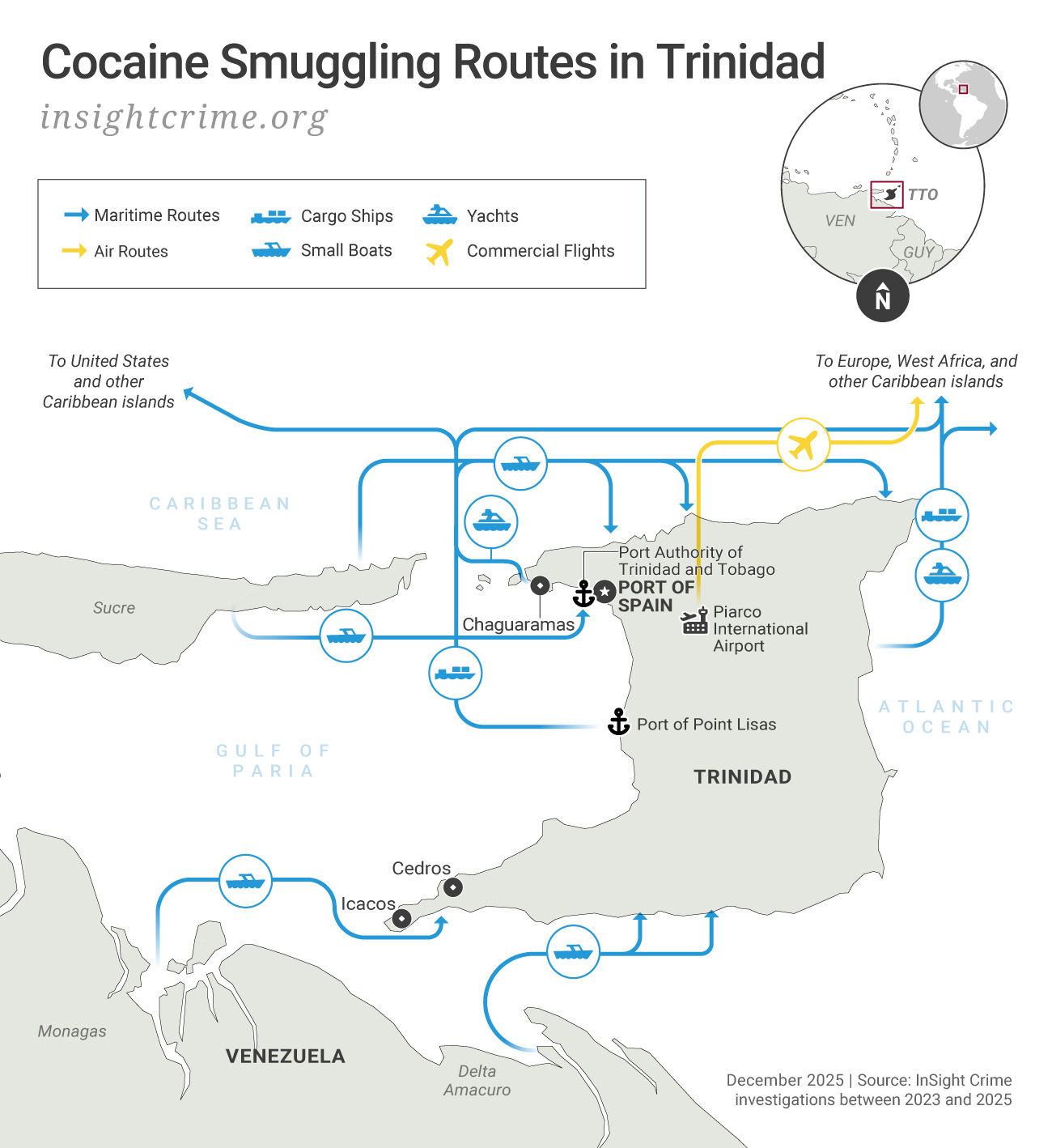
Further east, Trinidad and Tobago lies just a few miles off the coast of Venezuela. Traffickers use small boats to shuttle drugs to the islands from the states of Sucre and Delta Amacuro. There, local networks transfer loads to storage facilities. Shipments are then moved north towards the United States, hopping between other Caribbean islands, or are shipped directly to Europe aboard cargo ships and yachts.
5. Venezuela to the Dominican Republic
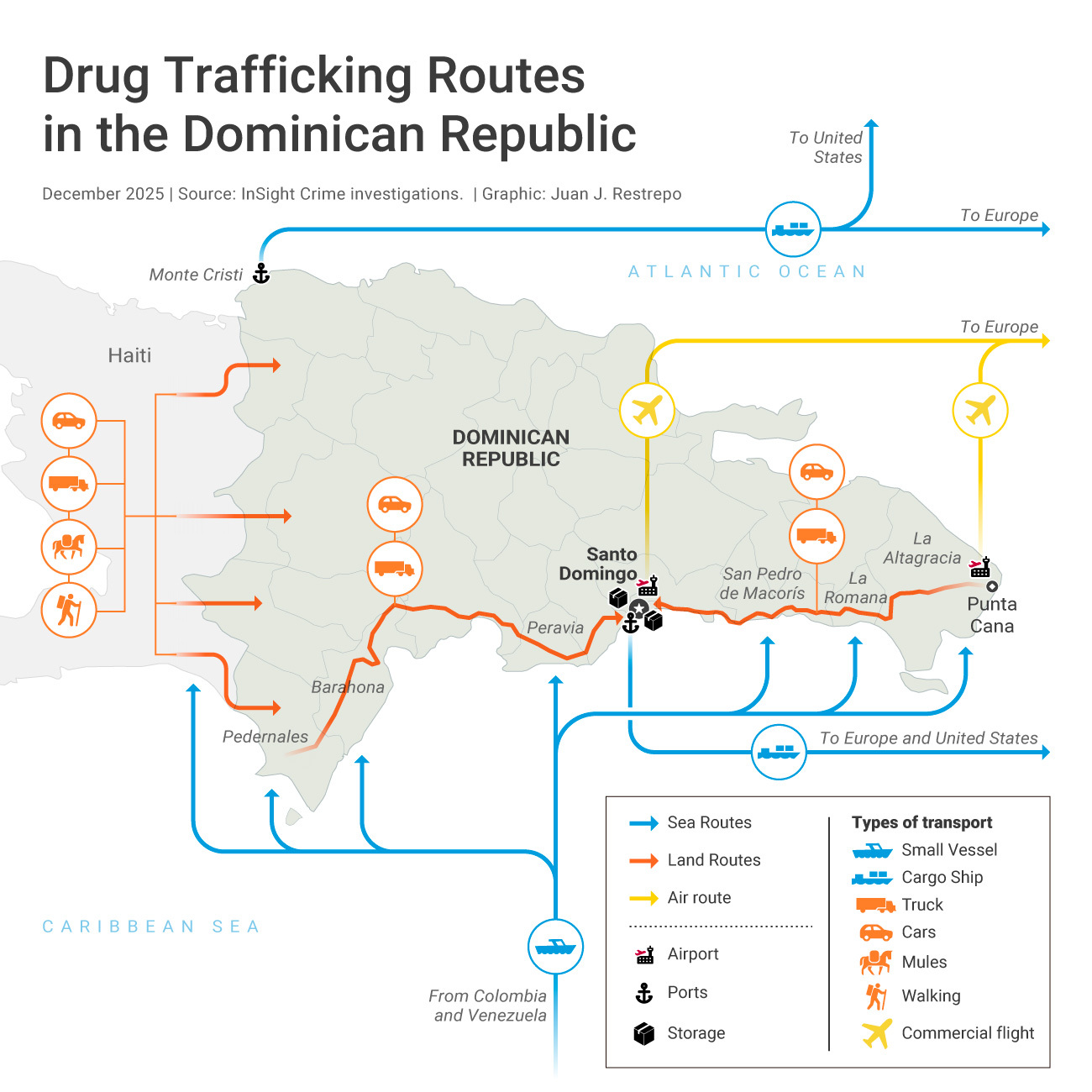
Traffickers often route cocaine via the southern coast of the Dominican Republic, where they offload shipments from boats or small vessels. The long, lightly policed coastline and proximity to South America make it an ideal staging area. Criminal groups also exploit the porous border with neighboring Haiti to smuggle cocaine into the Dominican Republic along roads and footpaths. Once inside the country, drugs are moved inland to major ports like Santo Domingo and Caucedo, where they can be concealed in shipping containers before crossing the Atlantic to Europe or heading to North America.
6. Disruptions to Routes
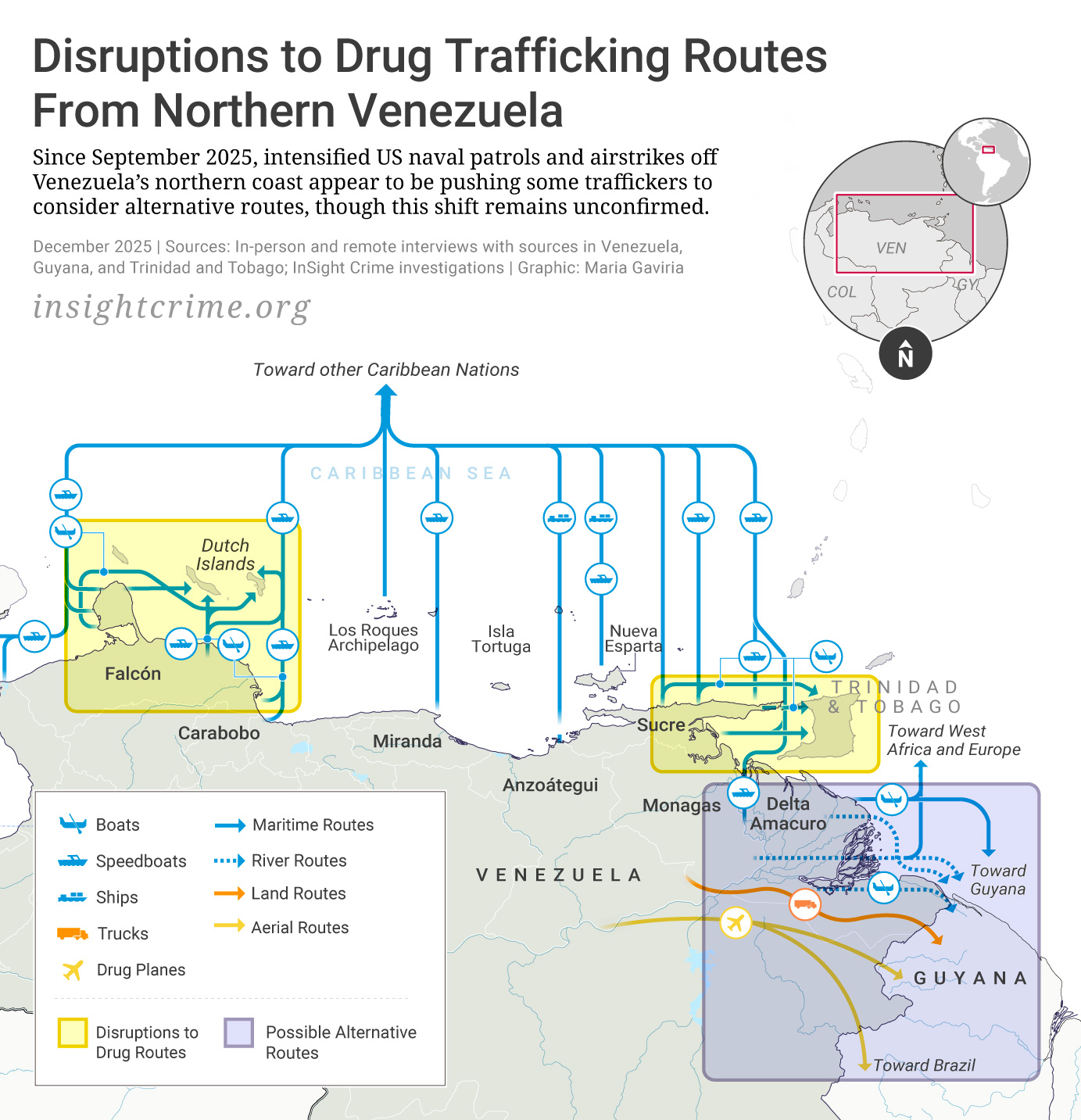
In September 2025, the United States targeted go-fast boats and small vessels with lethal airstrikes and deployed a flotilla of military assets in the southern Caribbean. These operations disrupted maritime channels between Venezuela and the ABC islands, as well as routes to Trinidad and Tobago. Some traffickers paused operations or left heavily patrolled areas. But the campaign only disrupted some of the Caribbean trafficking corridors while leaving others open. There is also evidence to suggest criminal networks shifted routes east toward Guyana, Suriname, and Brazil to avoid the US military.
*Sara García, Henry Shuldiner, Sean Doherty, Beatriz Vicent, and Cassia Jefferson contributed research to this report.


Don't Miss:
-
Iran war: Russia and China veto UN resolution to reopen Strait of Hormuz
-
Nasa’s Artemis crew snaps historic Earthset photo on way home from moon
-
Did US Military Strikes Impact Caribbean Drug Trafficking?
-
Hong Kong doctor axed for posting resuscitation photo faces Medical Council case
-
Ostrich escapes animal cafe, sprints down Thai highway