
 Rick Claypool on Pay to Play Corporate Crime Enforcement
  Labaton Launches Whistleblower Practice with Former SEC Acting Chair Allison Herren Lee
  Kremlin payment firm A7 has been pumping billions in ‘untraceable’ cash into global financial system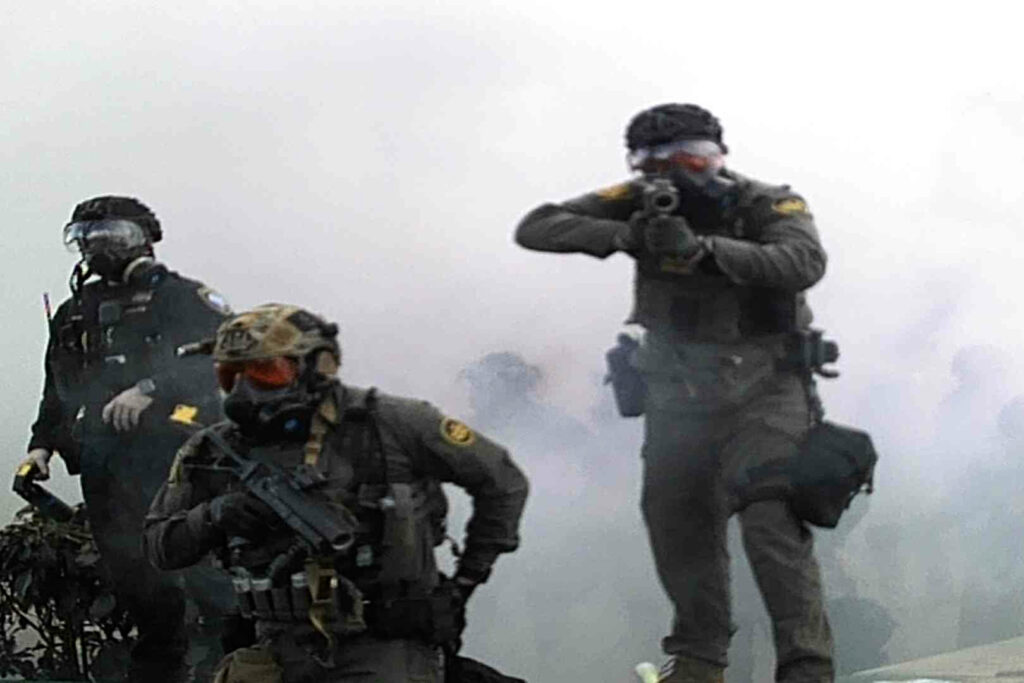
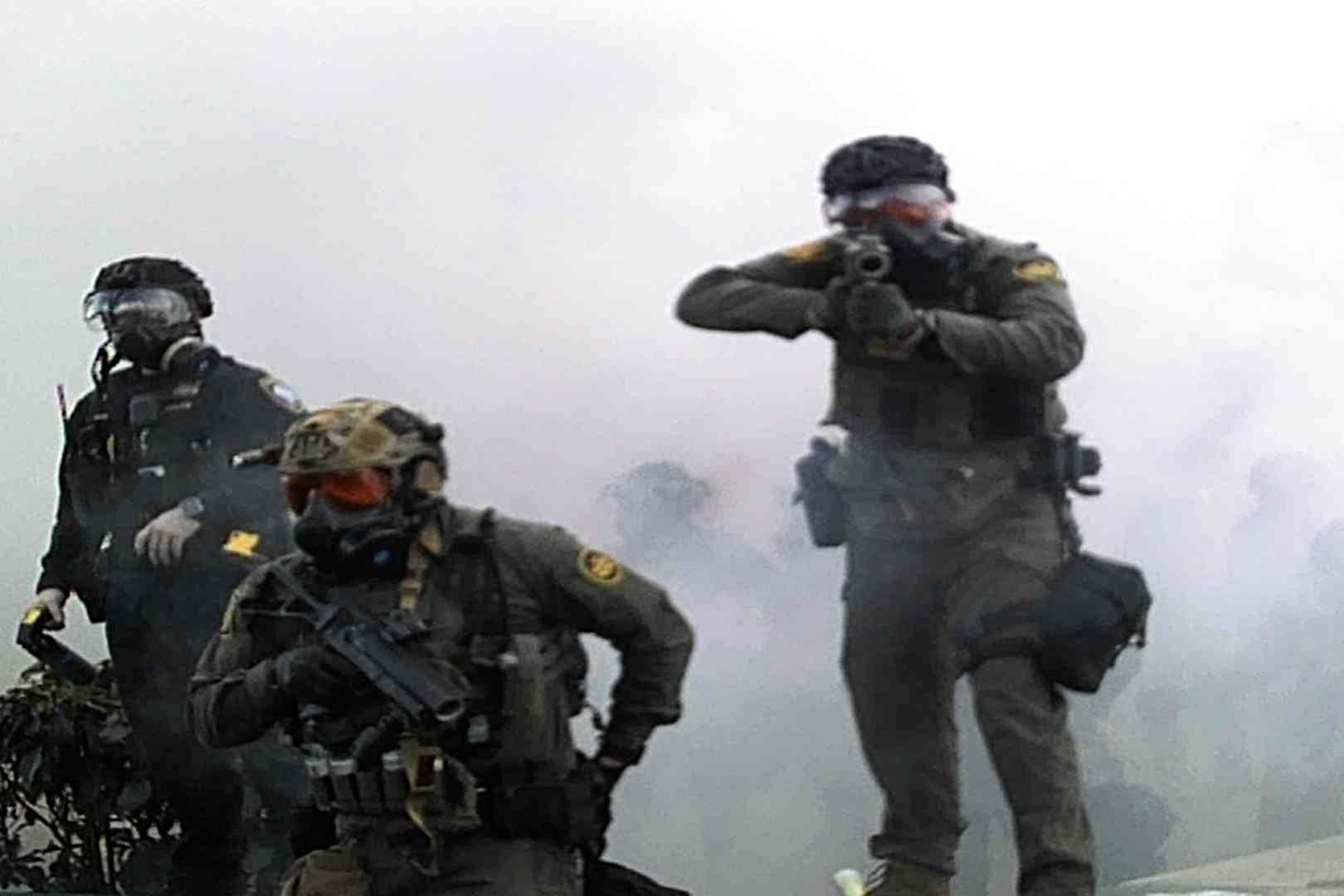
Three U.S. senators have called for an overhaul of federal agents’ use of tear gas and pepper spray, citing a ProPublica investigation that found at least 79 children were left screaming, coughing or hurt by these chemicals during President Donald Trump’s immigration crackdown.
Lawmakers said the findings showed more restrictions are needed to avoid injuring bystanders — including children — with chemical munitions. Such weapons were designed to combat rioters and soldiers, and their compounds are toxic, especially to children, who breathe more rapidly than adults relative to their body weight.
“This reporting makes clear that we need federal legislation to rein in the over-use and misuse of tear gas and chemical agents,” Sen. Cory Booker, a Democrat from New Jersey, said in a statement. “We cannot allow another child to be tear-gassed by federal law enforcement officers.”
ProPublica found that the Department of Homeland Security’s policies on the use of these weapons are less restrictive than those of some local police departments, many of which have been forced to adopt stronger ones following lawsuits or local legislation. There is no uniform standard governing how and when law enforcement departments can use these weapons.
DHS should update its policies based on the best practices of local police departments, Sen. Richard Blumenthal, a Democrat from Connecticut, told ProPublica. In Minneapolis, for instance, police officers can deploy chemical munitions only if the police chief has authorized it.
“This kind of use of force should require approval from someone in a position of authority” and an assessment of the potential “collateral damage to children,” Blumenthal said.
Sen. Tammy Duckworth, a Democrat from Illinois, echoed this sentiment. “We need a complete overhaul of ICE and Border Patrol to ensure they follow the same rules and safeguards that apply to police departments across the country,” she said in a written statement.
Many of the hurt kids were at home when tear gas drifted in from streets where federal agents had deployed the chemical agent against crowds of protesters. Other children were sitting in their parents’ cars when officers fired pepper spray through the driver’s side windows.
Virtually no research exists on the potential long-term effects on children, but the chemicals are undeniably dangerous. One mother near Chicago told ProPublica she’s repeatedly taken her 7-year-old daughter to urgent care due to her coughing and wheezing since tear gas seeped into their house last fall.
Referencing our reporting, three Democrats in the House Committee on Homeland Security also sent a letter to DHS Secretary Markwayne Mullin asking for the department’s training and policies for using chemical munitions when children are in the vicinity. The letter accused the department of “needlessly and callously” inflicting harm on children, and it requested details on whether DHS has studied the weapons’ “toxic effects on children.” The committee’s ranking member, Rep. Bennie Thompson, D-Miss., signed the letter, along with the ranking members of two subcommittees, Rep. J. Luis Correa from California and Rep. Shri Thanedar of Michigan.
Blumenthal sent a separate letter to Mullin requesting the disciplinary records of agents who used chemical munitions in the presence of children. One video disclosed in a lawsuit shows federal officers near Chicago hurling tear gas canisters at protesters without apparent provocation before an officer says, “Fuck yeah,” and shouts, “Woo!” This took place just a few blocks from where the 7-year-old lives. (It’s unclear if the officers were disciplined.)
“Video evidence demonstrates that chemical agents have been employed indiscriminately, even when children are present,” wrote Blumenthal, who sits on the Senate Committee on Homeland Security and Governmental Affairs and is the ranking member on the Permanent Subcommittee on Investigations.
The scope of the agents’ actions led some historians to compare current events with Southern law enforcement’s use of tear gas during the 1960s Civil Rights Movement. ProPublica interviewed one Civil Rights activist, Charles Mauldin, who was 17 years old when police tear gassed him and hundreds of others marching for voting rights in Selma, Alabama.
“Having people like ICE treat people the way we were treated 61 years ago, it’s horrible,” Mauldin told ProPublica.
A DHS spokesperson called Mauldin’s comparison “disgusting,” adding in a statement that “this type of garbage has led to our law enforcement officers experiencing coordinated campaigns of violence against them.”
The spokesperson didn’t address ProPublica requests for interviews with Mullin; Todd Lyons, the outgoing director of Immigration and Customs Enforcement; or David Venturella, the acting director of ICE.
“DHS does NOT target children,” the spokesperson wrote, before blaming parents for placing their children in risky situations. “It is reckless, unlawful, and extremely irresponsible for parents to interfere with law enforcement activities but especially when they are accompanied by children.”
ProPublica’s investigation found that some of the children most affected were innocent bystanders. In Portland, Oregon, federal agents routinely tear-gassed protesters who gathered outside an ICE processing center. For months starting last summer, the chemicals seeped into an apartment complex across the street, past closed windows and the towels that tenants shoved under their doors in a vain attempt to protect themselves. One 12-year-old developed hives and “chronic respiratory issues,” according to his mother’s court declaration. Two girls, ages 7 and 9, hid in a fort they built in their father’s closet. Another parent said she taught her 13-year-old son to wear a gas mask indoors.
Their situation was so extreme that the most approximate research ProPublica found was a 2018 survey of Palestinian families in the West Bank, where children complained of rashes and chronic tonsillitis after repeated exposure to tear gas deployed by Israeli security forces.
ProPublica contacted more than two dozen federal lawmakers seeking a response to our findings. None of the Republicans, including Speaker of the House Mike Johnson; Sen. Rand Paul, chair of the Senate Committee on Homeland Security and Governmental Affairs; and Rep. Andrew Garbarino, chair of the House Homeland Security Committee, responded to requests for comment.
Many of the Democrats who responded condemned DHS for its officers’ behavior and pointed to past unsuccessful efforts, such as holding hearings and sending dozens of oversight letters, to hold the department accountable for its actions.
ProPublica previously reported on a Democrat-led forum in March spotlighting children who have been harmed during immigration enforcement operations, including citizens who appear to have been wrongfully detained. In mid-May, Rep. Delia Ramirez of Illinois held a shadow hearing in which she cited ProPublica’s findings on children harmed by tear gas and pepper spray.
Rep. Glenn Ivey, a Maryland Democrat who attended the hearing, said in an interview that he has been pushing for fellow lawmakers to take up the George Floyd Justice in Policing Act, which would address many of the issues our investigation raised.
Various experts told ProPublica that federal legislation could help ensure law enforcement agencies across the country adopt additional restrictions on these weapons, particularly when children are at risk.
Last month, for instance, Sen. Tina Smith, a Democrat from Minnesota, introduced a bill that prohibits excessive use of force, including chemical munitions, in the presence of children. It has 17 co-sponsors, none Republican, and hasn’t been brought to a vote.
Blumenthal also called for fellow lawmakers to support a bill that would explicitly provide the public with the right to sue federal law enforcement officers for violating civil and constitutional rights.
The Trump administration previously said that any new restrictions would hamper immigration officers’ ability to carry out their work.
On Monday afternoon, federal agents fired pepper spray outside an immigration detention center in Newark, hitting Sen. Andy Kim, a Democrat from New Jersey, according to the USA Today Network. Kim had visited the facility to support detainees who’d started a hunger strike to protest conditions inside. He told reporters that he was pepper-sprayed after trying to de-escalate tensions between immigration agents and protesters, and his throat still burned later that evening. It’s unclear if any children were affected by chemical munitions.
DHS said officers had responded to protesters obstructing law enforcement from leaving the ICE facility.
“No individuals were directly struck by pepper ball projectiles,” DHS wrote in a post on X. “Our law enforcement followed their training and used the minimum amount of force necessary to protect themselves, the public, and federal property.”
In response to ProPublica’s questions about the lawmakers’ calls for reform, a spokesperson for DHS said in a written statement that officers are trained to use “the minimum amount of force necessary to resolve dangerous situations.”
“DHS is authorized to do what is appropriate and necessary in each situation to diffuse violence against our officers in the most appropriate manner possible,” the statement said.
In his letter sent last week, Blumenthal gave the agency a deadline of June 1 to respond to his questions and requests for records.
Don't Miss:
-
Trump’s Education Department Scaled Back Investigations Into Discrimination and Sexual Assault on Campus, New Data Shows
-
Ballot Rejections Soared in Rural Counties After USPS Reduced Mail Service
-
Town Leaders Said They Were Prepared for Floods. First Responders Disagree.
-
“The River Can’t Be Trusted”
-
Colorado Marijuana Regulators Failed to Protect Consumers From Potential Contamination, Audit Finds