
 The story that rocked the world: Ten years of the Panama Papers, part 1
  France to try alleged Magnitsky Affair mastermind Dimitry Klyuev in absentia
  Canada revokes dozens of crypto firms’ registrations
 I first found R. O. Kwon via Twitter in March 2021. Anti-Asian hate and violence had been rising across the country, and I’d stumbled on one of her essays in Vanity Fair: a letter to Asian women, written days after a shooter went into two spas and a massage parlor in Atlanta and murdered eight people, six of whom were Asian women. “It all hurts,” she wrote. “Still and always, hypersexualized, ignored, gaslit, marginalized, and disrespected as we’ve been, I am so fortified, so alive, when I’m with us.” My chest had felt so heavy that week; her words offered some relief.
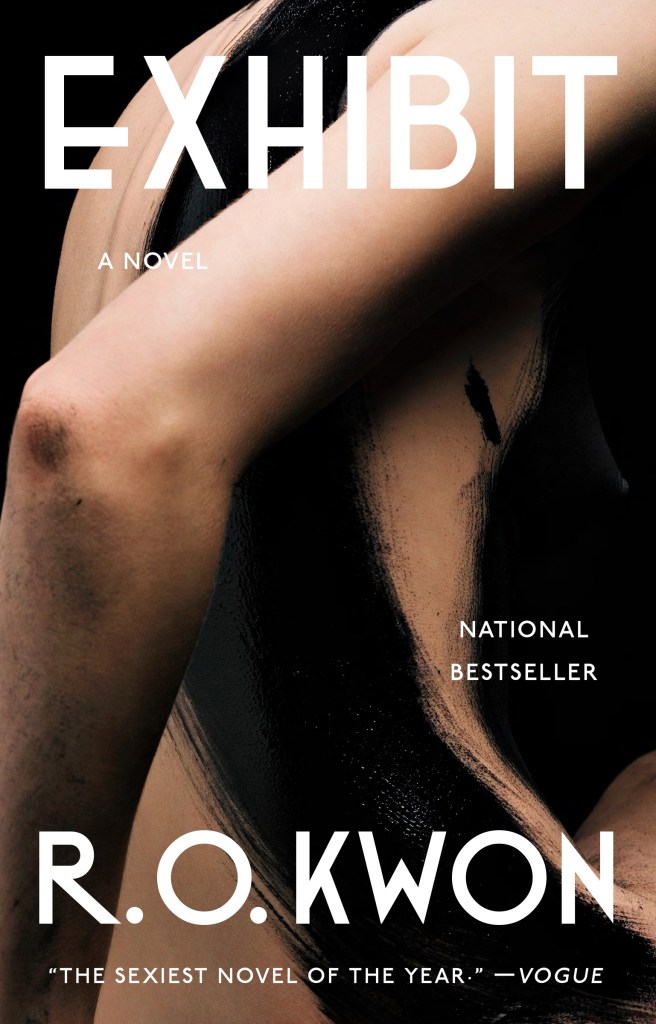
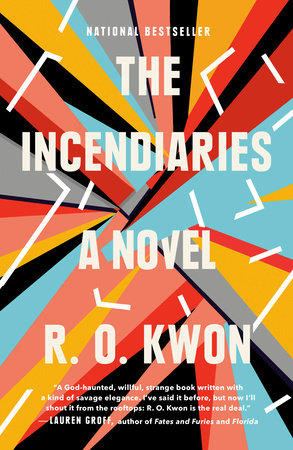
From there, I discovered Kwon’s 2018 debut novel, The Incendiaries, about a college student drawn into an extremist religious cult. Her essays speak to cultural and political moments while being frank and fiercely personal—pieces about losing her Christian faith at 17, anxiety and the body, (not) having children, and what it means to write about sex and queerness as a Korean American woman. Kwon describes the urge that drives her fiction in a sentence I return to often: “I have to put in words that which I’m afraid of saying.” Her second novel, Exhibit, kinky and filled with lust, is perhaps the fullest expression of that compulsion. Whether exploring themes of shame, desire, faith, or loneliness, Kwon writes with a vulnerability that’s hard not to be drawn to. “If and when I’m deep in a sentence, trying to get it to be the most truthful version of itself,” she once said in an interview, “I lose all sense of an I, an ego.”
Kwon recently co-founded The Ministry of Words, a teaching collective with writers Fatimah Asghar and Ingrid Rojas Contreras, offering online classes in fiction, nonfiction, poetry, and screenwriting. They’re currently accepting applications on a rolling basis for their fall 2026 workshops—including a chance to work directly with Kwon—which begin this August.
Where did you grow up?
I was born in Seoul and mostly grew up in Los Angeles.
What places feel like home?
Parts of San Francisco, Seoul, and New York.
Other than family members, who or what has shaped you the most?
Growing up so Christian I meant to devote my life to God, then losing that faith and having to leave that hope behind.
What is your favorite time of day?
The middle of the night, after 1 a.m. or so, when it’s quiet and I have hours to go until I feel I have to go to sleep. (I have a very nocturnal schedule, and usually go to sleep around 7 a.m.)
What are you really good at?
Obsessing, whether it’s over my writing or my latest power-lifting desires or keeping my nails short.
What’s the best gift you’ve ever received?
It’s hard to pick one, but in the past year I had the great gift of a visiting fellowship at the American Library in Paris. It’s already difficult to imagine my in-progress novel without that time. The novel is centered on an art heist, and since I was in town during the Louvre heist, I kept getting messages from friends asking if I had perhaps taken the research a little too far.
Describe your favorite meal.
Cheese. Always cheese. For my birthday, I usually have a couple kinds of chèvre, a baguette, and some white wine, maybe a Sancerre.
Sound or silence? (And if sound, what sound?)
Sound! But monotonous sound: While I’m writing, I play one or two songs on loop. The genre varies, from motets to rap.
Where do you do your best thinking?
In bed, where I tend to feel safe. I write a lot in bed.
What journey—physical, creative, intellectual, or otherwise—has meant the most to you?
Thinking there was no way I could make a life in writing to realizing there’s no other life for me.
Where do you like to read?
Also in bed.
What’s the last rabbit hole you disappeared into?
Bouldering is one of my preferred forms of exercise, and the other night I watched a lot of videos of highball bouldering, which is a variety of no-rope climbing involving rocks so tall that a fall would most likely kill or seriously injure you. Terrifying! (And not the kind of climbing I do—I keep my bouldering to walls that are no more than about 17 feet high.)
Name three publications you enjoy reading these days.
The Yale Review has been publishing some gorgeous pieces. The Approach and Coyote are two resistance-oriented Bay Area publications that just started within the past year: The Approach is print-only and Coyote is worker-owned.
What’s one longread that you can’t stop thinking about?
John Jeremiah Sullivan’s “Upon This Rock,” an essay I’ve read who knows how many times. It’s a gripping, hilarious, deeply moving account of going to a Christian rock festival.
What was the last book you read?
I’m rereading St. Augustine’s Confessions right now. As I said, I tend to be obsessive, and my lost faith is a locus of longtime fascination.
What piece of nonfiction are you most proud of writing?
Not sure I’d pick a single piece as one I’m most proud of having written, but a little over a year ago I published “A Novel’s Hidden Diary” in BOMB. It’s a process journal for Exhibit, my second and most recent novel, and includes thoughts on some of the doubt, fear, and joy that went into eight years of working on that book. It’s a piece I’d been working on for years without quite realizing, until the end, that it would ever be a piece.
What’s your most reliable way to get creatively unstuck?
Moving around! I’ve long maintained that it’s too easy for writers to freeze in place for hours at a time, and our bodies aren’t meant to be so stationary. I love a three-minute dance break. A quick handstand. Pacing my hallway.
Who’s a writer you turn to when you need some inspiration?
Mavis Gallant never doesn’t help me. No one quite writes like her.
What words do you overuse?
In a late draft of The Incendiaries, my first novel, I found I’d used the word “radiant” something like six times. And it’s a short novel! Unbearable. I cut at least a couple of instances of the word.
What’s your favorite guilty pleasure?
A real vice is that I can spend hours at a time reading wild shit people say on Reddit. I excuse it by telling myself I’m a student of humanity, but for hours at a time? No, no, no. Those are reading hours I can better put elsewhere.
What superpower would you like to have?
Flight, for sure. That’s one of the pleasures of climbing, feeling as though you’re outwitting gravity. Unless—does vampirism count as a superpower? I’m already so suited for a vampire’s life (I’m nocturnal, can thrive on a monotonous diet, love a cloak, etc.) that if vampires exist I’m offended they haven’t yet recruited me to the cause.
What animal or nonhuman being do you most identify with?
Leopards. A lot of time alone, a lot of time spent climbing things.
If you have a free solitary hour in your day, what do you typically do?
Write, if I can. I’m intensely aware of how little time I have left alive to write. Decades, if I’m lucky, which isn’t enough.
What five items would you place in a time capsule?
It’s impossible to pick. The world is so beautiful. I’m going to hate leaving it.
What does your writing space look like?
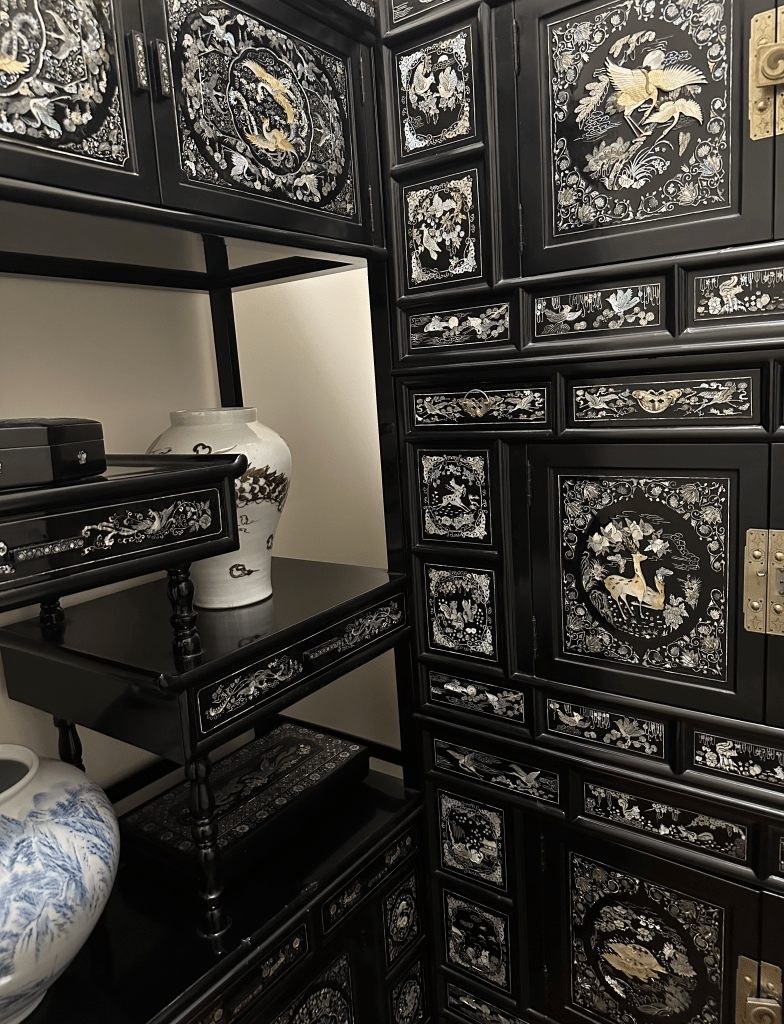
It’s pretty stripped down. I get distracted easily; much as I love spending time with visual art, I have nothing up on the walls. That said, my grandmother gave me her furniture from Seoul, which features elaborate najeonchilgi—Korean mother-of-pearl lacquerware—so there’s more going on than there used to be.
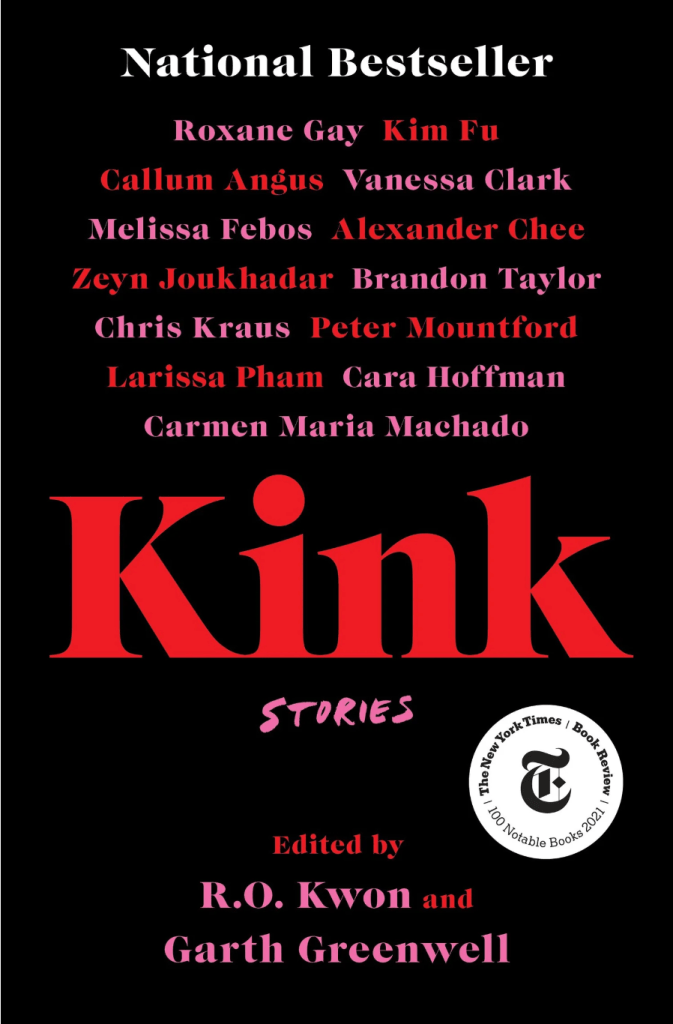
R. O. Kwon is the author of the nationally best-selling novel Exhibit, a recipient of the Lambda Literary Duggins Prize. Kwon’s nationally best-selling first novel, The Incendiaries, was a finalist for the National Book Critics Circle John Leonard Prize and The Los Angeles Times Art Seidenbaum Award. With Garth Greenwell, she coedited the best-selling Kink. Kwon’s books have been translated into seven languages and named a best book of the year by over 40 publications.
More questionnaires
The Longreads Questionnaire, Featuring Neal Allen and Anne Lamott
The authors of the new book Good Writing share their insights on reading, writing, and their day-to-day life.
The Longreads Questionnaire, Featuring Julian Brave NoiseCat
The author of We Survived the Night and co-director of Sugarcane responds to our 25 questions on writing, reading, and creativity.
The Longreads Questionnaire, Featuring Rebecca Solnit
The author of The Beginning Comes After the End talks about jackrabbits, her own “informational hypervigilance,” and the one word she won’t stop using.