
 About the China Capital investigation
  Frequently asked questions about the China Capital investigation
  ICBC promoted corrupt executive, ignored employee misconduct as it pursued global expansion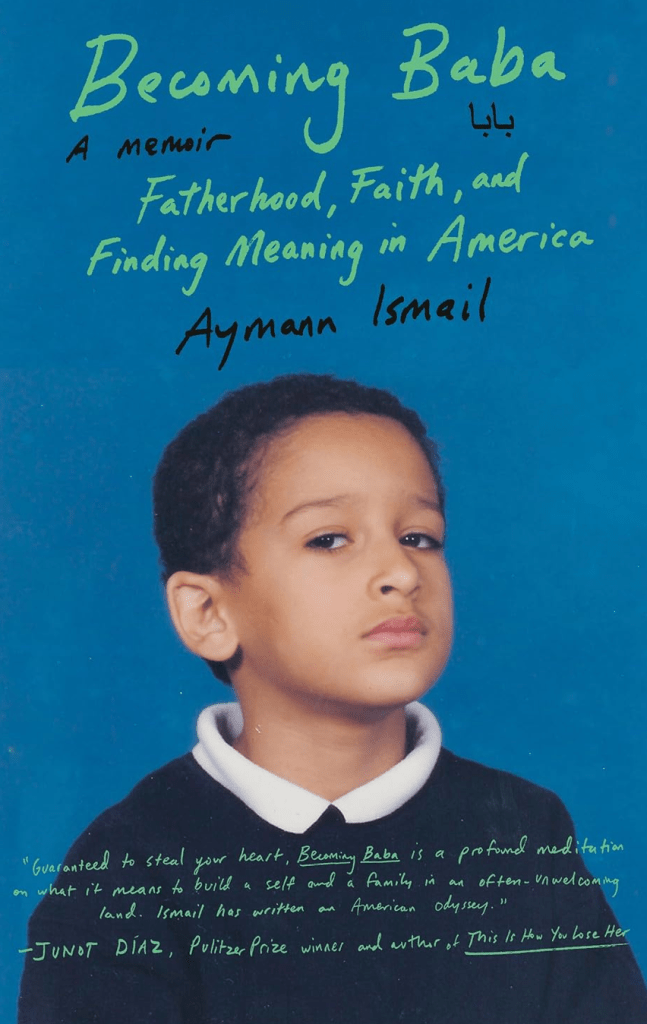
Aymann Ismail has a gift for excavating human stories from beneath the surface of national news coverage. At Slate, where he’s a senior staff writer, he doesn’t shy away from tough subjects—religion, politics, drug addiction, guns, war—and approaches a story with curiosity, patience, and empathy. For his National Magazine Award-nominated piece, “The Store That Called the Cops on George Floyd,” he did exactly that, spending time with the owners of CUP Foods, Minneapolis community members, and the store employee whose 911 call sparked a chain of events that the entire world watched.
Ismail brings that same care to other stories, like “The Woman on the Line,” a Longreads Top 5 pick about a safe-use hotline operator in Georgia who takes calls from people who don’t want to use drugs alone; and “Fear and Hope in Springfield, Ohio,” another Longreads favorite in which he reported from a town thrust into the spotlight after Trump claimed during a 2024 debate that its immigrant community was eating pets.
This curiosity and insightful reporting define Ismail’s work. “I’m genuinely curious, and people can usually tell,” he writes. “I like staying in a conversation past the point where most people would politely move on, asking one more question, then another, until the strange detail hiding underneath the first answer finally comes out.” It’s a trait that has served him well in journalism (and perhaps less well at dinner parties, his response implies).
Ismail often writes about identity and faith, drawing on his own upbringing in Newark, New Jersey, and the mosques that have always felt like home to him, “places where I don’t have to explain myself.” Ismail is Egyptian, and offers one of my favorite answers from a writer yet about where he does his best thinking: “There is no better place to think than somewhere over the Atlantic after Egypt has scrambled your brain.”
Reading Ismail’s responses below, I know you’ll want to read more from him when you’re done. Luckily, Becoming Baba, his memoir on fatherhood, faith, and finding meaning in America, is out in paperback next week. If you haven’t read it yet, pick up your copy today.
Where did you grow up?
I never know whether to answer Newark, where I lived, or Al-Ghazaly, the mosque and Islamic school in Jersey City where I spent pretty much every waking hour. Al-Ghazaly was school, mosque, gym, social club, and an all-purpose factory for family life and formative experiences. I learned karate there, had my first crush there, and got into my first fight there. My Mama taught Arabic and Islamic Studies at the school and was so determined not to appear biased that she gave me a full letter grade lower than I earned.
The mosque was on a rough block, across the street from a row of abandoned brownstones, the kind of place where the police wouldn’t come if you called. Muslim immigrants built communities in neighborhoods like that because it was affordable, and soon families from all over the world were passing through. My family settled a few miles west, in Newark’s Ironbound section, where everyone seemed to be some kind of Catholic. Everyone spoke only Portuguese and Spanish, which made ordering from the bakeries kind of tricky. They also soccer extremely seriously, and streets would flood with honking horns and revelers after every game.
After 9/11, Al-Ghazaly temporarily shut down and my parents switched me into the local public school. I made some of my closest friends there and learned how to exist outside the Muslim world I had known. I’m grateful for both places: Al-Ghazaly gave me a strong sense of community, and Newark made sure I could survive outside it.
What places feel like home?
Places where I don’t have to explain myself. Newark, obviously. I still feel like I run into someone I know every time I leave the house, which is comforting. Brooklyn also feels like home. I lived there for eight years before moving back to Newark when I got married. It was all fun and games until neighbors started calling the cops on me. After I got arrested once (it was for something awesome, don’t worry), I suddenly felt like leaving my apartment carried the small but real possibility of getting put in handcuffs. That complicated the romance.
Mosques also feel like home. The scattered splay of strangers across the carpet all coming to attention when the call to prayer sounds, it’s all so calming. As a kid it was like a gladiator arena for sports. As an adult, it’s a sanctuary where I can nap, sit quietly, and generally not stare at my phone. For a few minutes, I disconnect from the world entirely. I miss not being constantly connected. Hmm. I should probably pray more.
Other than family members, who or what has shaped you the most?
Easily my high school art teacher, Andrew Teheran, who we called Mr T. East Side High School was chaotic. The only expectation was that you’d stay in the building after first period—they locked the doors but kids still kicked them open. Even some of the teachers seemed to cut class. During Mr. T’s introductory speech about creative problem-solving, the intercom interrupted him, so he dragged over a desk, climbed on top of it, and jammed a pencil into the speaker. His classroom felt like a real-life Magic School Bus situation.
He had an Apple computer locked in a back closet with video-editing software nobody knew how to use. “We could learn it together,” was his philosophy. He printed out a list of keyboard shortcuts, handed it to me, and let me spend most of the school day figuring them out. Eventually, we made a documentary about an East Side graduate who had died in the Iraq War. It won a local film festival and gave me my first sense of addiction to making videos and telling stories. Mr. T never pretended to possess every answer. He gave the freedom and confidence to work out problems ourselves. Everything I’ve done professionally began in that back closet.
What is your favorite time of day?
The second after my two kids fall asleep. During the day, I’m constantly being summoned to look at this, look at that, find a toy, open a snack, settle a fight, kiss a boo-boo. It’s near impossible to even finish a conversation with my wife before the kids shut off for the night. The danger is wasting the entire night staring at my phone because I’m too tired to do any of the things I spent all day wishing I had time to do.
What are you really good at?
Talking to strangers. Getting people to tell me things. I’m genuinely curious, and people can usually tell. I like staying in a conversation past the point where most people would politely move on, asking one more question, then another, until the strange detail hiding underneath the first answer finally comes out. This is useful in journalism and occasionally terrible in ordinary social life.
I also really love taking photos. It gives me an excuse to walk around and look closely at things. But it’d be a stretch to say I’m “really good” at it.
What’s the best gift you’ve ever received?
An act of kindness that really stuck with me from when I was living in San Francisco in the 2000s. I was meeting up with friends in the Mission, had a panic attack, and got extremely disoriented. A hipster in full 2000s regalia could tell I was obviously not doing my best and asked if I needed help—he ended up disrupting his whole night to escort me all the way back out to Treasure Island on transit, which as anyone who lived on the island in those days knows was a real pain in the ass, especially late at night. I know this sounds extremely cheesy, but he reminded me that it’s always worth taking time out of your day to help someone who is clearly not having a good time out, rather than turning away. I hope he knows I still think of him and that he’s living his best life.
Describe your favorite meal.
An Egyptian breakfast. I’m talking ful, falafel, eggs with bastarma, tomatoes, cucumbers, olives, pickles, some aged yellow rumi cheese. All of this spread in separate bowls on a table with a stack of fluffy and hot baladi bread to break into pieces to scoop with.
You ever land in Cairo, exhausted from an overnight EGYPTAIR flight, when the heat hits you outside the terminal like someone opened an oven, and then you get seated at a table with this spread? Damn bro . . .
Sound or silence? (And if sound, what sound?)
Sound. I don’t know if it’s because I grew up in a city with constant background noise, but silence makes it impossible for me to focus. That being said, the sound of children playing, relatives talking over one another, someone in the kitchen moving pots around—that can all be really distracting for me. But when it gets too quiet I need to throw on my headphones and blast some really fast-paced jungle music. In fact, I’m listening to Nia Archives while answering this questionnaire.
Where do you do your best thinking?
On the EGYPTAIR flight home. A trip to Egypt pulls me completely out of myself. I land in the sizzling heat and spend weeks absorbing a dizzying amount of dust and city noises. I speak Arabic, which never comes as comfortably as I want it to, until by the end of the trip I have spent every word I know and can barely assemble two together. There are long drives through the desert to Alexandria, the g-force of flying down the Corniche in Alexandria, everything around you competing for whatever attention you have left. Then I board an 11-hour flight back to my regular life. The cabin goes dark, and suddenly there is nothing to do but sit with all of it. There is no better place to think than somewhere over the Atlantic after Egypt has scrambled your brain.
What journey—physical, creative, intellectual, or otherwise—has meant the most to you?
Becoming a Baba. Before my son was born, I read every parenting book I could find and exhausted the endless scroll in parenting forums and decided I was prepared for anything. I was going to be present, emotionally intelligent, spiritually grounded, and generally father the f*ck out of this baby. Then he arrived. It nearly destroyed me.
It made me reconsider the way I judged my Baba for being absent while working nights as a New York City cabbie, my Mama whose endless labor I had mistaken for invincibility, and the version of myself who believed love and good intentions could somehow compensate for sleep deprivation. It also brought me back toward Islam through the terrifying realization that my children were watching me decide what mattered. It manifested in a book I’m very proud to have authored called Becoming Baba. Check it out. Some people have said some pretty nice things about it on Goodreads. 😛
Where do you like to read?
On the train. I used to be able to read in bed but these days I can’t get through a page without falling asleep.
What’s the last rabbit hole you disappeared into?
Kitchen peninsula configurations. My sister is in the middle of renovating her apartment and she asked for my help. It’s impossible for me not to get obsessed with this kind of thing.
Name three publications you enjoy reading these days.
Defector, Hell Gate, and obviously Slate. They all retain the increasingly radical belief that a publication should be fun to read.
What’s one longread that you can’t stop thinking about?
Mohammed R. Mhawish’s “Treating Gaza’s Collective Trauma,” in The New Yorker. It follows mental-health workers trying to care for children who play games called “air strike.” It’s grim but honestly I wish all the reporting from Palestine was like this, centering the human toll and refusing to look away. I keep thinking about the absurdity of discussing recovery while the source of the trauma has not ended. There is no “post” yet. As a father, the piece is excruciating. As a journalist, it’s a feat that deserves all the praise in the world.
What was the last book you read?
Native Nations by Kathleen DuVal. I’m writing a book about the history of Muslims in America, and I wanted to see how another writer handled an enormous, contested history without flattening it into a march toward the present.
What piece of nonfiction are you most proud of writing?
Becoming Baba. It’s a really developed memoir about how fatherhood changed me and an unpacking of marriage, faith, masculinity, immigration, and more. Writing this has objectively made me a better Baba.
What’s your most reliable way to get creatively unstuck?
Go report. Talk to an actual person. Reality has a useful habit of ruining your elegant but incorrect idea and replacing it with a messier, better one.
Who’s a writer you turn to when you need some inspiration?
Hala Alyan. Her writing moves so naturally between narratives. I find her writing to be very lyrical without becoming tiring, and political without turning people into symbols which I appreciate a lot. Whenever I’m overthinking something, I read her and suddenly I can find the words for what I’m trying to write.
What words do you overuse?
“Actually,” “weird,” “just,” and “thing.” Also em dashes, which I love.
What’s your favorite guilty pleasure?
Taking away the candy my children get from their grandparents or bring home from school because it has too much sugar and sugar is bad for them, then eating it after they go to sleep. This is not hypocrisy. It’s called parenting. I am protecting them.
What superpower would you like to have?
Duplication. I have the worst FOMO. I want to play with my kids, finish my work, spend time with my wife, read a book, pray, fix whatever is broken in the house, and sit alone without feeling like I’m neglecting something else. I would send one of me to meet the wife at the restaurant she wants to try so another can sit at the computer all day meeting deadlines guilt free. Is it possible to do it all? So far, the evidence says no.
What animal or nonhuman being do you most identify with?
A camel. Curious, visibly tired, surprisingly dexterous. I’m Egyptian, so there’s also that.
If you have a free solitary hour in your day, what do you typically do?
Look for something to do. In Islamic school, I absorbed the idea that an idle mind creates room for the devil, and I have spent the rest of my life treating that as a productivity system. A busy Aymann is a productive Aymann, and a productive Aymann is usually a happy Aymann. So I’ll start a small repair, answer emails, research a problem that did not exist 10 minutes earlier, whatever. Relaxing makes me anxious. Is something broken within me? My wife seems to think so.
What five items would you place in a time capsule?
My Islamic School yearbook, a copy of Becoming Baba, my least favorite battered camera loaded with the photos I shot from January 6 and from New York City bridges and tunnels, my Egyptian ID card, and a stupid selfie of me winking and sticking my tongue out like Megan Thee Stallion.
What does your writing space look like?
These days, I have a pretty decent setup in the corner of my living room, beside a window facing the street. Someone walks past every 30 seconds, which helps me feel less like I’m spending the entire day inside a tunnel. I have a comfortable chair, a 4K monitor on an articulating arm that I can position however I want, some phat Sennheiser Momentum 4 headphones, an Ember mug that keeps my coffee hot, and a giant jug of water.
My camera gear lives there, along with a shelf of favorite books, a digital frame cycling through photos of my kids when they were younger, and walls covered in Arabesque calligraphy, including my coveted eL Seed print. It’s messy though. Notebooks, camera equipment, unknown chargers, random papers I am afraid to throw away.
I should add this is new. I did not own any of this while writing my book. Becoming Baba was written on a battered, sticker-covered laptop that was always too full to function properly. I wrote while reclining in bed, slouching on the couch, or hunched over the kitchen table. I also moved around constantly: the library, Express Newark at Rutgers, and for a while a rehabbed mansion downtown that a friend was helping decorate, where I somehow gained access and nobody ever asked me to leave. Writer’s block, for me, usually means I have been sitting in the same spot for too long. Changing the space often fixes that.
Aymann Ismail is a staff writer at Slate, the author of Becoming Baba, and the president of AMEJA. He was formerly the staff video and photo editor at ANIMALNewYork. He grew up in Newark, NJ, received an art degree from Rutgers University, and was arrested by the NYPD for trespassing on the Williamsburg Bridge in 2016. In 2018, he received an ASME Next award. In 2021, his essay The Store That Called the Cops on George Floyd was nominated for a National Magazine Award in Reporting and won a Writers Guild Award. His work has been featured by CNN, The New York Times, NPR, GQ, among others. He still lives in Newark.
More questionnaires
The Longreads Questionnaire, Featuring Elisa Gabbert
The author of Any Person Is the Only Self and recent Guggenheim fellow talks about the worst time of day, the value of wasting an hour, and chilaquiles.
The Longreads Questionnaire, Featuring Cory Doctorow
The author of Enshittification and the new The Reverse Centaur’s Guide to Life After AI on hammock life, the joy of pulp, and writing through it.
The Longreads Questionnaire, Featuring Vauhini Vara
The author of Searches: Selfhood in the Digital Age and The Immortal King Rao on memorable meals and books about whales.