
 Canada revokes dozens of crypto firms’ registrations
  Questions swirl around US plans for record $15B Prince Group crypto seizure
  Donate to ICIJ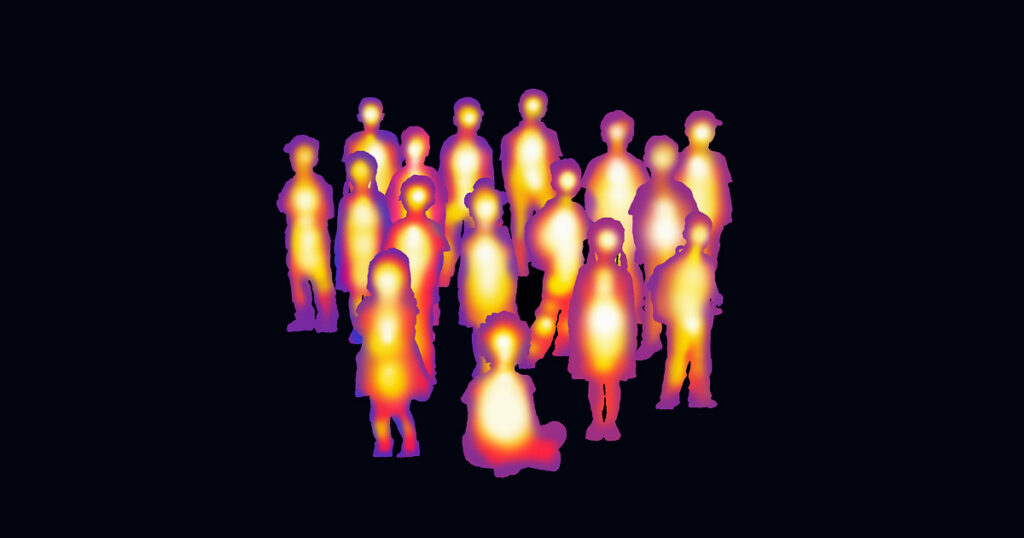
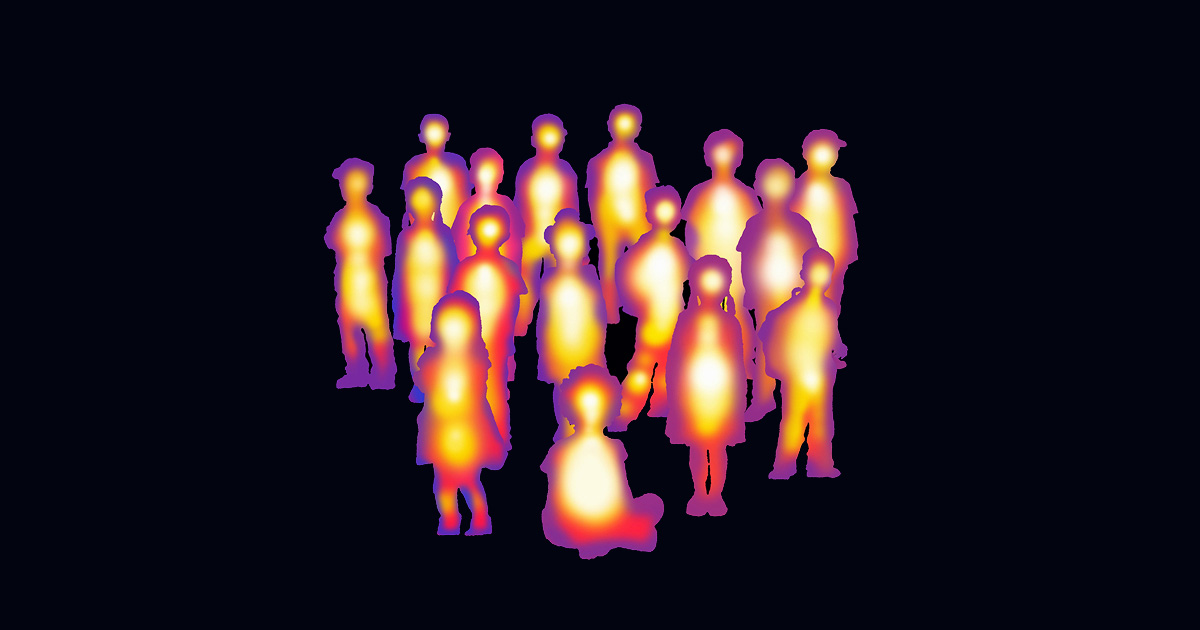
Before vaccines, death and disability stalked children. Then shots turned once-common infections into something doctors only read about in textbooks.
When immunization rates drop, however, plagues from the past can come roaring back, as measles has in American communities where parents decided not to vaccinate their children.
Imagine what would happen if even the people who wanted shots couldn’t get them.
Health Secretary Robert F. Kennedy Jr., who founded an antivaccination group, is considering changes that could prompt the handful of companies that make most shots for American children to stop selling them here. Over the last year, he has been transforming a government that long championed the lifesaving benefits of vaccines into one that questions their safety here and around the world.
Shortly after Kennedy was nominated, questions swirled over how he might overhaul America’s immunization system. Two Stanford University researchers wondered how many people would suffer if vaccination rates dropped or shots became entirely unavailable for four of the most infamous diseases: polio, measles, rubella and diphtheria.
Outbreaks often start when an American catches one of these illnesses abroad and returns home. So epidemiologists Mathew Kiang and Nathan Lo, who is also an infectious diseases doctor, built a model to simulate how the four contagions could spread from sick travelers based on each state’s vaccination rates.
Since a sizable chunk of the population is currently vaccinated, some of the infections wouldn’t get a foothold right away. But over time, as more babies are born and not vaccinated, a larger share of the population would become susceptible.
The professors ran thousands of simulations for each disease, producing a range of possible outcomes. From there, they figured out the average number of deaths and disabilities over a 25-year period.
Their model shows that at current vaccination rates, the nation is already teetering on the brink of an explosion in measles cases — one that would be virtually wiped out with just a 5% increase in vaccination. But if current rates drop by half, all four diseases could return.
The researchers’ modeling of the worst-case scenario assumes a quarter century where no one could get the shots. It doesn’t account for the likelihood of parents going abroad to find vaccines or politicians intervening to ensure drugmakers offer them again.
But the results demonstrate in stark terms how vital shots are and what’s at stake if policy changes interfere with Americans’ ability to vaccinate their kids.
ProPublica shared the key findings of that scenario with the Department of Health and Human Services. An agency spokesperson didn’t address the modeling but said “HHS has not limited access or insurance coverage to any FDA-approved vaccines” and continues to routinely recommend the shots for children.
When they published their paper in early 2025, Kiang and Lo emphasized the outcomes from less extreme drops in vaccination rates, in part because the peer reviewers suggested those were more realistic. Back then, Kennedy was in his earliest days at HHS.
A year later, though, a scenario where no one can get these vaccines doesn’t feel as far-fetched, Kiang said. “Every week that goes by,” he said, “that seems more plausible.”
Lo said that their goal was to show policy makers, “if we make certain decisions, this is what could happen.”
So ProPublica decided to illustrate what a future without vaccines could look like.
If we lost
the vaccine for
Measles
Measles is among the most contagious diseases in history. A child can spread it before they even get a rash, and the virus can linger in the air for up to two hours after they leave a room.
Famous for its blotchy spots covering the body, measles is a respiratory disease that can lead to pneumonia and swelling of the brain. Before the vaccine, just about everyone got measles, and every year 400 to 500 Americans died.
The model assumes that 3 out of every 1,000 people infected with measles would die.
If we lost
the vaccine for
Rubella
Rubella, also known as German measles, is usually mild in kids and adults. But it’s devastating to a developing fetus. If an infection occurs very early in pregnancy, there’s up to a 90% chance that the baby will be born with congenital rubella syndrome. These children frequently have heart defects, deafness or blindness — and sometimes all three. Many have intellectual disabilities, too. About a third of babies with the syndrome die before their first birthday. A U.S. rubella epidemic in the mid-1960s left 20,000 newborns with congenital rubella syndrome.
If we lost
the vaccine for
Diphtheria
Diphtheria, a major killer of children in the 1900s, was known as the “strangling angel.”
The disease’s name comes from the Greek word for leather because diphtheria’s toxin attacks the respiratory tract. Dead tissue builds up in the throat like a thick piece of hide, sealing off a swollen airway.
For those who escape suffocation, the toxin can damage the nerves and heart. Patients who seem better can drop dead weeks later.
An antitoxin made from the blood of horses needs to be given promptly, but it is in short supply. Children elsewhere in the world have died waiting for it.
The disease is rare and much less contagious than measles or rubella. But it’s also far more deadly. The model assumes only one infected traveler would arrive every five years and that 1 out of every 10 unvaccinated people who catch diphtheria would die.
The researchers found it’s very possible nobody would die of diphtheria in the 25-year period their model covers. But we would be playing a game of high-stakes roulette if we lost the vaccine. There is a chance that the strangling angel could become devastating again.
The number of paralytic polio cases, measles deaths, cases of congenital rubella syndrome and diphtheria deaths in this story are the average values generated by a model created by Stanford University researchers Mathew Kiang and Nathan Lo, which ran 2,000 simulations for each disease. When we refer to a “range” of possibilities, we mean the values within the upper and lower bounds of a 95% uncertainty interval — meaning across all simulations, 95% of the results fall within those bounds. For the worst-case scenario of deaths from diphtheria, the number used is the high end of this range.
For polio, the model generated an average of 23,066 cases of paralytic polio and a range of 0 to 74,934 cases.
For measles, the model generated an average of 290,129 deaths and a range of 285,271 to 294,286 deaths.
For rubella, the model generated an average of 41,441 cases of congenital rubella syndrome and a range of 34,876 to 48,373 cases.
For diphtheria, the model generated an average of 138,284 deaths and a range of 0 to 1,460,394 deaths.
For current vaccination rates, the researchers used the average of the rates from 2004 to 2023 in each state.
The six deaths from measles over the last 25 years figure is from a Centers for Disease Control and Prevention report.
Last year, the Stanford epidemiologists and other researchers published a peer-reviewed article about this model in the Journal of the American Medical Association that showed what could happen with less severe declines in vaccination.
Don't Miss:
-
Utah Bans Polygraph Tests for Those Reporting Sexual Assault
-
On ICE Patriots: A Plan To Guard the Exit
-
This Sheriff Says His Department Eliminated Racial Bias. Data Shows Otherwise.
-
“This Is What It Means to Be Minnesotan”: Why My Neighbors Continue to Stand Up Against ICE
-
An OB-GYN Was Repeatedly Accused of Sexual Misconduct. The State Medical Board Let Him Keep Practicing.