
 New documents show how a retail chain’s sales practices helped put guns on US streets
  Singapore a battleground of commodities fraud lawsuits
  From Propagandist to Criminal
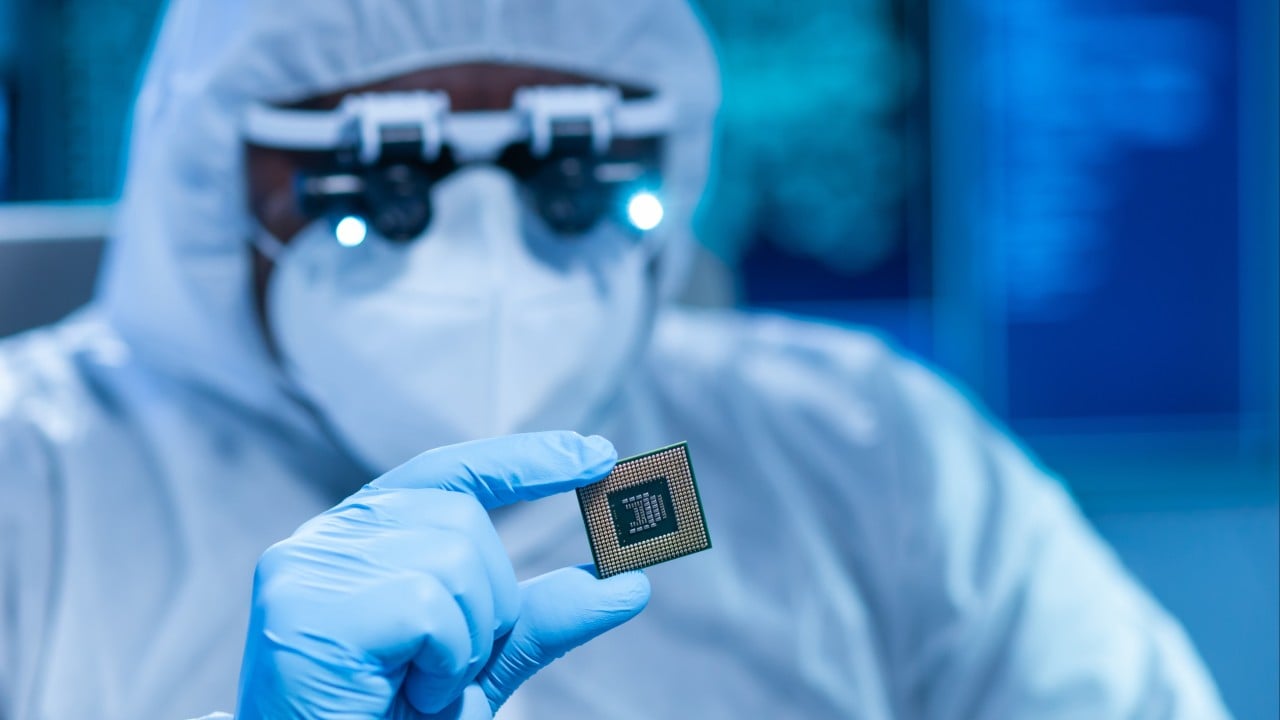
Moore’s Law predicted a doubling of semiconductor capacity every two years but as chip dimensions continue to shrink, physical limitations make further performance scaling increasingly difficult.

01:46
AI rush turns everyday data storage into ‘digital gold’ for Hong Kong consumers
AI rush turns everyday data storage into ‘digital gold’ for Hong Kong consumers
Advertisement
In a 2D semiconductor, its ability to conduct electricity can be altered by adding tiny amounts of other elements, a process called doping, which can result in n-type (negative) and p-type (positive) materials.
While many n‑type 2D semiconductors, such as molybdenum disulphide and molybdenum diselenide exist, high‑performance and stable p‑type ones are rare.
Advertisement
“Transistors in a chip require both n‑type and p‑type materials to work in pairs. The lack of high‑performance p‑type materials has become a critical bottleneck for the development of sub‑5‑nm node 2D semiconductors, and it is also a fiercely contested scientific and technological frontier,” said Zhu Mengjian from the National University of Defence Technology in a report by Science and Technology Daily on Thursday.
Don't Miss:
-
Former American Idol singer Caleb Flynn sentenced to life in prison for wife’s murder
-
Bogota mayor presses Chinese-led consortium for more metro workers as auditors flag delays
-
ICC unseals arrest warrants for 4 Taliban leaders wanted on gender persecution charges
-
Quebec votes in provincial election as separatist surge poses test for Canada’s PM Carney
-
“Here, We Confront Drug Traffickers Daily… And The U.S.?”