
 The Taliban’s New War Begins at Home
  Panama removed from EU’s tax haven ‘blacklist’ a decade after the Panama Papers
  Crackdown and Controversy: The Battle Over Beach Bars and Noise in Phuket’s Bang Tao
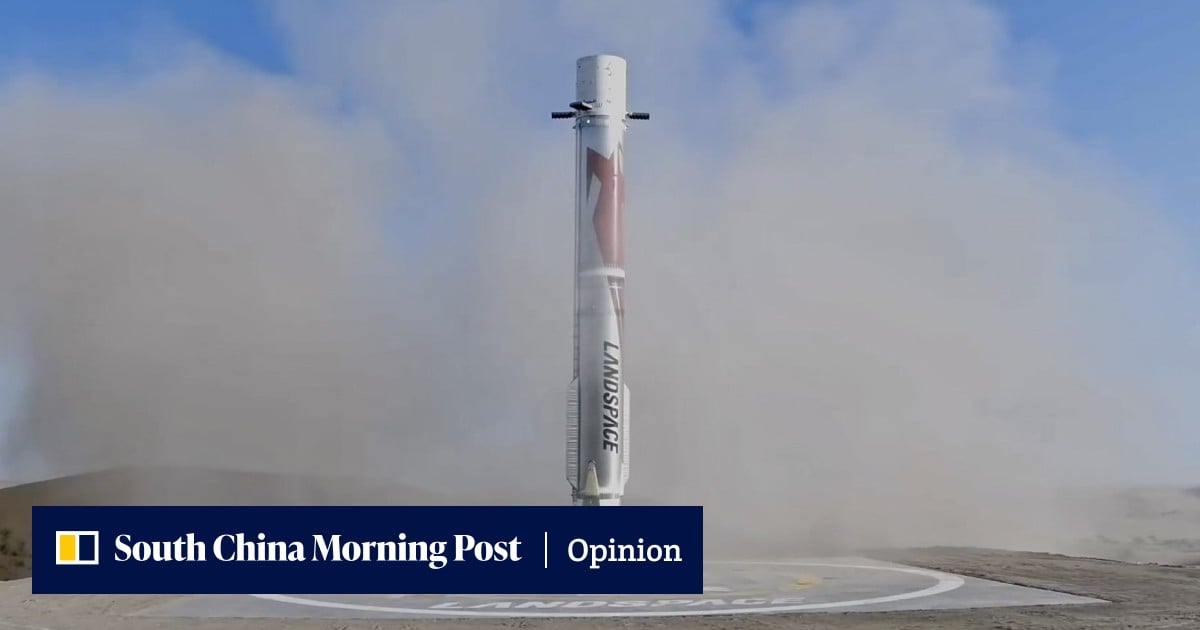
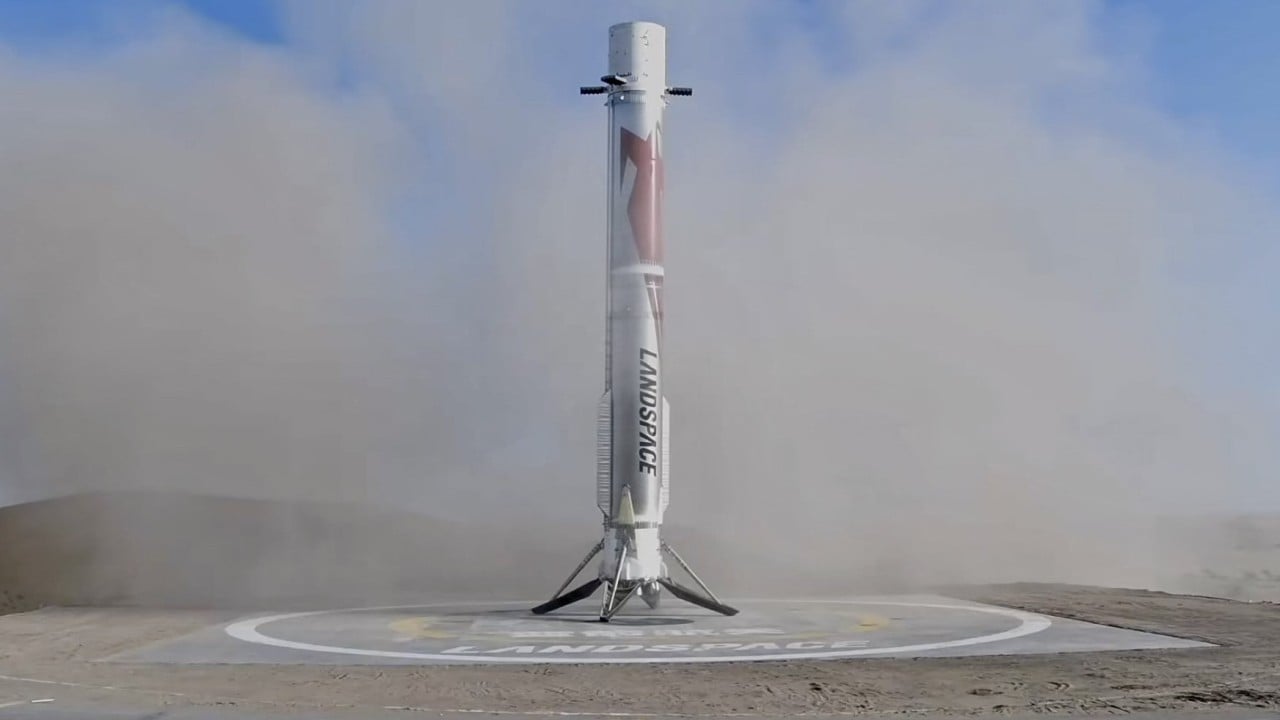
On the morning of August 19, LandSpace’s Zhuque-3 Y2 rocket lifted off from the Dongfeng Commercial Space Innovation Test Area. After deploying its second stage and payload into orbit, the rocket’s first stage touched down softly at a recovery site in Gansu province using deployable landing legs.
It was China’s first successful land-based recovery of an orbital-class rocket booster that had just completed an orbital mission – a feat previously achieved only by SpaceX.
The benchmark for reusable rockets remains SpaceX’s Falcon 9, which pioneered vertical landing after launches of this kind and has conducted hundreds of recoveries. Through first-stage reuse, Falcon 9 has driven its launch price down to about US$2,700 per kg (US$1,225 per lb) – a reduction of 85 per cent from an average of US$18,500 in the pre-reusable era. In contrast, China’s commercial launch prices hover at between US$8,000 and US$14,000 per kg, depending on rocket type and mission profile.
The Zhuque-3 is explicitly designed to close that gap. Standing 66 metres tall with a lift-off mass of roughly 570 tonnes, its first stage is powered by nine methane-liquid oxygen engines. Its stainless-steel structure – a deliberate departure from Falcon 9’s aluminium alloy – offers better heat resistance at a lower manufacturing cost. The booster is designed to be reused at least 20 times.
Don't Miss:
-
Drug Trafficking, U.S. Banks, and the Economic Reality Under Trump
-
Ivan’s Mob Beheads A Los Mayos Member
-
Ex-OFAC Official: The Cartel Risk Companies Can’t See | The InSight Take
-
Why Ecuador Is Losing Its Fight Against Organized Crime
-
‘El Cromo’ Arrested in Guadalajara; He Is Linked to a Group Affiliated with the CJNG