
 How Hungary’s richest man funneled millions into Orbán’s propaganda machine
  How Real Is the US Withdrawal from the Middle East?
  From Iran to China: An Emerging Trans-Central Asian Corridor
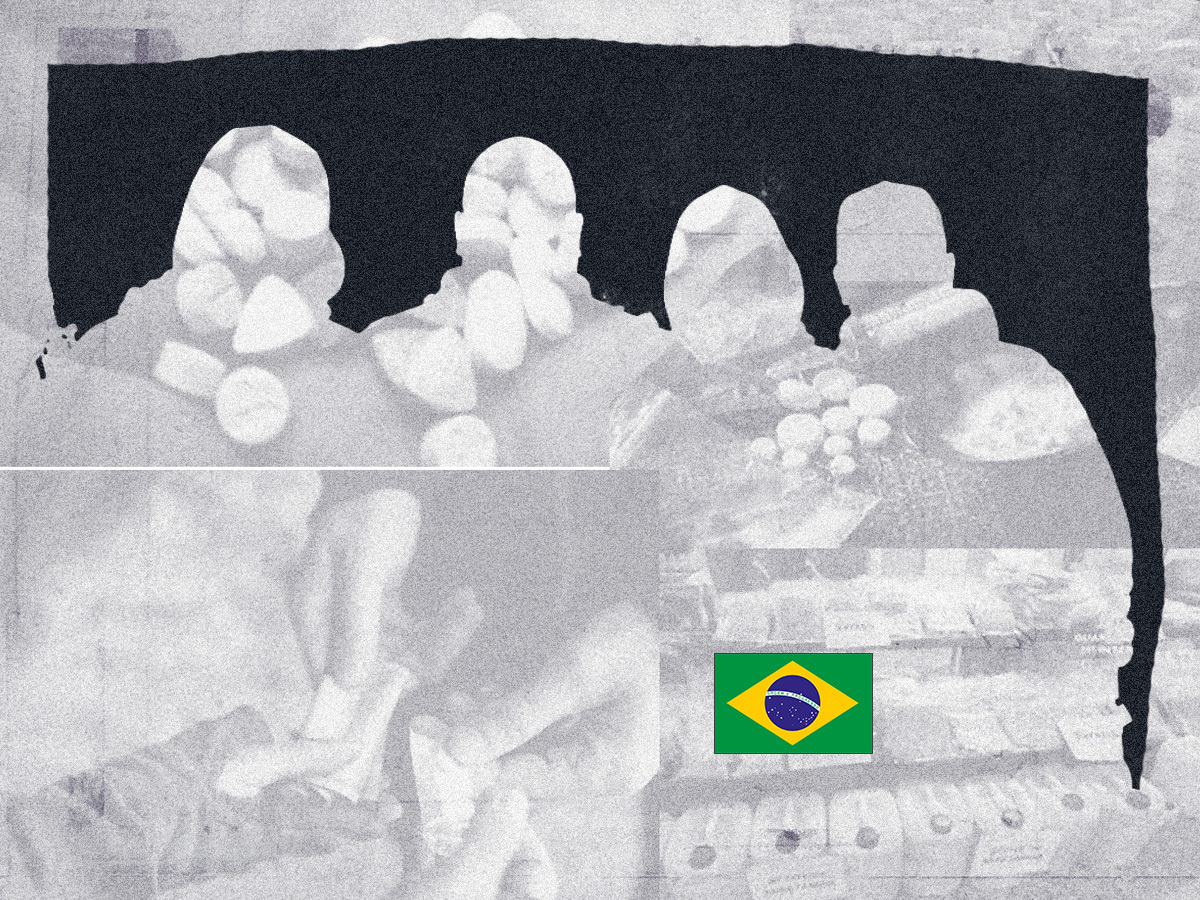
The Pure Third Command (Terceiro Comando Puro – TCP) is Brazil’s third largest criminal group and the second most powerful gang in Rio de Janeiro. Its origins can be traced back to a split within the Rio-based Red Command (Comando Vermelho – CV) gang in the mid-1980s. Its main criminal activities are drug trafficking and dealing, arms trafficking, and money laundering.
In This Profile:
Recent TCP News
June 2026 – Raid Targets TCP Property-Grabbing Ring
Rio de Janeiro police carried out 43 search warrants against a TCP cell accused of forcing residents and shop owners out of their properties in the city’s central region. Authorities say the gang used threats, extortion, and forged documents to seize buildings. The taken properties allegedly became assets of the faction and were used to launder drug money.
What is The Story of The TCP?
In the mid-1980s, enterprising members of the Red Command split off, forming a breakaway group to take advantage of Brazil’s rapidly expanding drug market, the Third Command.
Some analysts say the motive for the split was a leadership vacuum in the Red Command, which at the time was headed by a younger generation of gangsters. The dissident Red Command members who formed the Third Command wanted to establish a more efficient, business-like approach to the drug trade.
Throughout most of the 1990s, the Red Command and its offshoot, the Third Command, were rivals and the dominant criminal actors in Rio de Janeiro, battling for control of drug trafficking and extortion rackets across the city.
The Third Command formed a loose alliance in the late 1990s with another newly emerging breakaway group formed by ex-Red Command members known as Amigos dos Amigos. Both gangs concentrated their efforts on taking control of territory held by the Red Command.
The Third Command-Amigos dos Amigos pact sparked tensions that eventually led to the collapse of the Third Command in the early 2000s. Third Command leader Nei da Conceição Cruz, alias “Facão,” who oversaw the group’s drug trafficking activities in the northern area of Rio known as Complexo da Maré, became frustrated over what he perceived as encroachment on his territory by Amigos dos Amigos boss Paulo Cesar Silva dos Santos, alias “Linho.” As a result, Facão split from the Third Command in 2002, creating his own organization and declaring war on both former allies.
Facão’s group remained a relatively minor player until September 2002, when the Third Command’s imprisoned leadership was wiped out in a series of assassinations orchestrated by the Red Command with the help of Amigos dos Amigos co-founder Celso Luis Rodrigues, alias “Celsinho da Vila Vintém.”
The Third Command’s remaining members defected to more powerful organizations. Most local drug bosses swore their allegiance to either the Amigos dos Amigos or Facão, who took advantage of the incident to name his gang the “Pure” Third Command.
The TCP has since dominated control over drug sales in northern and western Rio, with a particularly strong presence in the Senador Camará neighborhood in the west of the city and Ilha do Governador, the largest island in Rio’s Guanabara Bay. The criminal group has also expanded its activities from drug trafficking to extortion of basic services in the neighborhoods under its control.
By 2020, one of the gang’s leaders, Álvaro Malaquias Santa Rosa, alias “Peixão,” started using Israeli symbolism and religious principles from Pentecostalism in the TCP, such as the belief that faith can bring material success. Peixão took control of five favelas by using religion to consolidate his authority, founding what the media called the “Israeli Complex” (Complexo de Israel). The TCP’s dominance over this area helped legitimize its parastatal military power and expand its influence in Rio.
In 2024, the gang came under pressure from the rival Red Command as it sought to move in on a TCP stronghold known as Morro de Macacos, leading to dozens of shootouts.
The gang has also expanded its activities to other states. In 2025, authorities convicted 13 TCP members in the southeastern state of Minas Gerais for drug trafficking and money laundering. In the same year, the TCP took over the gang Guardians of the State (Guardiões do Estado – GDE), from the northeastern state of Ceará, which was facing a crisis. The merger was a key part of TCP’s rapid growth beyond its home state.
In November 2025, an operation in the southeastern state of Espírito Santo revealed that the TCP had forged alliances with Brazil’s largest gang, the First Capital Command (Primeiro Comando da Capital – PCC) and a local criminal group called Capixaba Family Association (Associação Família Capixaba – AFC) to fight another Espírito Santo’s gang, the First Command of Vitória (Primeiro Comando de Vitória – PCV).
In April 2026, police in the Midwestern state of Distrito Federal identified links between local criminals and the TCP around drug trafficking and money laundering. And in May, an operation revealed that the gang maintains sophisticated military capabilities, with subterranean bunkers and forest encampments used as support bases for moving drugs and weapons.
Who Are the Leaders of the TCP?
The TCP, like Rio’s other top criminal groups, lacks a strong hierarchy. Rather than a vertical, mafia-type organization, the group functions as a loose horizontal coalition of local crime bosses who forge alliances based on mutually beneficial interests.
Within the gang’s loose structure, Peixão is one of the TCP’s main leaders. He has been able to establish authority and consolidate the gang’s power over other groups in Rio by intertwining Pentecostal faith with criminal violence.
Many of the TCP’s top leaders have avoided arrest by employing an effective system of lookouts and paying bribes to both civil and military police officers.
The group’s founding leader, Facão, was arrested and imprisoned in 2009. He was succeeded by Marcio José Sabino Pereira, alias “Matemático,” who died during a gunfight with police in 2012.
Fernando Gomes de Freitas, alias “Fernandinho Guarabu,” was one of the TCP’s most relevant leaders, and oversaw the group’s territorial hold over neighborhoods on Ilha do Governador for over a decade. In 2019, he was killed by the police in an operation.
Where Does the TCP Operate?
The Pure Third Command’s influence has spread across Rio de Janeiro, and it is the criminal group with the third-largest territory in the city, after the Red Command and militias—paramilitary-style groups composed of former or current security agents. The TCP’s main territorial stronghold, the Israeli Complex, consists of five favelas in northern Rio. The group also controls Morro dos Macacos, another favela in northern Rio that is frequently under dispute due to incursions by the Red Command. Additionally, the Pure Third Command maintains a presence in the Baixada Fluminense suburbs, which lie north of Rio de Janeiro proper.
The gang has also allegedly used the religious principles it preaches to expand its operations to other Brazilian states, such as Ceará, Minas Gerais, Espírito Santo, and Distrito Federal.
Who Are the TCP’s Allies and Enemies?
The Pure Third Command has traditionally been pitted against Rio de Janeiro’s other two largest gangs, the Amigos dos Amigos and the Red Command.
The Pure Third Command’s main allies are corrupt security force officers, who largely turn a blind eye to their activities in exchange for kickbacks, and often supply the group with weapons. The gang is believed to occasionally cooperate with Rio’s militia groups, as a strategy to fight the Red Command.
In other states, the TCP has taken over Ceará’s gang Guardians of the State and forged alliances with São Paulo’s PCC and Espírito Santo’s Capixaba Family Association (Associação Família Capixaba – AFC), aiming to expand its control.
What Lies Ahead for the TCP?
The Pure Third Command has been expanding its power as Rio’s third most-powerful criminal force, right behind the Red Command and the militias. The gang controls key drug trafficking areas in Rio de Janeiro and has been able to sustain its influence in the city, especially as the mobilization of Pentecostalism becomes more frequent among criminals in Brazil.
TCP’s rapid growth established the group as the third-largest criminal gang in Brazil, with a presence in at least nine states besides Rio de Janeiro. Its 2025 merger with Ceará’s Guardians of the State suggests the group keeps expanding its membership, territory, and criminal power.
Don't Miss:
-
US wraps up military mission in Iraq, giving Baghdad room to strengthen China ties
-
As China and the EU begin crunch trade talks, optimism is in short supply
-
Data centre opposition is growing in Australia. Is there a middle ground?
-
Helper arrested for allegedly slapping 5-year-old boy after he refuses to eat
-
Workers, mostly Indian, building US consulate in Milan agree to record settlement