
 How Hungary’s richest man funneled millions into Orbán’s propaganda machine
  How Real Is the US Withdrawal from the Middle East?
  From Iran to China: An Emerging Trans-Central Asian Corridor
 After the US-Venezuela cooperation on the missile strike that killed the leader of Venezuela’s most feared gang, could Colombian guerrillas, who have long encamped in Venezuela with the support of elements of the Chavista regime, face similar bombardments?
Bolívar, where Hector Rusthenford Guerrero Flores, alias “Niño Guerrero,” the founder and leader of the Venezuelan transnational gang Tren de Aragua, was struck in southern Venezuela, is the country’s mining heartland.
The rebels of the National Liberation Army (Ejército de Liberación Nacional – ELN) also have a strong presence there, and profit from the illegal gold trade. It is these same deposits that Venezuela’s President Delcy Rodríguez wants to auction off to international companies as she seeks to move her country from the edge of bankruptcy and cling onto power.
SEE ALSO: Niño Guerrero Is Dead. This Is How He Built Latin America’s Most Notorious Criminal Franchise
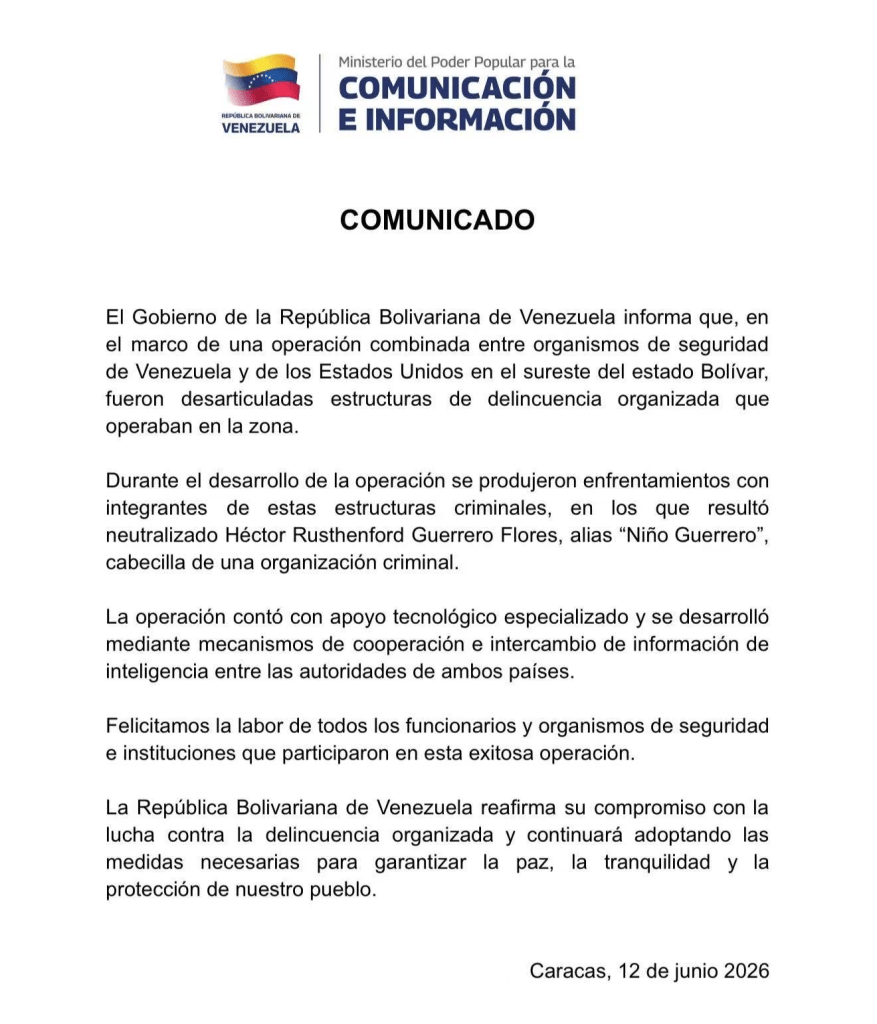
“Venezuelan and US security agencies dismantled organized crime networks operating in southeastern Bolívar state in a joint operation,” said a Venezuelan government press release about Guerrero’s killing on June 12.
But the ELN is not Tren de Aragua. The second is a loosely knit federation of gangs born in a prison. The ELN is a disciplined guerrilla army that has fended off the US-backed Colombian military for decades, and is stronger today than it has ever been, with around 6,300 fighters operating in both Colombia and Venezuela. It is also deeply entwined with elements of the regime set up by Hugo Chávez more than 25 years ago. The Chavista regime has offered the Colombian rebels sanctuary and even tacit support, a useful bulwark against an often hostile Washington and its most loyal ally in the region (until recently), Colombia.
SEE ALSO: Peace Never Had a Chance: Colombia’s ELN in Venezuela
Even if the political will exists, can Rodríguez trust her security forces to aid in US operations against the Colombian guerrilla army, which is on Washington’s list of terrorist organizations?
All of this is occurring against the backdrop of the Colombian presidential elections, which conclude on June 21, in which the current president, former guerrilla Gustavo Petro, looks set to be replaced by a right-wing, avowed admirer of Donald Trump.
Abelardo de la Espriella has vowed to unleash fire and fury on all of Colombia’s warring factions and refuses to acknowledge any kind of civil conflict. With the Trump Administration’s fusion of the war on drugs with the war on terror, Washington will likely find an enthusiastic ally keen to unleash missile strikes, pushing for a fully militarized approach.
“To the bandits of the ELN, the Clan del Golfo, to ‘Iván Mordisco’, to ‘Calarcá’ — from here in Buga I say that from August 7th — when I am president — I declare them a military target, I am going to take them down,” said de la Espriella during a June campaign rally.
Were the ELN to be attacked simultaneously on both sides of the 2219 km Colombia-Venezuela border, it could face one of the most serious threats to its existence in over 60 years of fighting.
InSight Crime Analysis
Strikes against the ELN are unlikely before the US midterms. Trump needs as many foreign policy wins as he can stack up before November’s Congressional elections, and getting mired in another counterinsurgency war, like that of neighboring Colombia, might seem an unattractive prospect and an unsavory legacy.
Washington has taken control of Venezuela’s oil sales and is looking to ratchet up production, especially with the current shortages created by the Iran crisis and the flow of oil through the Straits of Hormuz. That done, the United States appears keen to secure as many concessions as possible for Venezuela’s gold and rare earth minerals.
The Venezuelan government has already passed a new mining law to allow foreign investment and reorganize the mining sector to facilitate the entry of foreign companies. Initial agreements have been signed, and US officials have even visited the area, according to local reports. Additionally, the United States has eased all sanctions imposed on Venezuelan gold and minerals to promote operations.
The ELN has already shown its capacity to disguise its visible footprint in Venezuela, even though there are hundreds of rebels, likely over 1000, scattered through at least eight Venezuelan states, including Bolívar. In December last year, when the US flotilla, led by the aircraft carrier USS Gerald Ford, deployed off the north coast of Venezuela, InSight Crime field research saw the ELN abandon long-term encampments in the border states, and rebels appeared to embed themselves among the civilian population. While ELN patrol and vehicle checkpoints remained active, InSight Crime field research found that they continue to participate in a series of criminal economies, including drug trafficking, all forms of contraband, and the gold and mineral trade. Most of these activities are conducted in tandem with corrupt elements of the Chavista regime, which have a vested interest in maintaining the status quo and protecting the ELN.

Don't Miss:
-
US wraps up military mission in Iraq, giving Baghdad room to strengthen China ties
-
As China and the EU begin crunch trade talks, optimism is in short supply
-
Data centre opposition is growing in Australia. Is there a middle ground?
-
Helper arrested for allegedly slapping 5-year-old boy after he refuses to eat
-
Workers, mostly Indian, building US consulate in Milan agree to record settlement