
 How Real Is the US Withdrawal from the Middle East?
  From Iran to China: An Emerging Trans-Central Asian Corridor
  New documents show how a retail chain’s sales practices helped put guns on US streets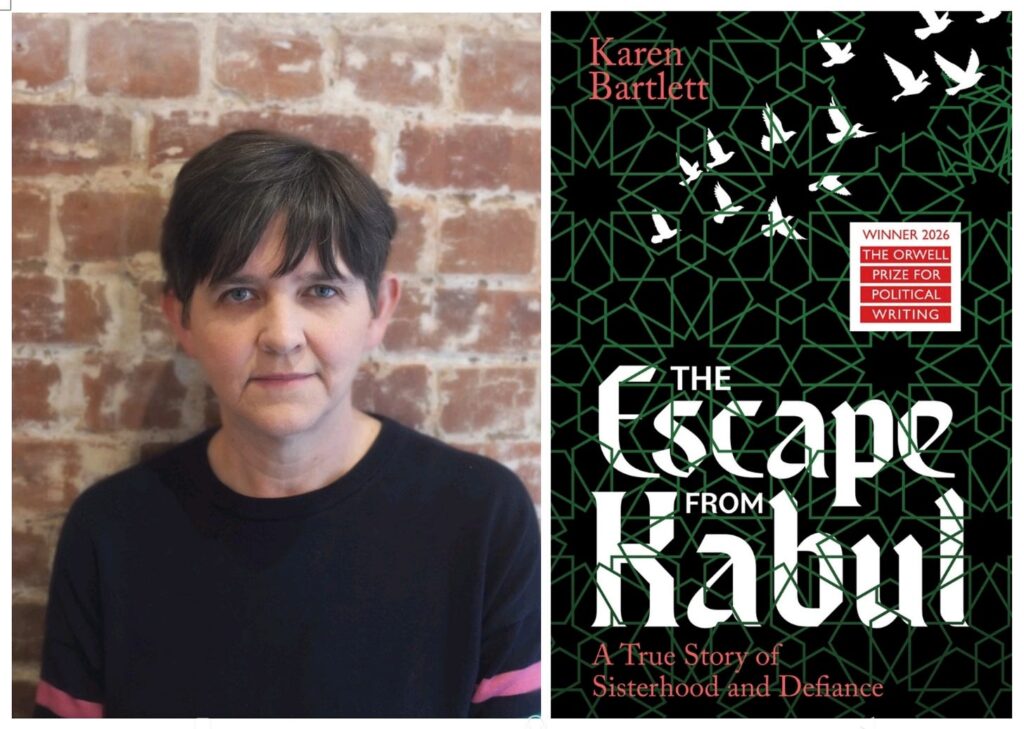
By: Majid Maqbool
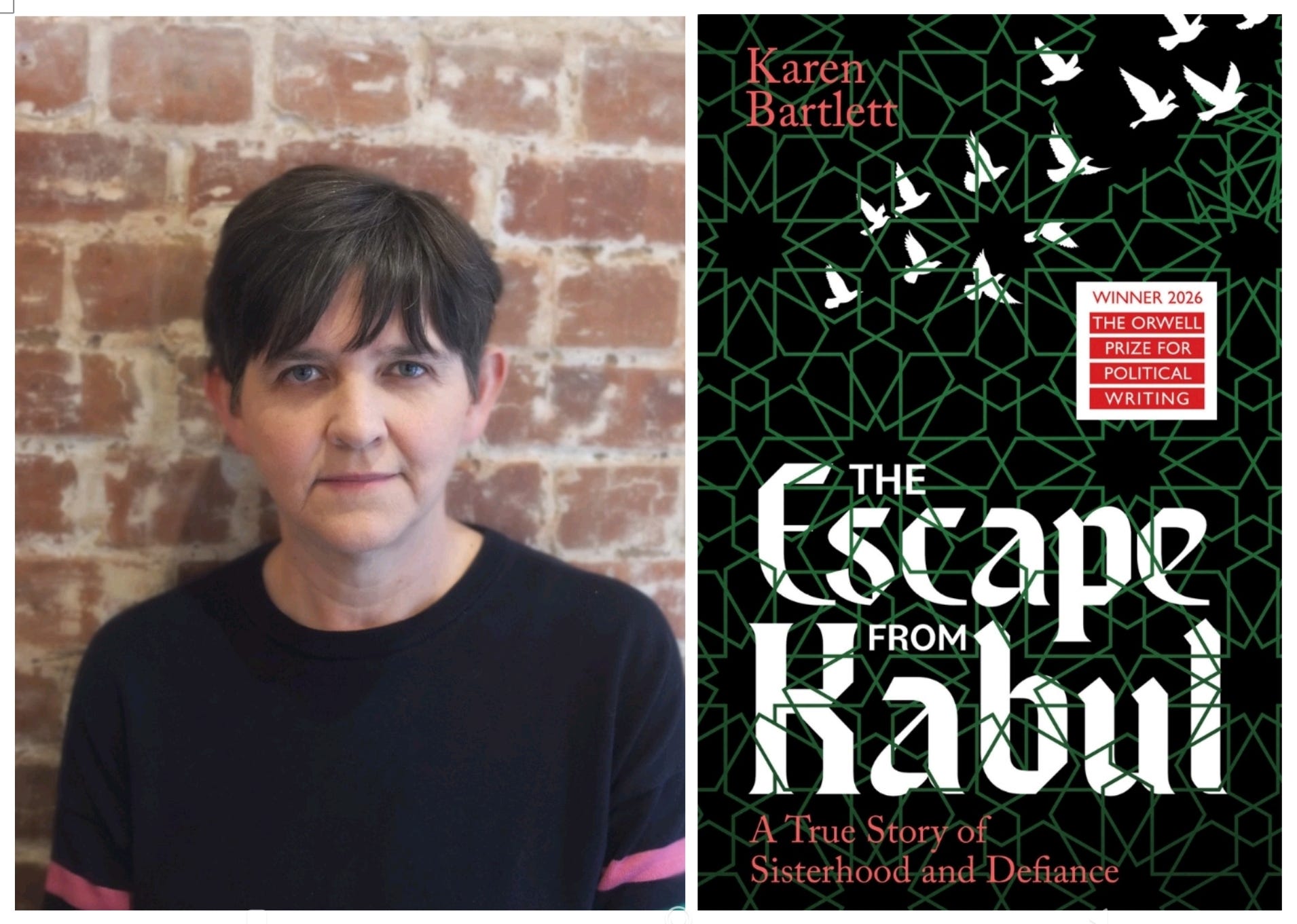
Over the two decades following 2001, Afghan women earned law degrees, rose to the bench as judges and made all efforts to reshape their nation. They confronted corruption and struggled to curb rising violence targeting women and children. These educated and powerful women spearheaded the effort to build a modern democracy. Yet when Western forces pulled out in August 2021, Afghanistan’s women judges, including their families, were suddenly exposed to life-threatening peril.
In her Orwell Prize 2026-winning book, The Escape from Kabul, writer and journalist Karen Bartlett tells the story of the escape of nearly 200 women and their families, supported by a network of professional friends, female judges and lawyers from around the world, who refused to abandon them to the Taliban.
The former director of a leading campaign group for democracy and human rights, Bartlett is the author of five other non-fiction books including The Health of Nations, The Diary That Changed The World: The Remarkable Story of Otto Frank, The Diary of Anne Frank and After Auschwitz with Eva Schloss.
In an exclusive interview with Asia Sentinel, the London-based author talks about what drew her to write the story of these brave Afghan women judges who had upheld the rule of law in their country for 20 years, and how it suddenly vanished, and the coming together of an informal network of female judges, lawyers, and volunteers spread across Europe, North America, Australia and elsewhere who sprang into action from their bedrooms and kitchens to rescue about 300 Afghan women judges and their families.
Edited Excerpts:
What initially drew you to this story, and how did you begin working with international networks like the International Association of Women Judges (IAWJ) to document the lives and escape of these Afghan female judges?
In August 2021, as Kabul was falling, I learned that hundreds of Afghan women judges had suddenly become some of the most wanted people in the country. These were women who had spent two decades putting violent extremists, terrorists and domestic abusers behind bars. Overnight, the prison doors had been opened and many of the men they had sentenced were now free.
The headlines understandably focused on the airport evacuation, but there was another extraordinary story unfolding behind the scenes. These women had upheld the rule of law for twenty years, and suddenly the law they upheld and built had vanished.
I began speaking to the international judges involved in the evacuation efforts, and then the Afghan judges who had managed to escape. The International Association of Women Judges had become the nerve center of an extraordinary rescue operation – working alongside lawyers, judges and supporters across the world to try to evacuate hundreds of women and their families.
What amazed me was that this wasn’t a government-led operation. It was ordinary people, mostly women, working from kitchen tables, spare bedrooms and laptops across different continents. They were coordinating visas, flights, safe houses and communications while governments struggled to respond.
This was a story about courage, solidarity and what happens when civil society steps into a vacuum left by international institutions. That became the heart of Escape from Kabul. Yet this book was so much more, I wanted to chronicle the work and lives of women in Afghanistan. That was absolutely crucial because we see them in that role again in our lifetimes.
Before 2021, Afghan women were leading landmark efforts against domestic violence and corruption. How did these women transform the judiciary over two decades, and at what point did their professional work make them direct targets for retaliation?
These women were highly trained and experienced legal professionals who fundamentally changed Afghanistan’s justice system. Afghanistan appointed its first woman judge in 1969. After 2001, Afghanistan began rebuilding its legal institutions, and women entered the judiciary in unprecedented numbers. They worked in anti-terror courts, commercial courts, family courts, violence against women courts and on anti-corruption cases and criminal prosecutions. They enforced the Elimination of Violence Against Women law, prosecuted honor killings, forced marriages and domestic abuse, and held powerful individuals accountable.
For many Afghan women, walking into a courtroom and seeing a female judge for the first time was transformative. Victims of abuse often said they finally felt someone understood their experiences.
But that same work made the judges enemies. Every conviction created another person who might seek revenge. Extremist groups regarded them as symbols of Western influence, while convicted criminals saw them as personal enemies.
By around 2015 or 2016, many judges were already travelling in different cars each day, changing routes to work and hiding where they lived. They received death threats regularly.
The danger intensified as the Taliban gained territory. By 2021, judges weren’t just threatened because they were women – they were threatened because they represented an independent legal system based on constitutional rights.
The January 2021 assassination of two female Supreme Court judges on their way to work was a devastating blow. From your interviews, did that mark the moment judges realized the threat was existential, or did most still hope to stay and protect the legal system until the final collapse in August?
The assassination of Judges Zakia Herawi and Qadria Yasini in January 2021 was a profound shock. It was truly devastating, and I will never forget the impact it had on their families. Many judges I’ve spoken to describe it as the moment they realized nobody was beyond reach. Yet the judges continued to go to work every day.
These women had devoted their lives to building Afghanistan’s justice system. Many genuinely believed that the institutions they had spent 20 years creating would survive. They continued hearing cases, writing judgments and going to court because they felt a profound duty to their country.
Even in August, as provinces began falling very quickly one by one, many still expected there would be some negotiated political settlement. Very few anticipated how quickly the entire state would collapse.
When Kabul fell on 15 August, the speed of events overtook everyone. One day they were judges; the next they were forced to flee. Those that left lost not only their homeland but also their identity and purpose.
When Western governments failed to establish organized evacuation pathways, an informal network of female judges, lawyers, and volunteers sprang into action from their bedrooms and kitchens. How did they work across time zones and make coordinated efforts at a time when the international diplomacy broke down?
It’s one of the most remarkable examples of grassroots international cooperation I’ve ever encountered. There was no command center. There was no official structure. Instead, there were volunteers spread across Europe, North America, Australia and elsewhere.
People worked almost continuously because someone was always awake somewhere in the world. A volunteer in London might hand over to someone in Washington, who handed over to someone in Sydney or Wellington in New Zealand.
They created encrypted messaging groups, verified identities, checked passport details, searched for available flights, contacted embassies, negotiated with governments and reassured terrified families who were hiding from the Taliban.
Many of these women had never met one another.
It demonstrated something extraordinary: when governments move slowly, networks built on trust and professional solidarity can achieve remarkable things. It wasn’t perfect, and not everyone escaped, but hundreds of lives were saved because these individuals refused to accept that nothing could be done.
What were the most extraordinary logistical hurdles they faced in carrying out the rescue efforts? Any particularly risky rescue mission that stands out?
Every stage of this process involved life-or-death decisions. The first challenge was communication. The Taliban monitored phones and social media, so simply contacting people carried risks.
Then there was the practical reality of moving families across Kabul, and Afghanistan. Imagine travelling through multiple Taliban checkpoints while carrying children, elderly relatives and very few possessions, knowing your name may already be on wanted lists.
One story that stayed with me involved judges repeatedly attempting to reach the airport during the chaotic final days of the evacuation. They were turned back several times, forced into hiding, then tried again under cover of darkness.
Another extraordinary aspect was that many judges refused to abandon colleagues. They constantly shared information and have continued trying to help others long after they themselves had reached safety.
Perhaps the greatest logistical challenge was simply uncertainty. Flights were cancelled. Borders closed unexpectedly. Countries changed visa requirements overnight. Every successful rescue required dozens of people solving problems in real time.
It was an enormous humanitarian operation run largely through determination rather than formal authority.
The high-ranking Afghan judges had to start over as refugees with severe language barriers and loss of professional identity in foreign countries. How are they navigating this transition in their host countries, and how many still yearn to return to Afghanistan if conditions ever change?
The escape was not the end of their story, it was the beginning of a very different struggle.
These women had occupied some of the most respected positions in Afghan society. They had decades of legal expertise, authority and responsibility. Suddenly, many found themselves unable to practice law because their qualifications weren’t recognized or because they didn’t speak the language fluently.
That loss of professional identity was deeply painful. Many describe feeling as though they had lost not only their country but also the purpose that had defined their lives.
Yet their resilience and resourcefulness are amazing.
Many are learning new languages, retraining, studying law, working with universities, supporting refugee communities or contributing to international human rights organizations. Others are campaigning to keep attention focused on Afghanistan and documenting human rights abuses.
Almost every judge I’ve interviewed says the same thing: if Afghanistan once again became a country governed by law and where women could serve safely, they would return without hesitation. Their exile is not a rejection of Afghanistan. It is an enforced separation from the country they dedicated their careers to serving.
What are some critical lessons that the collapse of Afghanistan’s legal system offers to other constitutional democracies regarding the fragility of judicial independence and the protection of women’s rights?
One of the central lessons is that the rule of law is far more fragile than we often imagine. For 20 years, Afghanistan built courts, trained judges, educated lawyers and developed legal institutions. Many people assumed those institutions were permanent. In reality, institutions only endure if there is sustained political commitment to defending them.
The second lesson is that women’s rights are often among the first casualties when democratic systems weaken. The Afghan women judges weren’t targeted simply because they were women. They were targeted because they represented the idea that women could exercise authority, interpret the law and hold powerful men accountable.
Another lesson is that judicial independence depends on more than constitutions and legislation. Judges need practical protection, international support and functioning institutions. Without those safeguards, even the most courageous judges become vulnerable.
Finally, I think the story reminds us that democracy isn’t self-sustaining. It relies on thousands of individuals who quietly uphold democratic values every day.
The women in Escape from Kabul defended those values until the very last moment. Their story isn’t only about Afghanistan. It’s a reminder to every democracy that rights can never be taken for granted, and that defending the rule of law requires constant vigilance.