
 Tunisian court dismisses case to dissolve publisher of ICIJ partner Inkyfada
  Prabowo Faces Growing Discontent as Jokowi Revives His Political Ambitions
  Five years after the Pandora Papers, transparency laws lose their teeth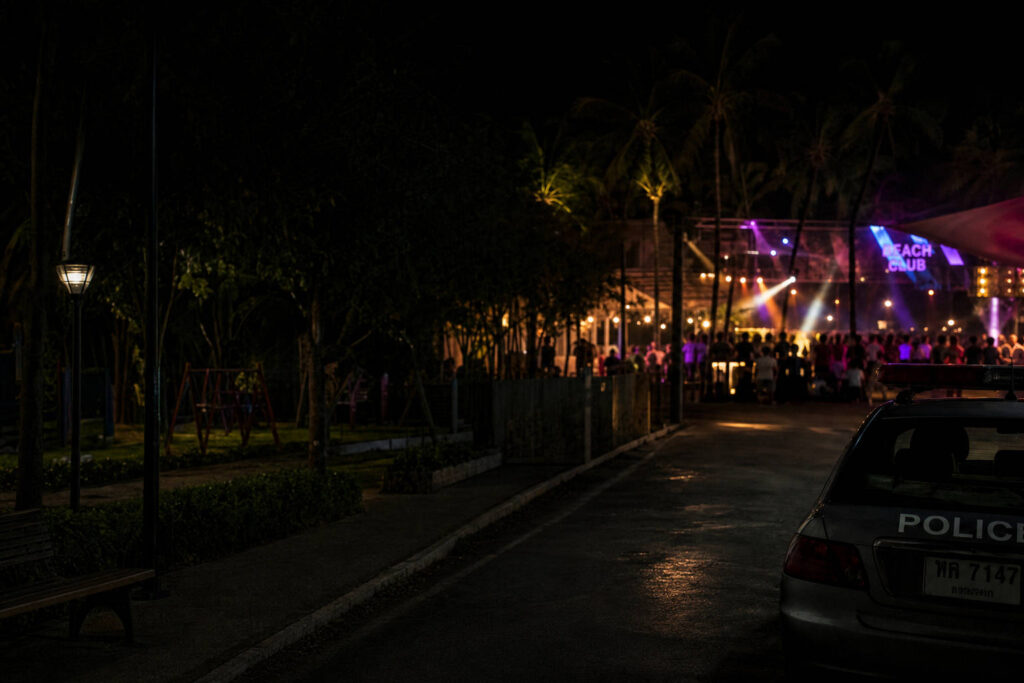
The picturesque shores of Bang Tao Beach, Instagram-worthy sunsets and high-decibel beach parties, have become the centre of a high-stakes legal showdown. While a chorus of social media influencers and YouTube vloggers bemoan about the area a deeper investigation reveals a complex reality of illegal land grabs, alleged bribery, and a significant government crackdown on foreign-owned nominee businesses that has put the rule of law firmly in the spotlight.
In early 2026, a sweeping investigation by Thai authorities, led by the Internal Security Operations Command (ISOC), led to the closure of at least 16 commercial venues along the Bang Tao coastline. The government’s action, personally backed by Prime Minister and Interior Minister Anutin Charnvirakul, was a direct response to years of complaints from local residents about loud parties that raged until the early hours of the morning in what is predominantly a residential area.
The Scope of the Seizure: A Land Dispute
The investigation centres on a contested area of public land in Moo 2, Cherng Talay. Authorities identified 34 structures—16 of which are commercial businesses—allegedly located on public beachfront or forest land protected under the Forest Act. The list of shuttered businesses includes high-profile venues such as Maya Beach Club, Yuuhi Beach Club, Nomad Beach Club Phuket, The Wave Phuket, and MAMBA.
The core of the legal argument is that these businesses were operating illegally, encroaching on public property and subleasing federal shoreline for private profit. Officials are currently examining five specific land title deeds to determine the boundaries and legitimacy of the claims. The case has escalated to the point where the government is preparing to demolish the illegal structures and reclaim the land for public use.
The “Nominee” Framework and Foreign Investment
One of the most significant underlying issues is the ownership structure of these lucrative businesses. Thai law strictly limits foreign ownership of land and requires that companies in certain sectors have a majority of Thai shareholders. However, authorities have uncovered a widespread practice of using Thai citizens as “nominee” shareholders to front for foreign investors. This allows the foreign investors to control the cash flow and profits while ostensibly complying with the 49% foreign ownership cap.
The crackdown is not isolated to Bang Tao. In a major “Phase 3” operation targeting the Andaman provinces of Phuket, Krabi, and Phang Nga, Thai police investigated 89 land plots worth over 1.05 billion baht. Authorities identified 29 companies suspected of being nominees and 48 companies where foreigners outnumbered Thai shareholders in land-holding companies. This has resulted in 59 arrest warrants and 60 search warrants for both Thai and foreign nationals. This aggressive enforcement signals a shift away from merely slapping wrists to dismantling the financial networks that enable these illegal operations.
Bribery, “Influential Figures,” and the Missing Narrative
Prime Minister Anutin has openly pledged a crackdown on corruption and “influential figures” who protect these illegal businesses. The fact that these venues operated for years in a residential area, violating zoning laws and noise regulations, points to a systemic breakdown in local governance. There has been public outcry from residents who have long complained about the “nightclub-style” activities continuing until 3:00-5:00 AM under the guise of restaurant and bar licenses. The longstanding allegations of local officials taking bribes to turn a blind eye were cited as a primary reason for the federal intervention. This is precisely the element of the story that the “doom and gloom” narrative pushed by some influencers conveniently ignores. The closure isn’t an attack on the party; it’s an attempt to restore order after years of lawlessness.
A New Era for Thai Investment
The message from the Thai government is clear: Thailand remains open for legitimate foreign investment, but the days of using illegal nominee structures, encroaching on public land, and disturbing local communities with impunity are over. While tourists and vloggers may view the “Temporarily Closed” signs on Bang Tao’s most famous beach clubs as a sign of a destination’s decline, for the local community and the Thai justice system, it represents a long-overdue restoration of fairness and the law. The fate of Maya, Yuuhi, and the rest now rests in the hands of a fact-finding committee expected to deliver its final report in September.
Don't Miss:
-
After AGNI, are local authorities attempting to conclude proceedings inappropriately?
-
No public admittance to a ‘public’ post-AGNI hearing
-
“Wrapped in Cotton Wool”: Protection, Restriction and P’s Best Interests
-
“Complete failure” of Fit to Discharge proceedings before Lieven J: Carers suspended after allegations of abuse, and no immediate prospect of discharge
-
Reducing restrictions for a person deprived of his liberty: internet use, access to services and ensuring appropriate support