
 The Taliban’s New War Begins at Home
  Panama removed from EU’s tax haven ‘blacklist’ a decade after the Panama Papers
  Crackdown and Controversy: The Battle Over Beach Bars and Noise in Phuket’s Bang Tao
Malaysia’s fisheries department director general, Adnan Hussain, said on Monday that his country was awaiting a response from Thai authorities on questions over export quality. “Once we receive the response, we will assess whether it meets Malaysia’s biosecurity requirements,” he told Bernama, the state news agency.
Advertisement
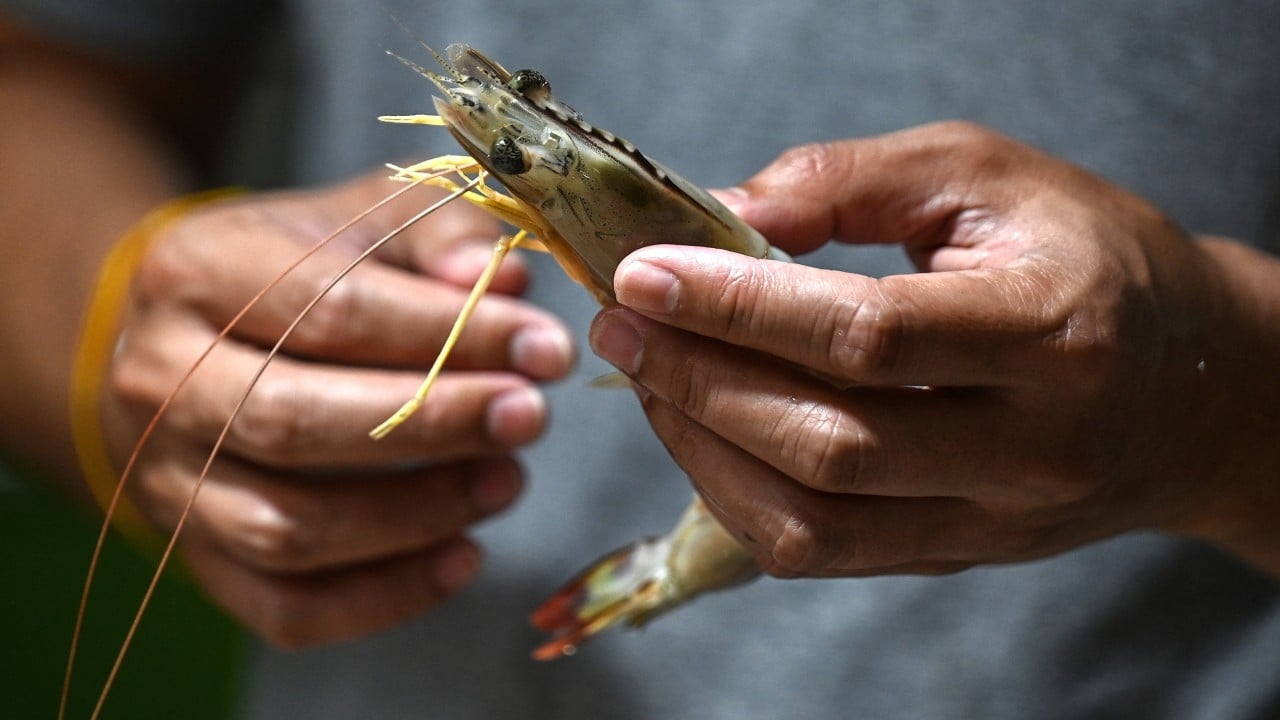
But the waiting game is already inflicting damage. As rumours of the suspension circulated in mid-May, farm-gate prices fell by as much as 30 baht (90 US cents) per kilogram, according to Preecha Sookasem, 60, owner of Sri Songkla Shrimp Farm – one of around 3,000 southern shrimp farmers.
White shrimp, which normally fetches around 200 baht per kilogram, has dropped to 160 baht.
Advertisement
“When the ban officially took effect on June 1, prices fell further and buyers disappeared altogether,” Preecha said. “That has put us in a very difficult position because shrimp is not a commodity that can be stored in a warehouse. We have to sell it immediately.”
Songkhla, his base of operations, lies about an hour from the Malaysian border, over which some 30 tonnes of fresh shrimp are normally exported daily.
Don't Miss:
-
Drug Trafficking, U.S. Banks, and the Economic Reality Under Trump
-
Ivan’s Mob Beheads A Los Mayos Member
-
Ex-OFAC Official: The Cartel Risk Companies Can’t See | The InSight Take
-
Why Ecuador Is Losing Its Fight Against Organized Crime
-
‘El Cromo’ Arrested in Guadalajara; He Is Linked to a Group Affiliated with the CJNG