
 The Taliban’s New War Begins at Home
  Panama removed from EU’s tax haven ‘blacklist’ a decade after the Panama Papers
  Crackdown and Controversy: The Battle Over Beach Bars and Noise in Phuket’s Bang Tao
Reporting Highlights
- Detroit’s Rebuilding: As the city recovers from the largest municipal bankruptcy in history, major construction has reshaped it. New concrete businesses have opened in response.
- Neighborhood Transformation: A concrete mixing plant has opened in the Cadillac Heights neighborhood, a process aided by the decisions of city officials.
- Residents Leaving: Homeowners, who say they can’t coexist with the plant, have sold their properties to the company and left. The number of private sales to one entity “had never happened before in Detroit.”
These highlights were written by the reporters and editors who worked on this story.
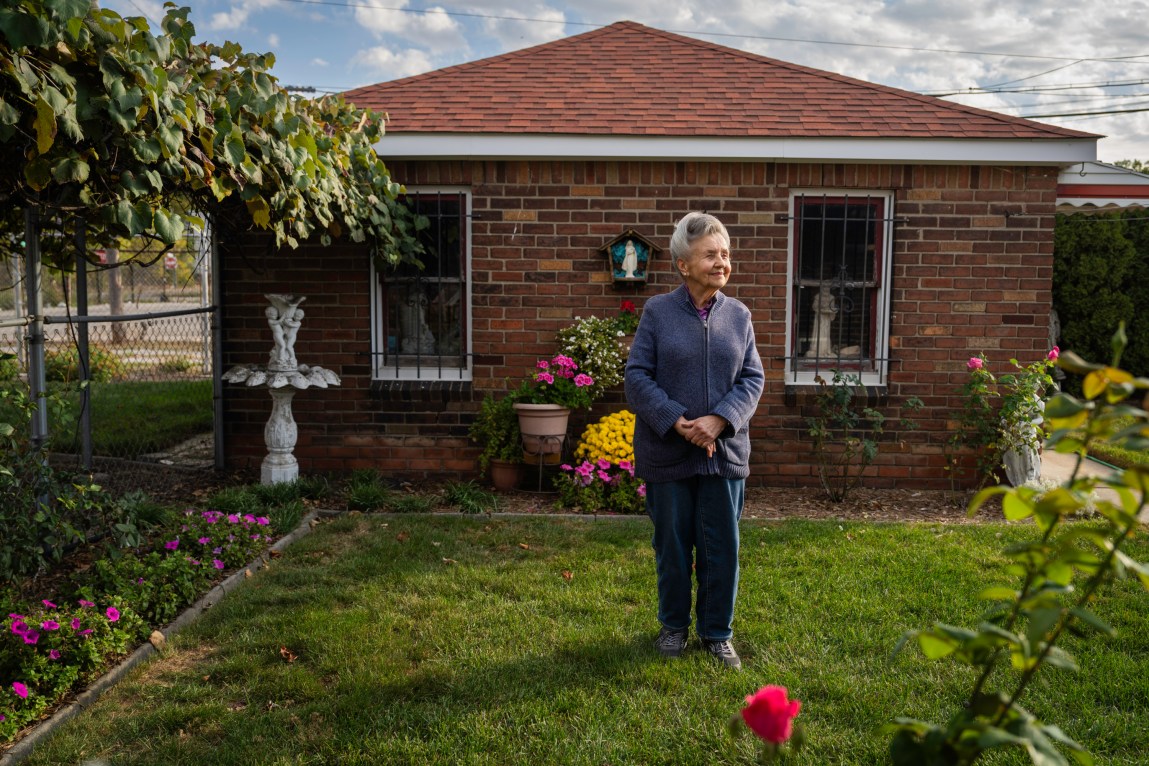
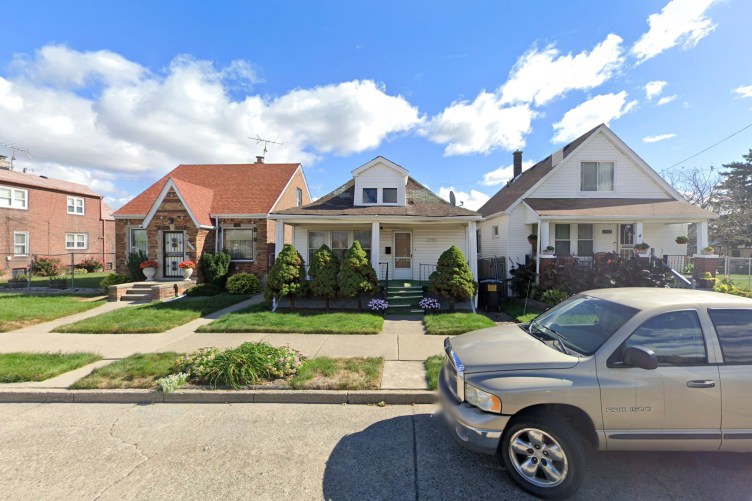
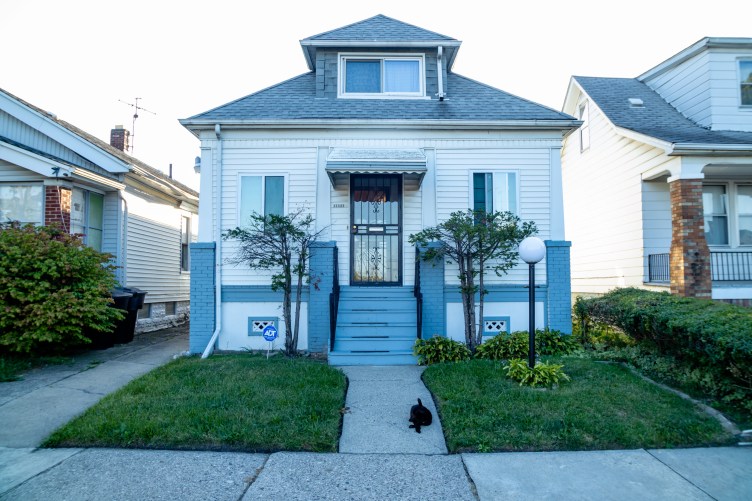
The abandoned house next door meant a lot to Christina Kary. For years, she tended to it, planting purple flowers, removing weeds and picking up trash. She attached locks to the doors to prevent trespassers from entering.
She had considered buying the property, located on the Cadillac Heights block where her family built the first houses in the early 1900s. Several years ago, she learned that the small home with a front porch was owned by the Detroit Land Bank Authority, which manages the city’s vacant properties. Kary, 86, said she told a land bank inspector she wanted to purchase it but didn’t follow up, thinking she would eventually hear back.
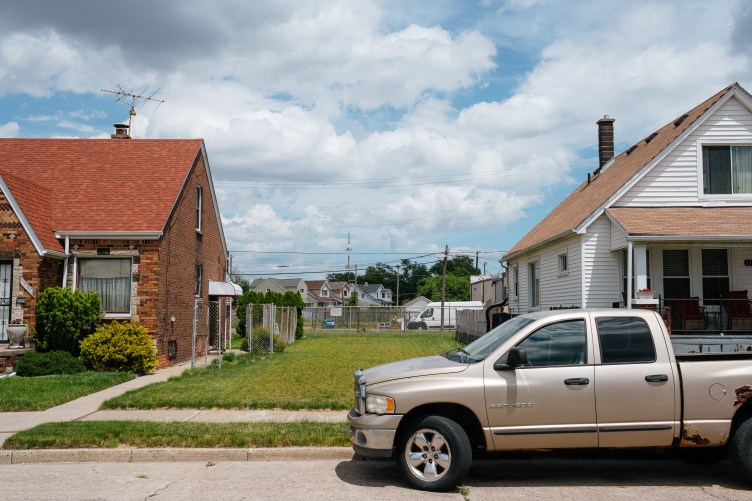
Then, one morning in 2024, she heard a commotion as heavy equipment squeezed through the alley. Kary watched from her backyard as the house was demolished, her feet vibrating beneath her. She marked the day in yellow highlighter on her paper wall calendar where she records other notable events like birthdays, doctor appointments and Bible study meetups. She would later learn that the city had sold the home to Crown Enterprises, a real estate firm owned by members of the Detroit area’s wealthy and politically connected Moroun family.
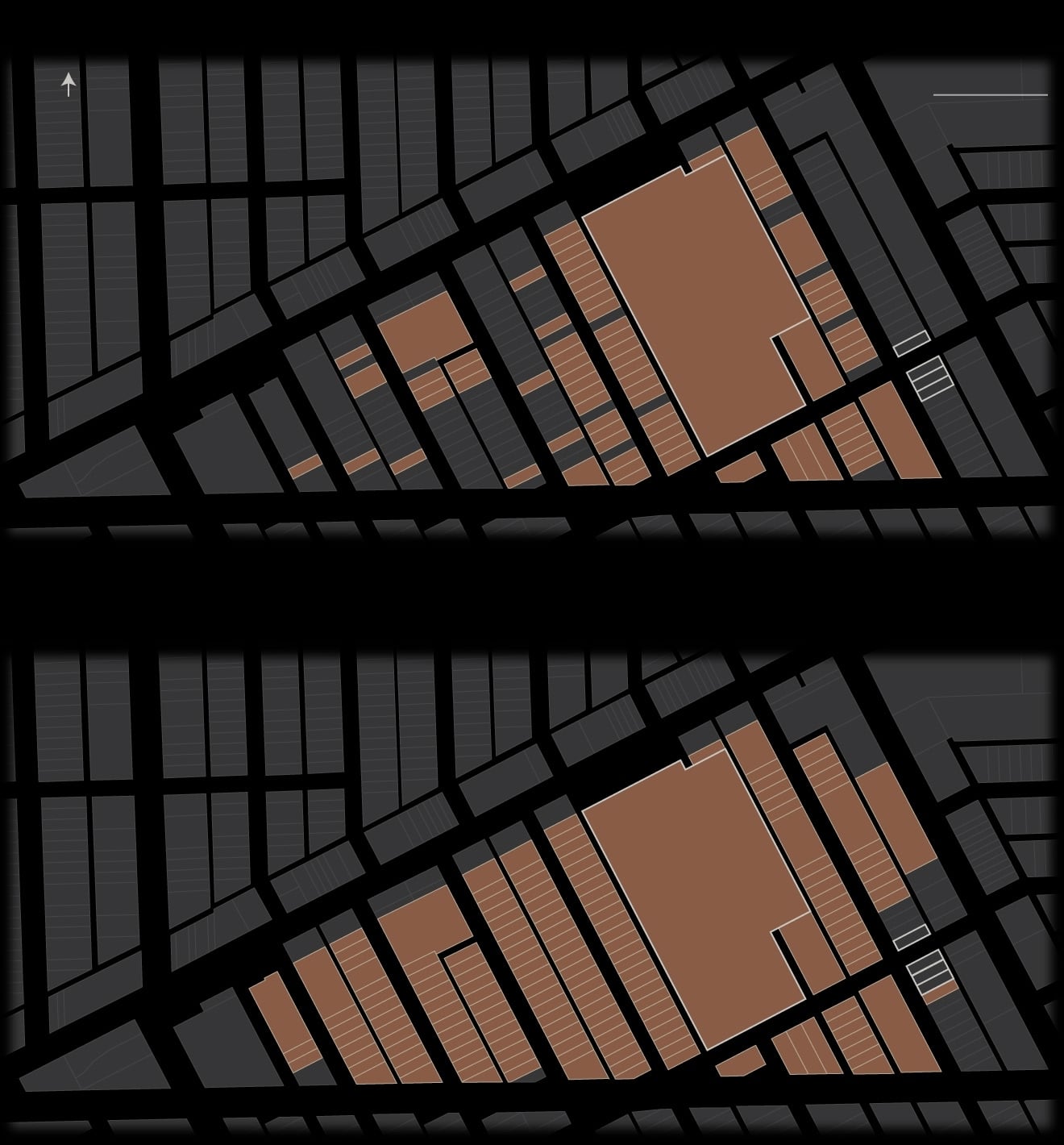
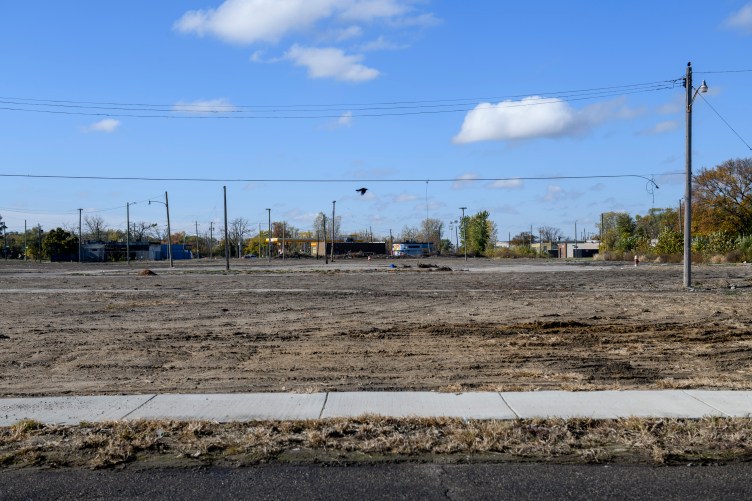
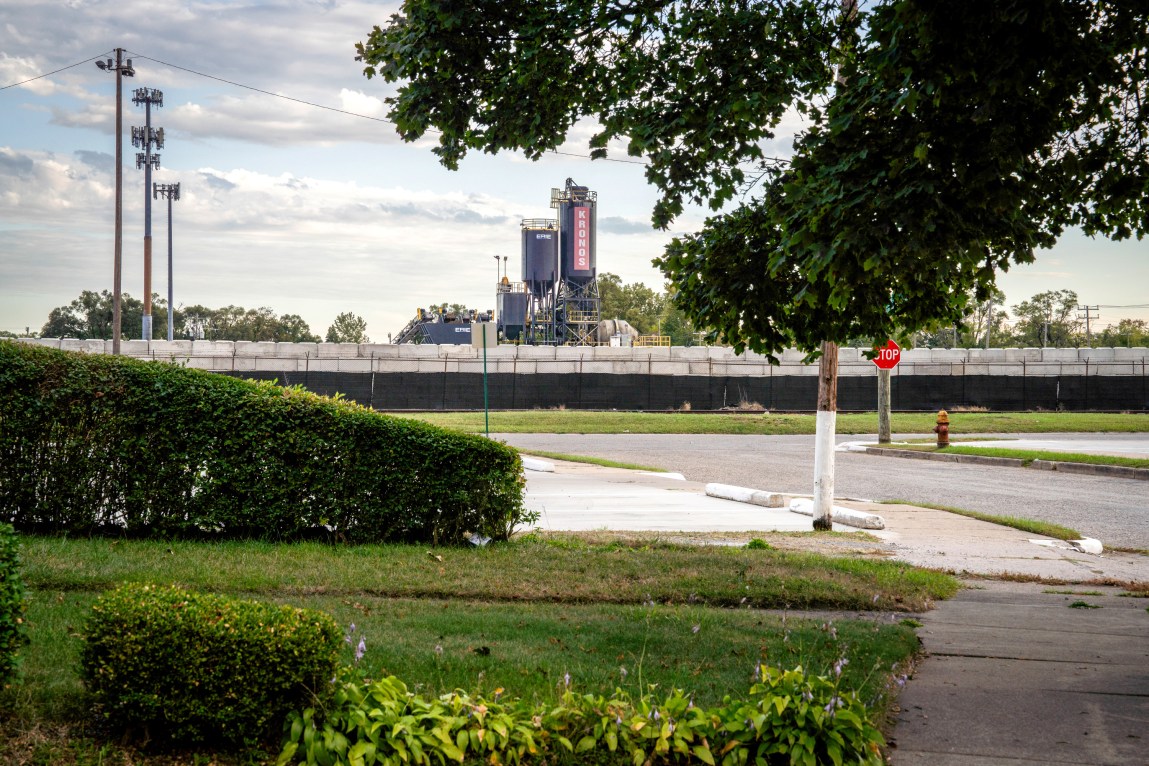
Over the last seven years, Crown has obtained dozens of parcels in Cadillac Heights and secured permits to demolish more than 20 structures. In all, the company now owns more than 160 lots in the neighborhood, most of which are barren. It also has erected a concrete-mixing plant just across the street from Kary’s home, creating clouds of dust, noise at early hours of the day and late into the night, and industrial lights that pierce through the area.
The company’s takeover of the southeast section of the neighborhood has marked the end of the community Kary and her neighbors knew — a process aided by the decisions of city officials. First, the city turned over dozens of properties to the company as part of a historic land-swap deal in 2019 and then gave it first dibs to purchase other lots, including the one next to Kary’s home, until 2034.
The city has also enabled the company in other ways, providing latitude on permitting and neighborhood maintenance. For instance, although city inspectors have repeatedly ticketed the company for violating rules limiting the spread of dust, the city also set up a system under which the company’s fines were dismissed.
As Detroit rebuilds from the largest municipal bankruptcy in history, major construction has reshaped the city: the first new skyscraper in 50 years, new hotels and sports complexes, repaved roads, and the renovation of Michigan Central Station, which had sat empty for decades while owned by the Moroun family and became a symbol of the city’s decline.
To meet the demand, at least three new concrete facilities have opened in the city since 2019. One is by a park, and two are in residential neighborhoods, including the plant in Cadillac Heights, called Kronos. The state also approved a permit for a new cement grinding plant that has not yet opened in an industrial area of southwest Detroit. Other proposed operations have been blocked after residents protested.
The new concrete plants are producing materials needed to help rebuild parts of the city while creating a bitter irony for residents such as Kary. She said Detroit’s decision to turn so many properties over to Crown “guarantees the death of this area.”
In written responses to questions from BridgeDetroit and ProPublica, company representative Kenneth Dobson called Kronos “a good neighbor.” He said the company complies with all permitting requirements and city ordinances, and that it properly mitigates dust.
Dobson said having a concrete supplier within the city helps support rebuilding and broadly improves the lives of Detroiters. Without concrete facilities in Detroit, “not only would there be less jobs and less City tax revenue, but the cost of both public and private infrastructure development would go up,” wrote Dobson, vice president of the Detroit International Bridge Company, another Moroun-owned business.
Dobson said Crown has invested $10 million in the neighborhood. When asked what that has funded, he cited costs related to the Kronos development: demolishing homes, obtaining permits and equipment to operate, and taking measures to control dust and monitor air quality.
Messages sent by ProPublica to email addresses linked to Matthew Moroun, who oversees the family business, didn’t receive a response. Dobson said the email was forwarded to him and he responded on Moroun’s behalf.

With City Help, Crown Moves In
Cadillac Heights’ most recent transformation began in May 2019, thanks in part to a vote by Detroit City Council to approve a nearly $267 million multipronged land swap orchestrated by former Mayor Mike Duggan.
The deal delivered ownership of dozens of lots in Cadillac Heights to Crown. In exchange, Crown gave up land in another part of the city, which allowed automaker Stellantis to open the first new car plant in Detroit in three decades, with the promise of 5,000 new jobs.
Duggan declared the day the land swap was approved as the “greatest” day he had had as mayor.
“Today was historic,” Duggan, who served for 12 years and recently gave up his bid for governor, said at a press conference. “Detroit was the city that built the middle class in America, and today we started to rebuild the middle class in Detroit.”
The news that day focused on the promise of Stellantis, not on what the deal meant for Cadillac Heights. Duggan spokesperson Andrea Bitely said the mayor did not know that Crown would put a concrete plant in the neighborhood and that doing so would ultimately drive out residents.
At its prime in the 1960s, Cadillac Heights had been full of local businesses and community life. The neighborhood attracted a predominantly working-class community of Black families who lived in modest single-family houses.
Buddy’s Pizza, famous as the birthplace of Detroit-style pizza, was founded there and drew crowds from across the city. Cadillac Heights also was home to Simpson’s Records, one of the city’s longest-running record shops.
But over several decades, Detroit declined under the weight of the crack epidemic, massive population loss and disinvestment. City historian Jamon Jordan said some neighborhoods saw more problems than others, but Cadillac Heights “had all of those things.”
By the time of the 2019 deal, roughly a third of the homes that were left had been abandoned, according to census data, and the streets were lined with empty storefronts. The remaining residents, many of whom, like Kary, had lived in Cadillac Heights for decades, said they tried to keep the neighborhood clean and enjoyable.
The Moroun family, too, had owned property in Cadillac Heights since the 1960s and operated a trucking depot there, which residents also found bothersome, but less so than the concrete facility. (The family also owns the Ambassador Bridge to Canada and more than 1,000 properties throughout Detroit, and has tried to block a competing bridge to Canada.)
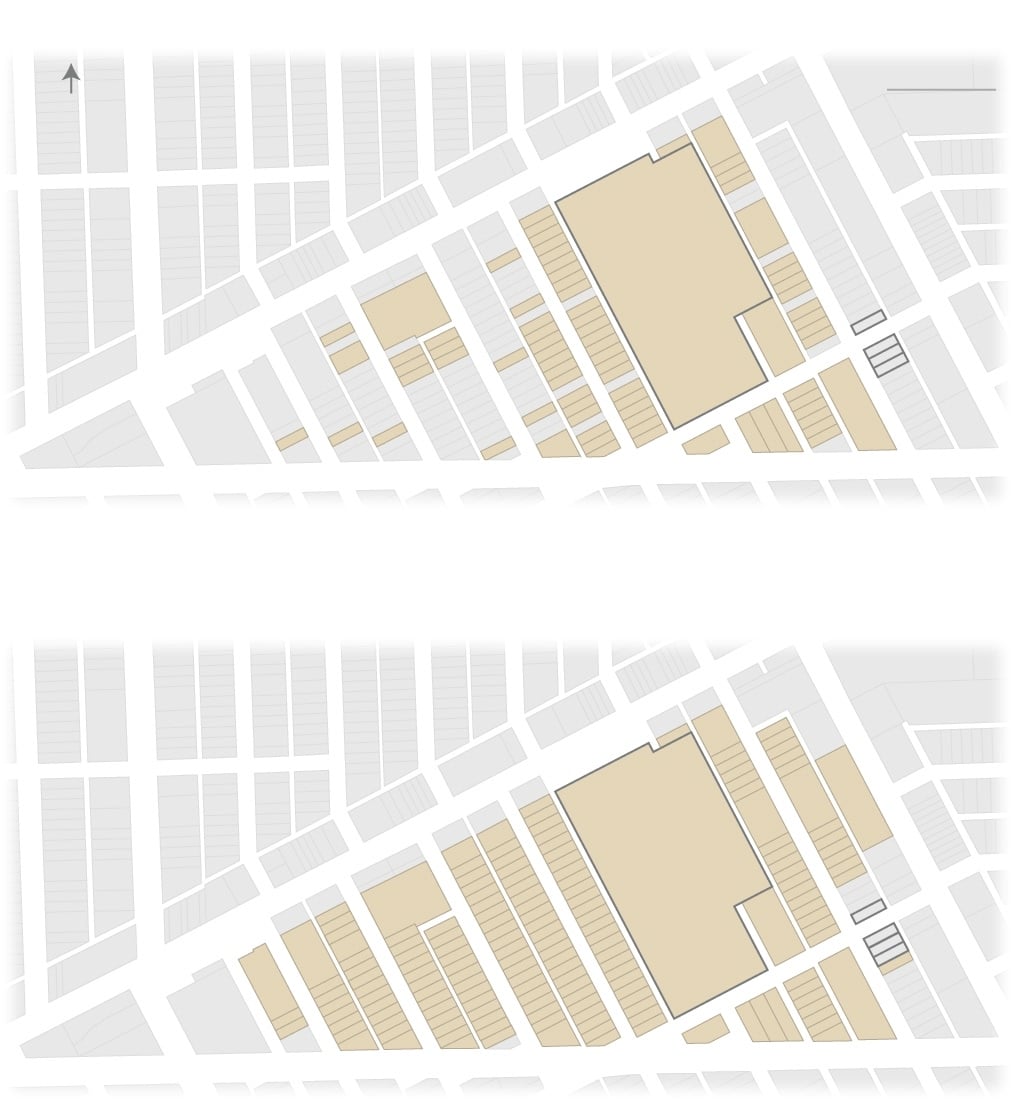
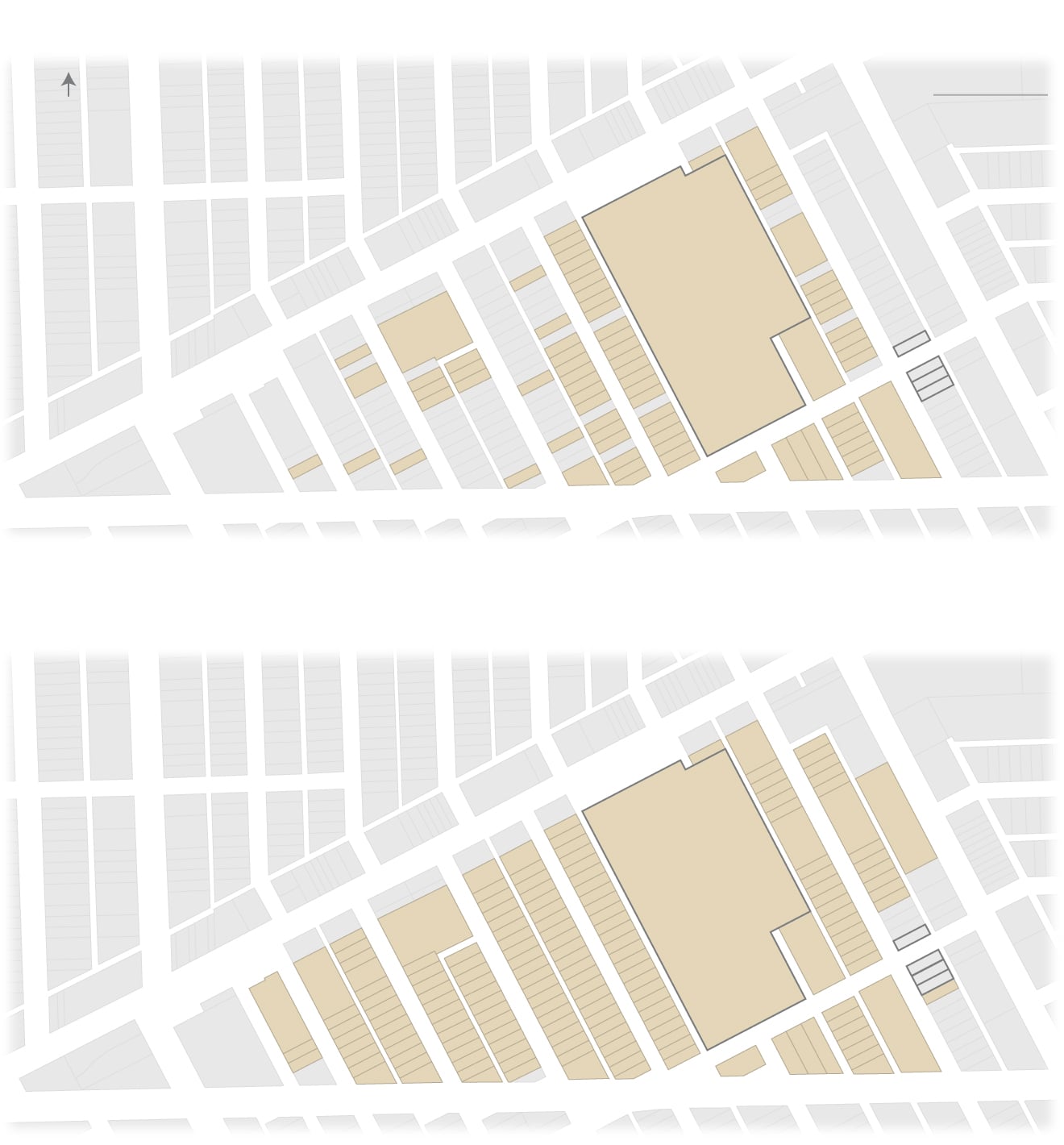
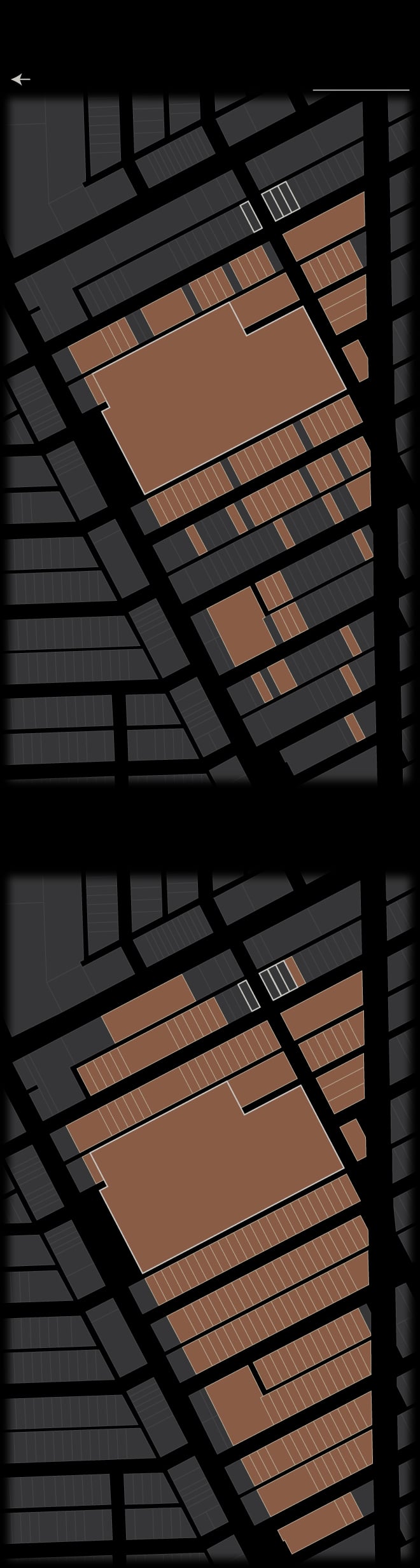
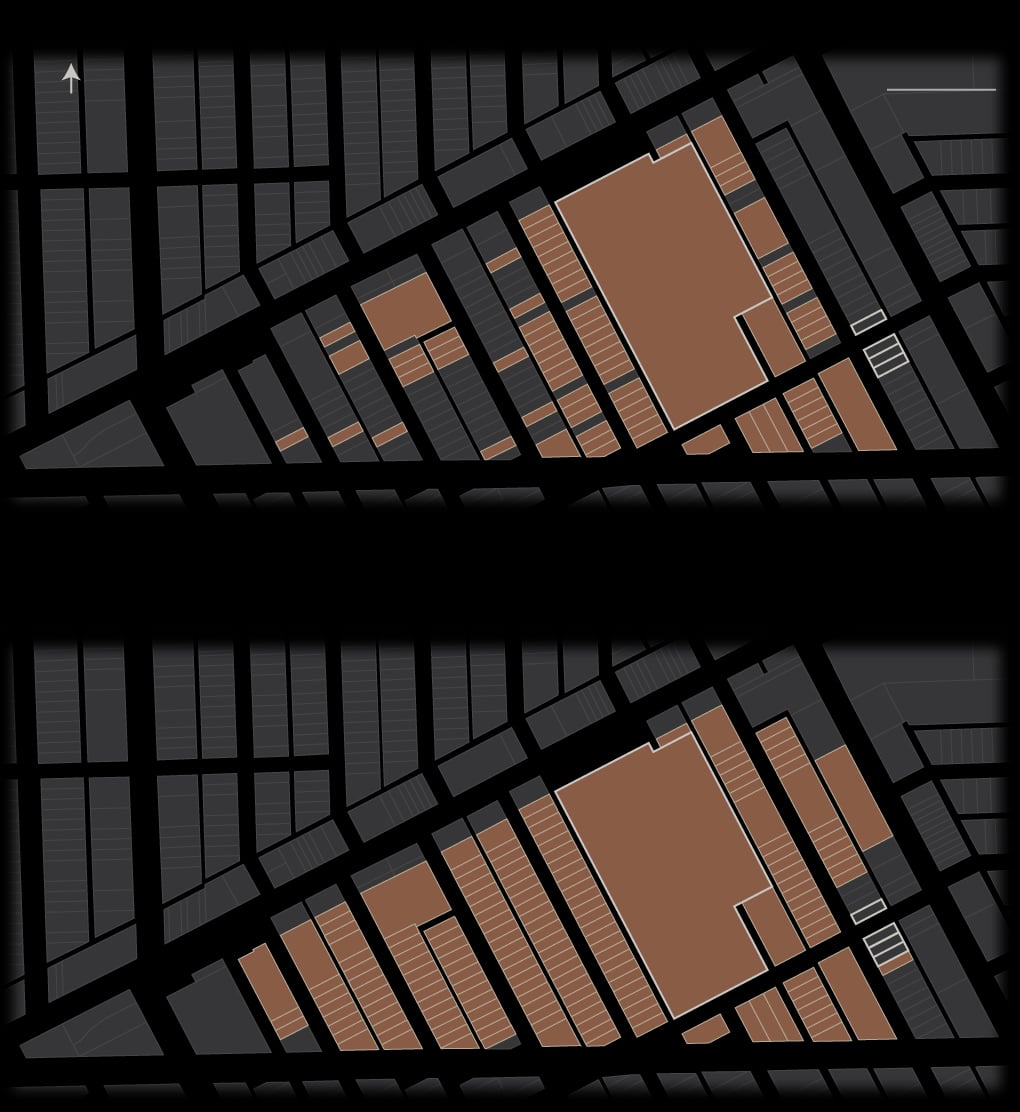
Crown gradually acquired more land in Cadillac Heights and had about 80 properties at the time of the land swap, records show.
Two Decades of Change in Cadillac Heights
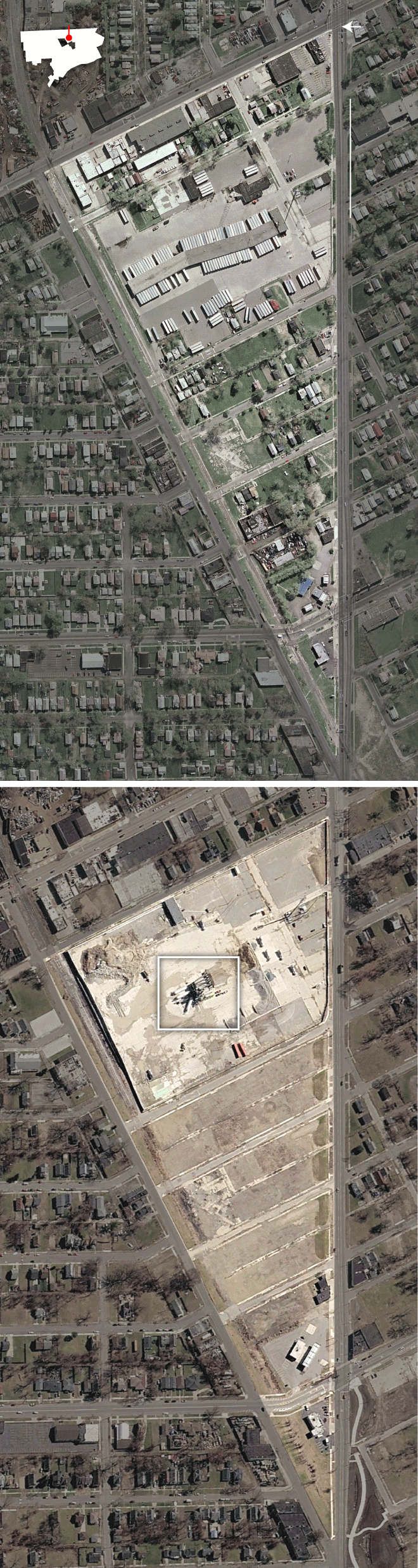
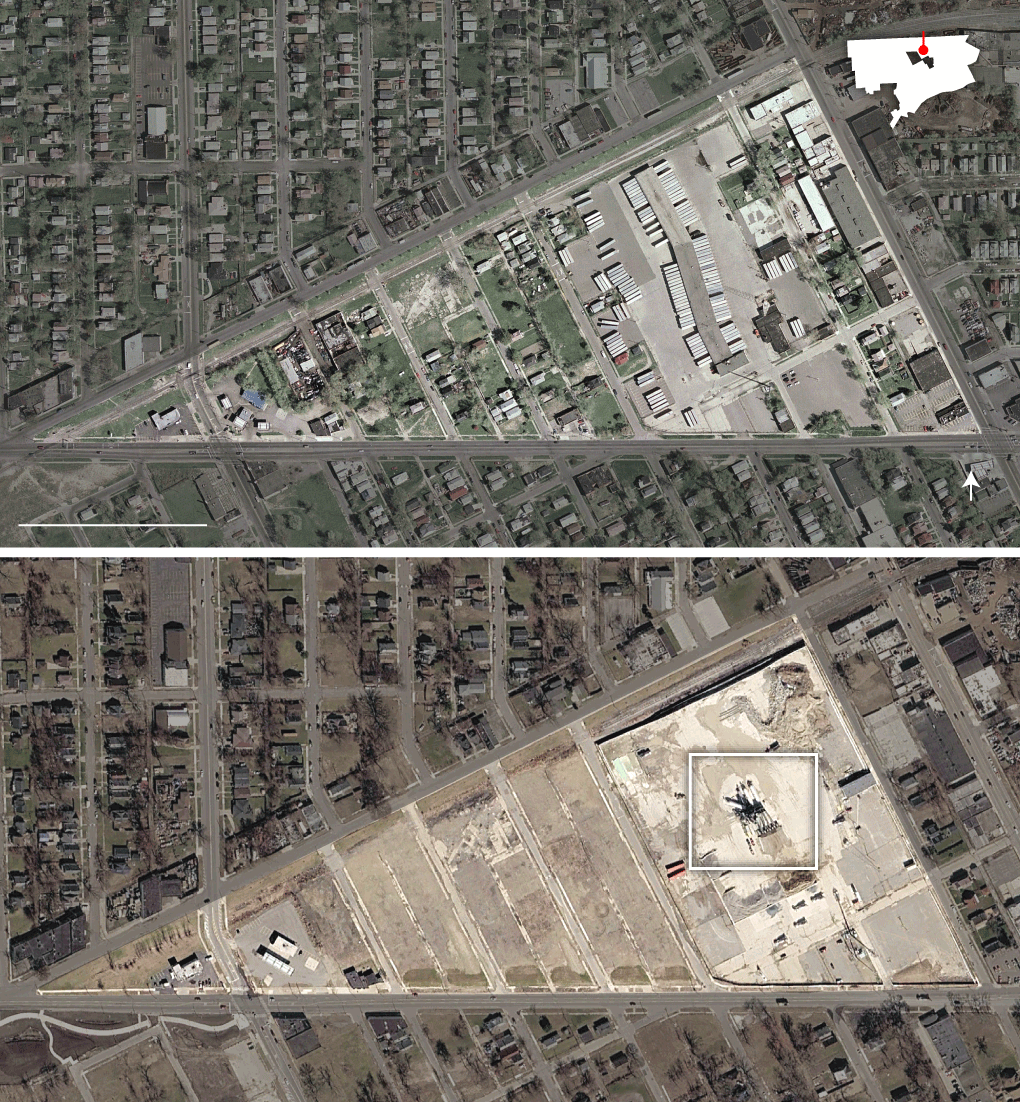
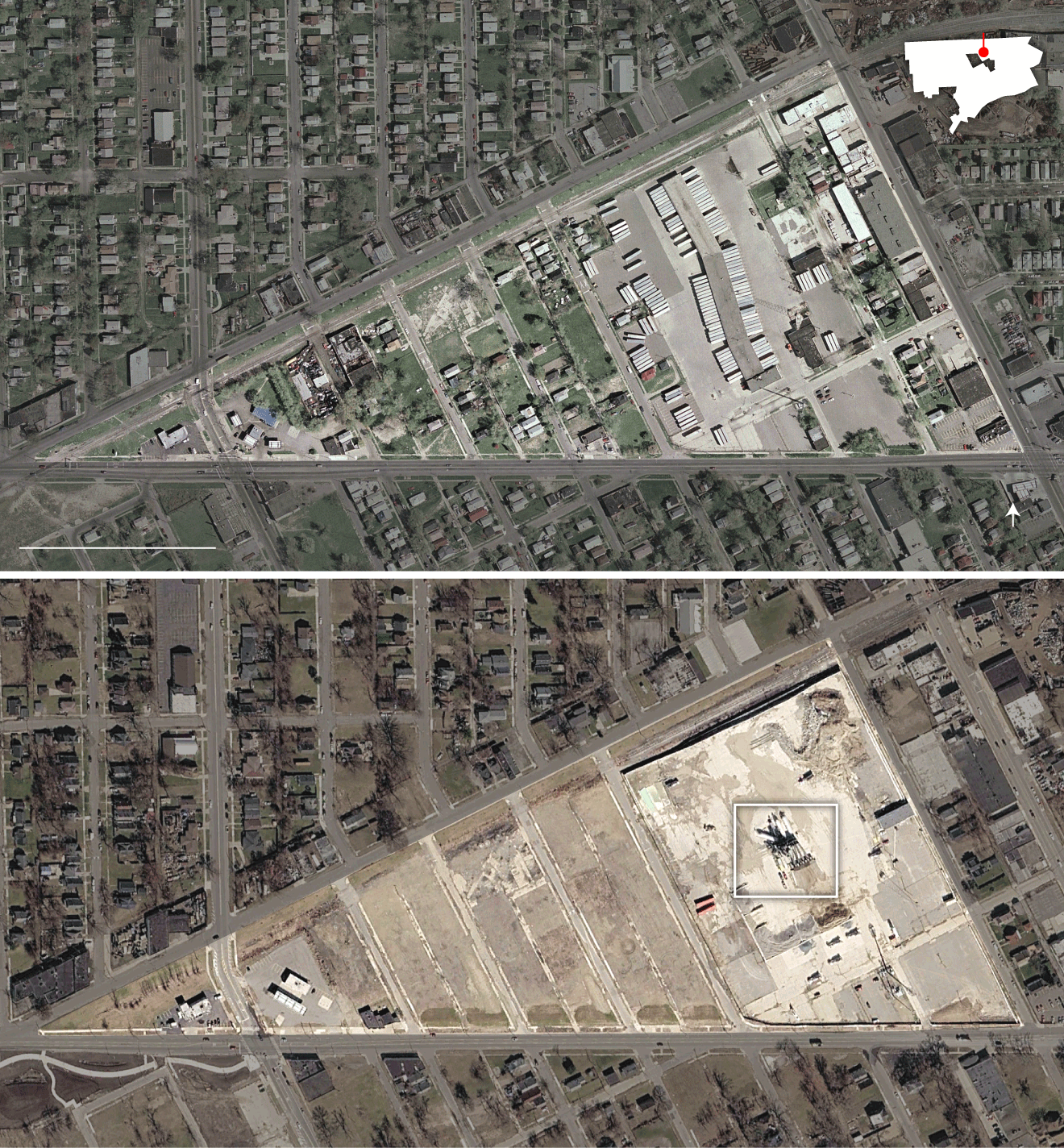
The deal gave Crown 34 more parcels throughout the neighborhood and the first rights to purchase others if they end up in the Land Bank by repossession due to tax foreclosure or other reasons. So far, Crown has purchased seven parcels under this option and demolished three homes, including the one next to Kary’s.
Detroit officials made other decisions, some in violation of city rules, that enabled Kronos to operate by summer 2022, before the company obtained a permit. The city ordered that operations stop. It then issued the permit without fining the company, and the concrete plant was reassembled. A city spokesperson did not respond to a question about why the company wasn’t fined.
The city issued a permit even though Crown had unpaid tickets for blight violations, which should have disqualified it from getting the approval to move forward. Crystal Rogers, a manager in the city’s Buildings, Safety Engineering and Environmental Department, attributed that to “human error.”
The company also accrued tickets between when it first applied for the permit and when the city approved it; Rogers said checking whether a company has pending tickets during that time period would “slow the development process.”
The tickets also should have prevented Crown from purchasing property from the county’s tax auction, according to city law. Yet records show the company was able to purchase a four-bedroom, single-family house in Cadillac Heights in October 2022 while it had unresolved blight tickets. Crown said it had disputed some of the tickets. The city acknowledged the tickets but said they were resolved by the time the sale was recorded months later.
After the concrete plant opened, the company acquired additional property from homeowners who decided to leave, further transforming the neighborhood. Dobson said the company is buying properties to create a buffer around the plant.
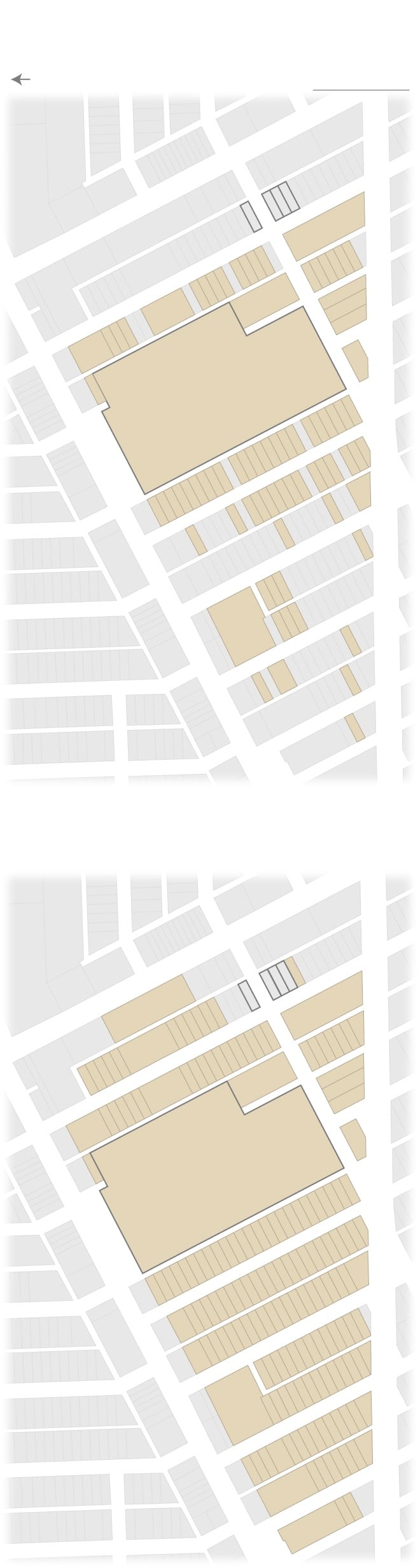
How a 2019 Land-Swap Deal Accelerated the Morouns’ Foothold
The Moroun family spent decades, from 1966 to 2018, records show, gradually acquiring lots in Cadillac Heights through their various companies, eventually putting the parcels all under the ownership of Crown Enterprises. A May 2019 deal with the city of Detroit allowed Crown to acquire dozens of additional parcels during the next seven years.
Properties owned by the Moroun family
before May 2019
cadillac
heights
Christina
Kary’s lots
Conant Street
Moran Street
Gaylord Street
Site of
Kronos Concrete
plant
East McNichols Road
Jerome Street
Properties the Moroun family owned,
titled under Crown Enterprises, as of June
Christina
Kary’s lots
Conant Street
Moran Street
Gaylord Street
East McNichols Road
Site of
Kronos Concrete
plant
Jerome Street
Properties owned by the Moroun family before May 2019
Conant Street
cadillac
heights
Site of
Kronos
Concrete
plant
Jerome Street
Christina
Kary’s
lots
East McNichols Road
Properties the Moroun family owned, titled under Crown
Enterprises, as of June
Conant Street
Site of
Kronos
Concrete
plant
Jerome Street
Christina
Kary’s
lots
East McNichols Road
Properties owned by the Moroun family before May 2019
cadillac
heights
Conant Street
Site of
Kronos
Concrete
plant
Jerome Street
Christina
Kary’s
lots
East McNichols Road
Properties the Moroun family owned, titled under Crown Enterprises,
as of June
Conant Street
Site of Kronos Concrete
plant
Jerome Street
Christina
Kary’s
lots
East McNichols Road
Properties owned by the Moroun family
before May 2019
cadillac
heights
Christina
Kary’s lots
Conant Street
Moran Street
Gaylord Street
Site of
Kronos Concrete
plant
East McNichols Road
Jerome Street
Properties the Moroun family owned,
titled under Crown Enterprises, as of June
Christina
Kary’s lots
Conant Street
Moran Street
Gaylord Street
East McNichols Road
Site of
Kronos Concrete
plant
Jerome Street
Properties owned by the Moroun family before May 2019
Conant Street
cadillac
heights
Site of
Kronos
Concrete
plant
Jerome Street
Christina
Kary’s
lots
East McNichols Road
Properties the Moroun family owned, titled under Crown
Enterprises, as of June
Conant Street
Site of
Kronos
Concrete
plant
Jerome Street
Christina
Kary’s
lots
East McNichols Road
Properties owned by the Moroun family before May 2019
cadillac
heights
Conant Street
Site of
Kronos
Concrete
plant
Jerome Street
Christina
Kary’s
lots
East McNichols Road
Properties the Moroun family owned, titled under Crown Enterprises,
as of June
Conant Street
Site of Kronos Concrete
plant
Jerome Street
Christina
Kary’s
lots
East McNichols Road
Martin Murray, a University of Michigan urban planning professor, said what’s happening in Cadillac Heights follows a similar pattern to other U.S. cities undergoing redevelopment. Businesses “can promise jobs, they can promise a tax base, and the city will go along with that, because it makes them look better and they’re willing to sacrifice residents,” he said.
City Council President James Tate Jr. and member Scott Benson, who represents the Cadillac Heights neighborhood, voted in favor of the land swap. Tate said he thinks the arrangement benefited the city overall, but that officials should have questioned how Crown would use the properties before they approved the deal.
“Knowing what I know now, there are some additional protections and questions that I would ask,” he said. “I would never sacrifice one neighborhood to satisfy another, but there are times when you have to look at deals, and there may be some unintended consequences.”
Benson declined to comment on his decision to approve the deal and said he has advocated for zoning changes that would make the area less industrial.
“They Could Taste the Dust”
Since the Kronos plant opened four years ago, residents have filed about 80 complaints to both city and state environmental offices, according to records obtained by BridgeDetroit and ProPublica. They have sent photos, videos and pleas for help.
In complaints filed with the state, they described “literal whiteout conditions” and “dust clouds.” They said the dust was blanketing their neighborhood and irritating their eyes. They said they had to stop doing yardwork, go inside and shut all their windows.
“They could feel grit and debris hitting their eyes, that they tried not to inhale but they could taste the dust,” according to a state inspector’s summary of one complaint. The state’s environmental division repeatedly has recommended that Crown spray the site with water to minimize dust, which the company says it does every hour the plant is operating. Inspectors also told Crown multiple times to reduce the speed of its trucks to limit the spread of dust.
Josef Stephens, spokesperson for the Michigan Department of Environment, Great Lakes and Energy, said that while the state has noted dust at and around the Kronos site, it has not been opaque enough to warrant a violation.
City officials, too, are aware of residents’ concerns. In 2024, the City Council passed an ordinance requiring companies to control the spread of dust or face penalties. The city set up a hotline and email address so residents could submit complaints.
Nearly half of the complaints submitted to [email protected] have been about Kronos, according to city officials.
Dobson, the company representative, said readings from its air monitor have never exceeded the city’s pollution limits and that the facility is “fully compliant.”
Matthew Tomasz, who lived across the street from Kronos, filed complaints with the city and also ended up in a legal battle with Crown. The company sued him for trespassing on its vacant property next to his home. He countersued, claiming the company had violated the city’s dust ordinance when particles from the concrete facility traveled onto his property, calling it an “invasion.”
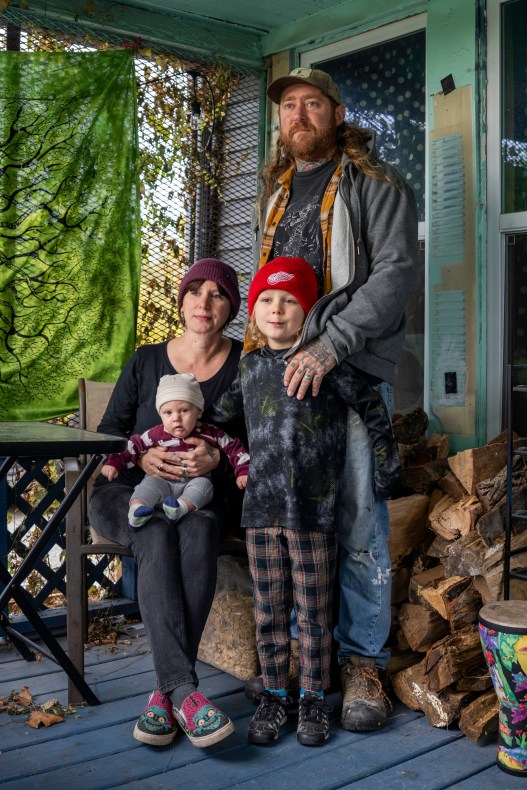
“Each day that dust from Kronos or the vacant lots lands on Mr. Tomasz’s property, a new trespass occurs,” according to the complaint. The lawsuits settled in February, but the terms were not made public, records show.
“I feel like I’m staring into a wasteland every day,” Tomasz said in an interview late last year. He said dust from the plant was so thick that he couldn’t see 10 feet in front of him. “There’s no peace to be had at my house.”
The city required that Kronos develop and adhere to a plan to limit the amount of dust. But despite five violations since Kronos agreed to adopt a plan, only once has the city’s environmental department fined the company for its failure to comply. The city last month dismissed two tickets issued to Crown, totalling $2,500, for the company’s failure to keep dust from traveling into the neighborhood.
The company has been excused from the dust-related fines, as well as tickets for other reasons, because of an agreement it signed with the city in 2022 after the plant opened. That first-of-its-kind property maintenance agreement gives Crown up to 30 days to fix nonemergency building and environmental violations — and up to 10 days to address overgrown weeds and trash — before it is assessed fines. The city has since entered into similar agreements with two other concrete businesses and a developer.
The agreement with Crown came after the company racked up blight tickets across the city. At the time it was signed, the city’s law department acknowledged it didn’t know the number of outstanding tickets but agreed that the company could pay $50,000 to resolve all the past violations before the new agreement kicked in.
One ticket that was excused last year came after Detroit resident Jahdante Smith emailed a complaint to city officials in July with a video showing a cloud of dust blowing near the facility. “This is a ridiculous everyday occurrence,” Smith wrote.
A city inspector issued Crown a $500 ticket seven weeks later for failing to mitigate dust, but the city’s environmental department dismissed it under the agreement.
The city also waived a $1,000 ticket issued to Crown in October for exceeding state and city requirements to limit dust opacity. The company temporarily suspended operations and agreed to sweep and spray water on the streets daily to control the dust, and the ticket was dismissed, Rogers said.
City inspectors also alerted Crown to code violations at other properties in the neighborhood, including a vacant lot littered with garbage and another with overgrown weeds and broken tree limbs. An abandoned home was unsecured, leaving it open to trespassers, a city inspector found.
Because of its agreement with the city, Crown was not issued any fines after it addressed the issues with the three properties. The vacant home has been demolished, and the other lots are now barren.
However, a recent visit to the neighborhood showed that similar issues have resurfaced: Another home that Crown purchased in January had missing first-floor windows and no front door, allowing anyone to enter. The lawn was covered in tall weeds and grass, and trash littered the yard. Crown plans to demolish the home but is waiting on the utilities to be disconnected, said Dobson, the company representative.
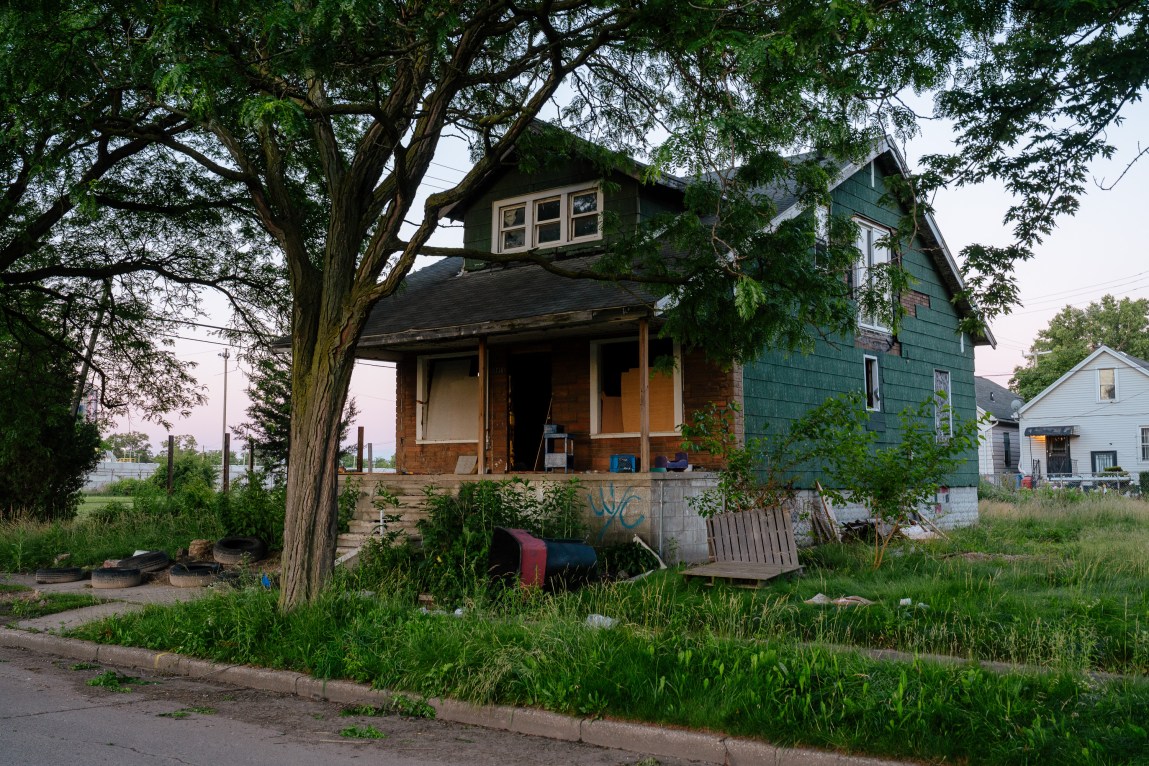
Dobson said the property maintenance agreement has worked because the company responds to concerns and fixes “the potential violation.” Conrad Mallett, the city’s top attorney, who negotiated the agreement, said it is “working well from the perspective of both parties.”
But residents and advocates have continued to protest, speak out at City Council meetings and collect hundreds of signatures to shut the plant down and get the area rezoned to be less industrial. Councilmember Benson asked the city’s law department about legal avenues the city could pursue to close Kronos.
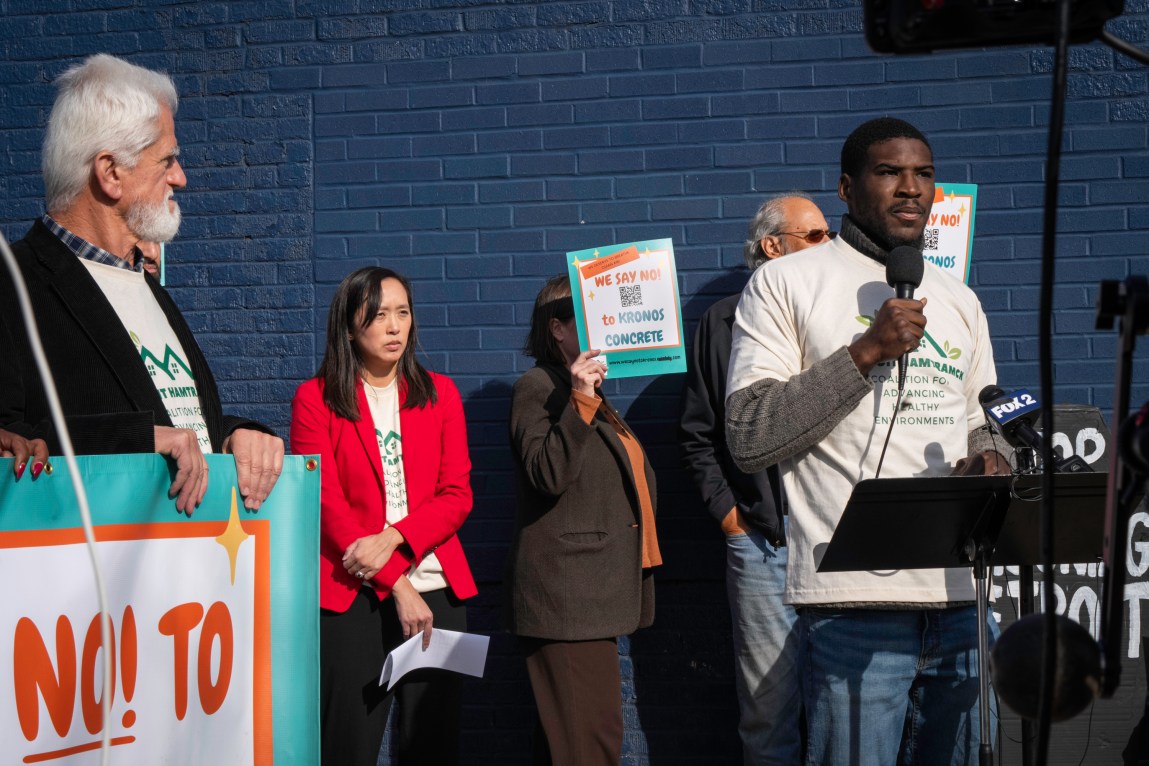
The department, in response, said officials have no legal authority to interfere because the plant is properly permitted and complies with zoning regulations and city rules. And even though the city is considering rezoning some parts of Cadillac Heights to make them less industrial, the plans stop just short of the lots owned by Crown, records show.
The Moroun family continues to expand its concrete supply business, called Hercules Material Holdings, which now has seven locations in Michigan. Other facilities are expected to open in Toledo, Ohio, and Windsor, Ontario, where the Morouns have been purchasing properties for decades.
Residents Move Out
Some Cadillac Heights residents say they can’t coexist with the concrete plant.
They recently turned to the Wayne County Commission for help. At a May county committee meeting, advocate Sharon Buttry told commissioners that residents are frustrated that Crown hasn’t been ticketed more.
Commissioners voted to pass a resolution urging the state and city to further monitor the site and revoke permits if there are violations. “Our neighborhoods should never have to sacrifice their health and peace of mind for industrial operations that create ongoing public nuisance concerns,” county Commissioner Martha G. Scott said in an interview.
The county is paying a local air monitoring company, JustAir, to track and analyze air quality near Kronos. The company found the quality was “measurably worse” during the six days of the week when Kronos operates.
Separately, Mayor Mary Sheffield, who took office this year, directed the city’s environmental agency to install four monitors near the plant so residents “knew that the administration is taking their concerns seriously,” according to city spokesperson John Roach. He said the monitors have not measured pollution that exceeds moderate levels. (Sheffield voted against the land swap when she was on City Council.)
Kronos representatives, meanwhile, have worked to build public support. The company has said that it has hired Detroiters to work at the plant, donated food and backpacks to community groups, and paved a new parking lot for a neighborhood church. A few years ago, it published renderings online showing how it would improve the neighborhood with paved sidewalks, mature trees and 6-foot-tall grassy hills to create a buffer from the plant.
Those images don’t match what the neighborhood looks like. Sidewalks are missing or cracked. Barbed wire hangs from fences over debris-strewn lots. Water sprayed to control dust creeps into the streets, creating small pools of green liquid. Lots are barren and gray after being treated with herbicides to prevent weeds.
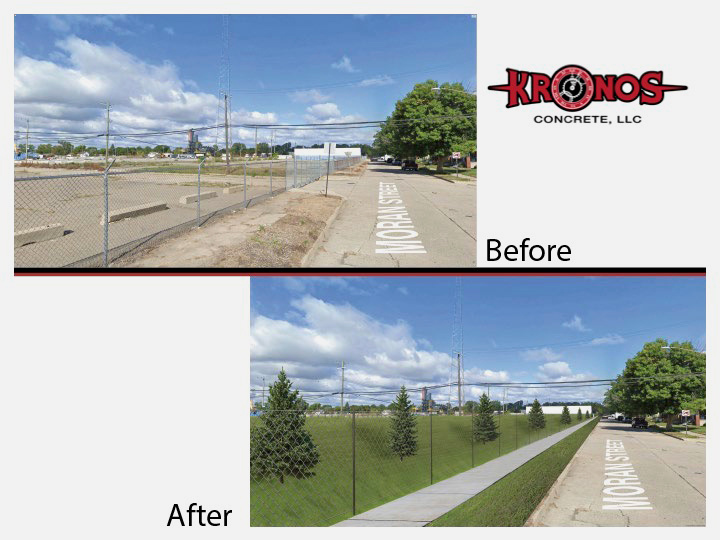
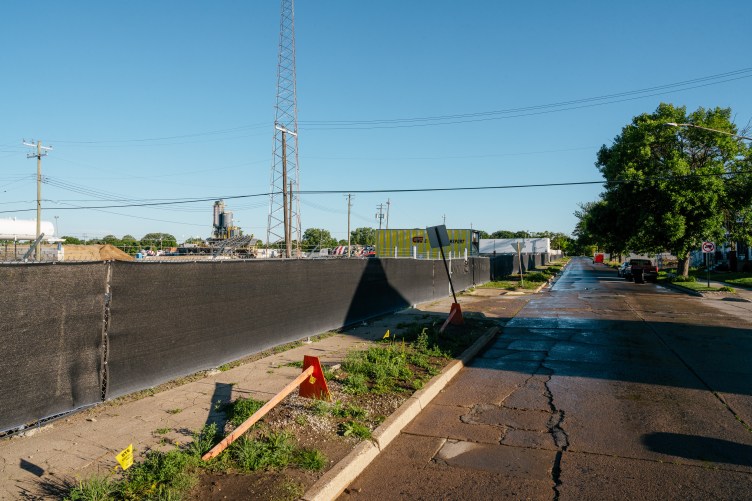
Dobson said Crown hasn’t been able to carry out the improvements because the city hasn’t signed off on its plan. Roach said the city won’t grant permission until the company addresses code violations, including an unpermitted chain-link fence and inadequate screening to hide operations.
If Crown doesn’t make the improvements soon, Mitchell Gross, who lives across the street from Kronos, said he’s going to plant evergreen trees himself “to filter the dust.”
He said he keeps his windows shut and that his son and his two young grandchildren, who used to live with him, have left Detroit to protect their health. “They’re in a nice place and getting good air to breathe,” said Gross, who has lived in the neighborhood for more than 50 years.

Some of Cadillac Heights’ longtime residents aren’t sticking around to find out whether things will improve. At least 16 residents who lived in the area closest to the Kronos plant have sold their land to Crown since the land swap, according to records reviewed by BridgeDetroit and ProPublica. The sellers have received “a windfall,” with an average 2024 purchase price of $114,000 that has been “increasing,” according to Crown representative Dobson.
Bitely, the spokesperson for Duggan, said that having so many private sales to one entity “had never happened before in Detroit.”
Samantha Flowers was among the first residents to fight against the concrete operation. Last year, she texted BridgeDetroit and ProPublica a video of the plant, taken at 6:15 a.m., to demonstrate the daily noise and bright lights residents are accustomed to. “Typical morning in the neighborhood,” she wrote.
Flowers sold her home and five other parcels to Crown in January for $125,000, according to the county’s online records. Tomasz, who had filed a lawsuit against the company, gave up his hope of buying the lot next to his and instead sold his home to the company for $150,000. Dobson said the property will be used to create additional buffering from the plant.
Kary, however, plans to live out her final years in her family’s home. She pays for grass seed to maintain the Crown-owned vacant lot next to hers so she can look out her windows at something nice.
“It’s home,” she said. “I’m not leaving.”
Don't Miss:
-
“Devoid of Any Factual Basis”: Again and Again, Judges Have Dismissed Trump’s Voter Data Lawsuits
-
Frustrated by Losses in the Courts, Missouri Republicans Want to Change How Top Judges Are Selected
-
Trump Says the Border Is Secure. Texas Gov. Greg Abbott Keeps Declaring an Emergency.
-
Make It Shitty, Vengeful, Inept and Untrue
-
New Mexico and El Paso Spent Millions on Climate Plans. Three New Data Centers Could Undo Them.