
 The Taliban’s New War Begins at Home
  Panama removed from EU’s tax haven ‘blacklist’ a decade after the Panama Papers
  Crackdown and Controversy: The Battle Over Beach Bars and Noise in Phuket’s Bang Tao
ProPublica is a nonprofit newsroom that investigates abuses of power. Sign up to receive our biggest stories as soon as they’re published.
Ten Democratic lawmakers told Defense Secretary Pete Hegseth in a letter Sunday that his gutting of a program focused on protecting civilians is a leadership failure that imperils service members and erodes the military’s moral standing.
Led by Sen. Elizabeth Warren, D-Mass., the joint letter echoed concerns raised by a recent Defense Department inspector general report that described civilian protection efforts as largely “inactive.” Lawmakers also cited reporting by ProPublica and other news outlets in pushing to preserve the framework known as civilian harm mitigation and response, or CHMR.
“The Trump administration — potentially in violation of federal law — has defunded and impeded civilian protection efforts,” the lawmakers asserted.
A Pentagon spokesperson declined to answer questions from ProPublica, noting: “As with all congressional correspondence, the Department will respond directly to the authors.”
The retreat from civilian protection drew global attention in February when an apparent U.S. strike killed dozens of children and teachers at a school on the first day of the U.S.-Israeli war in Iran — an incident the Pentagon says is under investigation.
Beyond those deaths, conflict monitoring groups have recorded a surge in reports of civilian casualties, most notably in Somalia and Yemen, which have both seen a dramatic increase in U.S. strikes under the second Trump administration.
In March, ProPublica interviewedcurrent and former national security officials across party lines who said the discarding of civilian protections is part of a broader remaking of the military around two key principles: more aggression, less accountability.
The harm mitigation leadership, housed in a specialized Civilian Protection Center of Excellence mandated by Congress in 2022, aimed to reduce the number of civilian casualties of U.S. military operations, a problem that has spanned administrations in the post-9/11 “forever wars.”
The idea was to embed prevention specialists within targeting teams and foster a culture that prioritizes civilian security in accordance with U.S. law and international rules of war. Senior military leaders have publicly supported the mission, expressing both a moral obligation to safeguard civilian life and a necessity to hit their intended targets.
The program was still being rolled out when momentum halted under Hegseth.
In the spring of 2025, as U.S. operations in Yemen reportedly killed dozens of civilians, the Defense Department was scrapping the CHMR mission as out of step with Hegseth’s “lethality” doctrine, according to current and former staffers. Hegseth repeatedly has expressed disdain for guardrails he describes as hindrances to combat forces.
By the time of the Iran school strike, current and former personnel told ProPublica, the protection mission had been slashed by about 90%, leaving just a handful of staffers to monitor civilian harm issues even as the Defense Department accelerated the strike tempo across swaths of Africa and the Middle East.
Militant groups exploit civilian casualties to gain recruits and support, a practice retired Gen. Stanley McChrystal, who commanded U.S. and NATO forces in Afghanistan, has called “insurgent math”: For every innocent killed, the theory goes, at least 10 new enemies are created.
“The Trump administration’s military adventurism overseas, combined with its obvious disregard for civilians, do not make the American people or our service members safer,” the 10 Democrats said in their letter to Hegseth.
Three signees are military veterans: Sen. Tammy Duckworth of Illinois, Sen. Mark Kelly of Arizona and Rep. Jason Crow of Colorado.
The letter ended with 20 questions the lawmakers want answered by July 9, including requests for the latest CHMR staffing and funding numbers, and an explanation for why the department wasn’t cooperative with the inspector general’s inquiry.
Current and former CHMR personnel said it’s impossible to know whether a more robust prevention team could’ve helped the military avoid civilian casualties in Yemen and Iran. But they said the program could have made a difference, providing transparency and immediate inquiries into civilian deaths.
Within days of the strike on the elementary school adjacent to an Iranian military compound in Minab, open-source investigative outlets surfaced video showing a U.S.-made Tomahawk missile likely was responsible. The Washington Post, citing officials familiar with the Minab inquiry, reported that the school was on a U.S. target list and “may have been mistaken for a military site.”
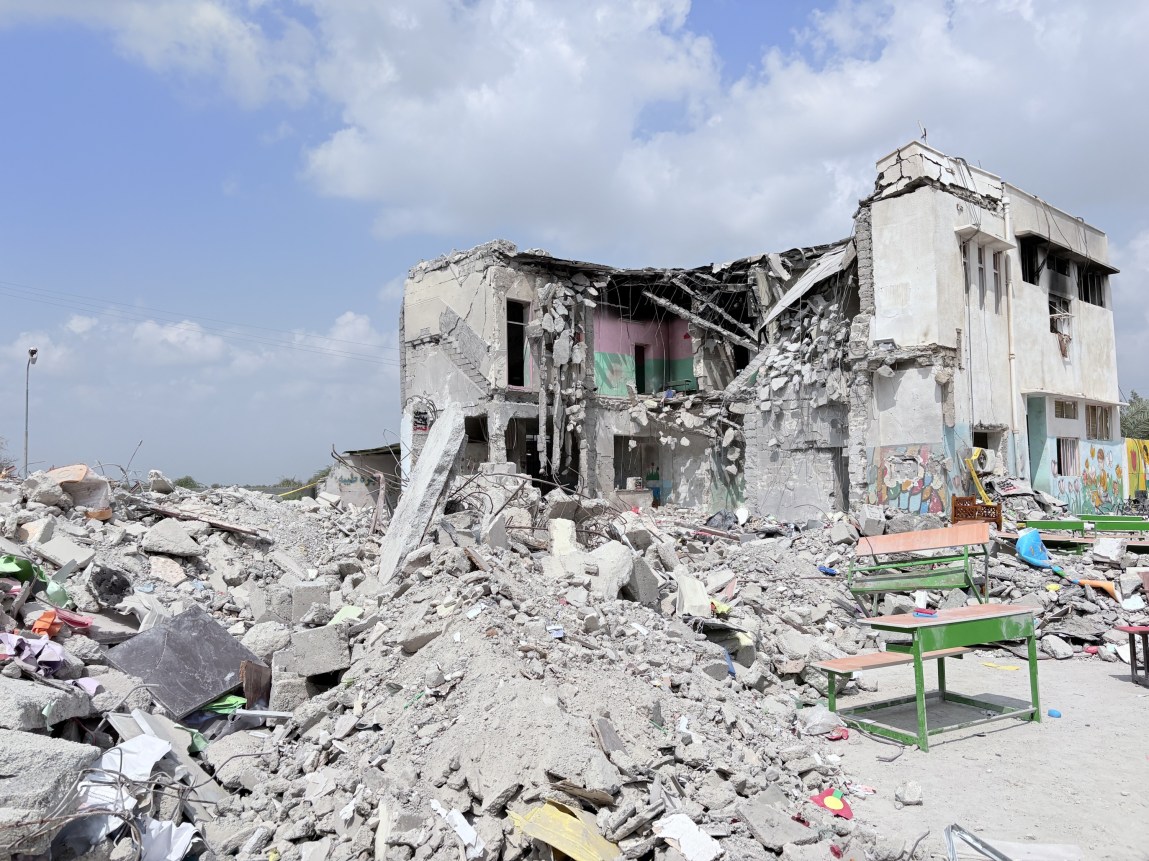
Nearly five months later, the Trump administration has yet to explain what happened.
“The command investigation will take as long as necessary to address all the matters surrounding this incident,” Hegseth said in March.
Annie Shiel, U.S. director of the Center for Civilians in Conflict, which advocates for the protection of noncombatants in warfare, said congressional support is “critical” at a moment when the CHMR mission hangs in the balance.
“The department is violating U.S. laws and policies that have grown out of hard-learned lessons from past wars and garnered bipartisan support across multiple administrations,” Shiel said.
Plan Sprung From Civilian Deaths
Historically, the military’s prioritizing of civilian protection has followed a pattern, analysts say: A catastrophic incident kills civilians, the Pentagon pledges reviews and reforms, the issue recedes from view and oversight slips until the next disaster.
During the Biden administration’s chaotic withdrawal of U.S. forces from Afghanistan in August 2021, a missile strike in Kabul killed an aid worker and nine of his relatives, including seven children. Then-Defense Secretary Lloyd Austin apologized and said the department would “endeavor to learn from this horrible mistake.”
That incident, along with a New York Times investigation into deaths from U.S. airstrikes, spurred the adoption of the civilian harm mitigation and response action plan in 2022. Proponents didn’t view the plan as a cure-all but called it a step toward breaking the cycle of intermittent attention by making civilian protection a year-round mission.
Now that mission is in limbo, and, according to the May inspector general’s report, defense leadership “withheld access” to department tools that track the program’s implementation.
“You are in violation of the law right now on civilian harm,” Rep. Adam Smith, D-Wash., told Army Secretary Daniel Driscoll at a hearing in May. “I’d like to know either A. what the explanation is for why you think it’s OK for you to ignore the law that this Congress passes or B. what you’re planning to do to fix that problem.”
The new letter comes as critics, including some Republicans and veteran commanders, grow increasingly vocal about Hegseth’s attempts to overhaul the Department of Defense, which the Trump administration refers to as the Department of War.
The secretary’s sweeping terminations of high-ranking officers without public explanation has drawn bipartisan criticism and accusations that the moves are rooted in political vengeance, racism and bias against women. Hegseth has repeatedly condemned military officers for comments lauding diversity, saying in one speech, “We became ‘the woke department.’ … We’re done with that shit.”
Hegseth has said that out of respect for the officers he won’t speak about why they were fired. He said it was “very difficult to change the culture of a department that was destroyed by the wrong perspectives with the same officers that were there.”
Public rebukes followed Hegseth’s decision last month to effectively fire Gen. Chris Donahue, a respected four-star commander who came up the ranks through the special forces. In 2023, Donahue said that any concerns over wokeness were “BS,” adding: “We’re focused on people, war-fighting and making sure that we’re prepared for the next fight. There ain’t no ‘woke’ here.”
Don't Miss:
-
“Devoid of Any Factual Basis”: Again and Again, Judges Have Dismissed Trump’s Voter Data Lawsuits
-
Frustrated by Losses in the Courts, Missouri Republicans Want to Change How Top Judges Are Selected
-
Trump Says the Border Is Secure. Texas Gov. Greg Abbott Keeps Declaring an Emergency.
-
Make It Shitty, Vengeful, Inept and Untrue
-
New Mexico and El Paso Spent Millions on Climate Plans. Three New Data Centers Could Undo Them.