
 From Iran to China: An Emerging Trans-Central Asian Corridor
  New documents show how a retail chain’s sales practices helped put guns on US streets
  Singapore a battleground of commodities fraud lawsuits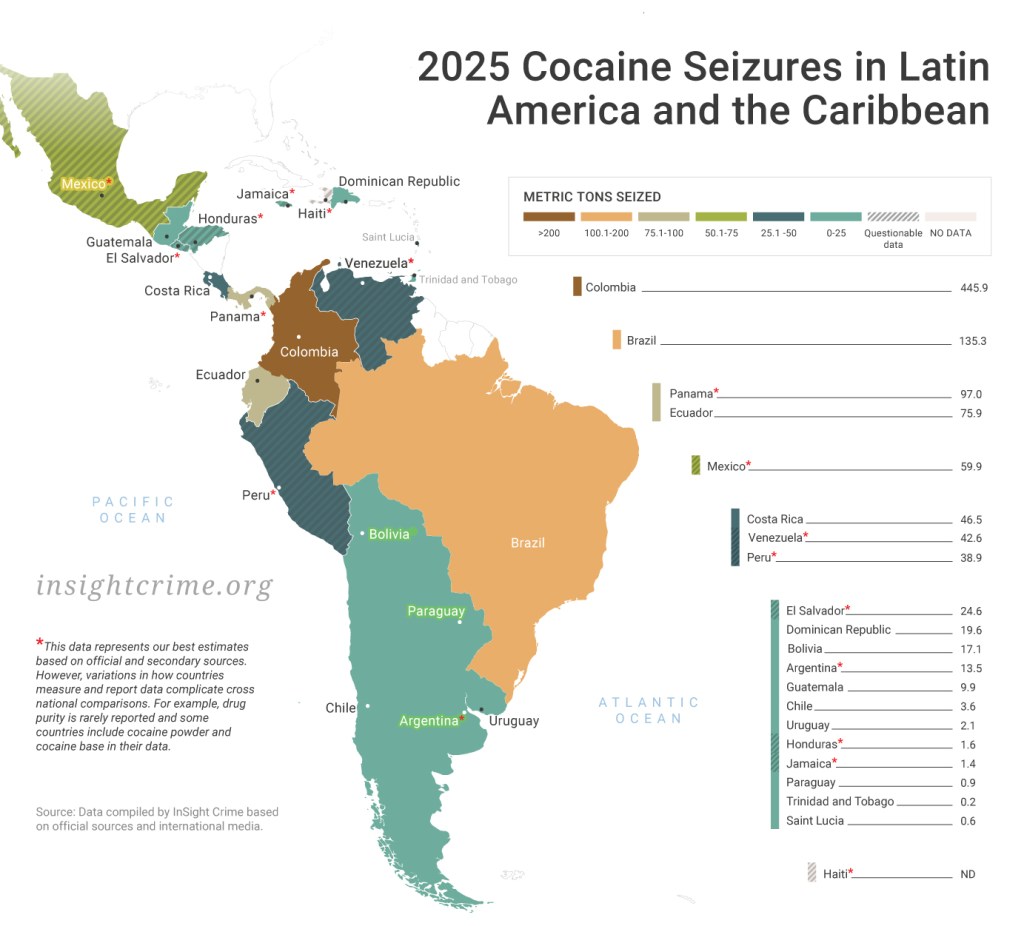
As the United States drags the drug war back in time, traffickers are leaping forward, creating new ways of disguising and moving cocaine while weaving sophisticated global networks to reach new markets.
InSight Crime’s 2025 Cocaine Seizure Round-Up reveals a fast-evolving global market. Roughly half of the countries in Latin America and the Caribbean increased their cocaine seizures. The other half saw them fall as trafficking routes shifted in response to new international interdiction strategies.
By moving liquid cocaine to evade modern scanners and using alternative transportation like sailing vessels, criminal organizations are making the global cocaine trade more innovative and geographically diverse than ever.
Cocaine Seizures in Production Zones:
Colombia
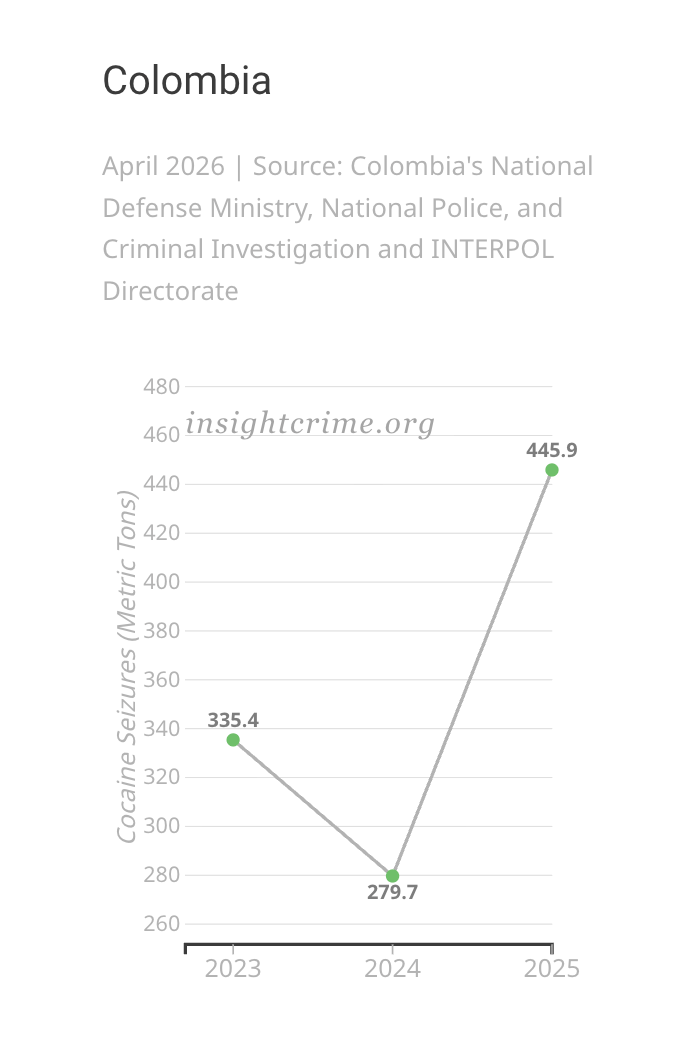
In Colombia, the world’s largest cocaine-producing country, authorities seized 445.9 tons of the drug in 2025, marking a 59.4% increase from the 279.7 tons seized in 2024. Authorities also contributed to another 633 tons seized internationally.
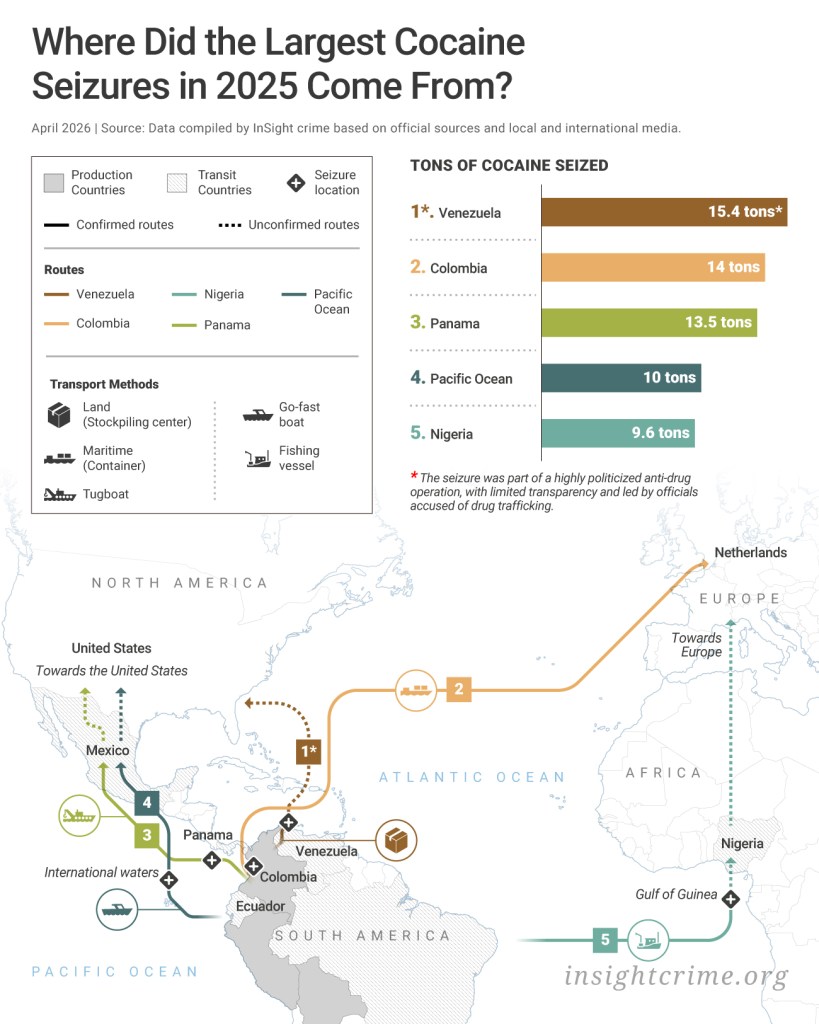
Record seizures and unusual trafficking methods defined the year. Authorities confiscated 14 tons of cocaine hidden in a container at the Pacific port of Buenaventura — the largest single seizure of the decade. Meanwhile, traffickers continued to adopt new technologies to reduce costs and risk along the supply chain. In July, Colombian authorities intercepted a remote-controlled narco submarine off the northern coast. It wasn’t carrying drugs when it was seized, but the police believe it was being tested for future shipments.
In 2025, the United States government also added Colombia to its list of nations failing to cooperate in the fight against drug trafficking, but for now the move is largely symbolic. Anti-narcotics assistance from the United States—crucial for its cocaine crackdown—will continue to flow to the Andean nation.
Peru*
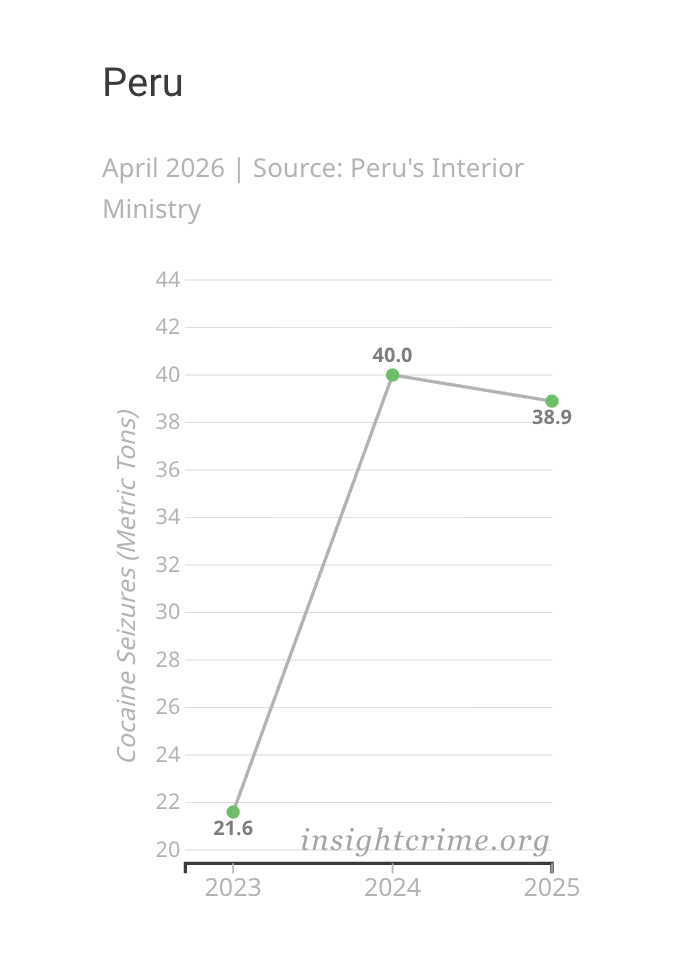
The Minister of the Interior reported that Peru destroyed 55.6 tons of drugs throughout 2025, 70% of which were “cocaine-like substances.” However, it is unclear if these figures represent the total amount of drugs seized throughout the year. Peru did not respond to our data request by the time of publication.
Eradication efforts continued, and Peru destroyed around 34,200 hectares of coca in 2025, up from 26,500 the year before. The regions with the highest eradication levels included Ucayali (17,531.8 ha), Huanuco (9,704.1 ha), and Loreto (5,078.8 ha), where illegal coca growers are increasingly encroaching upon Indigenous lands, fueling violence.
The Amazon region is also being threatened by Ecuadorian gangs expanding into Peru, whose fight against trafficking has been hampered by political instability and corruption, with regular leadership changes limiting policy responses.
Bolivia
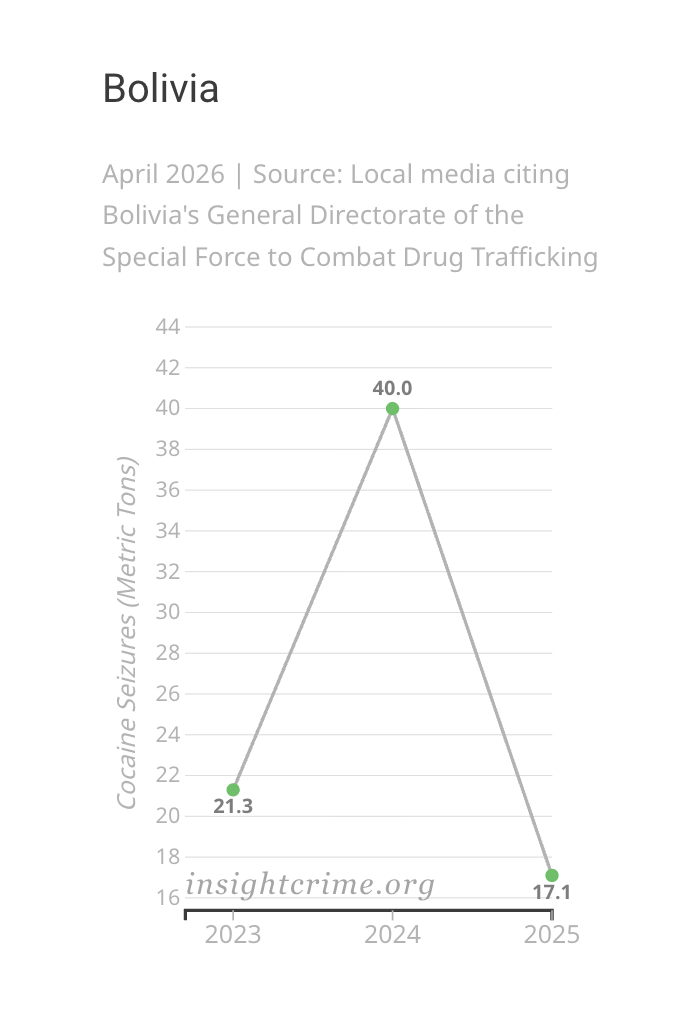
Bolivia seized 17.1 tons of cocaine in 2025, down 62.7% from 2024’s 45.9 tons, according to local media reports citing data from the Special Task Force Against Drug Trafficking (Fuerza Especial de Lucha Contra el Narcotráfico – FELCN).
The decrease comes on the heels of the largest-ever seizure of 21.6 tons in 2024, which was inflated by counting the total weight of the cargo, including both flour and cocaine. In 2025, the trend returned to normal, aligning more closely with the 21.3 tons seized in 2023.
Anti-drug trafficking operations and the dismantling of cocaine infrastructure, such as clandestine airstrips and labs, increased in 2025, according to FELCN data reported by Agencia de Noticias Fides.
Like Colombia, Bolivia was also decertified for failing to cooperate on anti-drug efforts with the United States. But under its new president, Rodrigo Paz, Bolivia has resumed its relationship with the Drug Enforcement Administration (DEA), which former President Evo Morales expelled in 2008.
Cocaine Seizures in Transit Zones:
Ecuador
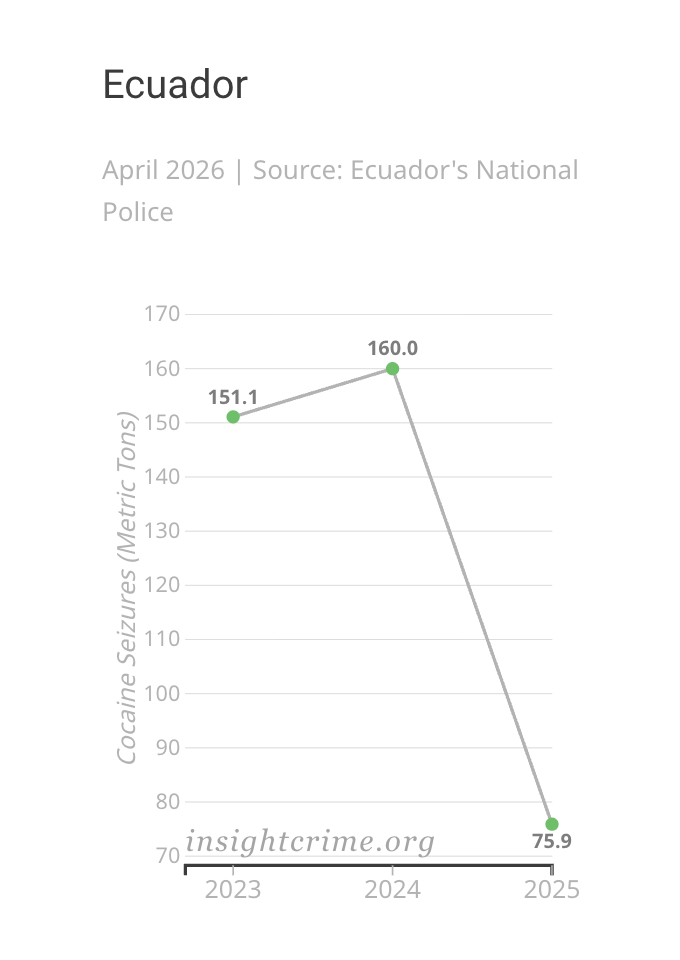
Ecuador registered 75.9 tons of cocaine seized within its borders in 2025, down from 157.7 in 2024. Its seizures on the high seas and internationally, on the other hand, rose to 124 tons from 99.4 the year before. Ecuador remains a key transit hub for cocaine flows to global consumer markets.
Cooperation with the United States intensified in 2025. In October, Ecuador’s Security Bloc—alongside police and naval forces and with support from the US Coast Guard—seized around 10 tons of cocaine from a vessel in international waters.
There is no clear evidence that these efforts have displaced routes away from Ecuador, but they have increased the cost of fishermen’s services for transporting drugs to Central America. Between 2023 and 2024, criminal organizations paid up to $20,000 per trip to those piloting the vessels and $5,000 to their assistants. These amounts have since surged, with payments now ranging from $40,000 to $15,000 per crew member, police sources in Manabí told local media.
SEE ALSO: How a New Port Created Ecuador’s Latest Criminal Epicenter
Venezuela*
The Venezuelan government reported a record-breaking year in 2025, with about 42.6 tons of cocaine seized, up from 35.1 in 2024. However, this data should be treated with skepticism, as there is little transparency regarding official figures.
Within these seizures was a record 15.4-ton seizure in April in the state of Zulia, on the border with Colombia, which was headed to the United States, according to Minister of Interior Relations, Justice, and Peace Diosdado Cabello. Zulia has been a key transit territory for cocaine smuggling and was once dominated by Mexico’s Sinaloa Cartel. But as corrupt security forces have cracked down, favoring local groups that are more cooperative, Sinaloa’s influence has withered, and Venezuelan gangs increasingly gain control.
Venezuela’s role as a cocaine transit country was used by the United States to justify airstrikes in international waters that began in early September 2025. The buildup off Venezuela’s coast appears to have temporarily reduced and displaced cocaine flowing from traditional exit points, like Margarita Island, Falcón, and Sucre, pushing traffickers to seek alternative routes. They have also harmed legitimate economies, particularly fishing.
SEE ALSO: Cocaine Corridor: Drugs Drive ELN’s Venezuela Expansion
Panama*
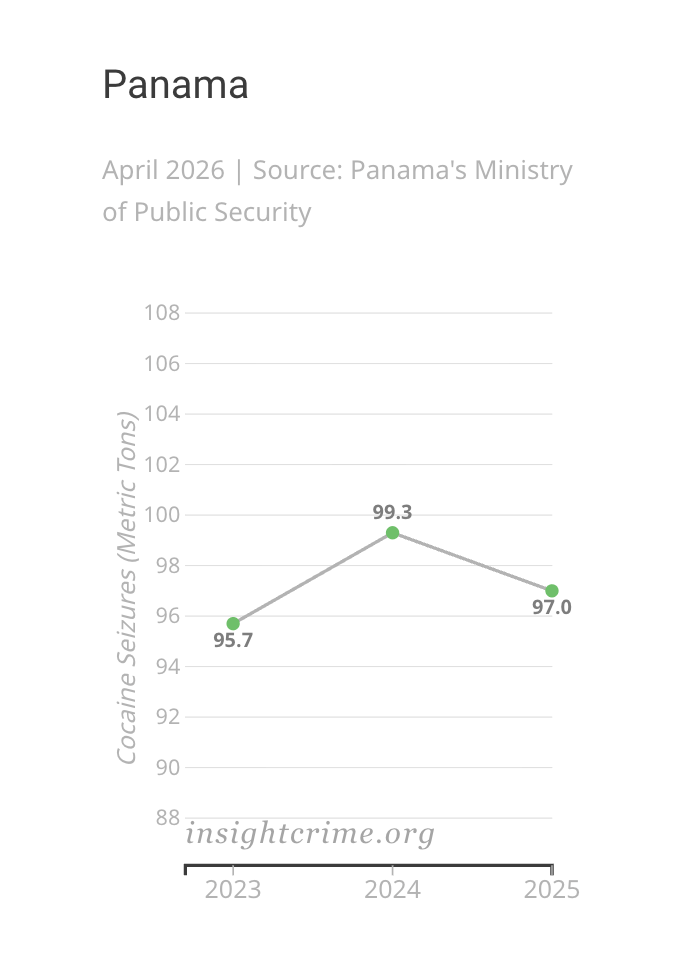
Panama seized 97.0 tons of cocaine in 2025, a decrease of 2.3% compared to 2024’s 99.3 tons.
It remains an important cocaine transit country. The third biggest global seizure of 2025 was in Panama’s Pacific waters: 13.5 tons of cocaine in a tugboat from Colombia headed for the United States.
The province of Colón, on the northern coast, recorded most of the country’s seizures due to its strategic position along the Panama Canal. The canal connects the Atlantic and Pacific Oceans and has long been a transit point for drugs bound for Europe and the United States.
Honduras*
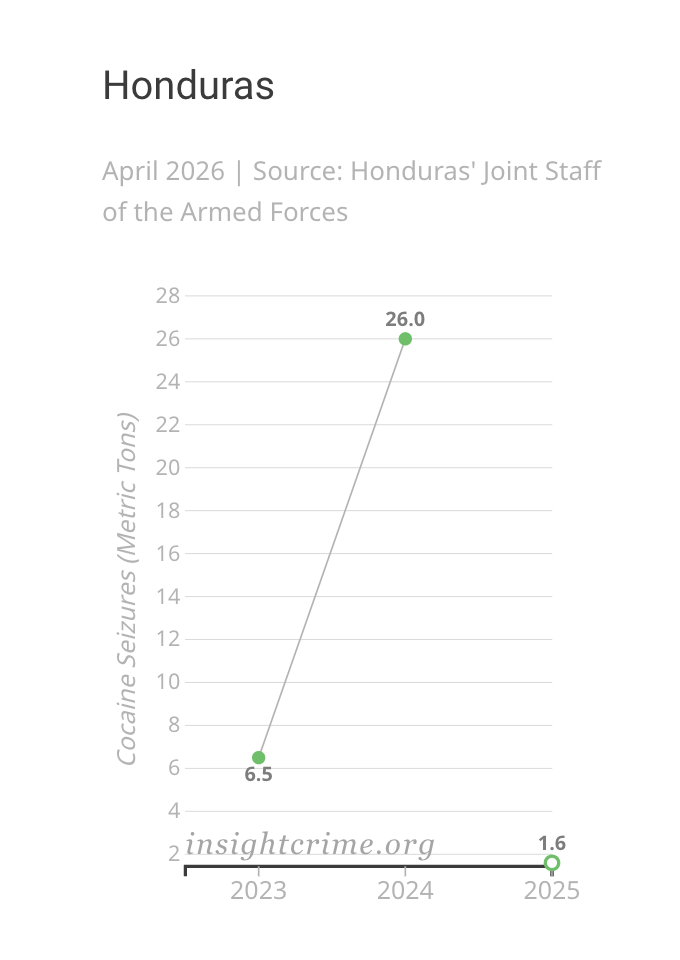
The 2025 data, reported by the armed forces of Honduras, shows seizures of 1.6 tons. This is a 94.0% decrease compared to the previous year, though the drop must be taken with a grain of salt because the 2024 figures were provided by the Ministry of Security, and different sources and methodologies complicate direct comparisons.
The government has focused efforts on containing coca cultivation. Over the last decade, Honduras has shown an increasing amount of coca grown within its borders. At least 223 coca crop seizures took place during President Xiomara Castro’s administration (2022-2026), a five-fold increase compared to the second term of her predecessor, Juan Orlando Hernández (2018-2022), according to data from ACLED, an independent, non-profit organization that collects real-time data to analyze political violence and protests globally. (Hernández served 19 months in a US prison on drug trafficking and weapons charges before President Donald Trump pardoned him in November 2025.)
Coca cultivation is now spreading to rural areas like Colón, Olancho, Atlántida, and Yoro, according to ACLED.
El Salvador*
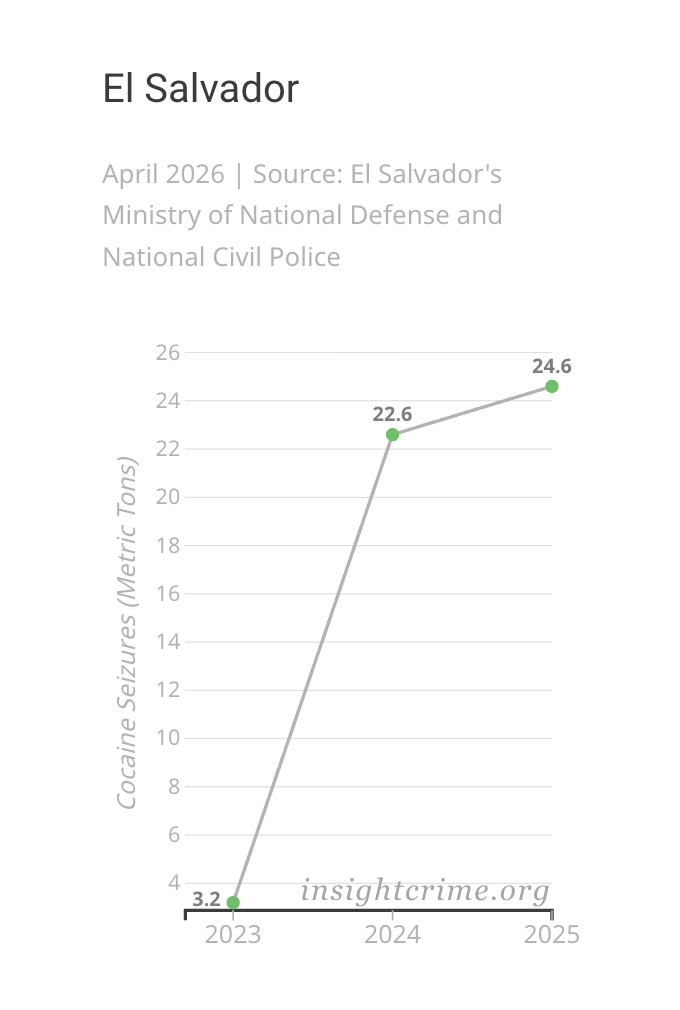
Salvadoran authorities did not respond to our data request, and different government institutions have presented figures over the last few years. The Ministry of National Defense claims cocaine seizures rose from 16.7 tons in 2024 to 24.6 tons in 2025, and a press release from the National Police put the 2024 figure at 22.6 tons. The country remains a transit nation used by transnational criminal organizations moving drugs from South America to the United States.
Guatemala
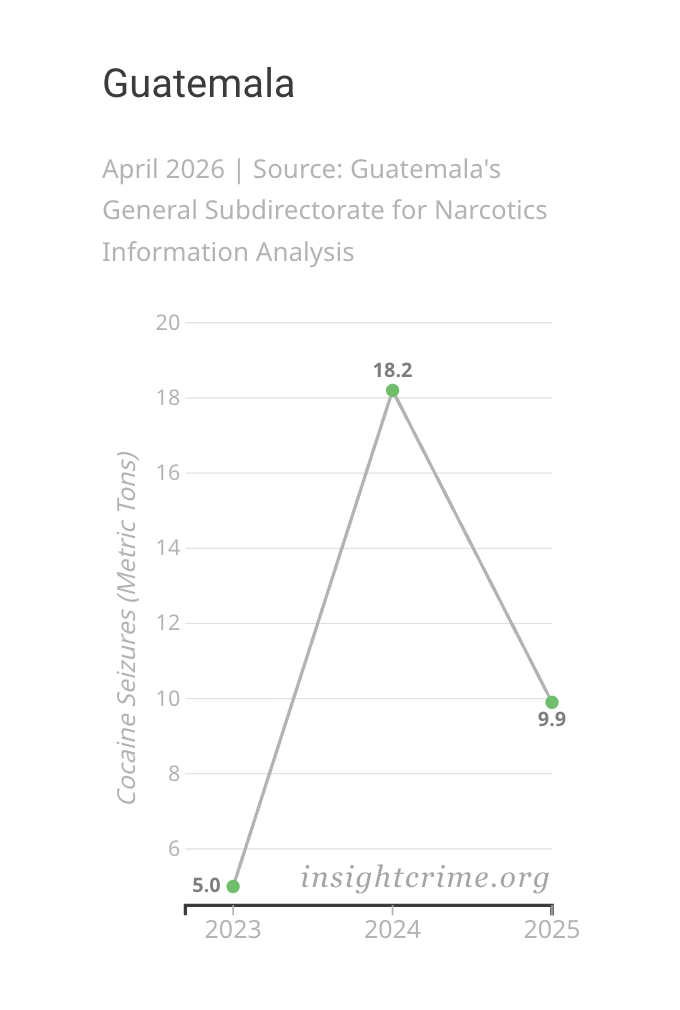
Guatemala, a key transit country for drug trafficking to both the United States and Europe, seized 9.9 tons of cocaine in 2025, a 45.9% drop compared to 2024.
In March, authorities arrested Guatemala’s most wanted drug trafficker, Aler Samayoa Recinos, in Mexico. Although Samayoa Recinos is believed to head the Huistas drug trafficking organization, his arrest is unlikely to topple the group, which has long been protected by corrupt officials.
In Spain, authorities tracked 1.2 tons of cocaine shipped from Guatemala to the port of Barcelona in 14 containers labeled as recycling materials. Of that load, 990 kilograms were later transported to Madrid, where it was intercepted, becoming the city’s largest seizure in two decades.
Guatemalan traffickers also used semisubmersible narco subs to transport cocaine. One was seized carrying 2.2 tons of cocaine off Guatemala’s Pacific coast in July.
Costa Rica
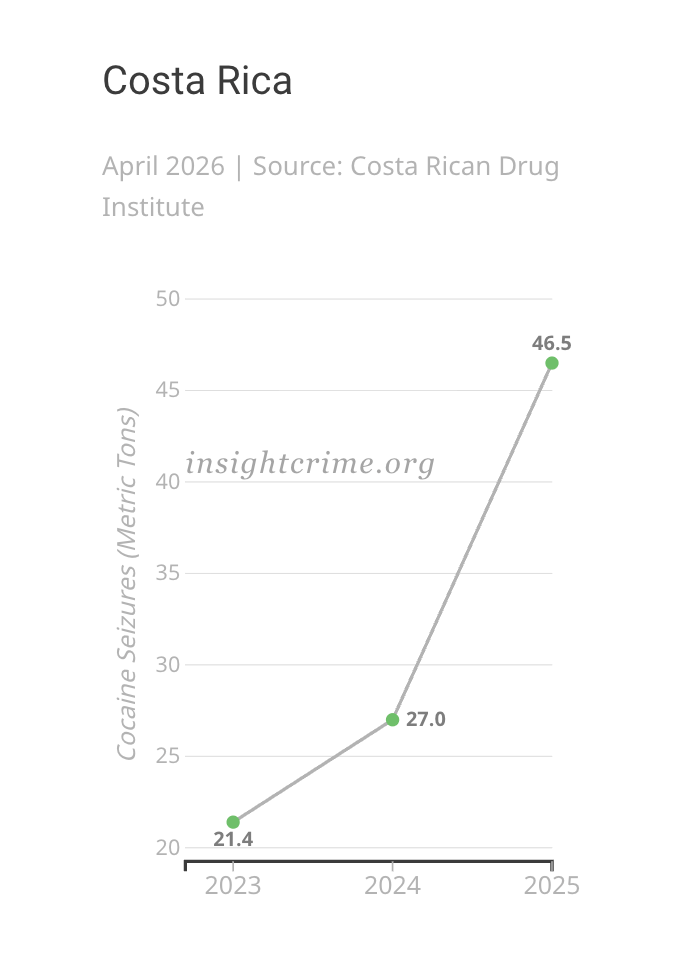
Costa Rica seized 46.5 tons of cocaine in 2025, a 72.4% increase from 2024. The country, which has seen a surge in drug trafficking activity in recent years, is one of the five main countries of origin for cocaine shipments arriving at the port of Antwerp, Belgium. Seizures in Belgium also rose in 2025, underscoring the country’s continued role as a key cocaine transit hub in global trafficking routes.
As Costa Rica’s role in the cocaine trade grows, the government is trying to adapt. In May 2025, then-President Rodrigo Chaves signed a constitutional amendment to permit the extradition of Costa Ricans to the United States on drug trafficking and terrorism charges. But state responses are being undercut from within. In June, Costa Rica’s former security minister was arrested for drug trafficking and corruption.
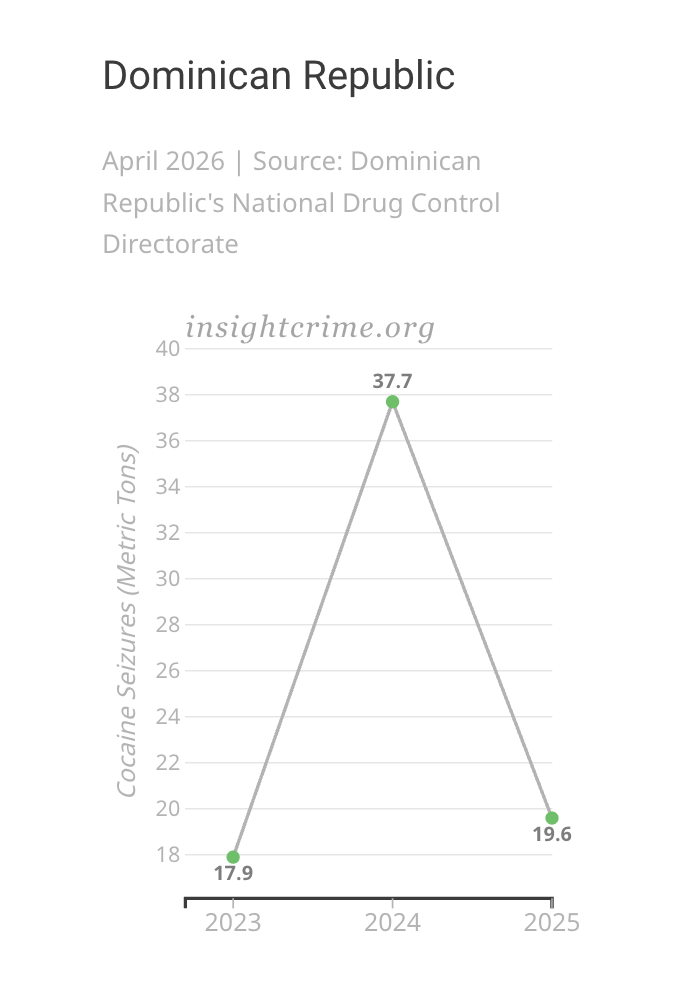
Dominican Republic
A key cocaine transit nation in the Caribbean, the Dominican Republic seized 19.6 tons in 2025, down from 2024’s record 37.7.
Cocaine typically comes to the Dominican Republic from Colombia and Venezuela via smaller boats. From there, traffickers use different methods — shipping containers, narco-submarines, and private planes — to send it to the United States or Europe.
Haiti*
Reliable data is lacking, but a 1-ton seizure near Île de la Tortue, off the northern coast—the largest there in 30 years—highlighted Haiti’s continued role in the business. Île de la Tortue is a strategic point as it has maritime connections to other Caribbean islands and is “rapidly becoming a central hub in a multinational trafficking network,” the United Nations reported.
A 1.1-ton seizure in Antwerp, Belgium, from a container shipped from Haiti in August, further underscored Haiti’s increasing significance as a trafficking route. Ravaged by gangs and violence, Haiti has struggled to rein in crime despite an international mission, led primarily by Kenyan police, to help the Haitian National Police and Armed Forces.
Mexico*
Mexico seized nearly 59.9 tons of cocaine between October 2024 and June 2025, the calendar the government uses to report yearly seizures. Mexico makes no distinction between national seizures, seizures in international waters, and collaborative seizures in their total figures.
Many of Mexico’s biggest cocaine seizures occurred off its shores, including 4.5 tons in March and 4.2 tons in April, both in boats. In June, 3.5 tons were seized from a narco submarine off the coast of Guerrero. Mexico remains a key corridor for cocaine trafficking to the United States. While US consumption has remained relatively stable, the market appears saturated, with prices continuing to fall, pushing traffickers to increasingly target Europe and emerging markets in Asia and Oceania.
The killing of Mexico’s Jalisco Cartel New Generation (Cártel de Jalisco Nueva Generación – CJNG) leader Nemesio Oseguera Cervants, alias “El Mencho,” in February raised questions about the future of the organization. It is too early to say what impact El Mencho’s death will have on Mexico’s cocaine trade. The business is highly fragmented, with multiple factions and individuals linked to the CJNG maintaining relationships with actors across the region. InSight Crime is actively monitoring developments.
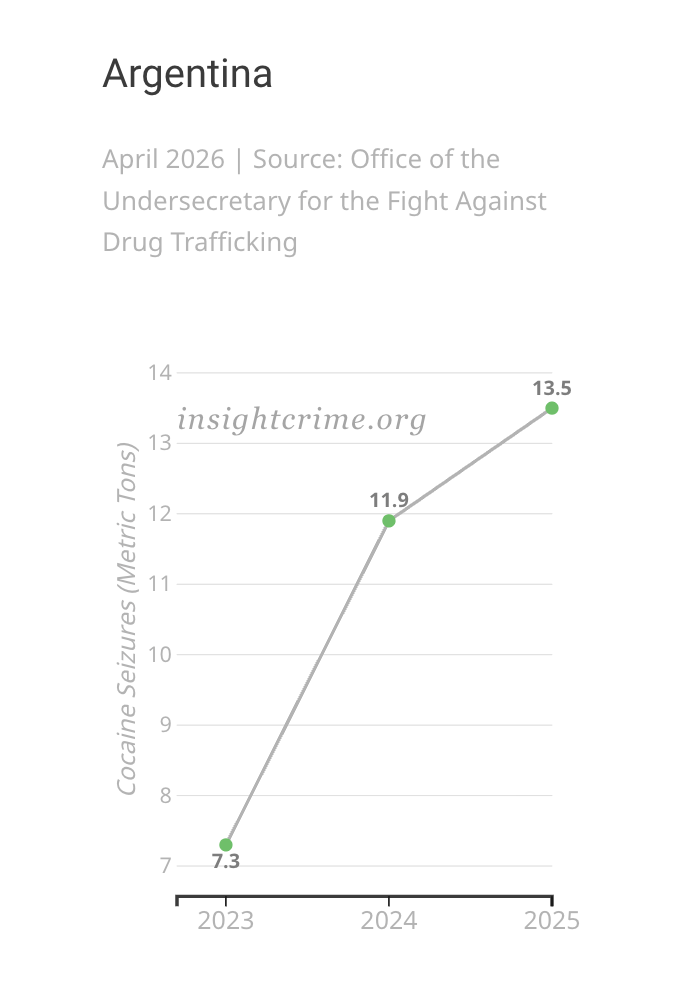
Argentina*
A record total of 13.5 tons of cocaine was seized in Argentina in 2025, a 13.2% increase from 2024’s 11.9 tons. Argentina’s figures include both powder and base cocaine.
Officials attribute the increased seizures to Plan Paraná, which focused surveillance on the Paraguay-Paraná waterway, which flows through Rosario, one of the country’s most important cocaine hubs. The operation increased interagency cooperation and launched real-time surveillance with drones, radars, thermal cameras, and scanners.
SEE ALSO: How Rosario Became Argentina’s Drug Violence Capital
Chile
Chilean authorities seized 3.6 tons of cocaine in 2025. In 2024, the country did not respond to InSight Crime’s request for data.
Despite its borders with two major producer countries, Bolivia and Peru, and a series of Pacific ports, Chile has not historically been a major international trafficking route. This may be changing.
The Port of Arica has seen major cocaine busts since at least 2022. And with consumer markets growing in Oceania and Asia, it may turn into a key exit port for cocaine heading west from South America’s shores. Moreover, corruption in security forces is on the rise, raising concerns that transnational drug trafficking organizations may be making moves in the country.
Uruguay
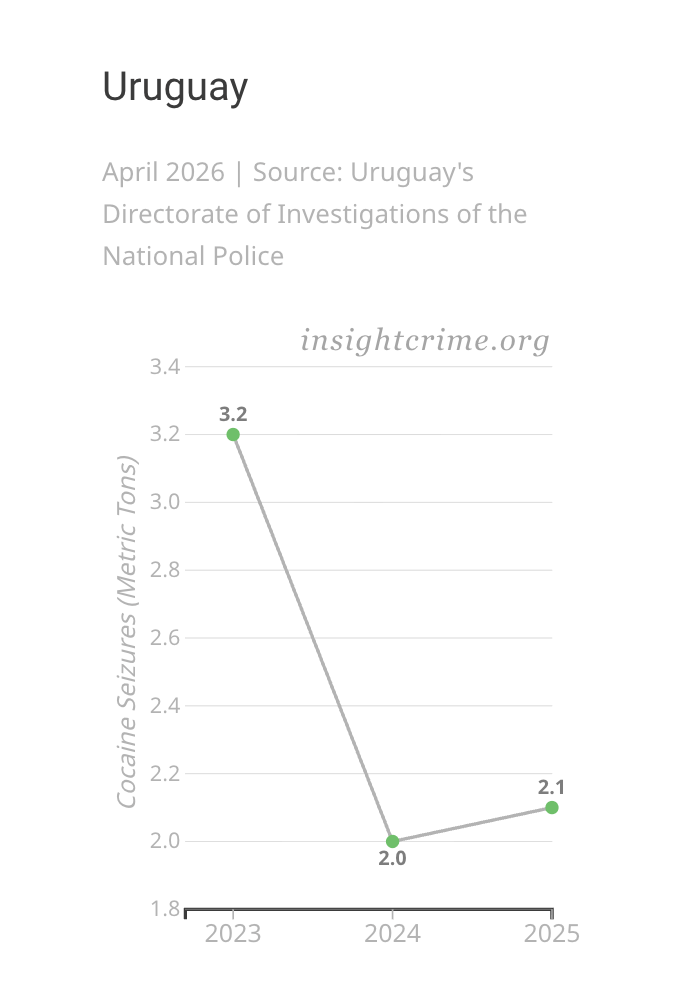
Uruguay’s seizures of cocaine powder increased slightly from 2 tons in 2024 to 2.1 in 2025, showing 6.4% growth. The vast majority of 2025’s cocaine was seized in a single operation in which authorities uncovered around 2 tons being stored by a local gang called Los Albín.
The takedown was notable for a number of reasons beyond just its size. For one, the drugs were being stored on land to later be loaded on a shipping container likely headed to Europe. This is different from the typical method for large shipments, which are loaded onto containers earlier along the Paraguay-Paraná waterway and move through the Port of Montevideo. The change in tactics may be a response to Uruguay’s government installing new scanners in the port.
The seizure also sparked a violent response from traffickers. On September 28, 2025, two people broke into the house of the acting attorney general who oversaw the operation, and opened fire. Such audacious attacks are rare in Uruguay, as most criminal groups are small, disorganized, and less violent. However, authorities believe this cocaine shipment and the subsequent violence were linked to Sebastián Marset, who, for a long time, was Uruguay’s most notorious drug trafficker until he was arrested in Bolivia in March 2026.
Paraguay
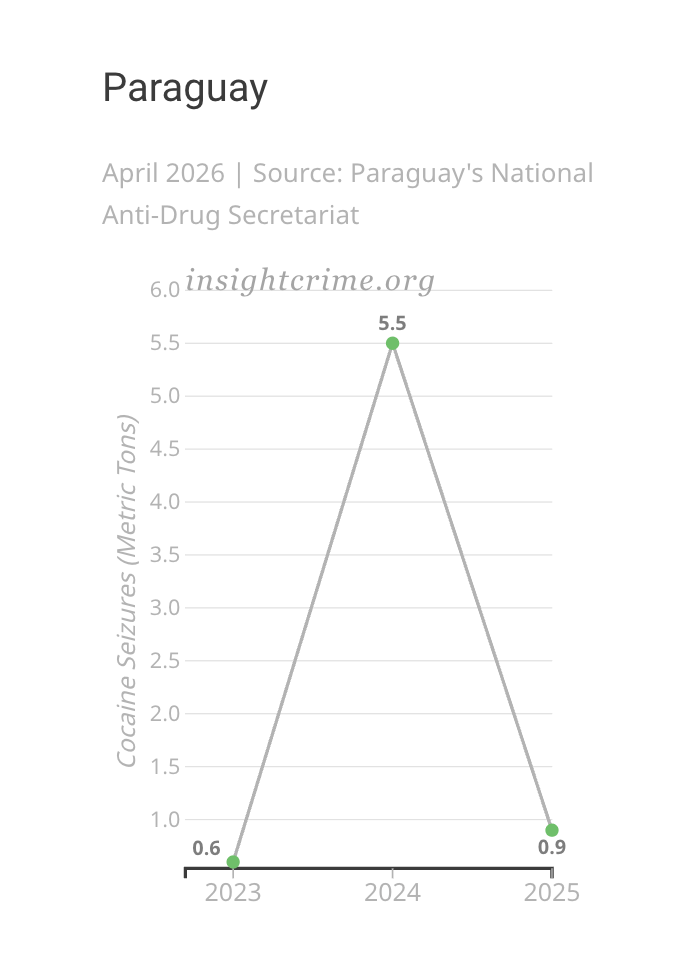
Paraguay had a marked 82.6% decrease in cocaine seizures in 2025, seizing about 1 ton of cocaine compared to 2024’s 5.5 tons. However, nearly all the cocaine seized in 2024 came from a single, record 4-ton seizure, making 2025’s figures a return to normal.
Wedged between Bolivia, a producer nation to the west, and Brazil, South America’s international shipping hub,to the south and east, Paraguay plays a vital role as a launching pad for cocaine heading to Europe.
Its role is facilitated by endemic corruption, as exemplified by the conviction of a sitting senator of the ruling Colorado Party, Erico Galeano. Galeano was found guilty in March 2026 of providing logistical support to cocaine traffickers and laundering the profits, but has yet to be formally arrested.
Corruption has fueled distrust between authorities in Paraguay, inhibiting cooperation and intelligence sharing, which undercuts investigations. Meanwhile, the assassinations of key figures investigating organized crime and corruption remain unsolved.
Brazil
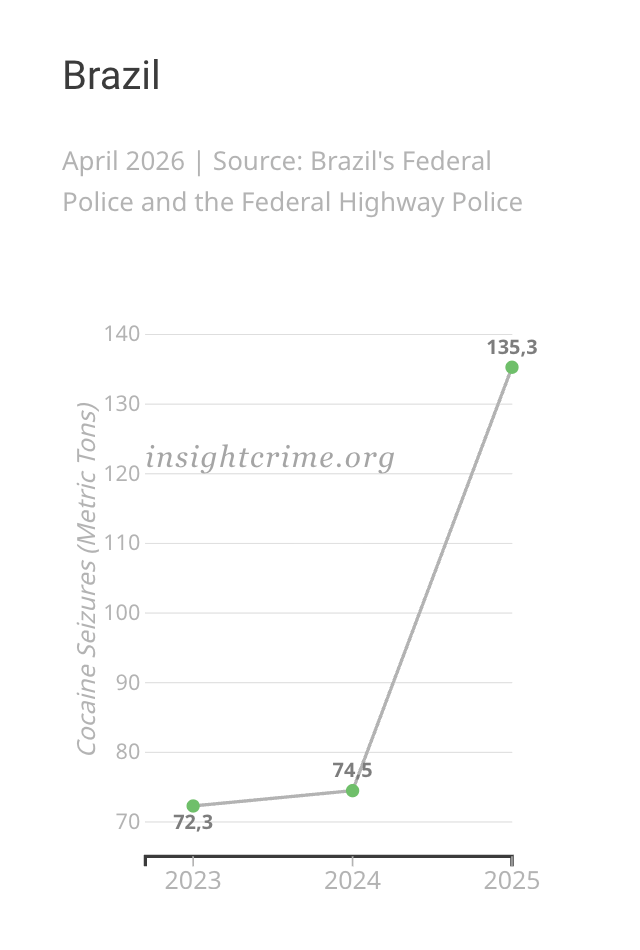
Brazil seized 135.3 tons of powder cocaine in 2025. In 2024, InSight Crime did not have access to seizure figures disaggregated by cocaine type, but federal and state police agencies seized 213.7 tons of powder cocaine, base cocaine, and crack combined.
Traffickers adapted to increased security measures and intelligence in Latin America’s biggest and most traditional exit point, the port of Santos, and shifted their operations to alternatives, including ports in Paranaguá, Salvador, and Roraima.
Additionally, networks diversified their trafficking methods to evade law enforcement. The largest-ever narco sub cocaine shipment travelled the Brazilian Amazon before being seized with 6.5 tons of cocaine by Portuguese authorities in 2025.
Cocaine Seizures in Consumer Markets:
United States
United States cocaine seizures hit 20.8 tons of cocaine in the 2025 fiscal year, which runs from October 2024 to September 2025, up from 14.7 in 2024. The United States conducted dozens of strikes against alleged drug boats in the Caribbean and Pacific since September 2, 2025. President Trump’s government carried out an unprecedented intervention in Venezuela, arresting then-President Nicolás Maduro and First Lady Cilia Flores in January and transporting them to the United States to face drug charges. But these military operations haven’t stopped drug flows. Instead, traffickers are using alternative routes to avoid interdiction and the ongoing missile strikes.
Belgium*
Belgium remains the main European destination for drugs being moved via maritime traffic, with 55 tons seized in 2025, 25% more than the previous year.
Home to the port of Antwerp, historically the main European entry point for cocaine, Brussels is facing rising violence fueled by drug-related turf wars and an unprecedented surge in the frequency and intensity of shootings. As authorities have cracked down on Antwerp, record seizures in other European countries suggest that traffickers continue to look for other entry spots to access the continent.
Netherlands*
The Netherlands seized 24.5 tons of cocaine in 2025, down from 38 tons in 2024. The decrease follows a trend already observed in 2024, with criminal organizations increasingly shifting their trafficking routes to smaller ports and neighboring countries to avoid enforcement.
Most of the cocaine seized in the Netherlands in 2025 came in ships from Brazil and Ecuador.
Spain
Spain did not respond to our request for data by the time of publication. However, the country remains an important entry point for cocaine into the European market.
In 2025, Spain continued to seize cocaine from semi-submersible submarines and speedboats, a trend that has been rising since at least 2019. But traffickers are using an array of modi operandi.
In June 2025, Madrid saw its largest seizure in the last 20 years, with 990 kg of cocaine hidden in a load of recycling material that first arrived in the port of Barcelona. According to authorities, when it got to the port, the shipment contained over 1.1 tons of cocaine that was distributed to other parts of Spain.
France*
French customs officers seized 31.3 tons of cocaine in 2025, a 49% rise from 2024’s 20.9 tons. The country is facing a severe rise in violence that authorities have tied to cocaine entering through the ports of Marseille and Le Havre.
In response to the surging drug violence, lawmakers approved a counter-narcotics law in April 2025, aimed at equipping the state with tougher tools to fight organized crime. The law created a national organized crime prosecutor’s office, allowed for the isolation of cocaine bosses in prisons, and the shutdown of businesses that launder drug money.
France is also focused on increasing its international cooperation and reported a 112% increase in cocaine seizures in foreign territories in 2025 compared to 2024.
Portugal
Portuguese authorities seized 25.6 tons of cocaine in 2025, up from 23 tons the year before. This is the largest total in the past 20 years and marks a five-year trend of increases.
About 95% of cocaine gets to Portugal by sea, with Brazil replacing Colombia as the principal origin point in 2025. Its largest criminal organization, the First Capital Command (Primeiro Comando da Capital – PCC) controls much of the cocaine trafficked between the two countries and has expanded into Portugal.
Many of the most significant seizures of the year occurred in the Azores archipelago in the North Atlantic Ocean.
Though hiding tons of cocaine in shipping containers has been the go-to method for traffickers, Portugal is increasingly seeing other methods. In March 2025, for example, authorities captured a narco sub loaded with 6.5 tons of cocaine south of the Azores. It was the largest ever such seizure in Europe. Authorities captured another submersible in November, this time carrying 1.7 tons of cocaine. A sailboat was detained in the Azores in June with another 1.7 tons of cocaine on board.
Sweden*
Cocaine seizures in Sweden remained relatively steady, with 1.5 tons in 2025 compared to 2024’s record 1.6 tons, according to reporting in the Sweden Herald. Sweden has become an alternative entry point to the massive European consumption market as authorities in more traditional ports, particularly Antwerp and Rotterdam, clamp down.
SEE ALSO: What Iceland’s Cocaine Surge Says About Europe’s Saturated Drug Market
East Asia
As drug trafficking groups seek to expand, East Asian countries have been gaining relevance as consumer cocaine markets. In June 2025, police in China destroyed a major marine drug smuggling channel, while Korean authorities seized a record 2.6 tons of cocaine in 2025.
Among South Korea’s seizures was its largest-ever drug bust, with 2 tons of cocaine seized in a vessel that departed from Mexico and transited Ecuador, Panama, and China.
Oceania
Australia seized 7.8 tons of cocaine in 2025, a nearly 40% increase compared to the 2024 fiscal year, which goes from July 2023 to June 2024. In French Polynesia, authorities confiscated 1.6 tons of cocaine in an operation in July, which they claimed was a historic drug haul. The shipment was allegedly headed to Australia.
SEE ALSO: Is the UAE’s Role as a Safe Haven for Traffickers Waning?
In New Zealand, authorities had seized 430 kilograms of cocaine in Tauranga, the country’s largest port, by October 2025. That amount alone was double the total seized at the port in all of 2024, suggesting an increase in cocaine flows into the region.
The year also saw two abandoned low-profile vessels in the Asia Pacific, following the first discovery of such a vessel in August 2024. Authorities did not determine the country of origin, but investigations suggest that the two found in 2025 came from South America and traveled more than 13,000 kilometers to the Solomons, a journey that covers more than a quarter of the planet’s circumference.
Sources and Methodology
InSight Crime’s annual Cocaine Round-Up analyzes cocaine hydrochloride seizures in Latin America & the Caribbean to identify trends in production, processing, trafficking routes, enforcement efforts, and emerging consumer markets in the global trade.
The analysis prioritizes official government data wherever possible. Public information requests are filed to all countries to obtain the most rigorous and comprehensive data available. These requests typically ask for total seizures for the full year in kilograms, specifying the type of substance (e.g., cocaine hydrochloride, coca base), disaggregated by geographic level (e.g., province, department, municipality, or equivalent), and additional details such as specific location, means of transport, or number of arrests.
For countries that ignore or deny requests, or where official data is unavailable or outdated, data is gathered through our systematic daily monitoring of reliable secondary sources of any cocaine hydrochloride seizures above 1 kilogram. Such information is collected from official press releases, media outlets, intergovernmental organizations (IGOs), non-governmental organizations (NGOs), and other open-source reports.
To maintain analytical integrity, we focus on national seizure events involving cocaine hydrochloride powder. This means drawing clear boundaries between what is seized in a country’s national territory versus in international waters, and what is attributed to international cooperation. Quantities are standardized to kilograms and converted to tons or metric tons (1,000 kilograms), not to be confused with US tons (907.2 kilograms).
We also differentiate and explicitly identify individual seizure incidents from operational summaries (multi-day or multi-location aggregates).
Seizure data has several limitations. Inherently, it only represents substances identified and publicly disclosed by authorities, meaning that actual totals—which include undetected trafficking volumes, routes, and techniques—are far greater. Furthermore, sources use different methods to measure and report seizures. For instance, some do not distinguish between types of cocaine (or even drugs in general) and seizure attribution scope (e.g., national, international waters, and done through international cooperation). Some sources do not include details regarding modus operandi and alleged criminal groups associated. Other dimensions, such as purity of shipments, are rarely known.
While our methodology takes special care with these data quality concerns and other considerations (e.g., duplicate seizures, gaps in event and territorial coverage), all figures should be interpreted as indicative of reported and monitored events rather than a comprehensive record of all interdictions or overall trafficking activity.
Countries with *
Haiti: InSight Crime was unable to access official cocaine seizure data.
Panama: Data comes from an official source and covers national seizures, though it is preliminary in nature and does not distinguish between cocaine powder and paste.
Netherlands: Data comes from an official source, though it does not specify whether it refers exclusively to cocaine hydrochloride powder, and the scope of seizures is not clearly defined.
Sweden: Data comes from a non-official source, and it does not specify whether it refers exclusively to cocaine hydrochloride powder. The scope of seizures is not clearly defined.
Peru: Data comes from an official source, but the reported figures measure drugs destroyed after confiscation or state handling rather than the amount seized in enforcement operations. The source also does not clearly specify the type of cocaine included and does not distinguish seizure scope. Available references indicate that cocaine-related substances account for the majority of total drug seizures, though without precise quantification.
El Salvador: Data comes from a non-official source and does not clearly specify the type of cocaine and offers limited clarity on the extent of international cooperation involved in seizures.
Honduras: Data comes from an official source, but it might not capture all seizures and does not clearly specify whether the figures include different types of cocaine substances.
Argentina: Data comes from an official source but includes multiple forms of cocaine — both powder and base paste—which limits comparability with other reporting.
Venezuela: Data comes from an official source and refers to cocaine hydrochloride powder, though broader references to drugs are also used. The scope of seizures is unclear, and overall data reliability remains a concern.
Belgium: Data comes from an official source, though it does not specify whether it refers exclusively to cocaine hydrochloride powder, and the scope of seizures is not clearly defined.
France: Data comes from an official source and refers to national seizures, though it is derived from non-official sources. The type of cocaine and scope of seizures are not clearly specified.
Mexico: Data comes from an official source and refers to cocaine hydrochloride powder. However, it covers an incomplete period from October 2024 to June 2025 and does not clearly distinguish seizure scope.
FAQ
How much cocaine is seized globally each year? Even though it is difficult to determine the exact amount of cocaine seized in the world, InSight Crime’s annual Cocaine Seizure Round-Up analyzes seizures per country and the organized crime dynamics moving and diversifying the cocaine market. See previous editions here.
Which country produces the most cocaine? The three biggest and most traditional cocaine-producing countries are Colombia, Bolivia, and Peru. In 2025, these countries’ authorities continued to invest in eradication and anti-drug trafficking efforts, while traffickers diversified methods.
Where are the largest cocaine seizures happening? Since 2024, the world’s largest seizures have been happening closer to the source countries in Latin America and the Caribbean. In 2025, Colombia was the country that seized the most cocaine, with over 440 tons. However, seizures in Europe, the US, and alternative markets, such as East Asia and Oceania, are increasing.
*Amanda Rocha contributed to the research for this Cocaine Seizures Round-Up


Don't Miss:
-
John Lee promises ‘high-quality’ experience for Apec finance meeting guests
-
John Lee urges public to tune in to Legco debate on city’s 5-year plan, policy address
-
Hong Kong prepares reforms, accountability measures ahead of Tai Po fire report
-
Turkmenistan grows its arsenal of Chinese air defences as Russia’s role shrinks
-
India sizes up US F-35 stealth jets in landmark first on home turf