
 Tunisian court dismisses case to dissolve publisher of ICIJ partner Inkyfada
  Prabowo Faces Growing Discontent as Jokowi Revives His Political Ambitions
  Five years after the Pandora Papers, transparency laws lose their teeth
By: John Elliott
The strength of India’s representative democracy, where voters produce surprise results that throw out long-established governments, has been demonstrated by results in the country’s recent state assembly elections, notably in West Bengal and Tamil Nadu.
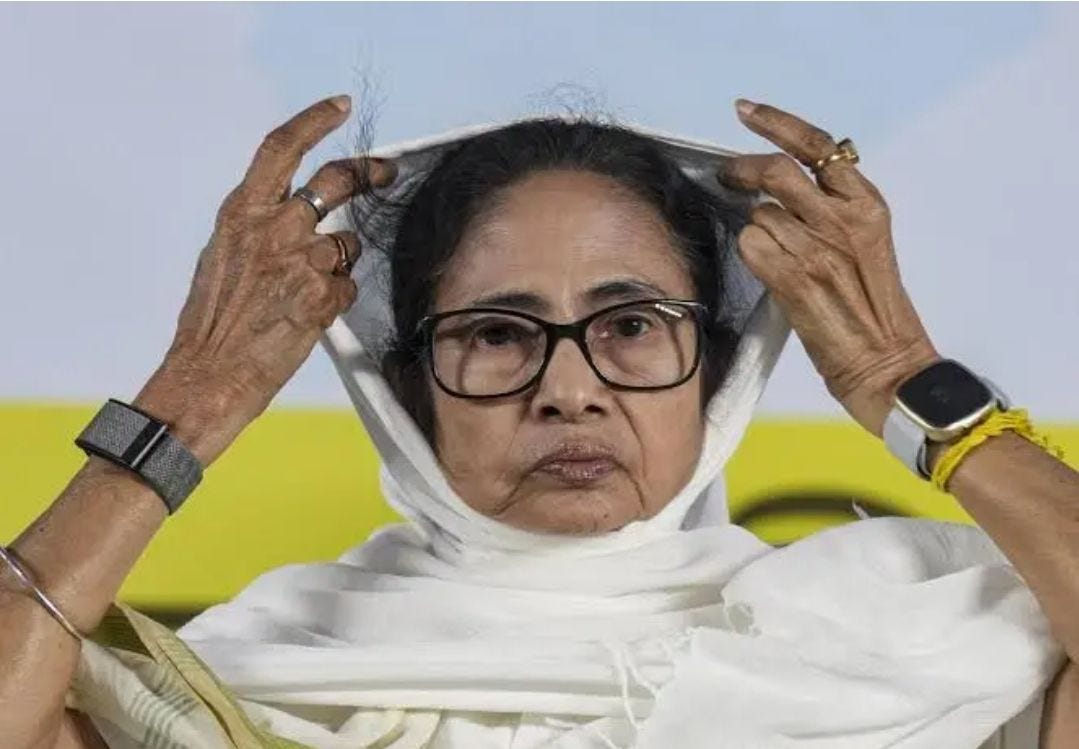
In Bengal, the Hindu nationalist Bhartiya Janata Party (BJP) is launching a new political era by defeating the incumbent Mamata Banerjee’s regional All India Trinamool Congress (TMC). Banerjee has ruled for almost 15 years, following 23 years of continuous Communist (CPI-M) governments, and she seemed almost unstoppable.
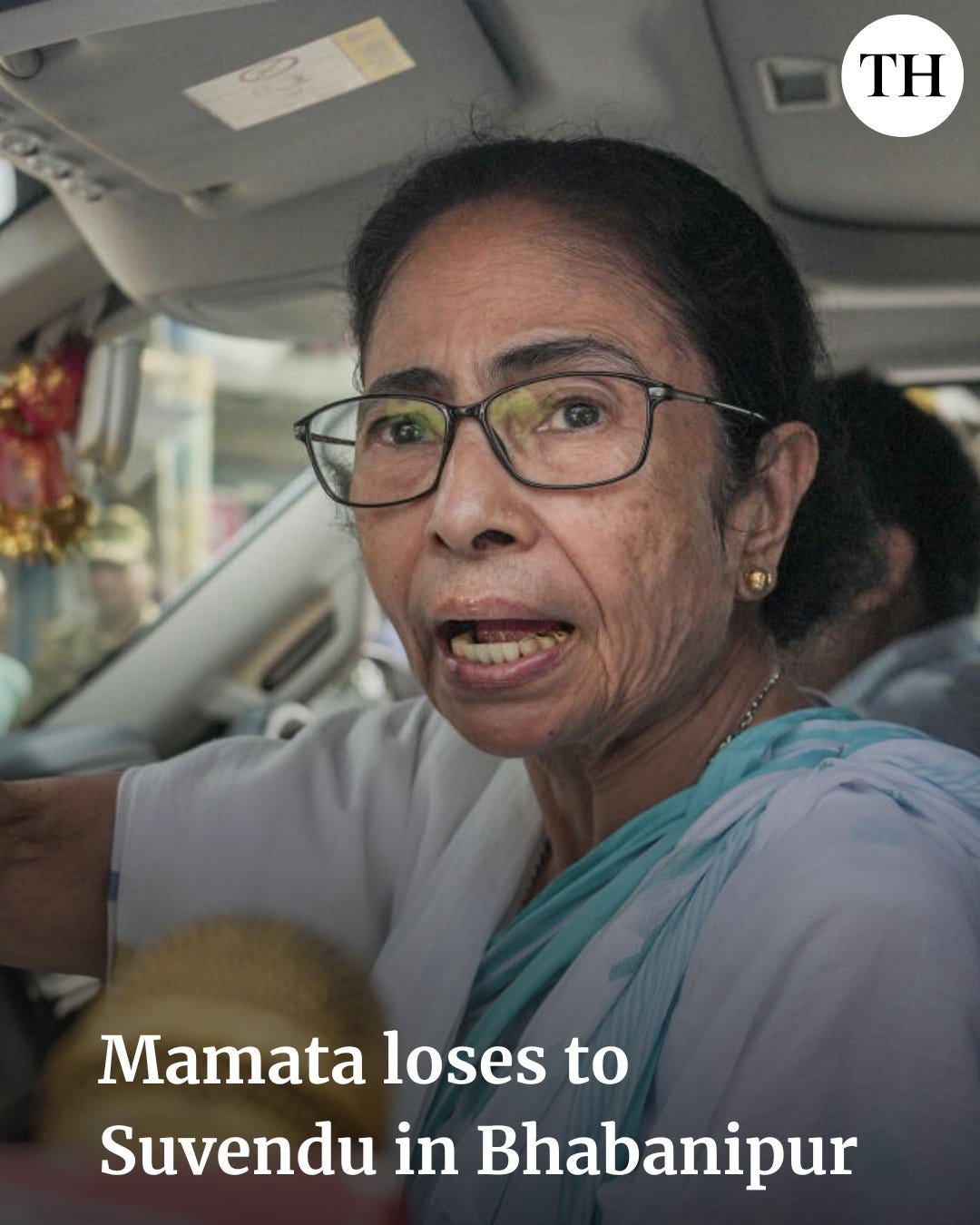
Banerjee, who lost her own seat, has alleged that the BJP “looted” more than 100 seats to give it around 206 out of a total 294. The TMC has only 81.
There are likely to be more allegations of election fixing and controversy, partly involving a recent election commission that removed about 9 million names from the voting lists to eliminate alleged illegal migrants from Bangladesh and duplicate entries.
The state suffers from slow industrial growth and serious unemployment so expectations will be high that the BJP will bring in a new era of job creation with investment infrastructure development and welfare schemes.
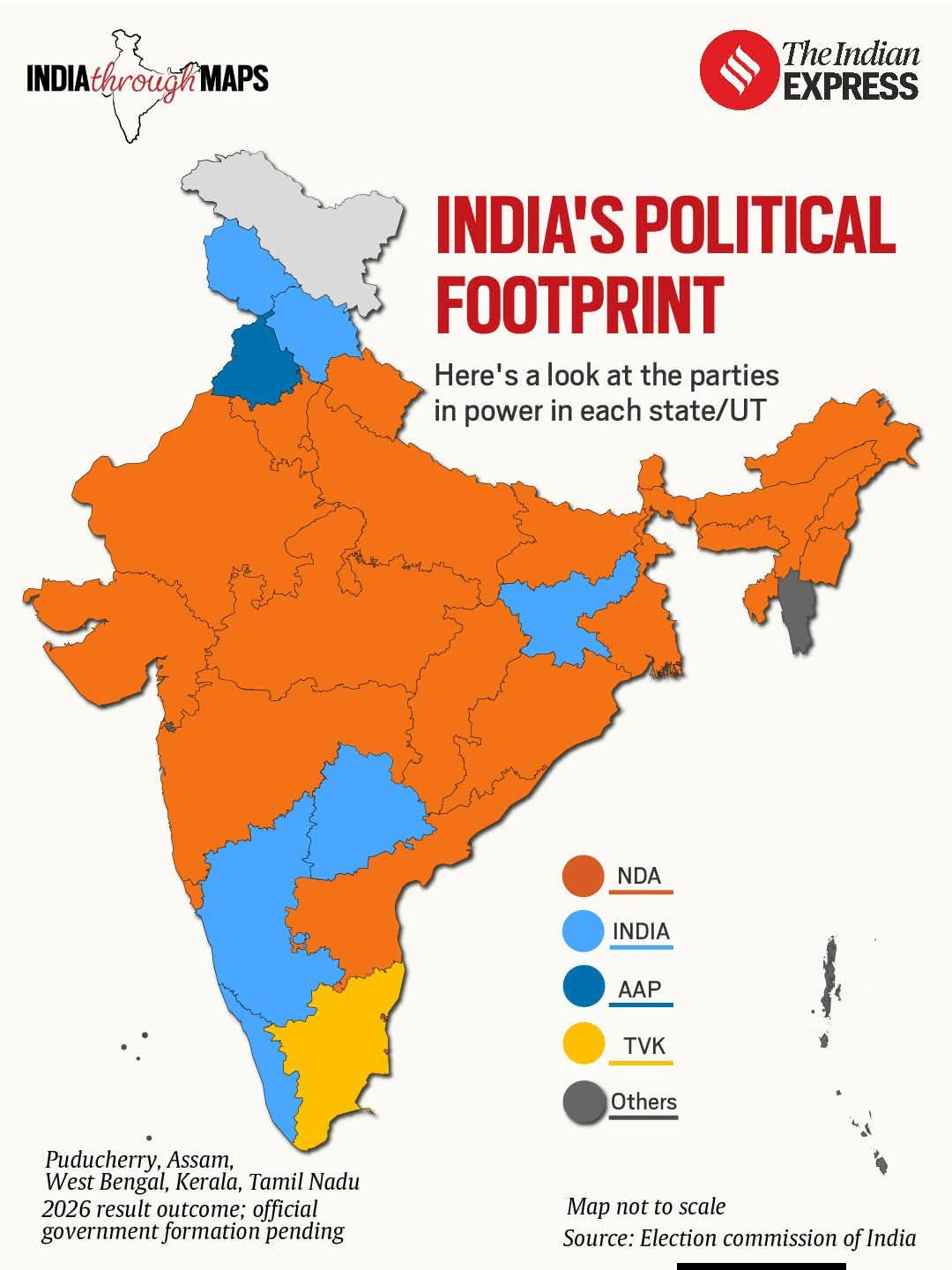
The result is a blow for the country’s opposition parties and a victory for Narendra Modi, India’s prime minister. He had set Bengal as his next major target to build on the party’s established strength across east, west, and much of north India – when these results are confirmed, it will be in power in 20 out of 28 states.
In the southern Indian state of Tamil Nadu, a new party, the Tamizhaga Vettri Kazhagam (TVK) or Tamil Nadu Victory Federation, founded just two years ago by Joseph Vijay, a top film star has won control with 108 seats out of a total 234. The TVK will need to find allies to form a government. Vijay, who is a big earner with a charismatic presence and is known for his charity work with education, disaster relief and other social initiatives, has said he is retiring from films.
The result confirms the power of the cinema in the state’s politics because the two long-running regional parties, the DMK and AIADMK, which the TVK is ousting, were also originally founded by film stars. Between them, they have governed since 1967.
Vijay has promised a break from decades of corrupt dynastic rule and a focus on development and jobs for youth, emphasizing Tamil regional pride and opposition to Hindu nationalism. It was expected that he would make a mark, but his victory seemed unlikely and was suggested by only one of half a dozen exit polls. Sometimes called kaattin singam, which is Tamil for “lion of the jungle”, Vijay, 51, has a big image and a charismatic presence. He said he was retiring from films when he founded his political party and is now known for his charity work with education, disaster relief and other social initiatives.
Also in southern India, a coalition headed by the Gandhi family’s Indian National Congress has won in Kerala, providing the party with a rare and much-needed victory. Priyanka Gandhi, whose brother Rahul is the ineffectual leader of the party, holds a parliamentary seat in the state.
Significantly, the BJP has won only three seats in Kerala and one in Tamil Nadu, demonstrating Modi’s failure to win over the south apart from the tiny southern enclave of Puducherry where it is playing a small role in a victory of its National Democratic Alliance (NDA). The NDA is also holding onto power in the eastern state of Assam.
The West Bengal victory, which was far from certain, is a major boost for Modi’s image, though substantial credit will go to the BJP’s chief election strategist, Amit Shah, who is Modi’s main ally and tough home minister.
Modi has largely recovered from the BJP doing far less well than had been expected in the 2024 general election, but he has had recent setbacks, and India is facing economic problems from the US-Iran war, including rising energy prices.
The government was defeated last month in parliament for the first time in more than a decade over legislation that would have reserved 33% seats for women in parliament’s Lok Sabha and state assemblies. It would, however, have also changed parliament’s seat allocation, reducing representation from areas that include southern India.
Internationally, problems have escalated with US President Donald Trump, who has been developing a close relationship with Pakistan’s army chief, Asam Munir. That led to Pakistan achieving a level of international recognition that it has craved for decades when Trump picked Munir and Shehbaz Sharif, the prime minister, as mediators in the US-Iran war, with talks being held in the capital, Islamabad.
This shocked Modii’s government, which has painted Pakistan for many years as a virtually untouchable terrorist state. Foreign minister S. Jaishankar had been pursuing a policy of multi-alignment that straddled relations with the US, Russia and China as well as Israel and Iran, but had not envisaged Pakistan slipping through the network as a major player.
Modi said yesterday in a statement that the West Bengal victory “will be remembered forever. People’s power has prevailed, and BJP’s politics of good governance has triumphed. I bow to each and every person of West Bengal”.
He may, however, not find it easy to clamp the BJP’s nationalism onto the state. He dreams of replacing regional identities with country-wide Hindu nationalism and the Hindi language, but he will encounter strong resistance because of strong Bengali loyalties, not least to the Bengali language.
The BJP victory possibly reflects voter apathy for incumbent Banerjee and her TMC government more than it does desire for the BJP and all it stands for. The TMC has a strong grassroots network and continuing representation in local politics, so politically charged opposition and demonstrations, sometimes violent, are likely.
Shah managed to organize a victory, but ruling the Bengalis may not be so easy.
John Elliott is Asa Sentinel’s South Asia correspondent. He blogs at Riding the Elephant.
Don't Miss:
-
Tunisian court dismisses case to dissolve publisher of ICIJ partner Inkyfada
-
Prabowo Faces Growing Discontent as Jokowi Revives His Political Ambitions
-
Five years after the Pandora Papers, transparency laws lose their teeth
-
How Hungary’s richest man funneled millions into Orbán’s propaganda machine
-
How Real Is the US Withdrawal from the Middle East?