
 Canada revokes dozens of crypto firms’ registrations
  Questions swirl around US plans for record $15B Prince Group crypto seizure
  Donate to ICIJ
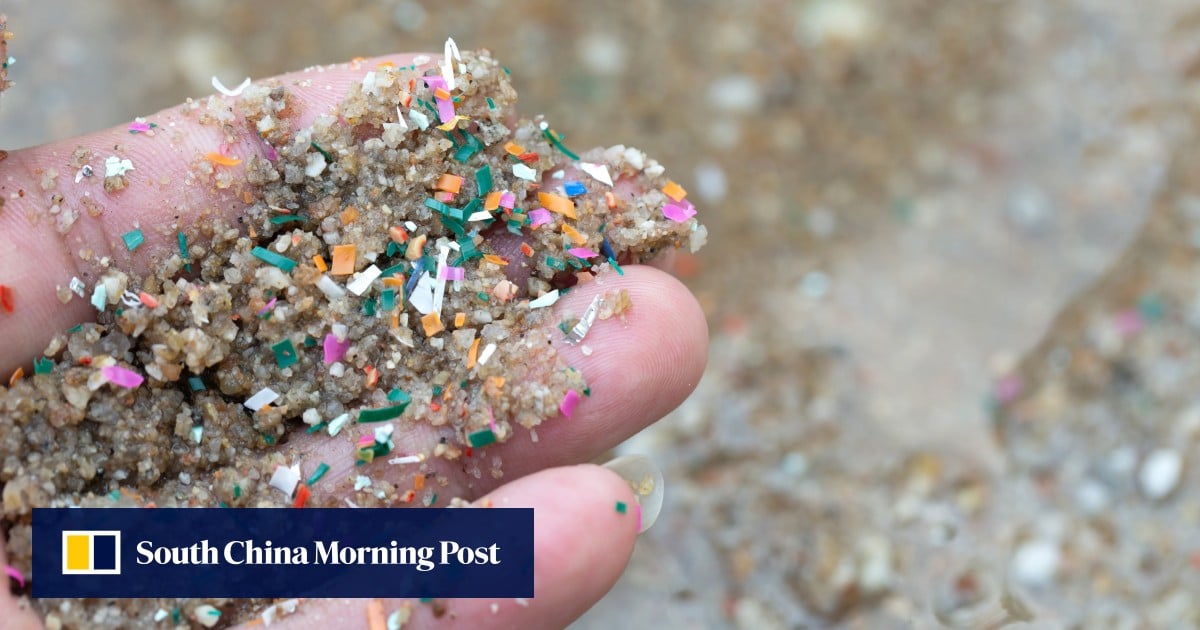
An estimated 93 million pieces of debris could be floating on the surface of the South China Sea, based on data collected by China in a projection of its marine monitoring and remote sensing prowess.
Using technologies such as fixed-ship monitoring, underway surveys and satellite remote sensing, marine scientists and ecologists audited 26 spots in the central and southern parts of the disputed waters.
In a report released this month, Beijing’s Ministry of Ecology and Environment said it collected data on the environmental quality of seawater, floating marine debris and microplastics, greenhouse gases, and island and reef ecosystems from May to June last year.
Advertisement
The monitoring “supports and guarantees stronger protection for the South China Sea’s marine ecology, maintaining the safety bottom line of its environment and safeguarding national marine rights and interests”, it said.
The 26 monitoring stations were set up across the 3.5 million sq km (1.35 million square miles) of the South China Sea, researchers identified an average of 26.5 pieces of rubbish per sq km, with the highest concentration found in the western South China Sea. If extrapolated to the whole region, this average would mean an estimated 92.75 million pieces.
They also detected 0.67 microplastic items per cubic metre. These items, appearing mainly as white or translucent films or fragments, included common thermoplastics such as polypropylene and polyethylene.
Advertisement
Don't Miss:
-
China threatens Mexico with trade reprisals over 50% import duties
-
Sex in space? Sperm struggles to navigate without gravity, scientists find
-
Police charge another 10 people over HK$1.6 billion JPEX cryptocurrency scandal
-
Can Donald Trump end his war on Iran in time for rescheduled China trip?
-
Knife-wielding man kills woman at Tokyo Pokemon shop before taking his own life