
 IMDB’s China Connection
  Trump administration gave firm with ties to ballroom donor the green light to do business with a sanctioned Russian bank
  Claire Sylvia on the Constitutionality of the False Claims Act
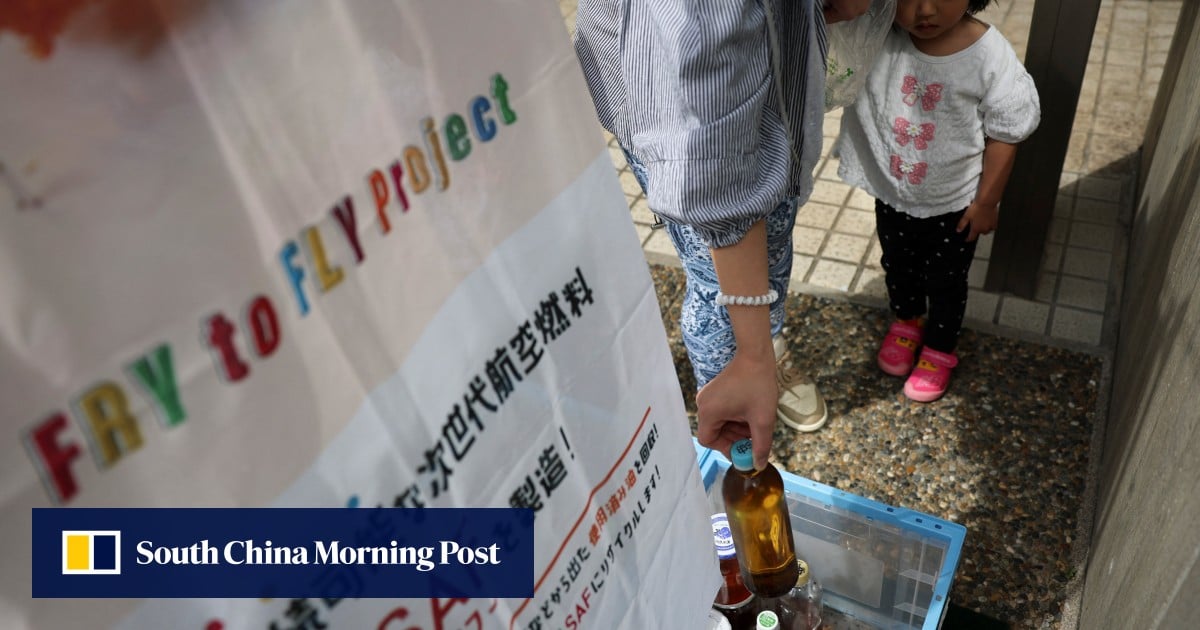
“It would take a tremendous amount to make an aircraft fly, so I hope we can collect more,” said Watanabe, whose penchant for cooking allows her to donate about 40 litres (10 gallons) a year.
Advertisement
Japan is looking to consumers like Watanabe with more urgency than ever as it scrambles to reach a goal of procuring a tenth of airline fuel from sustainable sources by 2030.
The world’s fourth-biggest economy estimates it needs about 1.7 million kilolitres in 2030, and hopes to gain as much as it can domestically through used cooking oil, a relatively cheap feedstock for sustainable aviation fuel (SAF).
Advertisement
But scarce feedstock and lack of infrastructure have limited domestic output of SAF to just 30,000 kilolitres now, or 0.3 per cent of total jet fuel use.
Don't Miss:
-
Japan begins clean-up after Typhoon Dujuan kills 4, batters east
-
Indefinite time in psychiatric ward for Hong Kong man who fatally stabbed 2 in mall
-
Who needs a degree? South Korea’s chip boom rewires university-obsessed culture
-
Cambodia hosts anti-scam summit as scepticism lingers
-
‘Do teachers not have families?’: kindergartens’ Mid-Autumn events draw backlash