
 From Iran to China: An Emerging Trans-Central Asian Corridor
  New documents show how a retail chain’s sales practices helped put guns on US streets
  Singapore a battleground of commodities fraud lawsuits
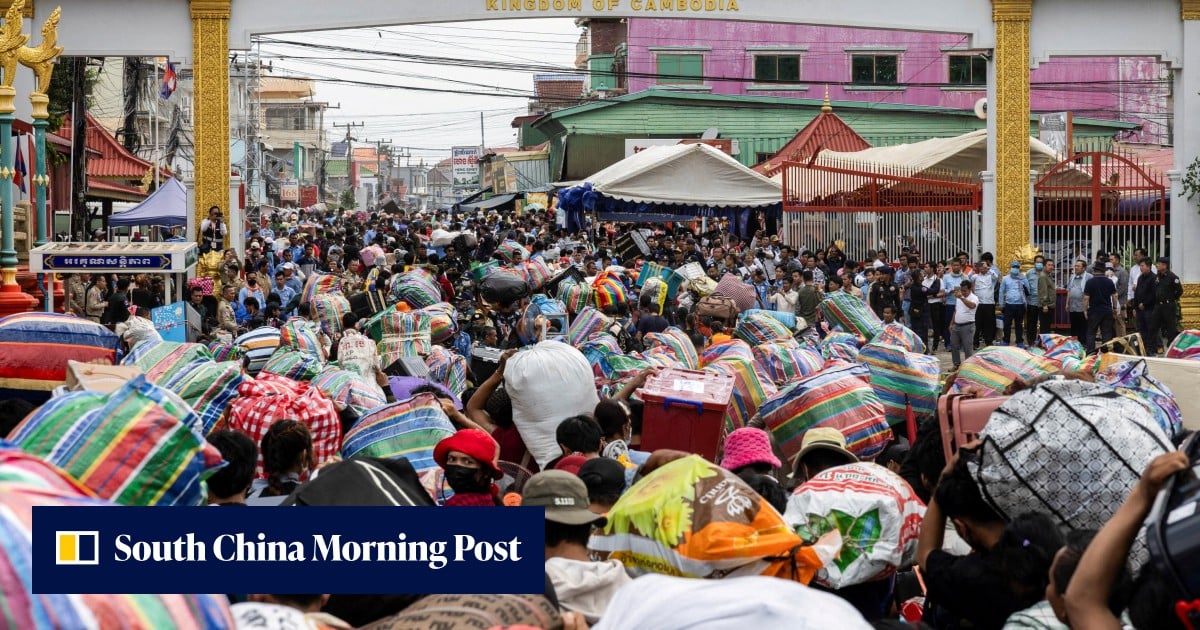
Thailand has tried to ease the squeeze by holding on to workers already in the country, especially Myanmar nationals. But figures from the International Labour Organization (ILO) and warnings from employer groups point to a deeper problem: a workforce built around proximity, familiarity and low travel costs cannot be quickly recreated through permit extensions.
Bringing in new labour legally is proving far more difficult, constrained by conflict, Myanmar’s exit controls and rising travel and brokerage costs.
The exact size of the Cambodian exodus is contested because of the calculation methods.
Last March, Thailand’s Department of Employment logged 495,271 authorised Cambodian workers – a figure dwarfed by Myanmar nationals, who made up 2.27 million of 3.14 million legal workers from nine Southeast Asian countries. A Labour Ministry analysis published six months later cited a Cambodian estimate of 780,000 returns, including undocumented migrants and family members.
For Thai employers, however, it is not how many workers have left but who remain available.
Don't Miss:
-
Land sales offer only temporary relief for West Kowloon arts hub, experts warn
-
As bear attacks rise in Japan, fearful residents change daily routines
-
Trump says will speak to Putin on plague, after death of Russian lab tech
-
Hong Kong’s first-store appeal grows as more Japanese, South Korean and Thai brands arrive
-
US resident arrested in connection to Canada school shooting