
 From Iran to China: An Emerging Trans-Central Asian Corridor
  New documents show how a retail chain’s sales practices helped put guns on US streets
  Singapore a battleground of commodities fraud lawsuits
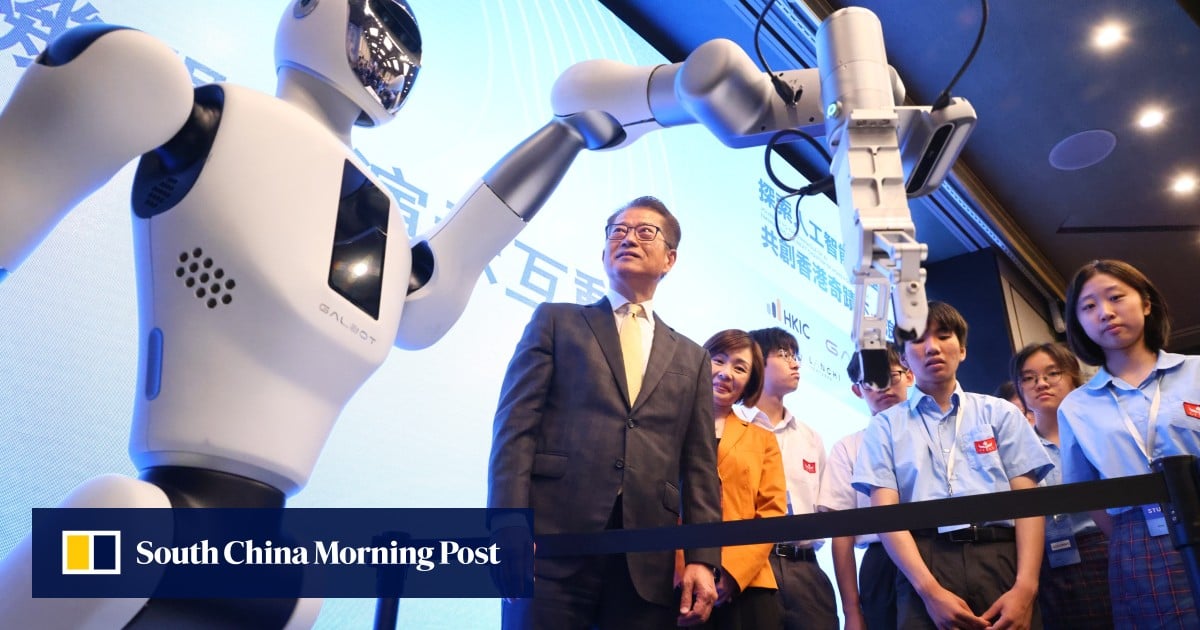
Hong Kong’s first five-year plan will map out concrete paths to address the city’s shortcomings and magnify socio-economic benefits, including how artificial intelligence can create quality jobs, the financial chief has said a day ahead of the public consultation on the blueprint.
Financial Secretary Paul Chan Mo-po said on Sunday that the key task for the blueprint would be the upgrading and transformation of the city’s economy, vowing to press ahead with the Northern Metropolis megaproject and make it a “spatial carrier for deploying emerging and future industries”.
“Hong Kong’s five-year plan aims not only to provide greater momentum for economic development and better application of technology, but also to promote more inclusive and equitable development in society, provide residents with more quality employment opportunities, and create a better life,” he said in his weekly blog.
Advertisement
The efforts to formulate Hong Kong’s first five-year plan are led by Chief Executive John Lee Ka-chiu, and the blueprint is expected to be finalised by the end of 2026.
Lee said last week that the public consultation for the outline would begin on Monday, confirming an earlier South China Morning Post report.
Advertisement
The public can submit views via dedicated websites during the two-month period, and the government would hold multiple sessions to gather input from various sectors, including lawmakers and industry representatives.
The blueprint aims at aligning Hong Kong’s development with China’s 15th five-year plan, which positions the city as an international hub for finance, shipping, trading, innovation and technology, offshore yuan and global talent.
Don't Miss:
-
Land sales offer only temporary relief for West Kowloon arts hub, experts warn
-
As bear attacks rise in Japan, fearful residents change daily routines
-
Trump says will speak to Putin on plague, after death of Russian lab tech
-
Hong Kong’s first-store appeal grows as more Japanese, South Korean and Thai brands arrive
-
US resident arrested in connection to Canada school shooting