
 Michael Marx on Corporate Campaigns in the USA
  Losing language and culture in Xinjiang
  Manila’s EV ambitions confront economic and energy realities
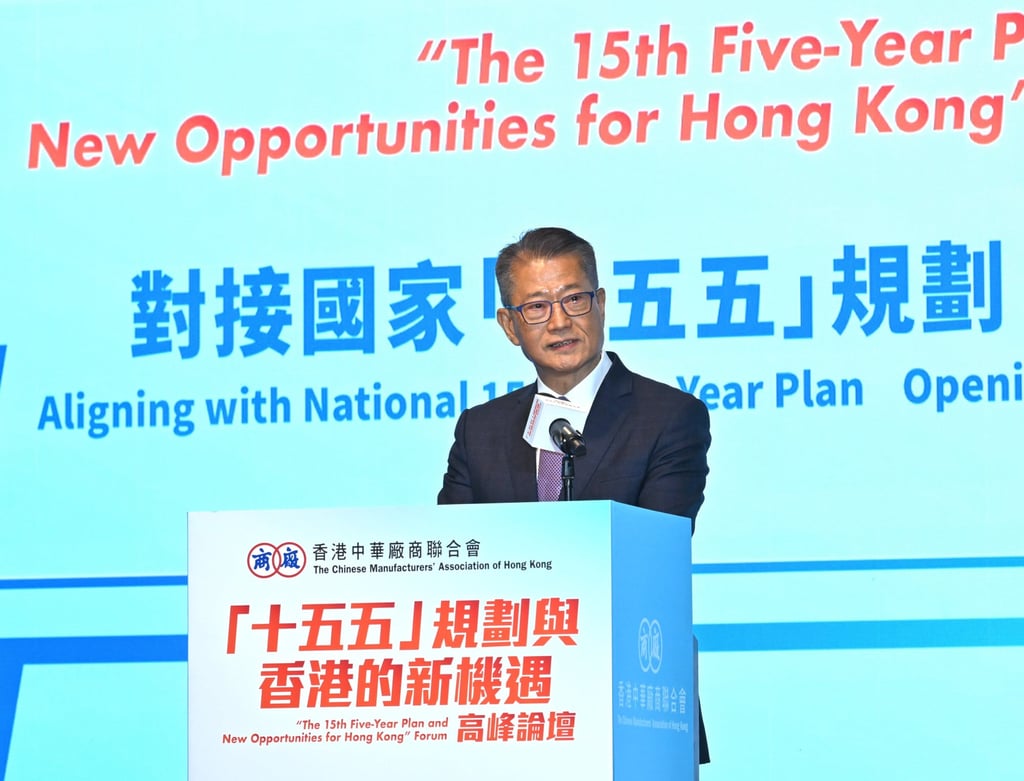
 For decades, Hong Kong thrived as the world’s freest economy without five-year plans, while mainland China rose to become the world’s second largest economy through them. Now Hong Kong has the rare advantage of both: market dynamism and strategic direction. Harnessed through the collective wisdom of the people, this combination can deliver more than what the market or planning alone can achieve.
Mainland China’s strength is scale; Hong Kong’s is distinction: the city does not need an all-encompassing plan. The mainland’s five-year plans are comprehensive by necessity, reflecting the scale and scope of the world’s second largest economy.
Advertisement
China’s five-year plans are a major national undertaking, involving hundreds of research projects, field visits, seminars and wide-ranging consultation. A particular effort is also made to gather views from minority and under-represented groups. A five-year plan is a full-scale effort to combine expert planning with social input, and strategic direction with broader legitimacy. Once it is formulated and national priorities set, resources can be mobilised at scale to deliver.
Advertisement
Hong Kong’s market economy operates differently. The direction may be set, but outcomes depend on the private sector’s response. Hong Kong straddles two systems. We can combine strategic direction with market forces, using land policy, infrastructure investment, a simplified regulatory regime, streamlined procedures and policy incentives to set the stage, while relying on private capital and enterprise to drive outcomes. This is not a compromise between systems, but a hybrid multiplier.
Don't Miss:
-
Tiguerones Leader ‘Willy’ Is Living Free in Spain
-
Video Shows CJNG Member Burying Landmine in Apatzingán, Michoacán
-
Explosives Workshop Raided after Shootout in Balleza, Chihuahua
-
The Eccentric Extravagances of “Captain Sol”: 12 Properties, a Penthouse in Tulum, and Casino Spending
-
Fight at Mazatlán Prison Leaves 10 Dead: A 2-Year-Old Boy Died During a Family Visit