
 The Taliban’s New War Begins at Home
  Panama removed from EU’s tax haven ‘blacklist’ a decade after the Panama Papers
  Crackdown and Controversy: The Battle Over Beach Bars and Noise in Phuket’s Bang Tao
 This spring, Father Dustin Feddon began waking up in the middle of the night. Heart racing, he would stand at the bathroom sink in the dark, splashing cold water on his face until the feeling passed.
For about a dozen years, Feddon had visited prisoners on Florida’s death row as their appeals wound their way through the courts. Some had waited for decades, but the priest learned, more or less, how to accompany people through years of confinement and isolation without losing himself in their desolation. Then in January 2025, Gov. Ron DeSantis began signing death warrants at an accelerated rate. What followed was the busiest period of executions in more than eight decades in a state that has long been a stronghold of capital punishment.
In November, DeSantis set the execution date for Frank Walls, one of the men Feddon was counseling. Walls was moved from death row, at Union Correctional Institution, about an hour west of Jacksonville in the northeast part of the state, to nearby Florida State Prison. There he was placed in one of the three cells, known as death watch, that sit 30 feet from the execution chamber. And with that, Feddon was drawn into the strange, intimate work of accompanying a condemned person through the final weeks of his life.
Seven days before Christmas, he sat beside Walls in the execution chamber, his hand resting on the man’s leg. Walls, with whom he shared communion just hours before, lay strapped to the gurney, his head freshly shaved, intravenous lines running into his right arm. His chest began to heave as he gasped for air for several minutes. Feddon watched as the man’s eyes rolled back and his body went slack and then fell still.
He was the 19th man put to death that year, shattering the state’s annual record of 11, first set in 1936; the Sunshine State accounted for 40% of all executions in the United States in 2025.
Soon there were more prisoners who sought out the priest. One received an execution date in February, another in May. With each new death warrant, Feddon felt the panic rising in his chest. The pace of executions had upended the nature of his work; no longer was he ministering to men living under sentences of death; he was preparing them to die.
Feddon spent years getting ready for this role without quite knowing it. He entered the seminary in his 30s after temporarily taking a break from a doctoral program in religion, and during a year of hands-on ministry before his ordination, he began visiting prisoners. He went on to found Joseph House, a reentry home in Tallahassee, where he lives alongside men newly released from prison and often scarred by years in solitary confinement. There, he helps residents rebuild their lives — driving them to jobs, doctor appointments and therapy sessions; helping them obtain ID cards and open bank accounts; refereeing the inevitable dramas of communal living. There were no off days. He spent one Christmas waiting with a resident in an emergency room.
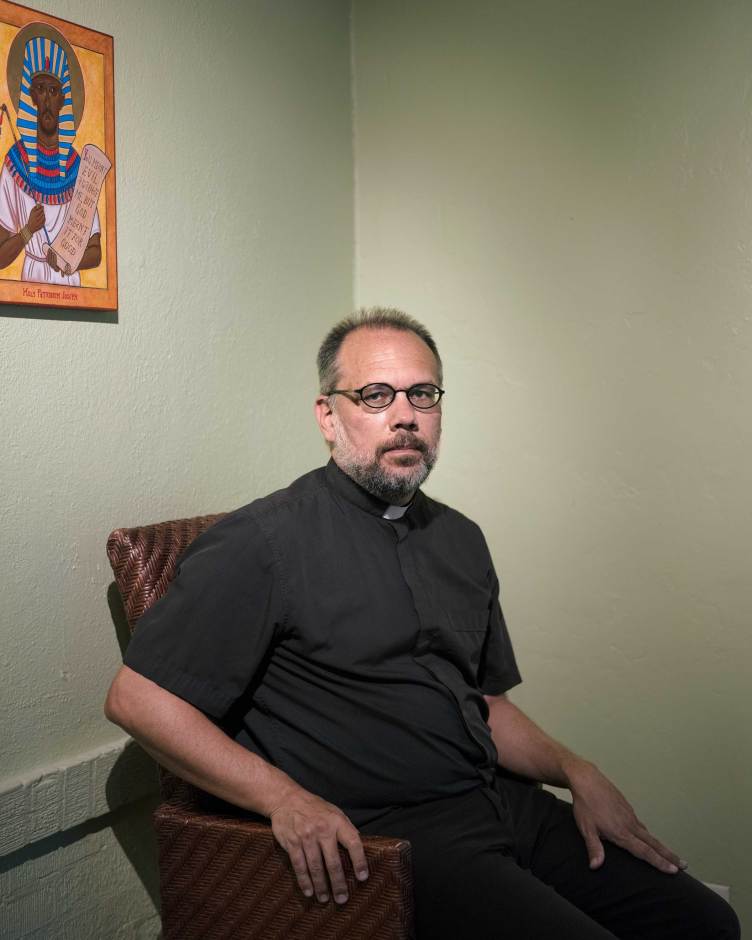
By the spring, he was ministering to the two men on death watch. As often as allowed, he came to see them, spending four hours on the road, round trip, to talk and pray with the men as they awaited execution. Some mornings he drove to Florida State Prison after only a few hours of sleep; and some days he returned to Joseph House so drained that the demands and small crises awaiting him there seemed strangely distant. At a spiritual retreat one afternoon, he suddenly became preoccupied with the idea that the priest who stood before him speaking was on the verge of collapse. Searching for an explanation, he told me he had become “hypervigilant of mortality — of other people dying, not me dying, but other people dying right in front of me.”
Florida has executed nine men this year, more than all other states combined. The pace has transformed death watch, which had typically been empty or held one man at a time. Now all three cells are often occupied, with the next man scheduled to die housed closest to the chamber. After each execution, the prisoners advance one cell closer; then another condemned man receives an execution date and is moved into the vacant cell. Death watch, once a lonely way station, has begun to resemble an assembly line.
Florida’s renewed embrace of the death penalty has unfolded against the backdrop of a decades-long national retreat from capital punishment. Thirty-three states have either abolished the death penalty or not carried out an execution in at least a decade. New death sentences have dropped even more precipitously, with prosecutors in capital cases seeking them less often and jurors more likely to choose life in prison. Just 23 people were sentenced to death in the United States last year, according to the Death Penalty Information Center, compared with 307 in 1995.
Support for capital punishment has been worn away by an accumulation of forces. The mounting number of death row exonerations — more than 200 since the early 1970s — has made the risk of executing an innocent person impossible to ignore. The steep cost of capital prosecutions has forced many prosecutors to think twice before seeking death; the years of litigation required to obtain and defend a death sentence can add millions of dollars to a case. Decades of declining violent crime have further blunted the public appetite for executions. Support for the death penalty now stands at its lowest since 1972; a Gallup poll last year found that a majority of Americans under 55 opposed it.
This July marks the 50th anniversary of the U.S. Supreme Court’s decision in Gregg v. Georgia, which reinstated the death penalty, making it a defining feature of the American criminal justice system. But capital punishment has since lost its hold on the political imagination, with executions persisting in only a small number of states, including Texas, Oklahoma, Alabama and Missouri.
That retreat from capital punishment is apparent in governors’ offices across the country. In 2000, Gov. George Ryan of Illinois, a Republican, declared a moratorium on executions, after the exoneration of 13 men who had been on death row; before leaving office, he commuted nearly all death sentences in the state to life in prison. More recently, Democrats like Gov. Gavin Newsom of California and Gov. Josh Shapiro of Pennsylvania imposed or maintained moratoriums. In June, Ohio’s governor, Mike DeWine, a Republican and a former prosecutor who helped write his state’s death penalty statute, called for abolishing capital punishment there, concluding that it did not deter murder and abandoning his belief that it was morally justified.
President Donald Trump, by contrast, has long been one of the death penalty’s most outspoken champions, making it a cornerstone of his law-and-order agenda. He resumed federal executions in 2020, ending a 17-year hiatus and reviving a punishment that had become an increasingly rare exercise of federal power. Before Trump took office, the federal government had executed just three people since 1963; in the final six months of his first term, it executed 13. He returned to the issue repeatedly on the 2024 campaign trail, calling for broadening the categories of crimes eligible for execution by proposing death sentences for drug dealers, human traffickers and migrants who kill American citizens.
Hours after taking office in January 2025, he signed a sweeping executive order titled “Restoring the Death Penalty and Protecting Public Safety” — signaling that the White House intended to put the full weight of the federal government behind the revival of capital punishment. He instructed the attorney general to pursue death sentences more aggressively, called on the Justice Department to challenge Supreme Court decisions limiting the death penalty, directed federal officials to help states obtain the increasingly scarce lethal injection drugs needed to carry out executions and encouraged state prosecutors to seek capital punishment more often.
Nowhere has the president’s vision been pursued more relentlessly than in Florida, thanks to an unusual concentration of power in the governor’s office. In most states that still carry out executions, the process follows a familiar legal path: Once a condemned prisoner has exhausted their appeals, courts — not governors — set execution dates. In Florida, however, the decision rests entirely with the governor, who decides whether — and when — to sign a death warrant for one of the state’s eligible prisoners.
DeSantis, like his predecessors, makes execution decisions behind closed doors; the state’s Supreme Court has long held that setting execution dates is an exercise of the governor’s executive authority, putting it beyond the reach of the state’s otherwise expansive open-government laws. As a result, there is no way to know what criteria DeSantis uses when he chooses who will be put to death, a Tampa-based attorney with the American Civil Liberties Union’s Capital Punishment Project, Maria DeLiberato, told me. “He could be deciding who is next to die by throwing darts at a list of names,” she said, “or spinning a roulette wheel.”
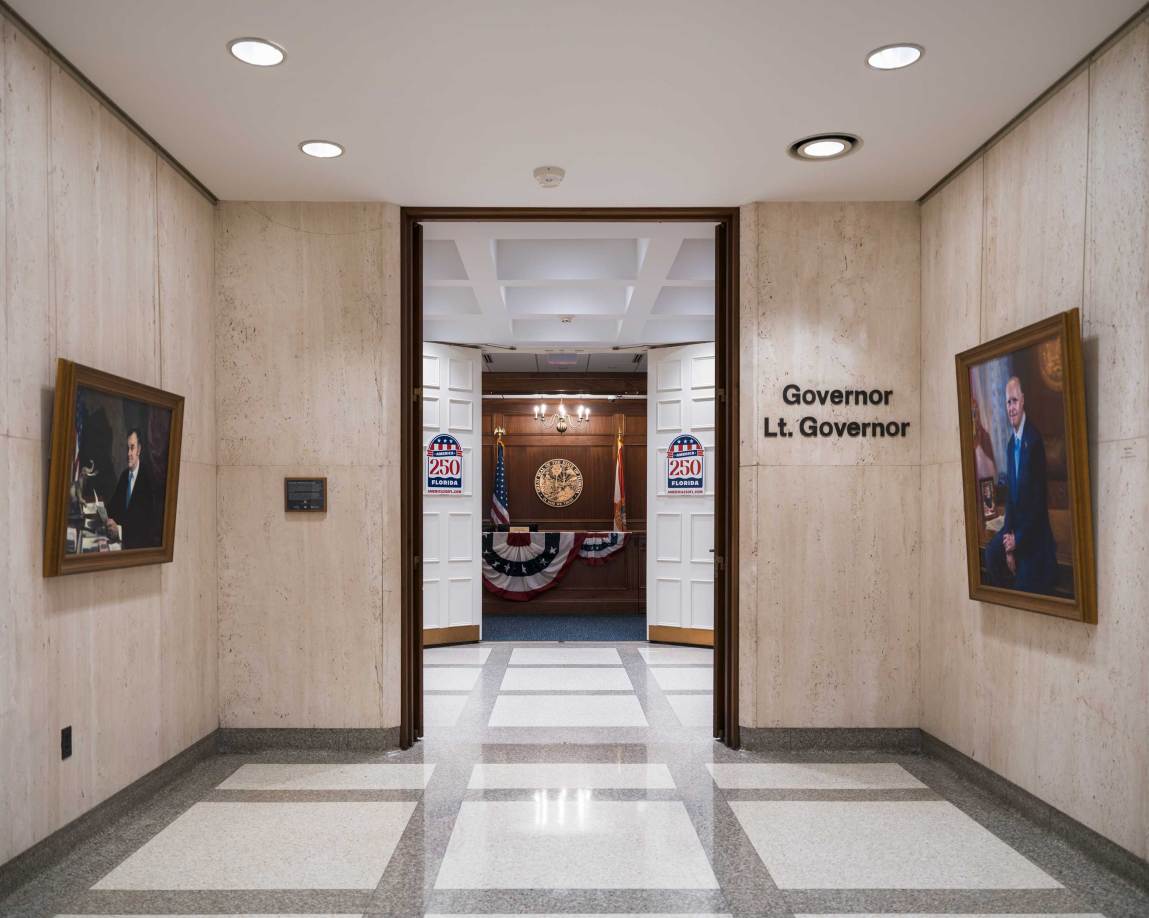
The secrecy surrounding those decisions has left victims’ families, prisoners and their lawyers searching for clues about what principles, if any, guide DeSantis’ selection process. How long a prisoner has spent on death row does not appear to be a deciding factor; DeSantis has bypassed prisoners who committed their crimes as far back as the 1970s, scheduling the executions of men convicted of murders committed decades later. With no obvious overarching logic governing who is chosen next, the process has become a contest to attract — or avoid — his attention. Hoping to prompt him to issue a death warrant for Ronald Heath, convicted of the 1989 robbery and murder of a traveling salesman, the victim’s family sent DeSantis custom blue Sharpies — his pen of choice for signing both legislation and death warrants. DeSantis subsequently did so, and Heath was executed on Feb. 10.
In March, after the execution of a man named Billy Kearse by lethal injection took roughly twice as long as usual, lawyers for another man on death row, Chadwick Willacy, filed a public records request seeking information about the state’s execution protocol. A week later, DeSantis signed Willacy’s death warrant. That timing introduced more fear and uncertainty into an already opaque process. Lawyers representing condemned prisoners were left to wonder whether every legal challenge they raised risked drawing the governor’s scrutiny — and whether vigorous advocacy, intended to save a client’s life, could instead move them closer to death.
DeSantis has offered little public explanation for the record number of executions carried out since 2025 on his watch. The acceleration is particularly striking because it came after years of relative inactivity. In 2019, the first year of DeSantis’ governorship, Florida carried out two executions, and then three years passed without another. Though six men were executed in 2023, just one was put to death the following year before the pace abruptly ramped up in 2025. At a news conference in Jacksonville last November, a reporter asked him to explain the sudden increase.
DeSantis blamed the disruptions of the pandemic as well as bureaucratic challenges for the slow pace at the start of his governorship. Meeting with victims’ families, he said, had reinforced his determination to see old death sentences carried out. “There’s a saying: Justice delayed is justice denied,” DeSantis said. “We’re doing it to be able to bring justice to the victims’ families.” When I asked his office for comment, the head of communications, Alex Lanfranconi, sent a short response: “My advice to those who are seeking to avoid the death penalty in Florida would be to not murder people.”
Some observers see a different calculus. DeSantis is term-limited and will leave office in January, but his political future remains an open question. Since ending his campaign for the White House in 2024, he has worked to repair his relationship with Trump; in April, Axios reported that he was lobbying for a position in the administration, with an eye toward attorney general. Few who follow Florida politics believe he has abandoned his presidential ambitions. The sheer number of death warrants, wrote the editorial boards of the Orlando Sentinel and the South Florida Sun Sentinel last summer, “gives rise to wonder: Why the sudden rush? Is it another sign that he’s planning another run for president in 2028? Would he campaign as the governor who tried to empty his state’s death row?”
When DeSantis signs a death warrant, no one on death row knows who among them has been selected until prison officials arrive at the condemned man’s cell. Of the 242 prisoners on death row, roughly half have exhausted their appeals and are eligible for a warrant. The routine is always the same: A cluster of officials in dress uniforms suddenly appears, the arrival announced by the heavy cadence of boots on concrete and the metallic jangle of handcuffs and restraints. “The warden is first, followed by the colonel and the major and the captain and about four of the biggest guards you’ve ever seen in your life,” a former death row inmate, John Buzia, who was resentenced to life in 2017, told me from prison. “They come walking down the wing and it’s dead silent, because they’ve got their game faces on.”
The men listen as the footsteps pass one cell, then another. From inside their cells, they can see little beyond their immediate neighbors, unless they slip a mirror between the bars in violation of prison rules. Somewhere along the way, the footsteps stop. The warden informs the man whose name appears on the piece of paper he carries that the governor has signed his death warrant. The prisoner is placed in restraints and led back down the wing before being transported to Florida State Prison and placed on death watch.
Even before the ramp-up of executions in 2025, waiting for this moment was an exercise in near constant close listening. “You become very ear-sensitive, sound-sensitive,” Buzia said. Years spent in near total isolation and the same monotonous routine sharpen the senses, lending the smallest break from the ordinary an outsize and terrifying significance: the unmistakable sound of several officers approaching, a certain rattle of keys, the wing suddenly falling silent.
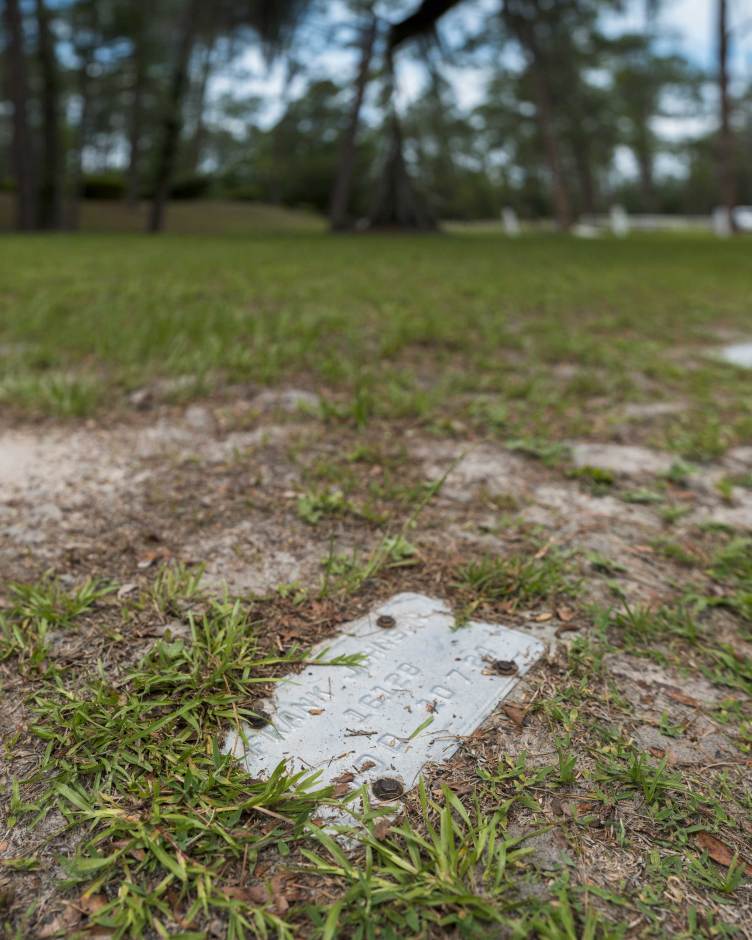
Feddon saw the effects of this last July, when he went to visit Walls, who had been sentenced to death for killing an Air Force airman and his girlfriend during a 1987 robbery. Ten death warrants had been served in the previous seven months, and Walls was visibly on edge, telling the priest that he was barely sleeping because he was sure that his death warrant was going to come down at any moment. “They kind of know there’s this mysterious list,” Feddon said, “and they know they’re on it.” Walls, usually animated as he talked about whichever saint or prayer had most recently captured his imagination, struggled to collect his thoughts, and they sat in silence while he tried to focus. Feddon watched as exhaustion eventually overtook Walls and he nodded off.
The lawyers who represent condemned prisoners, most of whom work for Florida’s Capital Collateral Regional Counsel — a state-funded agency responsible for representing death row inmates in their final rounds of appeals — live with the same uncertainty, never knowing which client will suddenly be scheduled to die, or when. Until a warrant is handed down, they can only guess which of the many cases they juggle will become their most urgent.
Texas, which has historically had the most active death chamber, requires at least 90 days to pass between the setting of an execution date and the execution itself. But in Florida, the period between the signing of a death warrant and an execution is roughly one month, on average. When a warrant arrives, it can set off an all-consuming race against the clock to determine whether there is any legal or factual reason the execution should not go forward: Were there witnesses who were overlooked? Or leads that earlier attorneys failed to recognize or fully investigate? Newer, more sensitive forms of forensic testing — which may have been unavailable, or less reliable, just a few years earlier — can shed light on old evidence. Advances in science and research can alter how courts view a prisoner’s long-standing claims of mental illness or intellectual disability. The imminence of an execution can prompt witnesses who have remained silent for years to speak.
This spring, a prisoner named James Duckett, convicted of the 1987 rape and murder of an 11-year-old girl, received an execution date. Five days before Duckett was to be put to death, the Florida Supreme Court stayed his execution while last-minute DNA testing and analysis in the case were completed.
Cases like Duckett’s illustrate why the period between a death warrant and an execution is so important, serving as a final safeguard against an irreversible punishment. Florida’s own history of wrongful convictions in capital cases underscores what is at stake. No state has exonerated more death row prisoners, 30 men in all.
Now, with the added strain of one death warrant following another in rapid succession, the burden on the lawyers who are responsible for these cases has grown even heavier. “You have an execution, and then within a week or two, you’re working on a warrant again,” says Linda McDermott, chief of the Capital Habeas Unit at the Office of the Federal Defender in Tallahassee, which represents Florida death row prisoners in federal court. Last year, eight prisoners represented by her office were executed.
The state’s accelerated pace leaves little room for error, or for the demands of life beyond the courtroom. When DeSantis signed a death warrant for Kearse on Jan. 29, Kearse’s lead attorney of more than 20 years, Paul Kalil, was grappling with a family crisis: His father, who had been hospitalized for several months, would enter hospice care less than a week later. As Kalil worked to prepare the final challenges to Kearse’s death sentence, his colleagues sought additional time, explaining in one court filing that “due to his ethical obligations to Mr. Kearse,” Kalil had not been able to spend sufficient time with his father in the final days of his life. The courts granted only 48 additional hours.
Kalil’s father died on Feb. 8. Afterward, Kalil’s colleagues again asked for more time, explaining that the lawyer with the deepest knowledge of the case was now grieving his father’s death and making funeral arrangements. The Florida Supreme Court denied the request, and three weeks later, Kearse was executed.
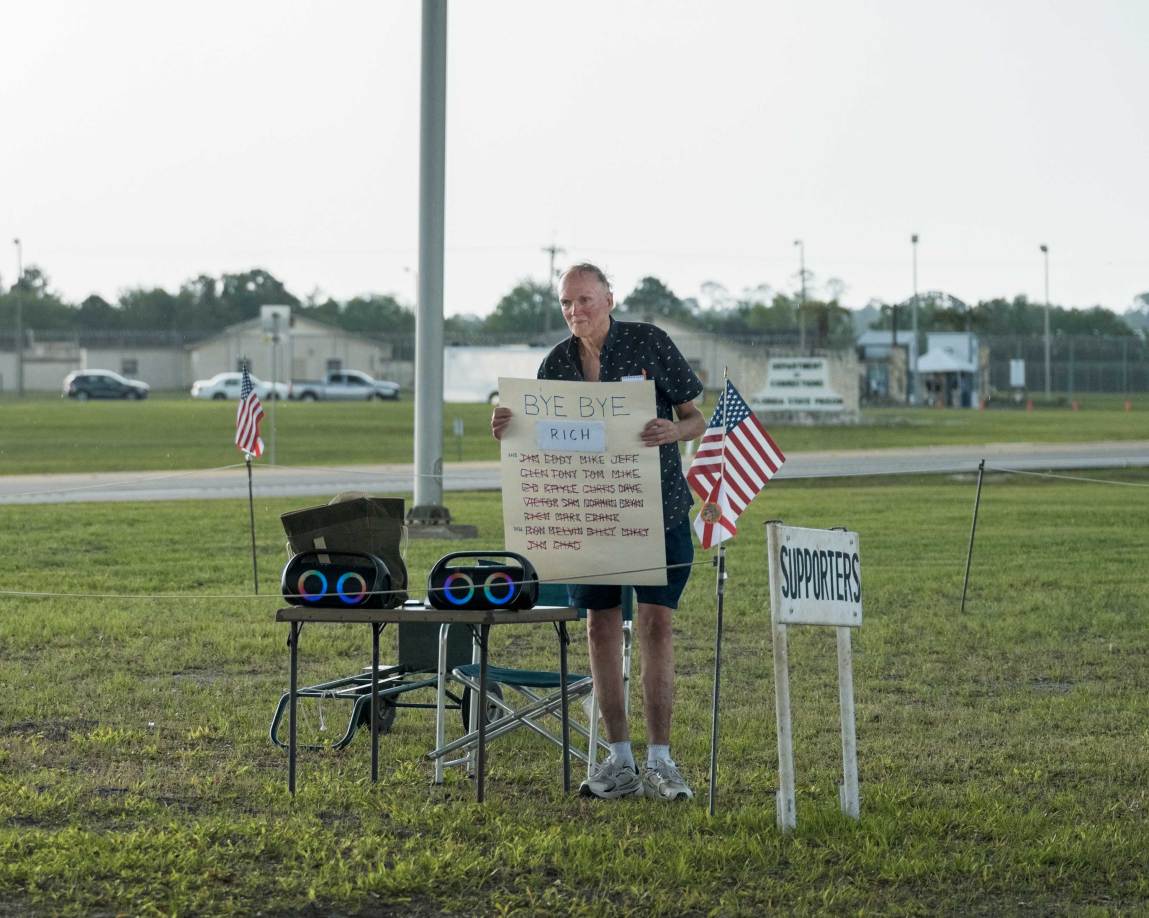
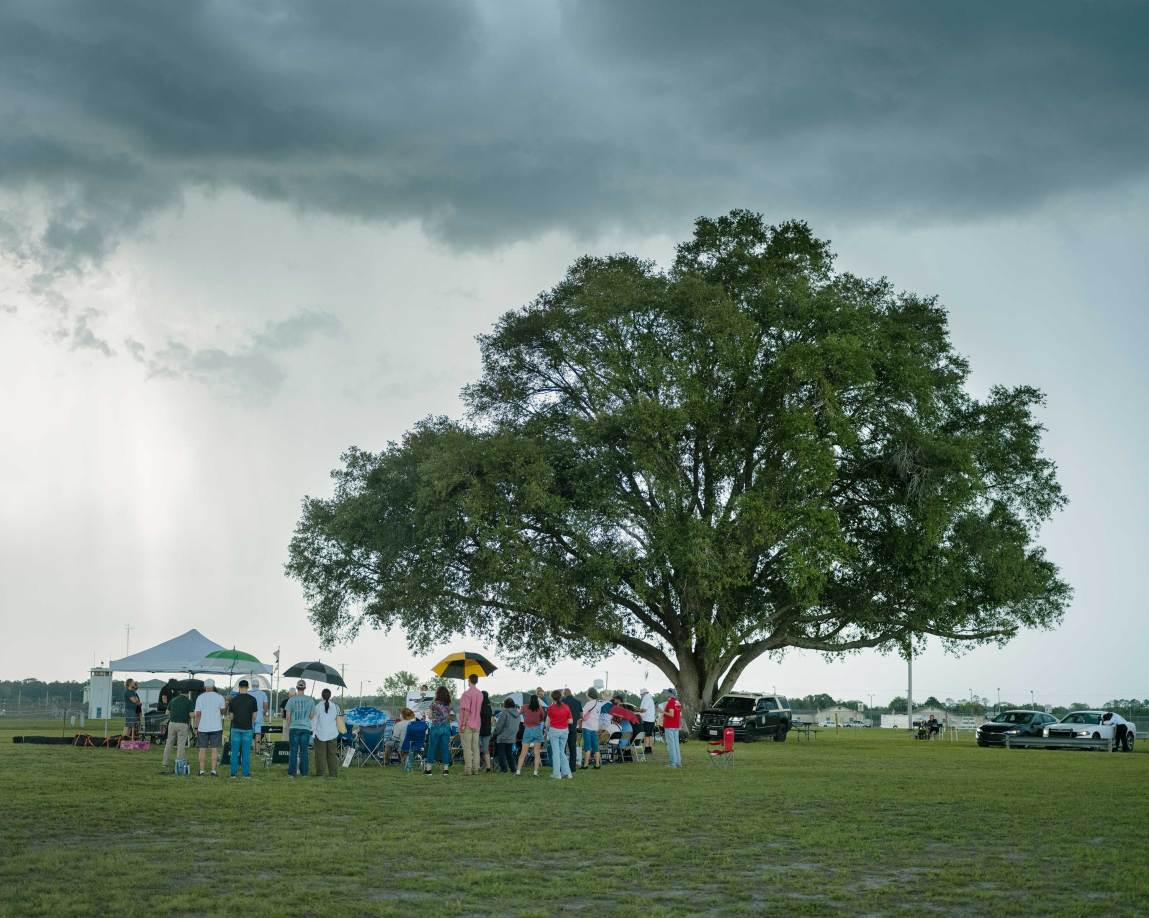
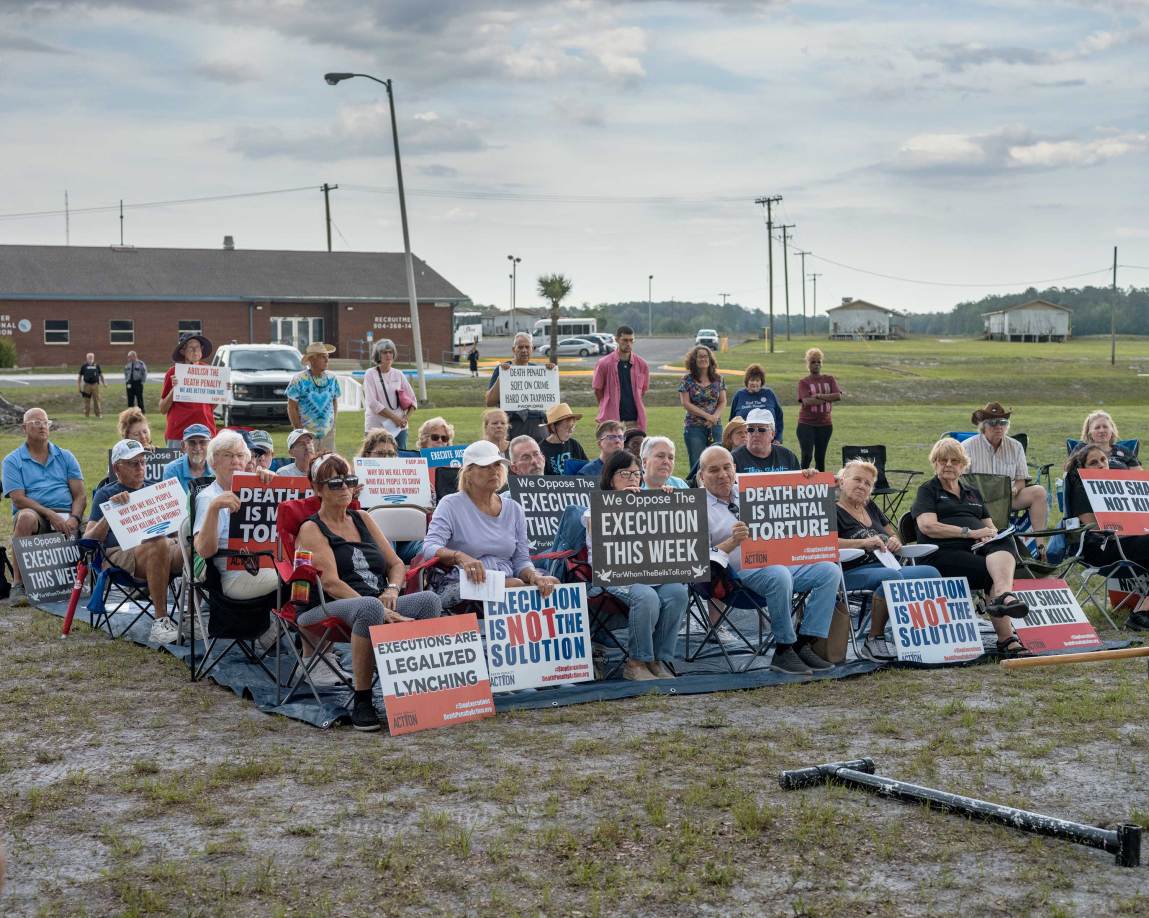
On April 21, the day Florida was set to execute Willacy, I made my way to the vigil that would be taking place outside Florida State Prison, near the small town of Starke. Across the two-lane highway that leads to the prison, a few dozen people were unfolding camping chairs on a sunbaked field, carrying signs with messages like “Execute justice not people” and “Thou shalt not kill.” A single, broad-canopied oak tree provided the only shade. There were no satellite trucks or television crews, no signs that something momentous was about to take place, other than a single counterprotester: a death penalty proponent who held up a sign listing the names of every man executed since early 2025, each name crossed out with a red X. Every so often, a lone car or pickup would come barreling down the highway, hurtle past the protesters and vanish.
The relative invisibility of executions — the sense that they take place with little public awareness — was what prompted Melanie Verdecia, a Jacksonville attorney, to start writing a newsletter on Substack, “Tracking Florida’s Death Penalty,” that chronicles everything from new capital prosecutions to last-minute death warrant litigation, in real time. Years ago, Verdecia told me, she was driving to the Florida Supreme Court, where she was clerking, on the day of a scheduled execution, having spent weeks immersed in the legal battle over whether it would proceed. As she sat in traffic looking at the commuters around her, she realized none of them had any idea that a man was slated to die that day.
Verdecia is one of a small number of Floridians who meticulously track the state’s use of the death penalty, trying to make sure executions — and more recently, the ramp-up in death warrants — do not pass completely unnoticed. On the afternoon of the Willacy execution, Grace Hanna was sitting in a doughnut shop in Starke, keeping a different kind of record. Hanna, the 29-year-old executive director of Floridians for Alternatives to the Death Penalty, sat at her laptop as she communicated with a network of people who were affected, in one way or another, by Florida’s death penalty, including capital defenders whose clients were under active death warrants and the state’s many death row exonerees, to family members of condemned prisoners who were preparing for final visits or grieving in the wake of an execution. Hanna told me that one of the most haunting parts of her job is when she is needed to collect the ashes of a condemned man and deliver them to his family.
When Hanna was 8 years old and growing up in Tallahassee, a cousin who worked the overnight shift at a convenience store in North Carolina was beaten to death during a robbery. The crime spurred long-running conversations in her home about crime, punishment and how society should respond after someone commits an act of violence. Her parents, Baptist deacons who ultimately left the church over its refusal to ordain women, raised their children to wrestle with such questions. “Clearly, something stuck,” Hanna told me. She went on to become a social worker, her brother a public defender. The man who killed her cousin received a sentence of life without parole, a punishment that spared her family from the many years or even decades of appeals that often accompany a death sentence. Justice, she said, had not demanded putting another person to death.
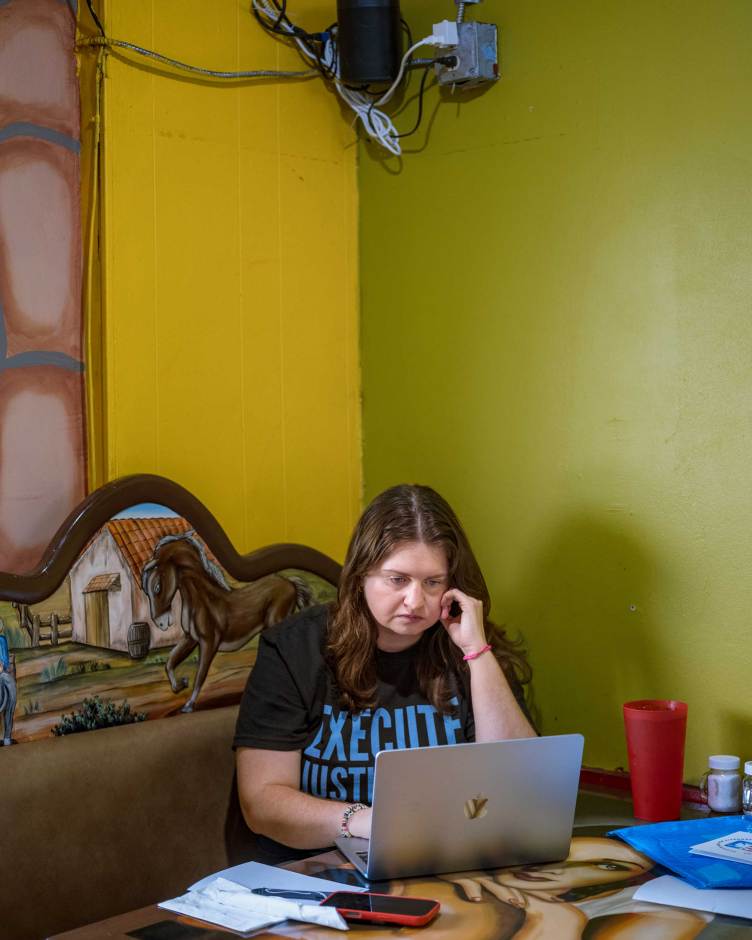
That day, Hanna was drafting a news release, as her team did every execution day, to be sent out after Willacy was put to death. It began by acknowledging the victim at the center of the case, Marlys Sather, who was 56 when she returned to her home in Palm Bay during her lunch break one day in 1990, interrupting a burglary. Court records show that Willacy beat her, bound her and set her on fire before fleeing.
These news releases try to hold two realities at once: the suffering caused by the crime and the complicated path that led there. Drawing on court filings, prison records and years of discussions with the lawyers and family members who know these men best, Hanna writes about forces that shaped their lives before prison: mental illness, intellectual disabilities, addiction, physical and sexual abuse, and childhoods marked by neglect. She also looks at the decades of incarceration that follow their convictions, during which sometimes profound transformations take place. “This is often the only obituary these men will get,” she said.
Yet that was not the central focus of the Willacy release she was writing. Hanna devoted much of it to his unsuccessful effort to force the state to disclose records about its lethal-injection protocol. “Every Floridian,” she typed, “should be asking themselves tonight: What is the State of Florida hiding in those records?”
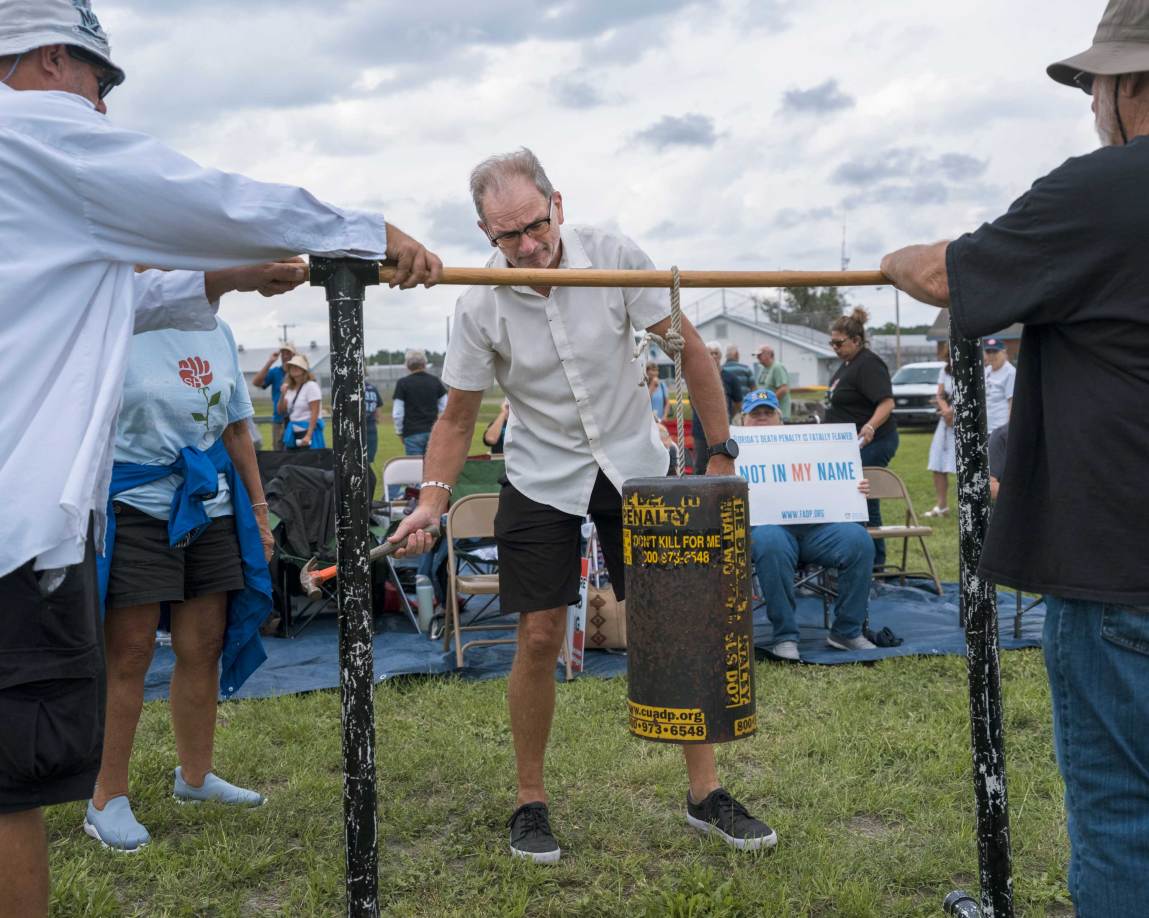
The execution went forward that evening. Shortly after 6 o’clock, around the time the lethal-injection drugs began to flow, the protesters gathered around a large metal bell. One by one, they stepped forward. “Not in my name,” each said before striking it. The sound was low and resonant, reverberating after each blow. The counterprotester, meanwhile, a lean retiree named Bill Campbell, tried to drown out the sound with a boom box blasting “Another One Bites the Dust.”
Above them, the sky stretched to the horizon, luminous in the early evening light. “Whenever we’re here for an execution, something wild happens in the sky, like a torrential downpour or the most beautiful sunset you’ve ever seen,” Hanna told me. She often takes a photograph of the sky and sends it to the prisoner’s family if they cannot bear to be there.
Soon a convoy of white vans emerged from the prison gates carrying witnesses, two members of the media and prison officials. The Florida Department of Corrections announced Willacy’s time of death as 6:15 p.m.
The protesters folded their chairs and gathered their belongings. A half-hour later, the vigil site had emptied out. Across the road, there was no visible sign that a man was put to death there that evening.
Another execution was already scheduled for nine days later. James Hitchcock, one of the longest-serving prisoners on Florida’s death row, was set to die on April 30. As Hanna headed to her car, she called out to another woman: “See you next week.”
Last December, with Florida on the verge of carrying out its 19th execution of the year, a retired warden named Ron McAndrew sat down to write an opinion piece for the Tampa Bay Times. A two-time DeSantis voter and self-described “law-and-order guy,” McAndrew was troubled by the rapid increase in executions. “That pace matters,” he wrote, “because executions depend on human beings performing complex, high-risk tasks under extreme pressure.” He warned of the potential for a serious error and the toll on those responsible for carrying out death sentences. “When something goes wrong in an execution chamber, it is not elected officials who absorb the consequences,” he wrote. It is prison staff members “who carry the memories long after the chamber is cleaned and the state moves on.”
McAndrew served as warden of Florida State Prison in the mid-’90s, when Florida still used the electric chair. He walked three men to the execution chamber and gave the signal that sent electricity coursing through their bodies. The last execution he oversaw, on March 25, 1997, would help hasten the end of Florida’s reliance on the electric chair. Moments after that prisoner, Pedro Medina, received the first jolt of electricity, his head caught fire and flames leaped into the air. Smoke filled the chamber. Medina’s chest heaved until he was pronounced dead.
McAndrew threw out the uniform he wore that day, which smelled of burning flesh. Afterward, Gov. Lawton Chiles sent him to Texas to study lethal injection, the primary method Florida uses today. The cumulative weight of the executions followed him. He drank heavily, sometimes downing a bottle of Johnnie Walker in a single day. At night, he often awoke to find the men whose executions he had overseen sitting on the edge of his bed. “They’re haunting me,” he told his wife.
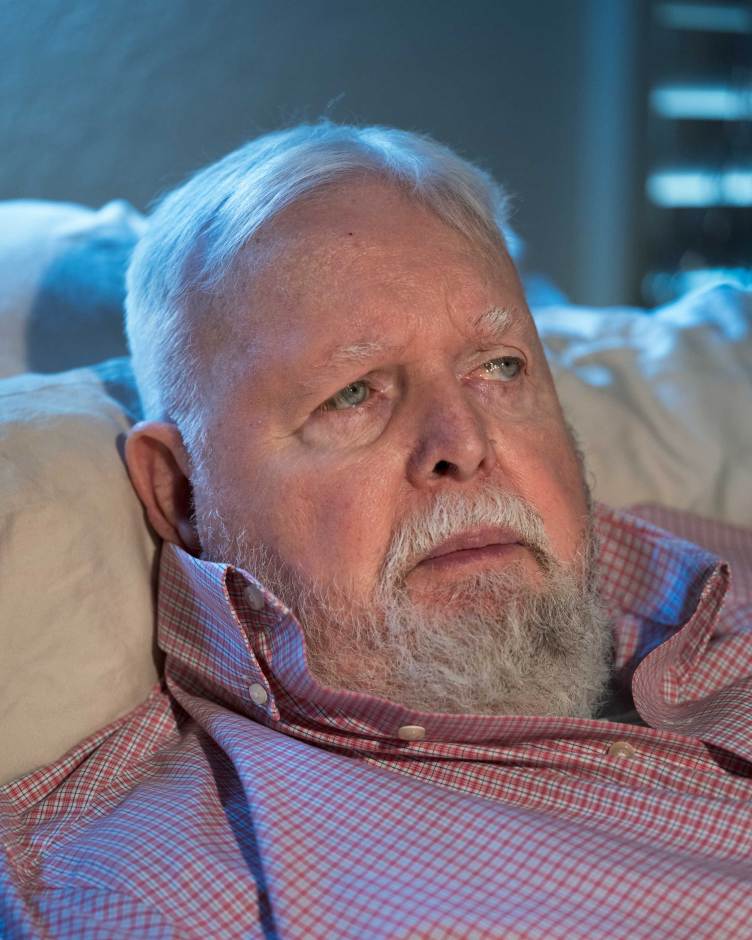
Thirteen years of therapy allowed him to regain his footing. Now retired, he lives in the small town of Dunnellon, roughly 70 miles southwest of Florida State Prison, where he had hoped for a quiet life, puttering along the Withlacoochee River on his pontoon boat. But as executions accelerated last year, he found himself worrying about the people inside Florida State Prison who were being asked to shoulder the burden he once carried, and of the effect on them of so much killing. He knew what it was like to stand inside the execution chamber, and what it was like for the other prison officials and staff members who were required to see the process through to the end. “It was damaging, and I mean very damaging, to the people in that room.”
I thought of the emotion with which McAndrew said “damaging” — as if he were describing an injury that never fully healed — when I spoke to Feddon on June 3, the day after a prisoner named Andrew Lukehart was executed.
Feddon had accompanied Lukehart, who was sentenced to death for the 1996 killing of his girlfriend’s 5-month-old daughter, through the final month of his life. The crime, the remorse he carried and the abuse that had marked his childhood were not the subjects to which Lukehart most often returned. Again and again, he spoke of the Camino de Santiago, the ancient pilgrimage route that winds across northern Spain, imagining that one day he might somehow walk its dusty roads. He and Feddon recited prayers, which the priest had found for him, that pilgrims have spoken for generations along the Camino.
Late in the afternoon on June 2, Feddon had been brought into the execution chamber at Florida State Prison, where he took a seat beside Lukehart, who was strapped to the gurney, and rested his hand on the man’s leg. Lukehart’s execution was the third that the priest would witness at Florida State Prison, and his voice was heavy as he spoke to me the following morning. “To begin the sacrament of last rites for an otherwise utterly healthy man …” he said, trailing off.
He told me he had been flooded with images of the execution since waking before dawn. The scenes returned one after another: Lukehart’s face, flushed with pooled blood, as if he had been doing a headstand; a doctor leaning over the gurney, raising Lukehart’s eyelids to verify that he was dead; the prayer rope Feddon laid across the man’s still chest. Before Mass that morning, the images looped in his mind. “I just was seeing it, and seeing it, and seeing it.”
The priest was struggling to reconcile what he believed he was called to do with what that calling now required of him, and how to move forward as death warrants continued to be signed at a relentless pace. How could he keep doing this work? And yet, how could he abandon the men who had asked him to walk beside them? Inside the death chamber with Lukehart, Feddon told me, he felt a tension between the privilege of being with the condemned, he said, “to speak words of healing, of love, of God’s mercy” at their hour of greatest need, contrasted with the taking of a life. “Everything makes you want to cry out to the people around you, ‘Why are you making me do this?’” he said.
Lukehart was gone, but another prisoner he was counseling, Duckett, whose execution had been put on hold for DNA testing, remained. The testing yielded no clear answers, and prosecutors were now asking the Florida Supreme Court to lift its stay so that the execution could proceed. The machinery of death had paused for him, but only briefly. Feddon would return to Florida State Prison to see him in just a few days.
Don't Miss:
-
“Devoid of Any Factual Basis”: Again and Again, Judges Have Dismissed Trump’s Voter Data Lawsuits
-
Frustrated by Losses in the Courts, Missouri Republicans Want to Change How Top Judges Are Selected
-
Trump Says the Border Is Secure. Texas Gov. Greg Abbott Keeps Declaring an Emergency.
-
Make It Shitty, Vengeful, Inept and Untrue
-
New Mexico and El Paso Spent Millions on Climate Plans. Three New Data Centers Could Undo Them.