
 Rick Claypool on Pay to Play Corporate Crime Enforcement
  Labaton Launches Whistleblower Practice with Former SEC Acting Chair Allison Herren Lee
  Kremlin payment firm A7 has been pumping billions in ‘untraceable’ cash into global financial system
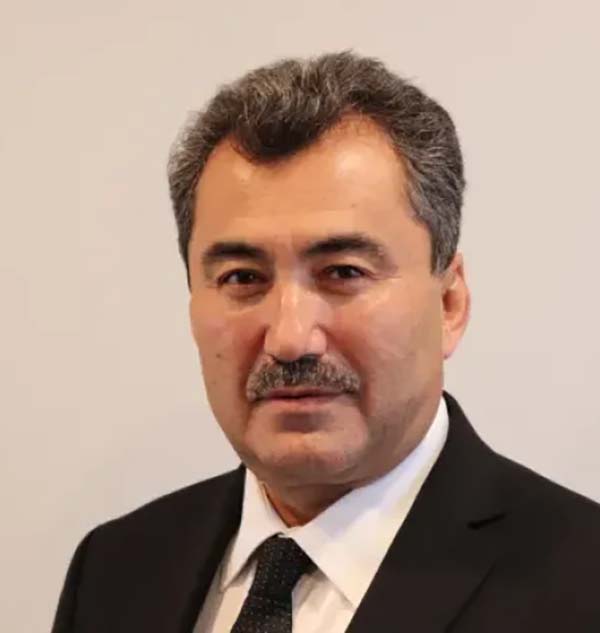
 For more than 15 hours, Abdulhakim Idris stared at the walls of a detention room in a Malaysian airport. The room, dirty and ridden with bed bugs, held dozens of detainees from around the world. Many of them slept on the floor.
Idris is the executive director of the Center for Uyghur Studies, a U.S.-based research and advocacy nonprofit. Last month, he traveled to Malaysia to launch the Malay-language version of his book, which chronicles Beijing’s repression of Uyghurs, a primarily Muslim ethnic group from northwestern China. But his plans changed when immigration officers detained him upon arrival in Kuala Lumpur, seized his U.S. passport and left him languishing in a detention room for hours before eventually deporting him.
There was clearly pressure from Beijing, Idris told ICIJ. “I feared [for] my life.”
Idris’ detention is the latest high-profile example of China’s campaign to quell dissent worldwide, a trend that ICIJ and a team of 104 journalists explored as part of last year’s China Targets investigation. Interviews with more than 100 people in 23 countries who were targeted by Chinese authorities revealed how Beijing uses other governments, as well as international institutions like the United Nations and Interpol, to silence critics.
In a statement to ICIJ, a spokesperson for the Chinese Embassy in Washington, D.C., said allegations of transnational repression were “fabricated by a handful of countries and organizations to slander China.”
But human rights advocates say Idris’ case is a clear example of China’s international reach.
“Beijing successfully weaponized a third country to detain and expel a U.S. citizen,” Rushan Abbas, founder and executive director of Campaign for Uyghurs, said in a press release following Idris’ deportation from Malaysia. “China is escalating its efforts to harass citizens of sovereign nations engaged in lawful advocacy.”
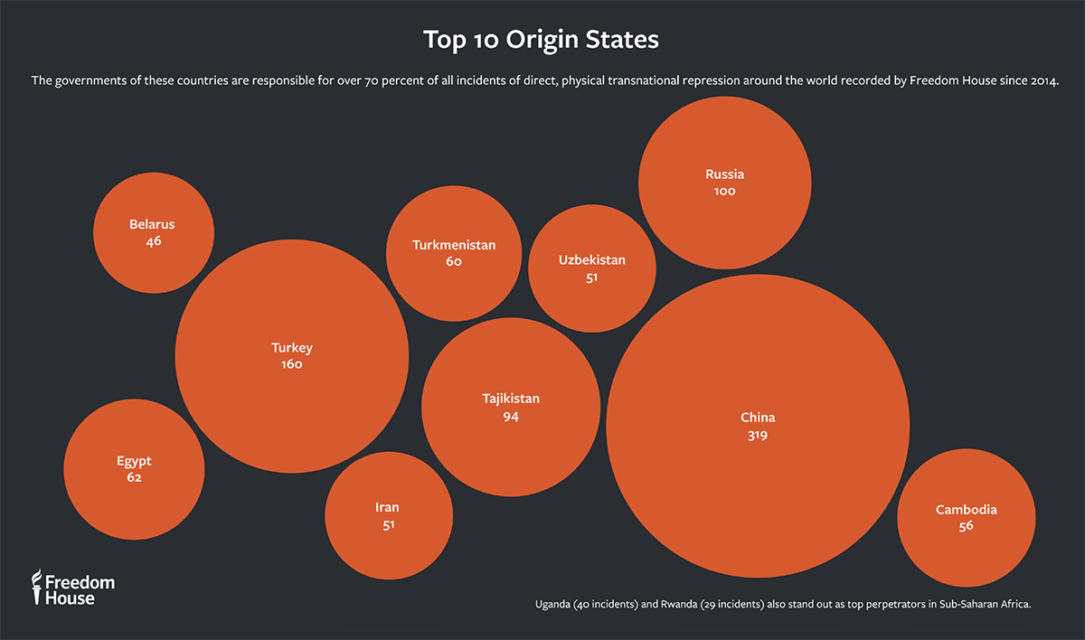
Beijing has consistently been one of the world’s leaders in transnational repression, according to the U.S.-based human rights group Freedom House, which began recording cases in 2014.
Since then, Uyghurs like Idris have been involved in more than 20% of incidents recorded by the nonprofit, but the Chinese government has also targeted political dissidents, Tibet and Taiwan independence advocates and Falun Gong practitioners.
In 2025, the total number of direct, physical incidents of Beijing’s repression rose to 319, according to Freedom House’s latest report. Incidents recorded last year included the detention and suspicious death of a Tibetan lama in Vietnam; the detention of a Thailand-based pro-democracy activist; and the mass deportation of 40 Uyghur men from Thailand who had fled repression in China more than a decade ago.
But those cases just scratch the surface.
“There’s a whole universe of digital or indirect transnational repression,” said Freedom House research director Yana Gorokhovskaia, who co-authored the report. In addition to direct threats, China carries out mass surveillance, online harassment, and coercion by proxy, including threats to friends and family. Those cases are harder to track and validate.
Freedom House also found that Beijing continues to leverage geopolitical and economic power to influence other governments. Thailand’s deputy foreign affairs minister said the country deported the group of Uyghurs last year to avoid “retaliation from China,” according to the report, which suggested that Thai authorities may have been concerned about compromising Chinese investments in Thailand’s agricultural industry and other sectors.
When Malaysian officers detained Idris, he saw them conferring with three people in civilian clothes. “They avoided eye contact with me. They were wearing a mask,” he said. “I’m sure they were Chinese.” Idris’ contact in Malaysia was able to confirm that Beijing had put pressure on the Malaysian government to detain him.
Gorokhovskaia said that transnational repression is “cheap and easy to do.”
“It relies on kind of the existing structures in the international system,” she said, emphasizing the abuse of Interpol red notices, alerts shared with police forces around the world. Freedom House recorded 11 incidents of wrongful detention or deportation last year spurred by red notices, though China was not among the perpetrators.
ICIJ’s China Targets investigation exposed how Beijing previously exploited the red notice system to pursue dissidents and powerful businesspeople in violation of Interpol’s rules. Targets of red notices interviewed by ICIJ included Uyghur rights advocates who said they had been falsely accused of terrorism; a small-town politician who said he was blacklisted after exposing corruption in the communist party; and followers of the Falun Gong spiritual movement.
Interpol continues to lack the staffing and resources to vet the thousands of notices received each year, Gorokhovskaia said, adding that member states should increase funding to ensure countries with “very weak rule of law” don’t get away with politically motivated alerts.
A quarter of all countries have attempted to silence dissidents abroad, according to Freedom House. China was by far the most prolific in 2025, but Vietnam and Russia also stood out, rounding out the top three perpetrators. The report also highlighted six new sponsors of transnational repression in the last year: Afghanistan, Benin, Georgia, Kenya, Tanzania and Zimbabwe.
Authoritarian governments are likely to coordinate with one another, the report found. Many democracies, on the other hand, have enacted new measures to protect dissidents — for example, launching tiplines for victims and enhancing police training. Even so, the political response to overt attacks has often been muted, Gorokhovskaia said. She cited the reestablishment of the relationship between the United States and Saudi Arabia after Jamal Khashoggi’s assassination.
“Reputationally,” she said, “you don’t pay a high price for using tactics of transnational repression.”
Threats from China are nothing new for Idris, who lost contact with his family in the country in 2017, but the situation is getting worse day by day, he said. “China’s arm [is] reaching to Washington, to Europe, to Turkey, everywhere.”
Idris said he struggled to sleep after returning home from his detention in Malaysia, and warned that China’s partners ultimately risk becoming subordinate to the regime.
“They are losing their sovereignty,” he said. “They are becoming like a victim of China every time they accept China’s demand.”
Don't Miss:
-
Rick Claypool on Pay to Play Corporate Crime Enforcement
-
Labaton Launches Whistleblower Practice with Former SEC Acting Chair Allison Herren Lee
-
Kremlin payment firm A7 has been pumping billions in ‘untraceable’ cash into global financial system
-
New US law requires dating apps to include warnings on romance scams
-
Southeast Asia Welcomes Japanese Investment but not Soldiers