
 Rick Claypool on Pay to Play Corporate Crime Enforcement
  Labaton Launches Whistleblower Practice with Former SEC Acting Chair Allison Herren Lee
  Kremlin payment firm A7 has been pumping billions in ‘untraceable’ cash into global financial system
 “There are roughly 1.19 million people who die in traffic accidents globally every year, and tens of millions more are injured. Our first goal is to achieve zero traffic accidents,” Wang said. “A car is equipped with more than a dozen cameras, lidar and radar – the equivalent of dozens of eyes – monitoring road conditions around the clock without blind spots. Advanced driver-assistance never gets tired.”
Advertisement
Wang did not disclose a timetable for commercialisation.
The announcement underscores BYD’s push to secure a leading position in the future of mobility, with ambitions to mass-produce smarter cars at lower costs. Wang said the company had built more than 6,100 flash-charging stations in total, the most among Chinese carmakers.
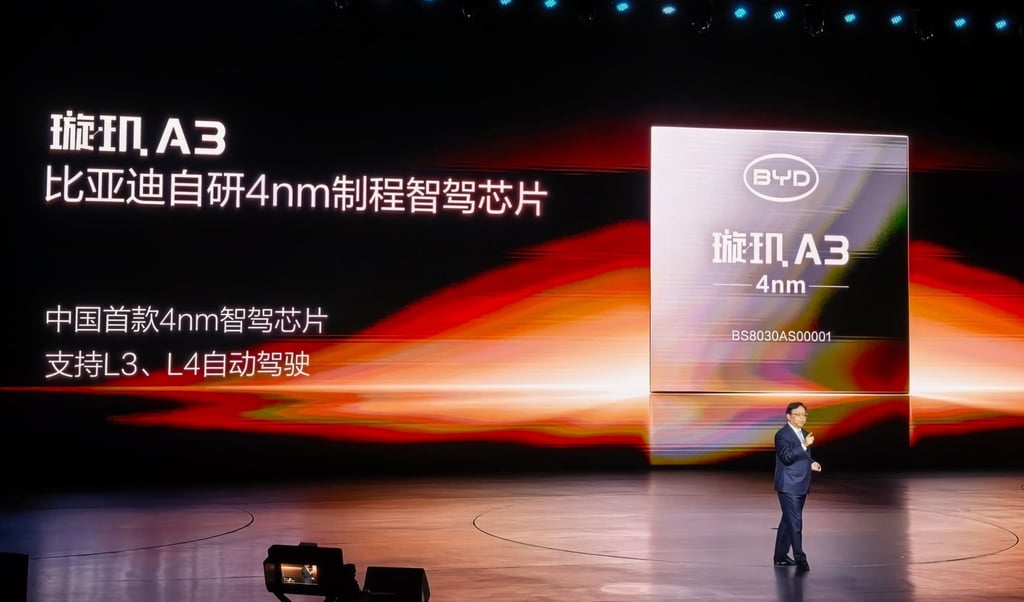
“The latest technologies BYD unveiled [send] a message that the company is embarking on technological advancements, instead of price cuts, to increase its market share,” said Gao Shen, an independent analyst in Shanghai. “As a bellwether in the global EV industry, any drastic action taken by BYD could change the game since its competitors would have to either increase investment in new technologies or slash costs to keep their vehicles affordable.”
Advertisement
Don't Miss:
-
A Total of 13 Mass Graves Have Been Found in Viesca Containing the Charred Remains of Men and Women
-
Jorge Luis Zambrano, alias “Rasquiña”
-
El Taliban Fell In Mazatlán… And What He Confessed Ties Everything Together
-
Inside the Camp at the Heart of Honduras’ Garífuna Land Struggle
-
This Is How the MataZetas Captured and Executed the Zetas