
 The Taliban’s New War Begins at Home
  Panama removed from EU’s tax haven ‘blacklist’ a decade after the Panama Papers
  Crackdown and Controversy: The Battle Over Beach Bars and Noise in Phuket’s Bang Tao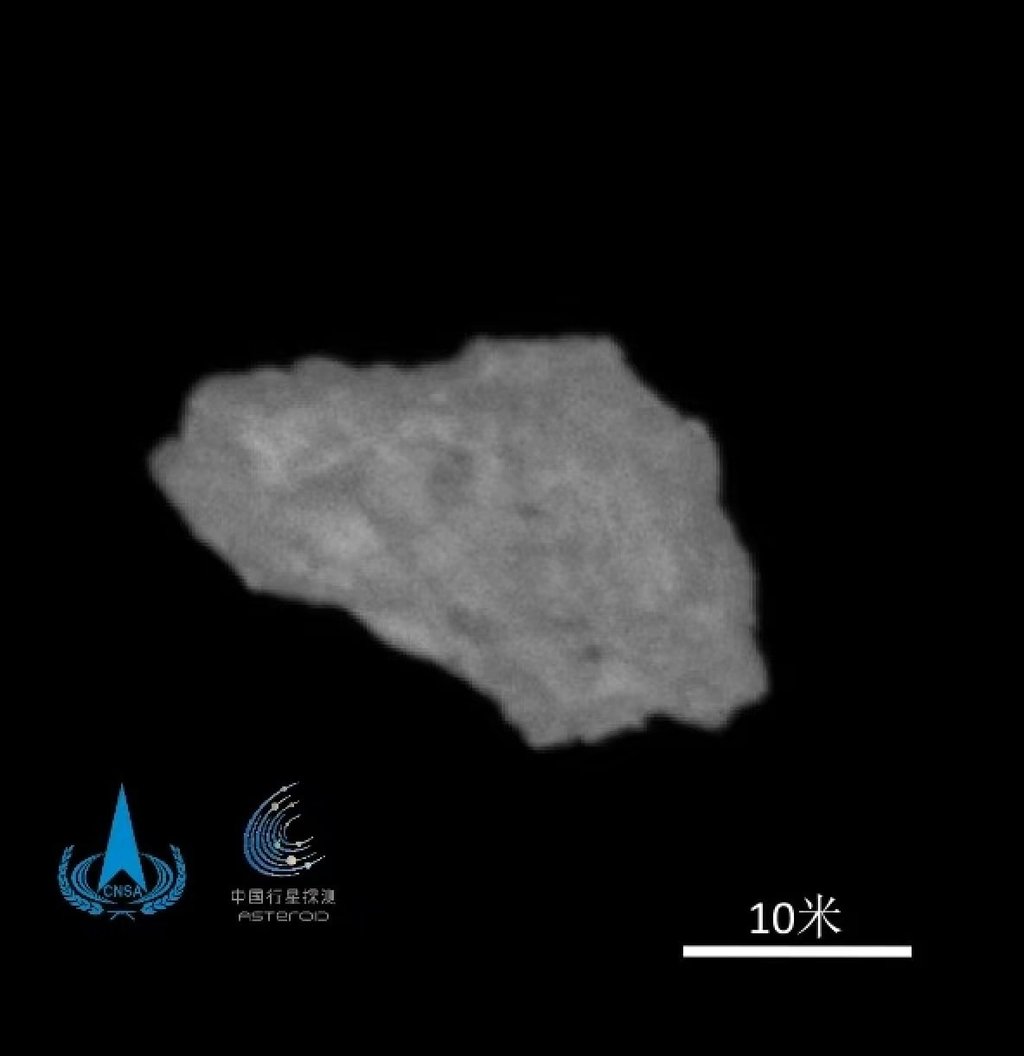
It was close enough for the spacecraft to begin scientific exploration of the asteroid, the agency said on its website.
Formally designated 2016 HO3, or asteroid 469219 Kamo‘oalewa, the target is a very small Apollo-type near-Earth asteroid previously estimated to measure about 40 to 100 metres (130 to 330 feet) in diameter. However, the image captured by Tianwen-2 and its accompanying scale bar suggests that the asteroid is likely to be less than 40 metres in diameter.
“Based on the image released so far, this asteroid appears to be somewhat smaller than previously predicted – it seems to be only about 20 to 30 metres across, whereas the earlier estimate from our paper was around 57 metres,” said Zhang Pengfei, a researcher from the Institute of Geochemistry at the Chinese Academy of Sciences.
Don't Miss:
-
Drug Trafficking, U.S. Banks, and the Economic Reality Under Trump
-
Ivan’s Mob Beheads A Los Mayos Member
-
Ex-OFAC Official: The Cartel Risk Companies Can’t See | The InSight Take
-
Why Ecuador Is Losing Its Fight Against Organized Crime
-
‘El Cromo’ Arrested in Guadalajara; He Is Linked to a Group Affiliated with the CJNG