
 How Hungary’s richest man funneled millions into Orbán’s propaganda machine
  How Real Is the US Withdrawal from the Middle East?
  From Iran to China: An Emerging Trans-Central Asian Corridor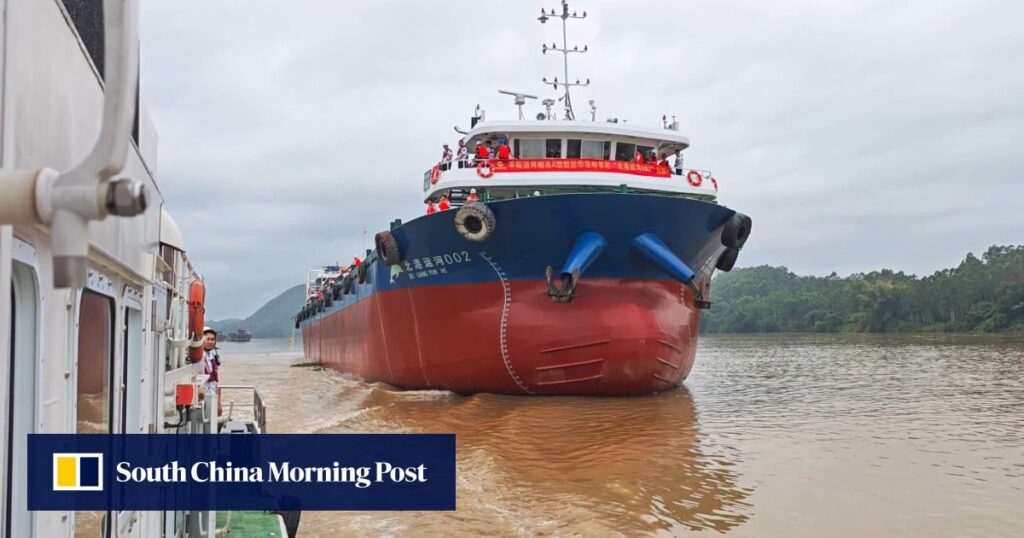
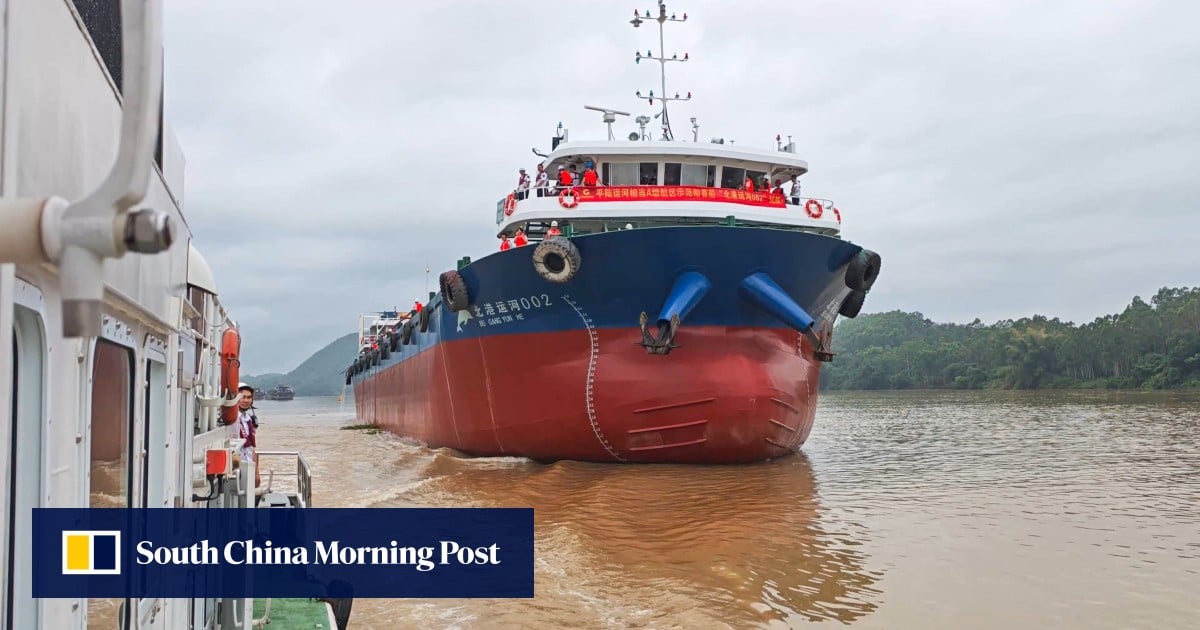
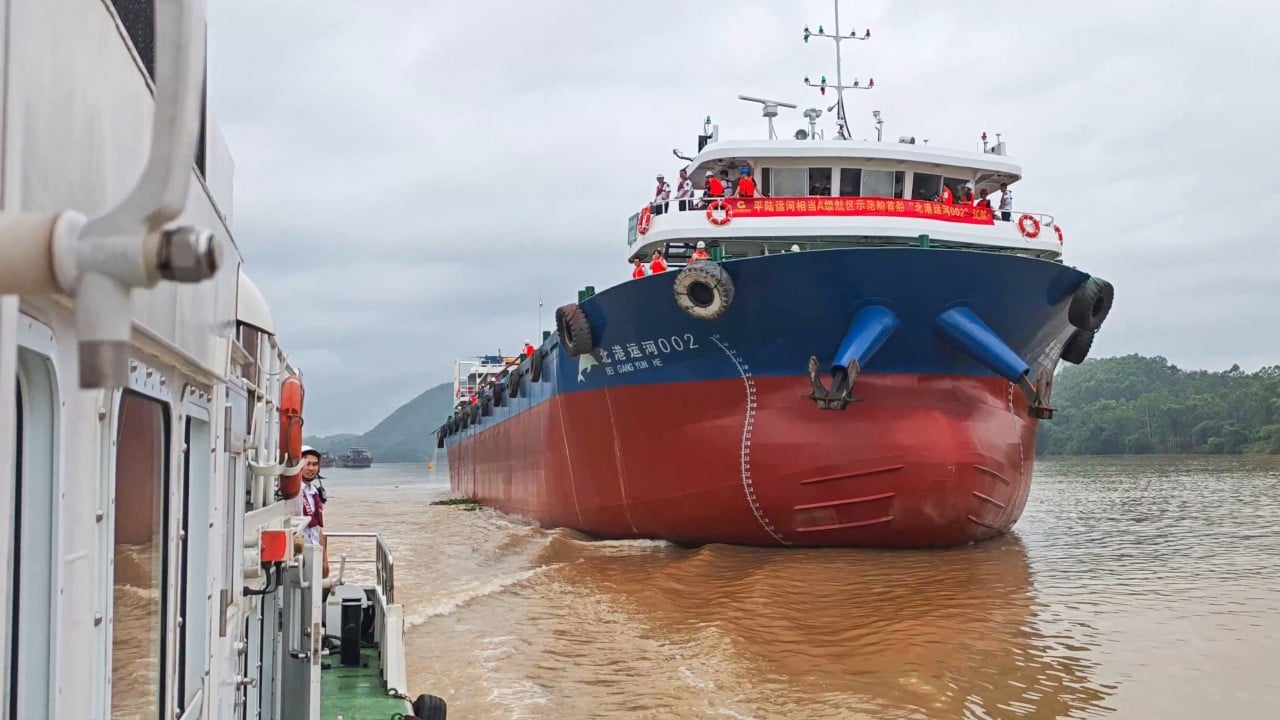
Intelligent barges and other vessels have been tested on the artificial waterway in the Guangxi Zhuang autonomous region since Wednesday, as part of preparations for the commissioning of the roughly US$10 billion megaproject connecting the strategically located region to the Gulf of Tonkin between China and Vietnam.
Integrating a range of intelligent systems and powered by liquefied natural gas, the vessels could send real-time navigation and hydrographic data from multi-sensor and camera systems to relay information to other ships, state broadcaster CCTV reported, citing Guangxi authorities.
Advertisement
Guangxi’s marine and shipping authority said trials were proceeding smoothly. During the tests, autonomous barges aided by high-precision sensors, radars and communication networks also carried out automated mooring, it added.
The vessels are tailor-made to haul containers and other bulk cargo, maximising the canal’s shipping capacity while cutting costs and navigation time. Pinglu’s massive main lock – 300 metres long, 34 metres wide and 8 metres deep – would be able to accommodate six such ships simultaneously, according to the CCTV report.
Advertisement
More ships are expected to be delivered by August, including vessels capable of cruising along both the canal and on the high seas of the Gulf of Tonkin – known in China as the Beibu Gulf – ahead of the canal’s planned test run in September.
Don't Miss:
-
US wraps up military mission in Iraq, giving Baghdad room to strengthen China ties
-
As China and the EU begin crunch trade talks, optimism is in short supply
-
Data centre opposition is growing in Australia. Is there a middle ground?
-
Helper arrested for allegedly slapping 5-year-old boy after he refuses to eat
-
Workers, mostly Indian, building US consulate in Milan agree to record settlement