
 How Real Is the US Withdrawal from the Middle East?
  From Iran to China: An Emerging Trans-Central Asian Corridor
  New documents show how a retail chain’s sales practices helped put guns on US streets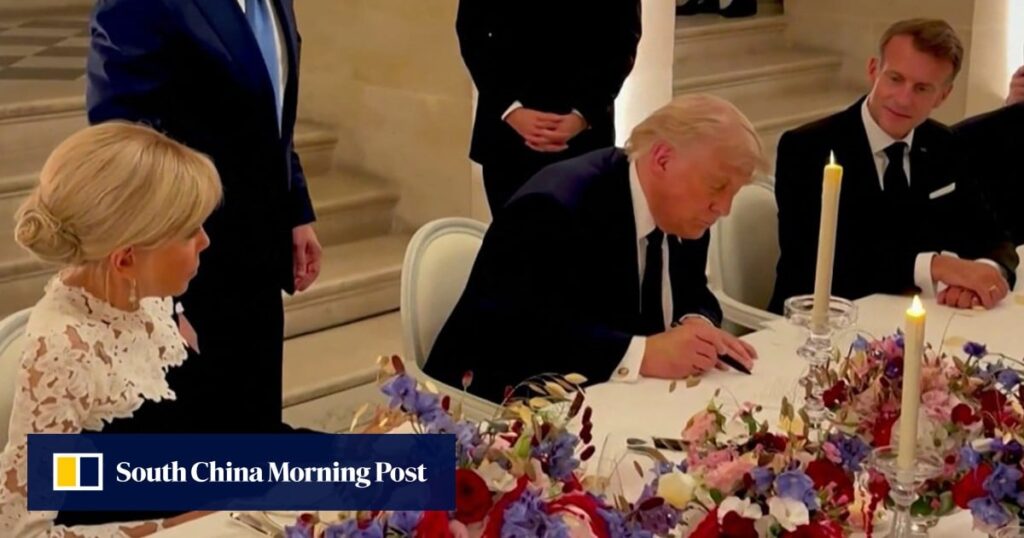
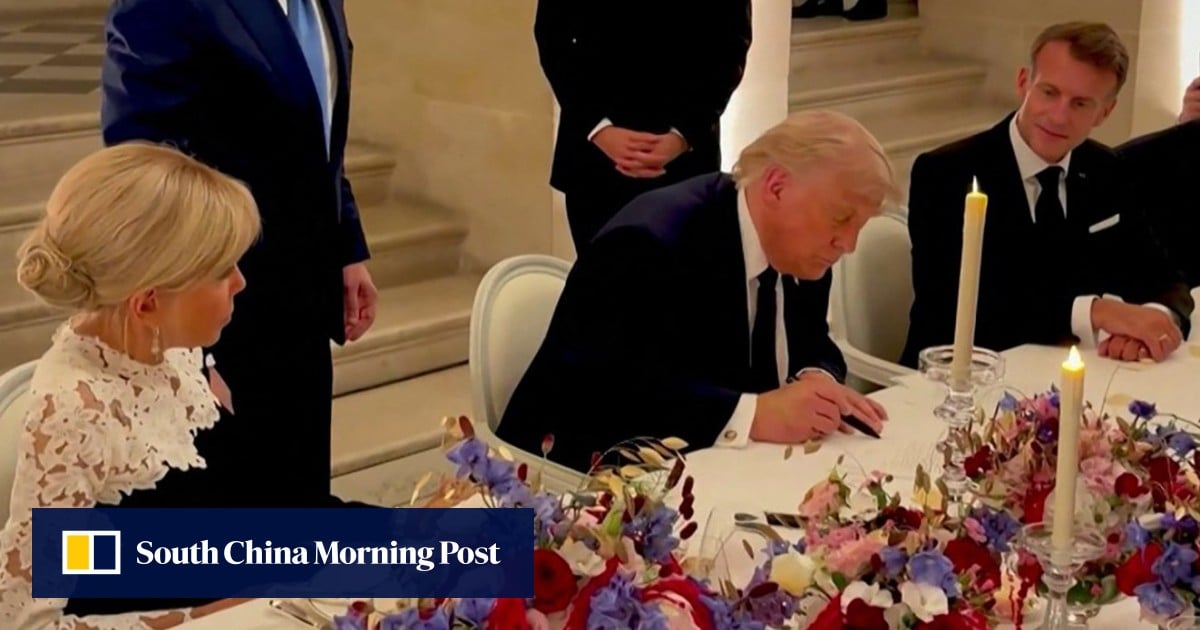
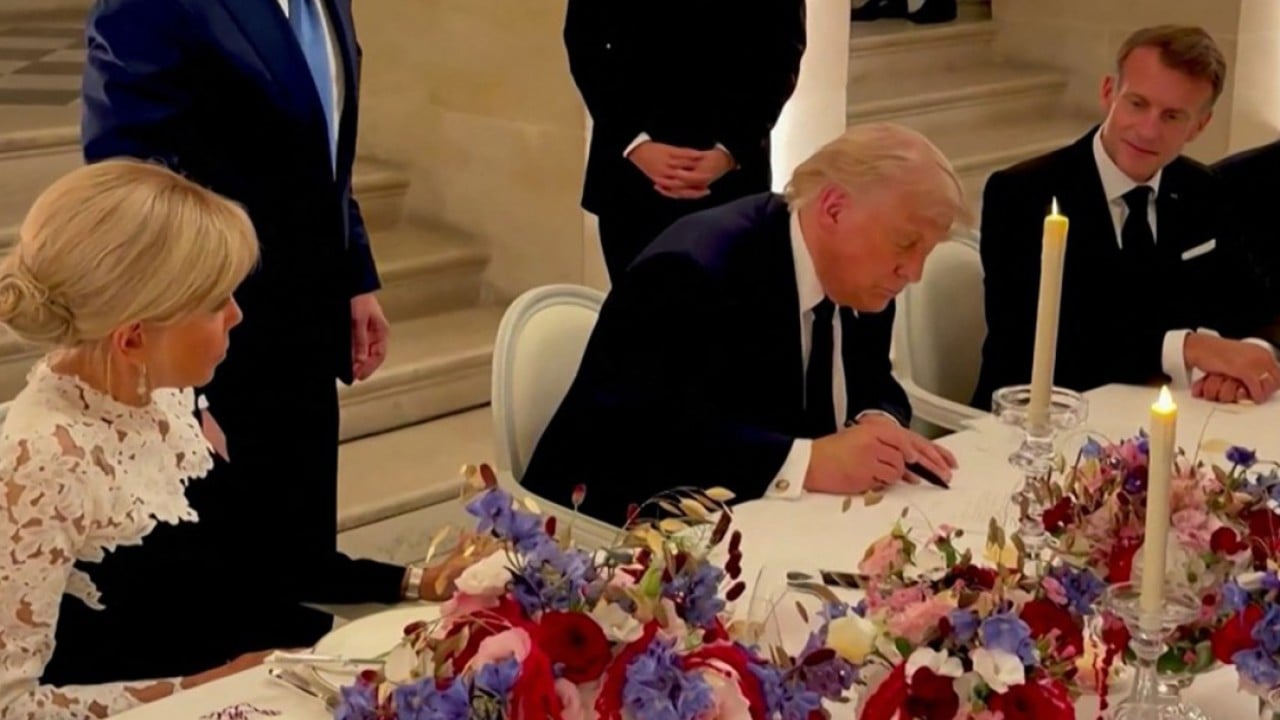
Trump signed it at a dinner at the Palace of Versailles, where he was joined by French President Emmanuel Macron and French first lady Brigitte Macron.
Advertisement
Pakistani Prime Minister Shehbaz Sharif, a key mediator, posted on social media that the “Islamabad MOU” would enter into force with immediate effect and, as a first step, Iran would instantly reopen the Strait of Hormuz while the US would “immediately lift the naval blockade”.
On the surface, the 14-point deal meant that Washington had made far greater concessions than Tehran, said Niu Xinchun, director of the China-Arab Research Institute at Ningxia University.
Advertisement
“At present, it appears that the United States has made more concessions, largely because Washington is more desperate to disentangle itself from the war,” Niu said.
Don't Miss:
-
Canada will not allow assisted suicide for those with only mental illness
-
Trump wants to turn Florida golf course into presidential retreat
-
US proposes US$70,000 fee for foreign students to work after graduation
-
France halts use of stun grenades in policing of student protests
-
The Jalisco Cartel: At Its Weakest Point in History